Pamukkale is Hierapolis first and travertines second — a Greco-Roman spa city of 100,000 people, with the white cliff as its front lawn. Base yourself in Pamukkale village, the only town you can walk to the gate from. The site ticket is single-entry, so plan your route before you go in. Two days covers the city properly and leaves room for a real day trip to Aphrodisias.
Start with the essentials, add what genuinely interests you, and leave the rest for another visit. Every place includes a concise story, practical timing, a Maps link, and a one-tap route planner action.
Make the route work
Anticipate the practical details.
Getting there
Base yourself in Pamukkale village. The nearest airport is Denizli Çardak (DNZ), about an hour by road; Denizli itself, 20km away, has bus and train links but sits at the wrong end of both the day and the walk. Many visitors arrive as part of a Selçuk–Pamukkale–Cappadocia coach chain — build in a full two days here rather than treating it as a stopover.
Getting around
Three gates, and which one you use shapes the whole visit. The South Gate is the default: main vehicle access, closest to the pool, museum and theatre, no climb. The North Gate drops you at the Frontinus Gate and the necropolis, for walking the whole city south. The town gate, at the foot of the cliff in Pamukkale village, is where the barefoot climb up the travertines begins. The site ticket is single-entry — you cannot leave and come back — so decide your route before you go in.
Money
Carry a payment card and some Turkish lira. The Antique Pool needs a separate ticket on top of site admission, and pricing changed on 1 May 2026 — confirm the current fee at the gate rather than trusting an older guide.
Connectivity
Mobile coverage is reliable in Pamukkale village and across the site. It can weaken on the road out to Aphrodisias, so download offline maps before that day trip.
Etiquette
Shoes, socks and slippers are banned on the travertine terraces and the rule is enforced by guards — go barefoot or don't walk them. Respect the fenced sections around the Plutonion; they are closed for a real and lethal reason, not bureaucracy.
Safety and comfort
There is no shade on the plateau and summer afternoons routinely pass 38°C — carry water and start early. The travertine surface is jagged where dry and slick with algae where wet. The Plutonion cave vents volcanic CO₂ that still kills birds at the mouth; never crouch or sit near the barrier, especially on cool mornings when the gas sits heaviest.
Türkiye's second most-visited site is not a pool. It is a Greco-Roman spa city of 100,000, and the white terraces are its front lawn.
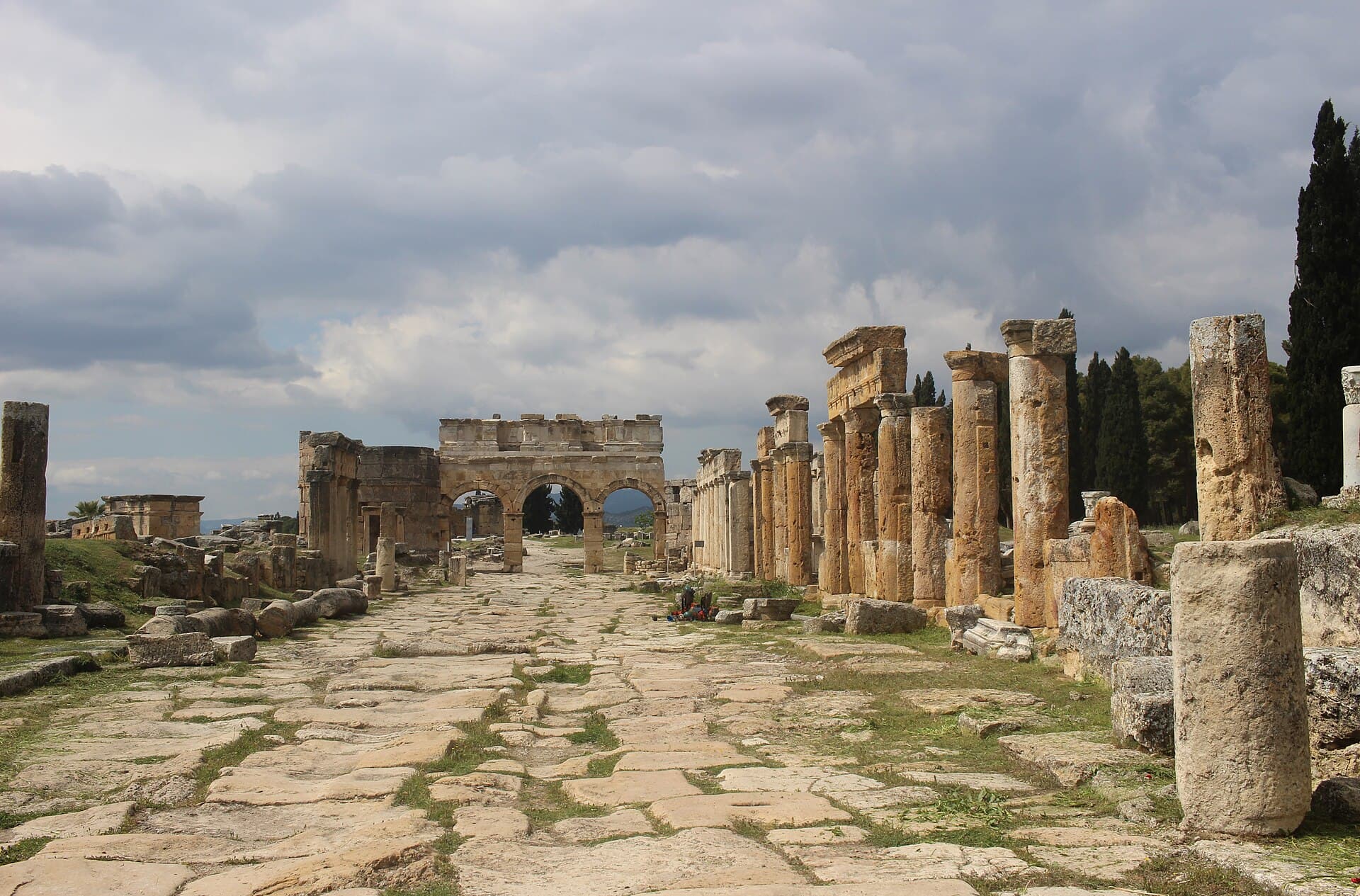
Founded by the Seleucids in the 3rd century BC on a Phrygian cult site, Hierapolis grew rich on thermal water, wool-dyeing and pilgrimage. Earthquakes levelled it in AD 17 and 60; Rome rebuilt it in marble, and under Septimius Severus it peaked near 100,000 people. Christianity took hold early — Philip died here — and it stayed a metropolitan see until a 7th-century quake. Abandoned for good in the 14th century.
Ticketed; €30, the same ticket as the travertines. MüzeKart valid.
240 minThe ruins sprawl 1.5 km end to end on an exposed plateau with almost no shade and no water once you leave the south gate cluster; summer afternoons routinely pass 38°C.The site ticket is single-entry. Stepping out to buy water ends the visit.Hierapolis is under an active excavation and restoration programme, so individual monuments can be fenced or scaffolded without notice.+1 more to know
Visitor numbers now exceed the site's own carrying-capacity study, and new restrictions are a reasonable expectation.
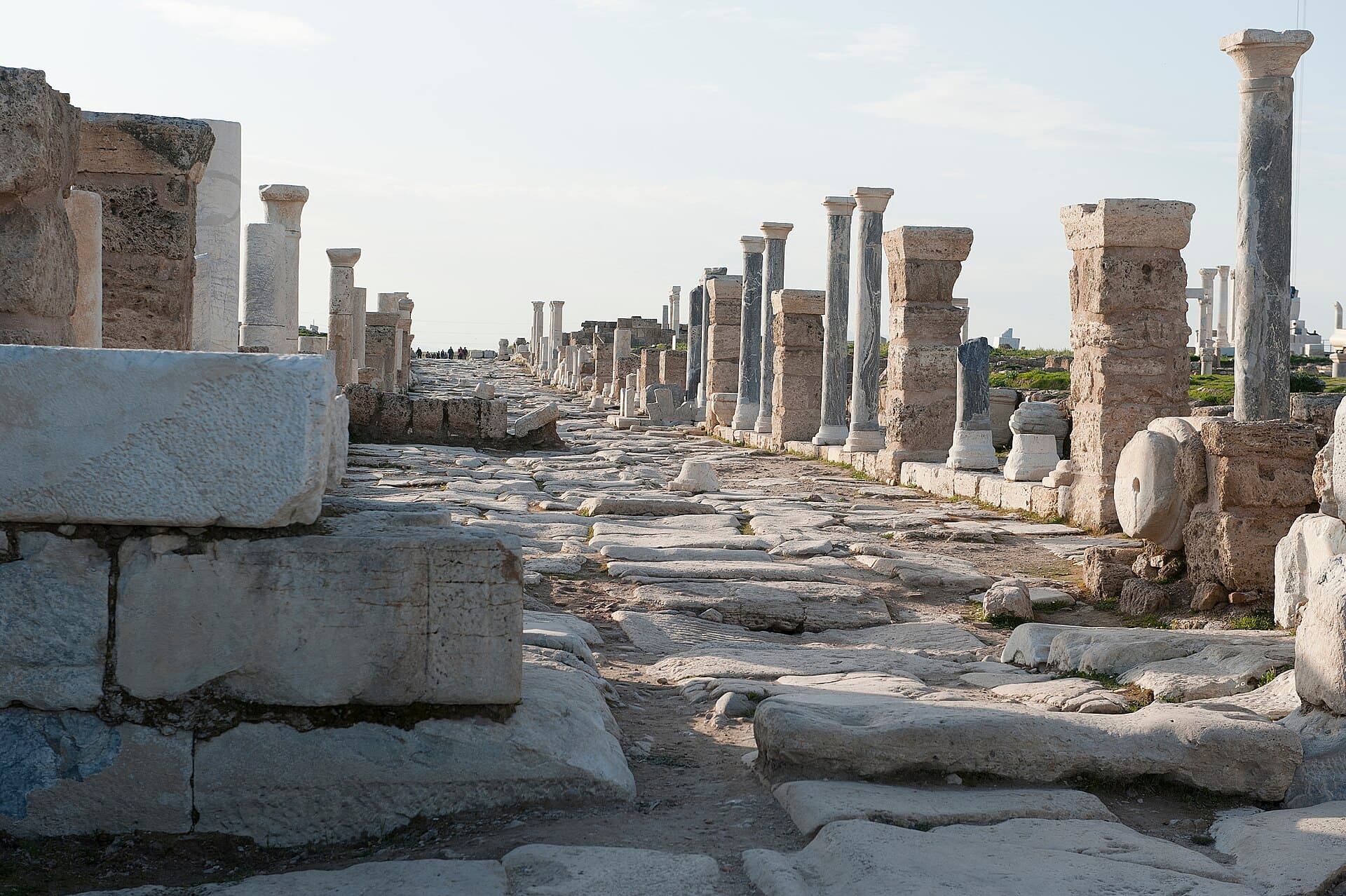
Look for: The grid: Hierapolis was laid out on a Hellenistic street plan, so the ruins line up. Stand on the colonnaded street and you can see a gate at each end, 1.5 km apart, with the theatre on the ridge above and tombs beyond the walls.
Verified · · 3 min to Antique Pool (Cleopatra's Pool) · 4 min to Hierapolis Archaeology Museum
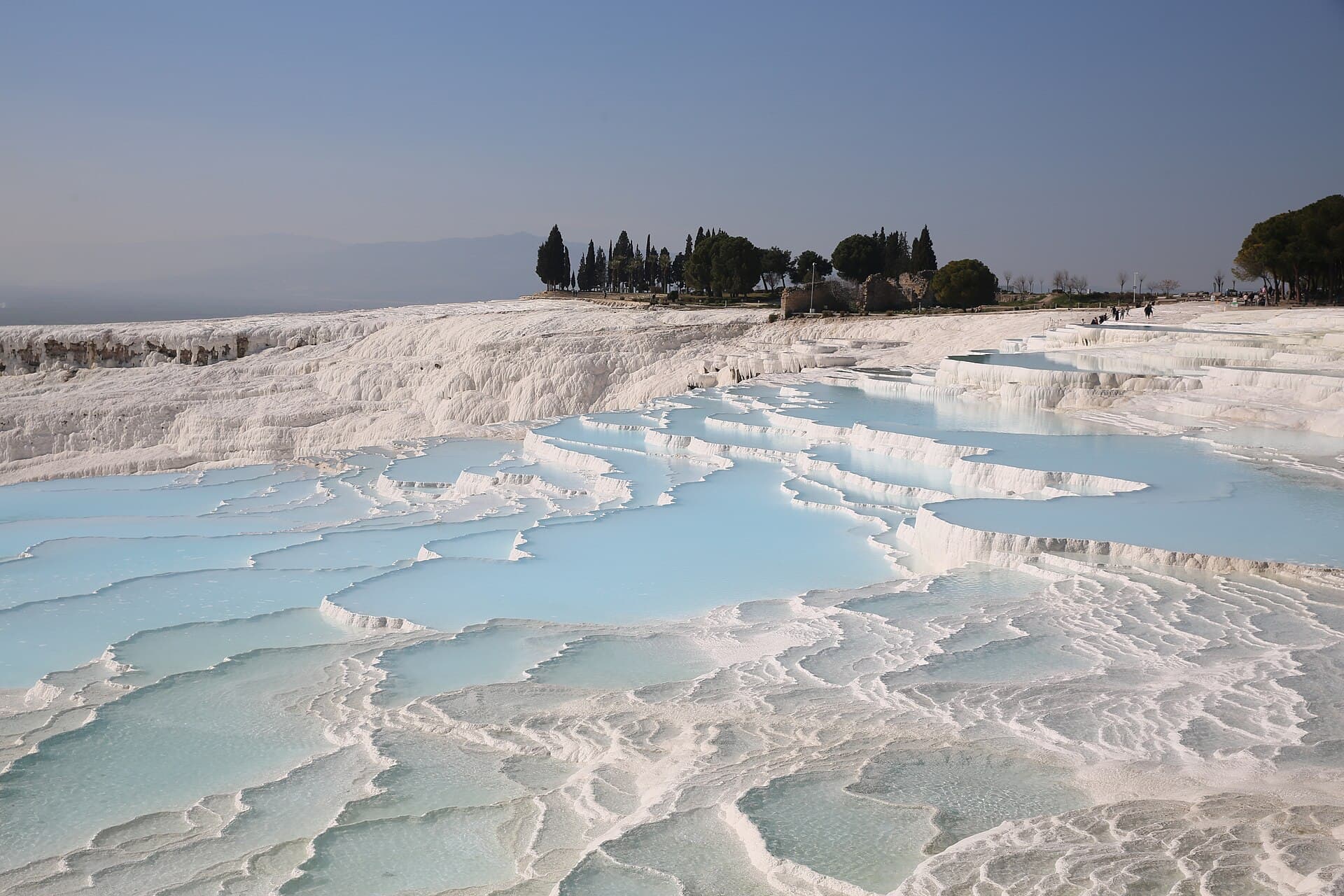
A white limestone cliff 2.7 km wide. Barefoot is compulsory, most basins are dry by design, and one narrow channel is open to walk.
Calcium-saturated water at about 35°C has poured over this cliff for hundreds of thousands of years, laying down travertine as it degasses. The Romans built a spa city on the source. By the 1980s hotels stood on the terraces, a road cut through them and the stone had gone grey; UNESCO listing in 1988 forced the hotels down — the last two in 2001 — and put the water on a managed rotation.
Ticketed; €30 for foreign visitors, one ticket shared with Hierapolis and the museum. MüzeKart valid.
120 minBathing in the natural pools is prohibited and access is confined to marked paths; shoes, socks and slippers are banned and enforced by guards.Water is rotated between basins by design, so the terrace in your reference photo may be bone dry on the day — never plan around a specific pool.The surface is jagged where dry and slick with algae where wet.+1 more to know
There is no shade anywhere on the cliff and the white stone reflects sun hard.
Look for: Grey and brown patches are algae and old damage, not dirt. Compare the sculpted natural basins you cannot enter with the shallow regular pools you can: the walkable ones are largely engineered, built where the old road once ran.
Verified · · 5 min to Hierapolis Archaeology Museum · 6 min to Antique Pool (Cleopatra's Pool)
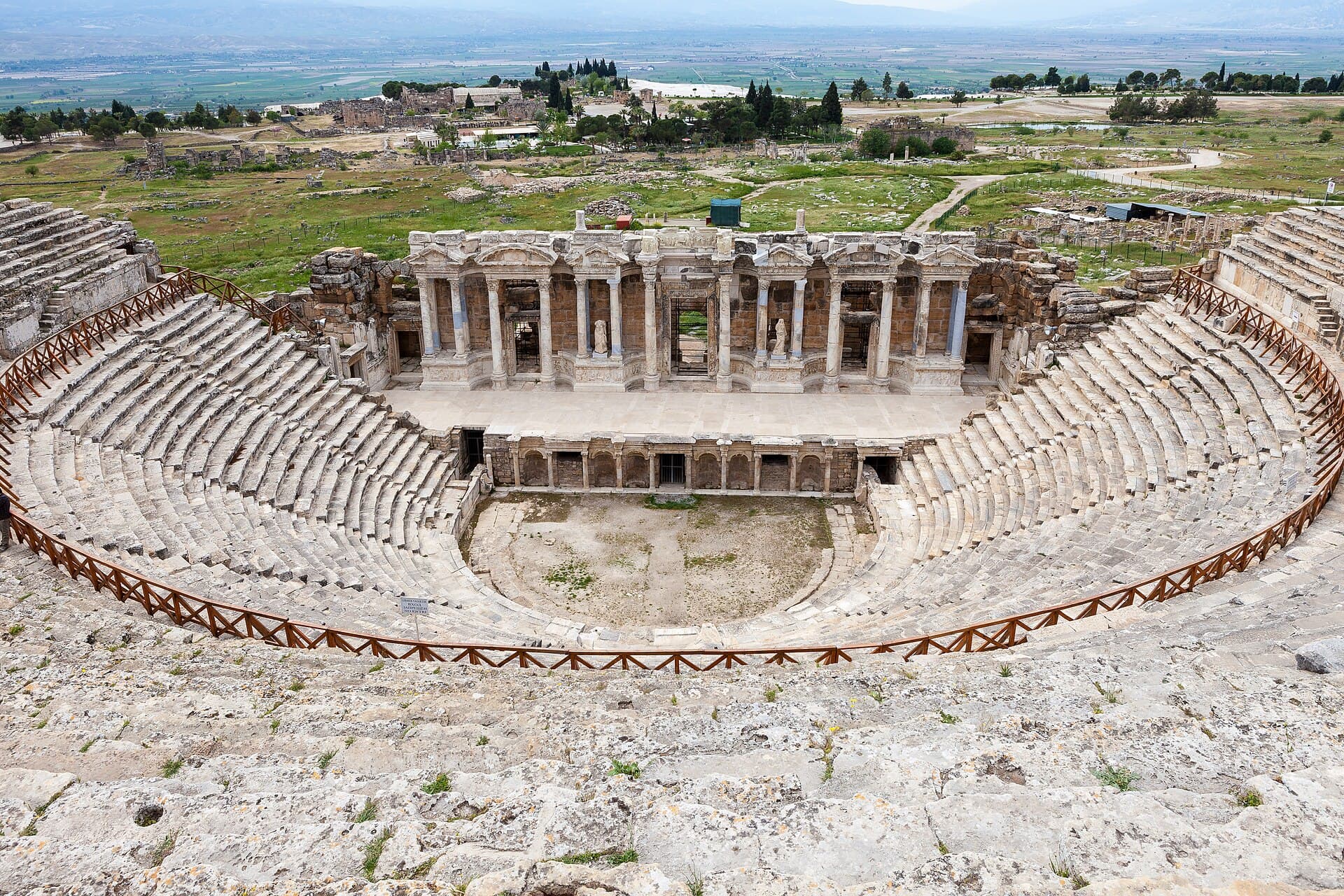
Fifty rows for 12,000 people, and a stage wall still standing with its emperors, Apollo and Artemis carved in place.
Built for Hadrian's visit around AD 129, replacing a theatre wrecked by the earthquake of 60, then lavishly rebuilt under Septimius Severus (AD 193–211) whose masons carved the stage front with gods and the imperial family. Italian archaeologists have worked here since 1957; the stage building was re-erected in campaigns running to 2014, with replicas standing in for sculpture now in the museum.
No separate ticket; inside the Hierapolis site (€30).
45 minThe climb up from the colonnaded street is steep, on uneven stone, with no handrail and no shade on the seating.Restoration campaigns have closed sections here before and the site remains under an active works programme, so expect scaffolding somewhere.The orchestra and stage floor are normally roped off, so you look down from the cavea rather than walking on it.
Look for: The imperial box halfway up the seating and the five doorways of the stage wall. The reliefs at eye level are casts — the originals are in the museum downhill, an argument for doing the museum after the theatre, not before.
Verified · · 5 min to The Plutonion (Pluto's Gate) · 8 min to Hierapolis Ancient City
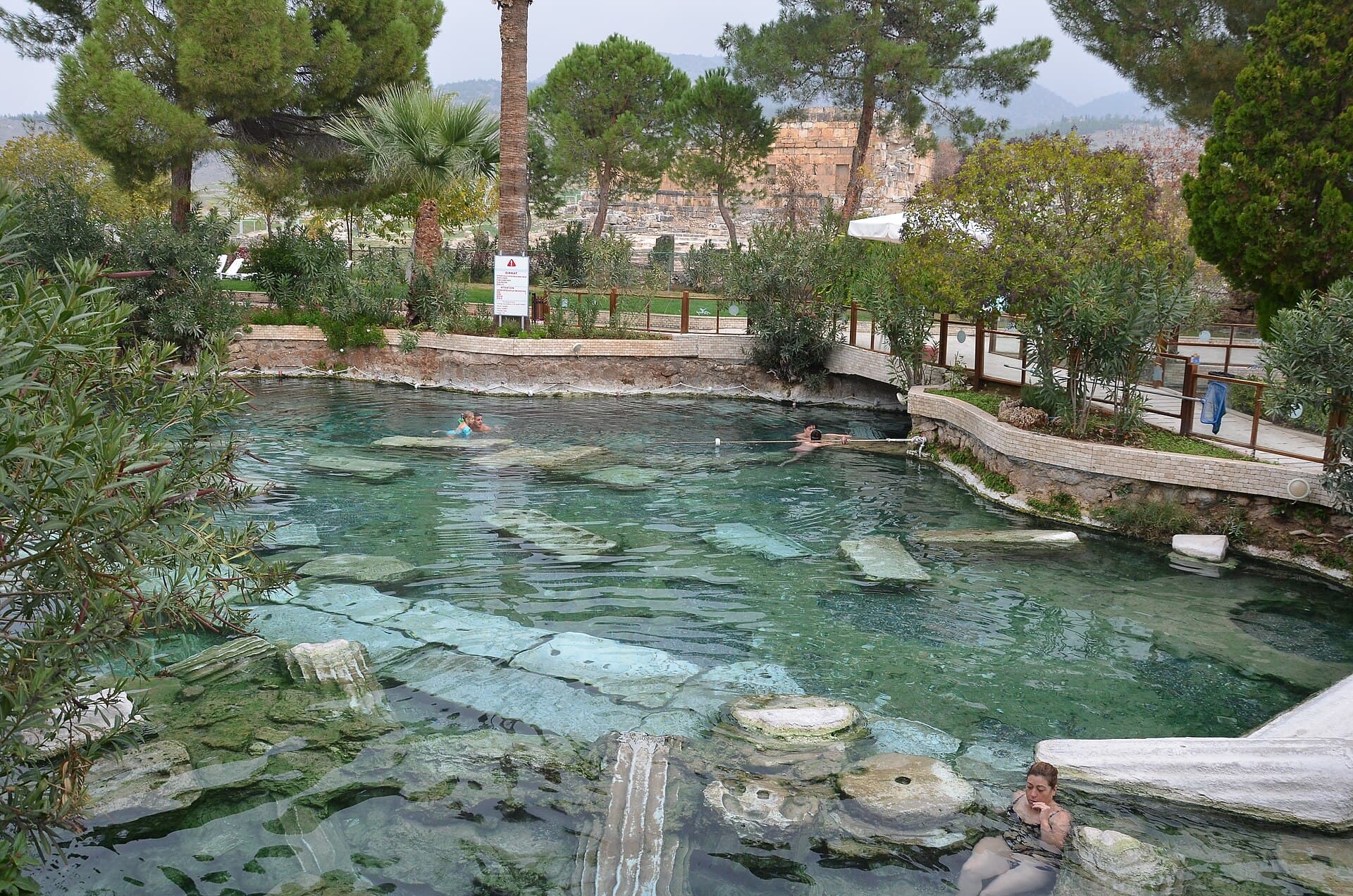
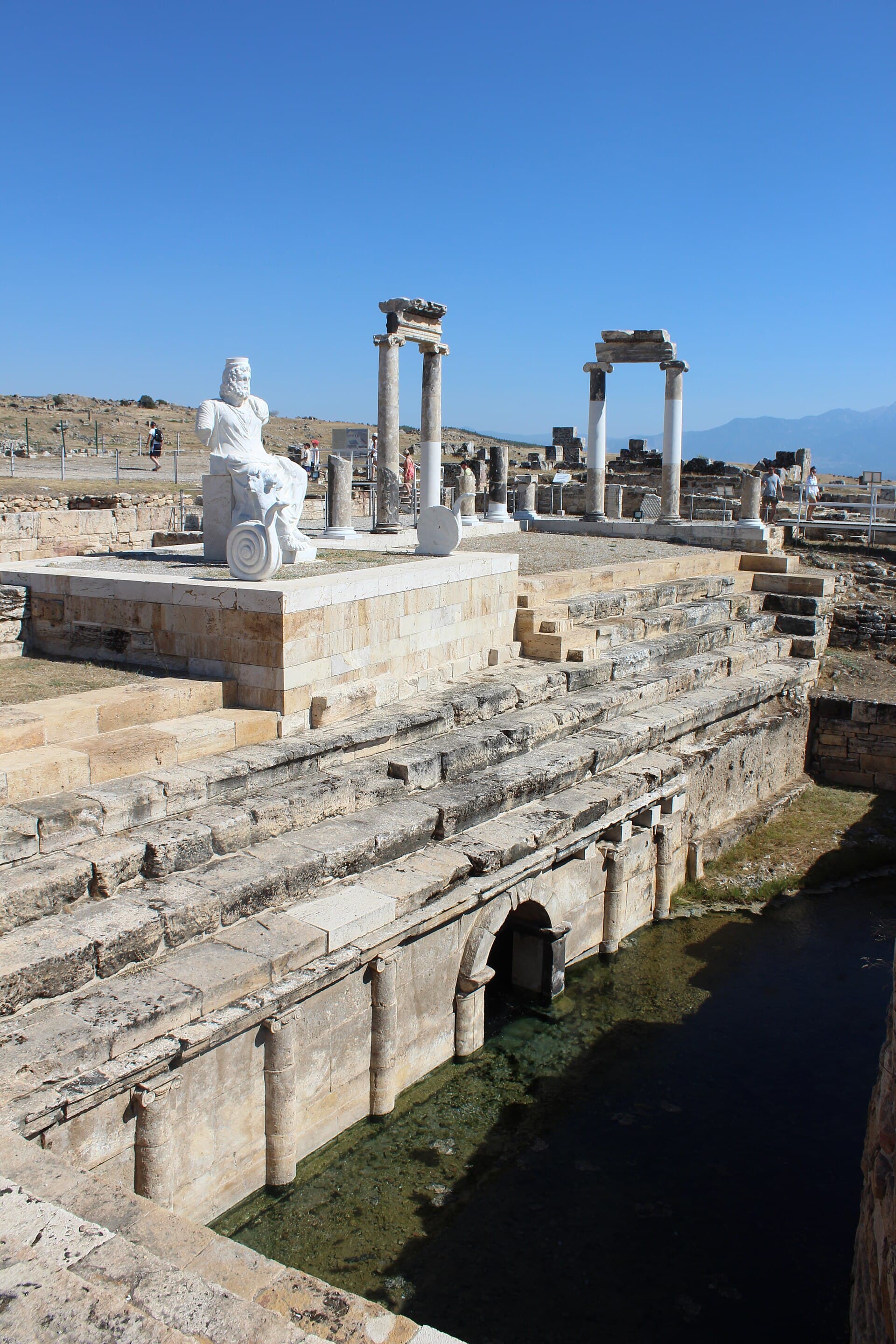
Swim over a fallen marble colonnade in 36°C spring water — the one place in Hierapolis where you get into the ruins.
The pool sits directly on the sacred spring that made the city. A 7th-century earthquake dropped the marble portico of a Roman building into the basin, and the fluted column drums and capitals have lain on the floor ever since. The Cleopatra name is modern marketing with no ancient basis; the bathing complex in its current commercial form dates from the 20th century.
Separate 600 TL adult ticket on top of the €30 site entry; 300 TL ages 7–12, free under 7. Not covered by MüzeKart (discounted 235 TL). Reopened 1 May 2026 after 16 months closed.
90 minClosed in January 2025 for restoration and since reopened; pricing changed on 1 May 2026.A separate ticket on top of site admission, and the site ticket is single-entry so you cannot go back out for kit.Changing rooms and lockers are basic and it becomes very crowded once coach groups arrive mid-morning.+1 more to know
Do not drink the water. Phones and cameras are restricted in the pool area.
Look for: Fluted column drums and carved capitals lying where they fell, clear through the water. The bubbles rising around you are carbon dioxide — the same gas that makes the Plutonion lethal a hundred metres away.
Verified · · 3 min to Hierapolis Ancient City · 3 min to Hierapolis Archaeology Museum
A cave that still kills birds. Priests led bulls in and walked out alive; the CO₂ pooling at ankle height did the rest.
A sanctuary of Pluto over a fissure venting volcanic carbon dioxide, described by Strabo and Cassius Dio as a place where sacrificial animals dropped dead. Christians walled up the entrance in the 4th century and it was lost until Francesco D'Andria's team relocated and cleared it in 2013. Researchers later measured up to 91 percent CO₂ inside the grotto.
No separate ticket; inside the Hierapolis site (€30). Barriered — viewed from outside for safety (CO₂ emissions).
20 minThe cave mouth and the stepped seating are permanently fenced and cannot be entered — a standing hard restriction, not a temporary closure, and the gas is lethal.Do not crouch, sit or lower a child near the barrier: CO₂ is heavier than air, pools at ground level, and is strongest at dawn and on cool, still mornings.Concentrations vary and are not signposted.
Look for: The stepped seating facing the cave, where spectators sat above the gas layer to watch. Dead birds and insects near the mouth are normal, not neglect. A replica of Hades and Cerberus stands where the original statue was found.
Verified · · 5 min to Hierapolis Theatre · 5 min to Antique Pool (Cleopatra's Pool)
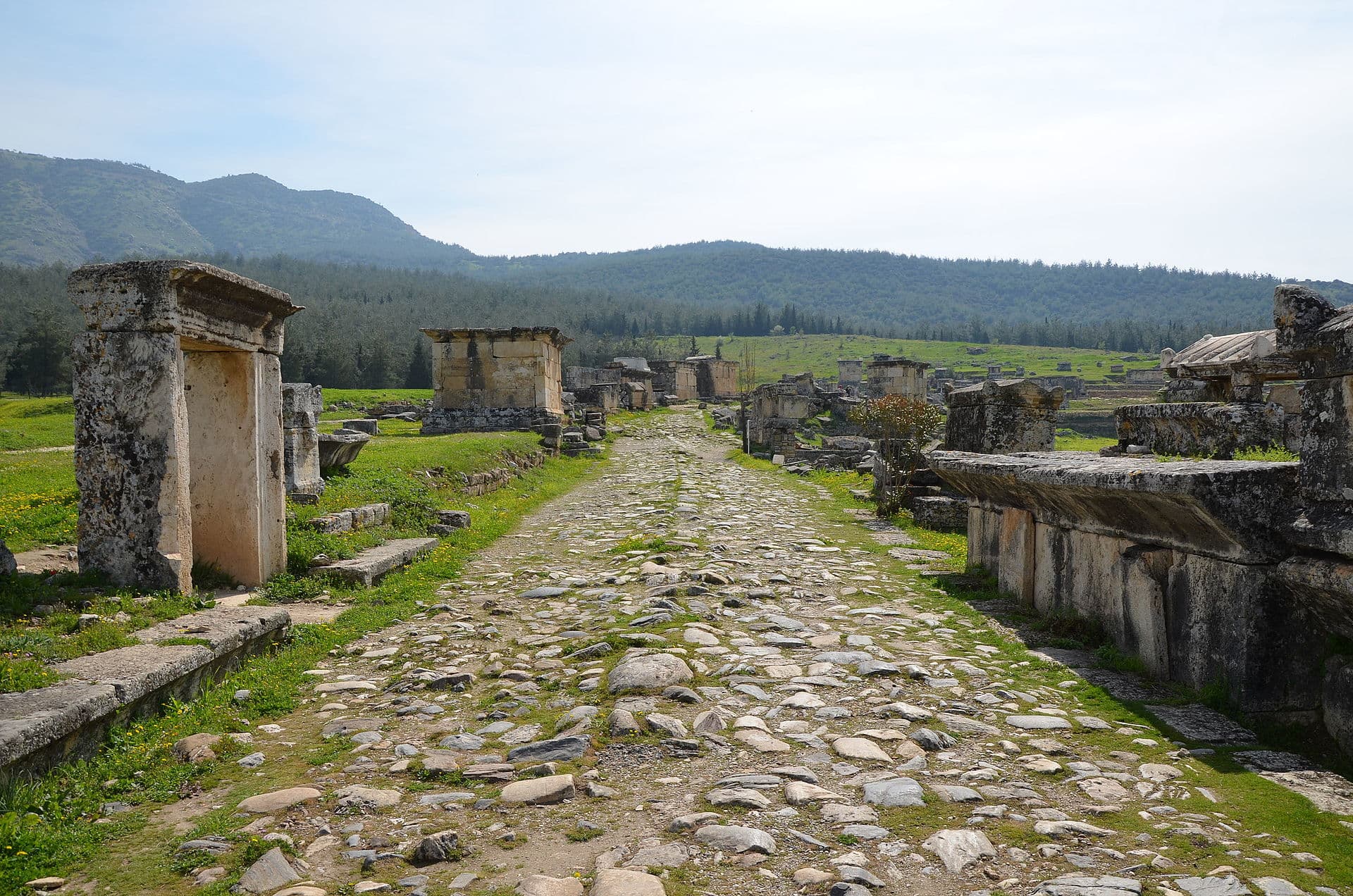
Two kilometres of tombs along the old road north: house-tombs, tumuli and more than a thousand sarcophagi.
People came to Hierapolis to be cured by the water and a great many stayed permanently. From the Hellenistic period to the Byzantine, the road to Tripolis and Sardis was lined with graves of every rank — plain cists, marble sarcophagi on plinths, circular tumuli with vaulted chambers, and temple-fronted family mausolea. Around 1,200 tombs survive.
No separate ticket; inside the Hierapolis site (€30).
60 minUnderfoot is loose stone and thorny scrub, so keep to paths and watch your footing; snakes are reported in summer.The furthest point in the site from the South Gate cluster — roughly 1.5–2 km each way along the colonnaded street with no shade and no water on the route.Visitors on a half-day coach stop essentially never reach it.
Look for: Greek epitaphs still legible on sarcophagus lids, and the round tumuli with their stone drums. The Ammianos relief showing a water-powered stone saw — the earliest known crank and connecting rod — is in the museum, not here.
Verified · · 18 min to Antique Pool (Cleopatra's Pool) · 18 min to Martyrium and Tomb of St Philip
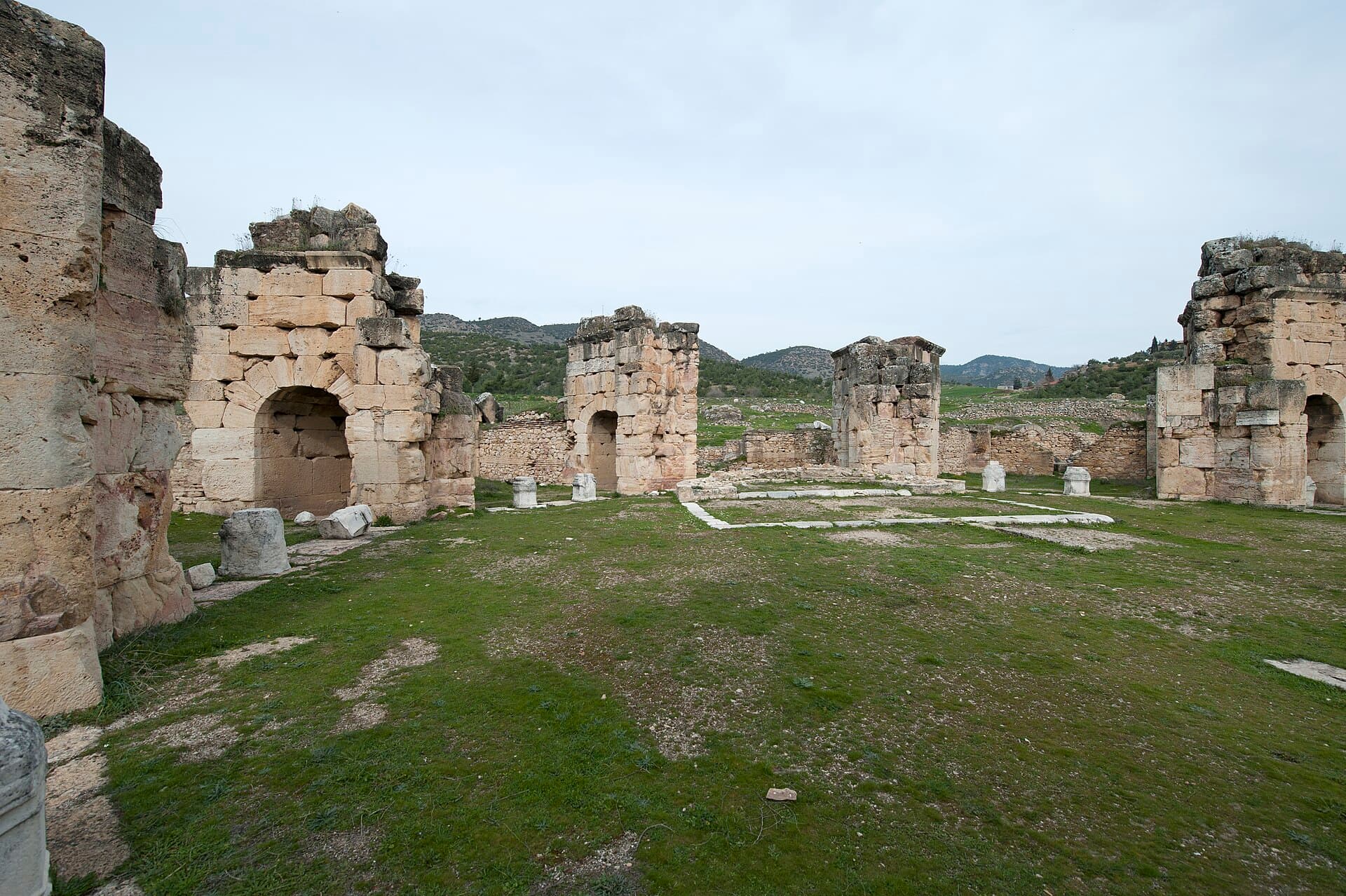
An octagon on a hilltop where an apostle was killed, and the 1st-century tomb found 40 m away in 2011 that may be his.
Philip is held to have been martyred at Hierapolis around AD 80. A 5th-century octagonal pilgrim complex, 20 m across under a timber dome, was raised on the hill and burned within a century. Excavators assumed the grave lay at its centre; in 2011 Francesco D'Andria announced the Roman tomb itself, in a separate church about 40 m downhill, reached by a travertine stair from a pilgrims' bath.
No separate ticket; inside the Hierapolis site (€30). Reached by an uphill unshaded path.
45 minReached only on foot by a steep, unshaded climb from the colonnaded street, well beyond the theatre in the north-east corner of the site; allow 30–40 minutes of walking on top of the visit.Signage is thin and the two structures — the octagonal martyrium and the tomb church below it — are easy to confuse.Excavation, restoration and access-path work have been running here for several years.
Look for: The eight radiating chapels and rooms of the octagon plan, readable at foundation level, and the processional stair climbing the hill. From the top the city, the theatre and the plateau edge lay out below you.
Verified · · 8 min to Hierapolis Theatre · 10 min to Antique Pool (Cleopatra's Pool)
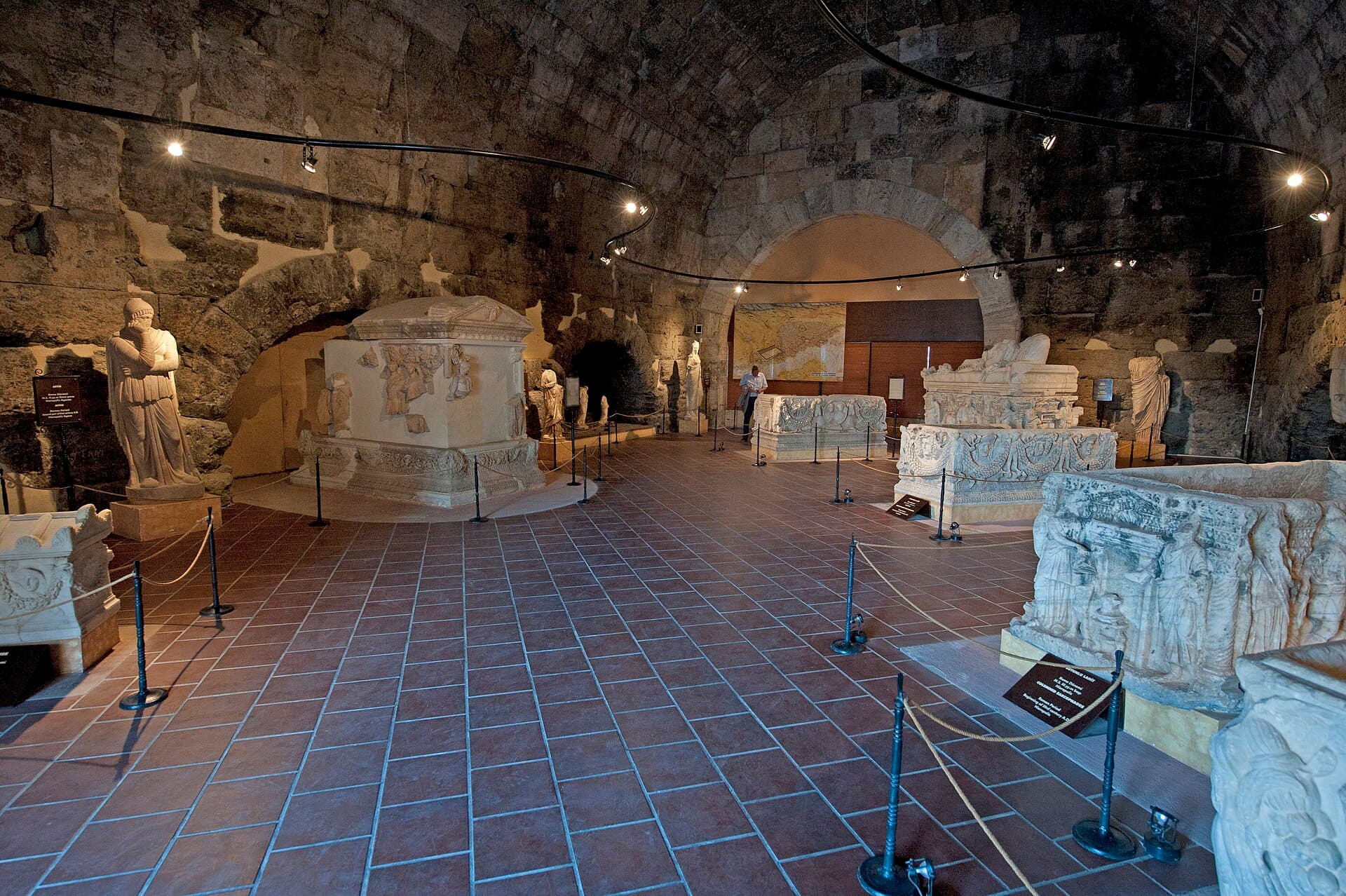
The city's sculpture, housed in its own Roman bath — including the relief that rewrote the history of the crankshaft.
The museum occupies the Great Baths, a 2nd-century thermal complex whose vaulted halls survived partly because Christians converted them. It opened as a museum in 1984 and was reworked in 2000. The galleries hold what excavators lifted from the theatre stage, the necropolis and the sanctuary of Apollo, plus finds from Laodikeia, Tripolis and Colossae.
Free to enter, but it sits inside the ticketed site — you still need the €30 Hierapolis ticket to reach it.
60 minHoused in an unclimatised ancient bath — cold in winter, stifling in summer.Labelling is uneven, largely Turkish with brief English.It stands inside the archaeological site near the Antique Pool, so it cannot be visited without a site ticket, and it closes before the site itself does.
Look for: The Ammianos sarcophagus relief of a water-driven stone saw, the earliest known machine using a crank and connecting rod. Then the theatre reliefs — seeing the originals explains what you were looking at up the hill.
Verified · · 3 min to Antique Pool (Cleopatra's Pool) · 4 min to Hierapolis Ancient City
The lukewarm church of Revelation, and the largest stadium in Anatolia, twelve kilometres down the road.
Refounded by Antiochus II in the 3rd century BC on a mound reaching back millennia, Laodicea grew rich on banking, black wool and an eye-salve exported across the empire. It was one of the Seven Churches of Revelation, rebuked for being neither hot nor cold. An earthquake in the early 7th century ended it. Excavation since 2003 has re-erected whole streets.
Ticketed; €12 for foreign visitors. MüzeKart valid; covered by the Aegean pass.
180 minNot a compact site: the ruins spread over roughly 5 sq km and the walk between the stadium, the two theatres and Syria Street is long, flat, treeless and glaring off white marble.Active excavation means individual monuments are fenced without notice and the site changes year to year.12 km from Pamukkale village but there is no useful direct public transport; access is realistically by car or taxi, or via Denizli.+1 more to know
Not covered by the Hierapolis ticket.
Look for: The Laodicea Church, found in 2010 and now under a protective roof with a glass walkway, whose cruciform baptismal font is among the oldest surviving anywhere.
Built in AD 84–86 and dedicated by Julius Frontinus, proconsul of Asia, the gate framed the arrival of anyone coming from Ephesus and the west. Behind it the plateia ran roughly 1.5 km south through the whole grid, arcaded on both sides, with a matching gate at the far end. A late-4th-century Byzantine wall later cut across it, built from the demolished agora.
At the far north end of the site — 1.5 km each way from the south gate cluster with no shade and no water.Paving is loose in places and drain channels along the street are open.Most half-day tours turn back at the theatre and never come this far; bring your own water.
Aphrodisias grew around a sanctuary of Aphrodite and thrived on the marble quarried beside it, exporting sculptors across the empire. Its Sebasteion, built AD 20–60 for the Julio-Claudian emperors, carried some 200 reliefs of gods, myths and the conquered peoples of Augustus's world; over 80 survive. Oxford and NYU have excavated here for decades. UNESCO listed it in 2017.
Ticketed; €12 for site and museum together. The museum is closed for structural work — the site is fully open. MüzeKart valid.
The Aphrodisias Museum has been closed since 11 January 2024 for structural reinforcement against earthquake risk, with completion signalled for 2027 — which means the Sebasteion reliefs, the strongest reason to come, are not on public view. A temporary reopening of one hall was announced for mid-2026 but was still described as in preparation in July 2026; verify before travelling. The open-air archaeological site is open.Roughly 100 km and 1.5–2 hours each way from Pamukkale by road via Karacasu; public transport needs a change onto infrequent village minibuses.Geyre has almost no accommodation, so this is a day trip and cannot anchor a night.+2 more to know
Site and museum need a full 2–3 hours, which makes a late start unworkable.Excavation is ongoing and areas are fenced in rotation.
Apollo Lairbenos, an Anatolian sun god absorbed into Greek religion, held the terrace above the spring, on ground already sacred to Cybele. The late Hellenistic temple was rebuilt in the 3rd century AD; only the marble floor and the Doric enclosure remain. The U-shaped nymphaeum below it, 2nd century and repaired in the 5th, fed spring water into the city.
Heavily ruined and easy to walk straight past — little stands above knee height and on-site interpretation is minimal.It abuts the fenced Plutonion, so apply the same caution about low ground on still, cool mornings.
The same aquifer, a different chemistry. Karahayıt's water carries heavy iron oxide, which oxidises on contact with air and stains the travertine rust-red, orange and purple. The village grew into a thermal resort on the strength of it, and Turkish spa visitors have used the springs for generations.
Free; village thermal springs, no gate. Individual hotel thermal pools charge separately.
Small and often disappointing — the open red formation is a modest terrace in a village centre ringed by large thermal hotels, and recent visitors describe it as run-down.Water can be scarce here too.The free open spring is separate from the paid pools, mud baths and fish spas around it, and touts actively steer visitors into paid facilities.
Ballooning came to Pamukkale in the wake of Cappadocia's success and now flies daily at sunrise in season. The route crosses the travertine cliff and the Hierapolis plateau, showing the relationship between spring, cliff and city grid that is almost impossible to read from the ground.
Sunrise only and routinely cancelled for wind, so build a spare morning into the trip if this matters to you.Pick-up is typically 04:00–05:00.Actual airborne time is often 35–60 minutes even where a longer "experience" is advertised — read what is being sold.+2 more to know
The Pamukkale fleet is a fraction of Cappadocia's, so slots are limited and sell out.Tandem paragliding from the ridge runs in daylight as an alternative and is weather-dependent in the same way.
The park at the foot of the terraces occupies ground reclaimed as part of the same conservation programme that removed the hotels and the hillside road. Its pond and lawns are municipal and modern, but the vantage is the original one — this is how the cliff appeared to travellers arriving across the plain.
Outside the ticketed site, so free — but the site ticket is single-entry, meaning you cannot come down here and go back up. Decide the order in advance.The park itself is an ordinary municipal pond with pedalos and snack stalls; the reason to stand here is the cliff.Busy with domestic day-trippers at weekends.
The roof of this cave fell in, opening a sinkhole around 40 m across. Thermal water carrying the same calcium bicarbonate as Pamukkale's drips through it, building travertine basins and stalactites below ground. It was opened to visitors relatively recently and remains largely a domestic attraction.
Strong sulphur smell, slippery wet walkways and low light inside.About 45 km east of Pamukkale towards Honaz with no practical public transport.It is small — a 20-minute walk-through, not a half day.
Built in 1253 under the Anatolian Seljuk sultanate, Akhan gave merchants on the route between Denizli and the interior a fortified night's shelter. Its inscription names the founder and the date, and the marble portal keeps its interlace carving. It has been restored and is one of the few substantial Seljuk buildings surviving in the province.
Free; roadside Seljuk caravanserai, no gate.
Sits beside a busy road on the Denizli outskirts with no visitor facilities and minimal interpretation.Access arrangements are informal and it is sometimes locked outside event use.Worth 30 minutes only if you are already driving between Denizli and Laodikeia.