Hierapolis Ancient City
Türkiye's second most-visited site is not a pool. It is a Greco-Roman spa city of 100,000, and the white terraces are its front lawn.
Enough context, no spoilers
Why it matters
Founded by the Seleucids in the 3rd century BC on a Phrygian cult site, Hierapolis grew rich on thermal water, wool-dyeing and pilgrimage. Earthquakes levelled it in AD 17 and 60; Rome rebuilt it in marble, and under Septimius Severus it peaked near 100,000 people. Christianity took hold early — Philip died here — and it stayed a metropolitan see until a 7th-century quake. Abandoned for good in the 14th century.
What to know before you go
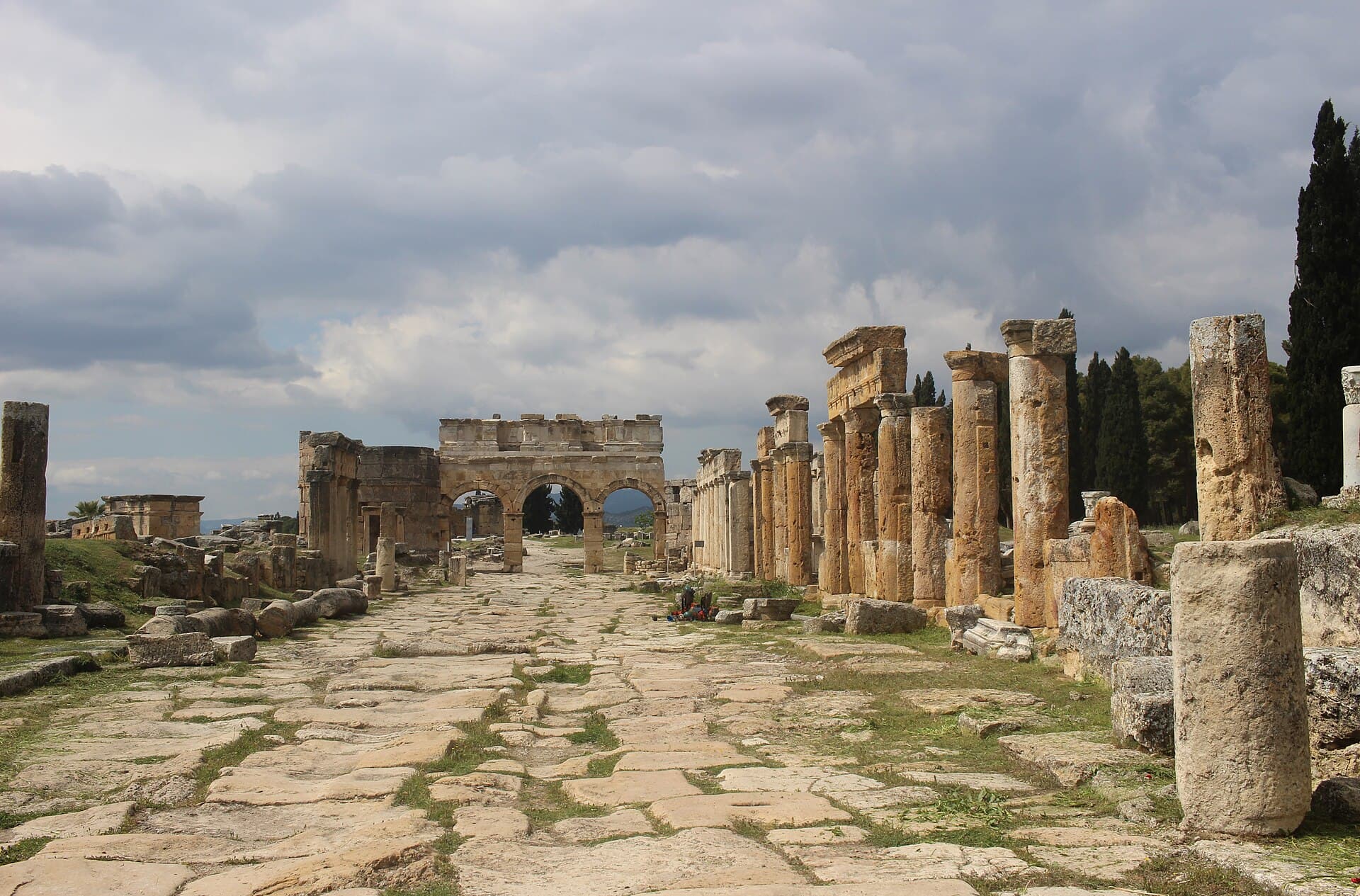
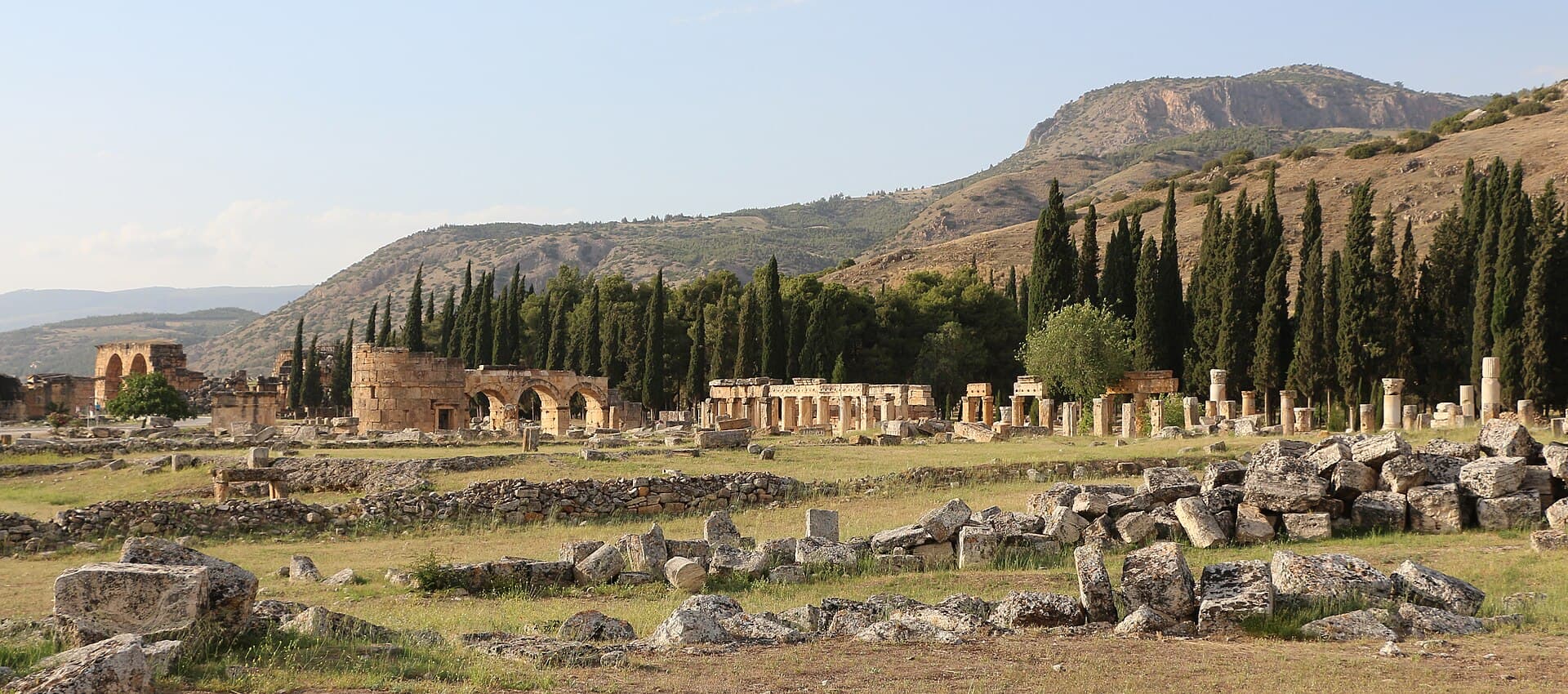
Almost everyone who comes to Pamukkale photographs the terraces and leaves. What they walk past is a city — one that Rome rebuilt twice, that supported a metropolitan bishop, and that ran for 1,600 years on a single natural asset: water coming out of the ground at 35°C. The layout rewards ten minutes of orientation. The plateau runs north to south. At the south end sit the visitor cluster: the top of the travertines, the Antique Pool, the museum in its Roman bath, and above them the theatre. At the north end, 1.5 km away, stand the Frontinus Gate and beyond it a necropolis of over a thousand tombs. The colonnaded street connects the two, and the whole thing is legible from the ground because the Hellenistic surveyors laid it on a grid. A single ticket covers everything, and it is single-entry — once you leave, that is the visit. Budget accordingly: water, sun cover and a decision about how far north you intend to walk, made before you set off rather than at two in the afternoon on open stone.