Hierapolis Archaeology Museum
The city's sculpture, housed in its own Roman bath — including the relief that rewrote the history of the crankshaft.
Enough context, no spoilers
Why it matters
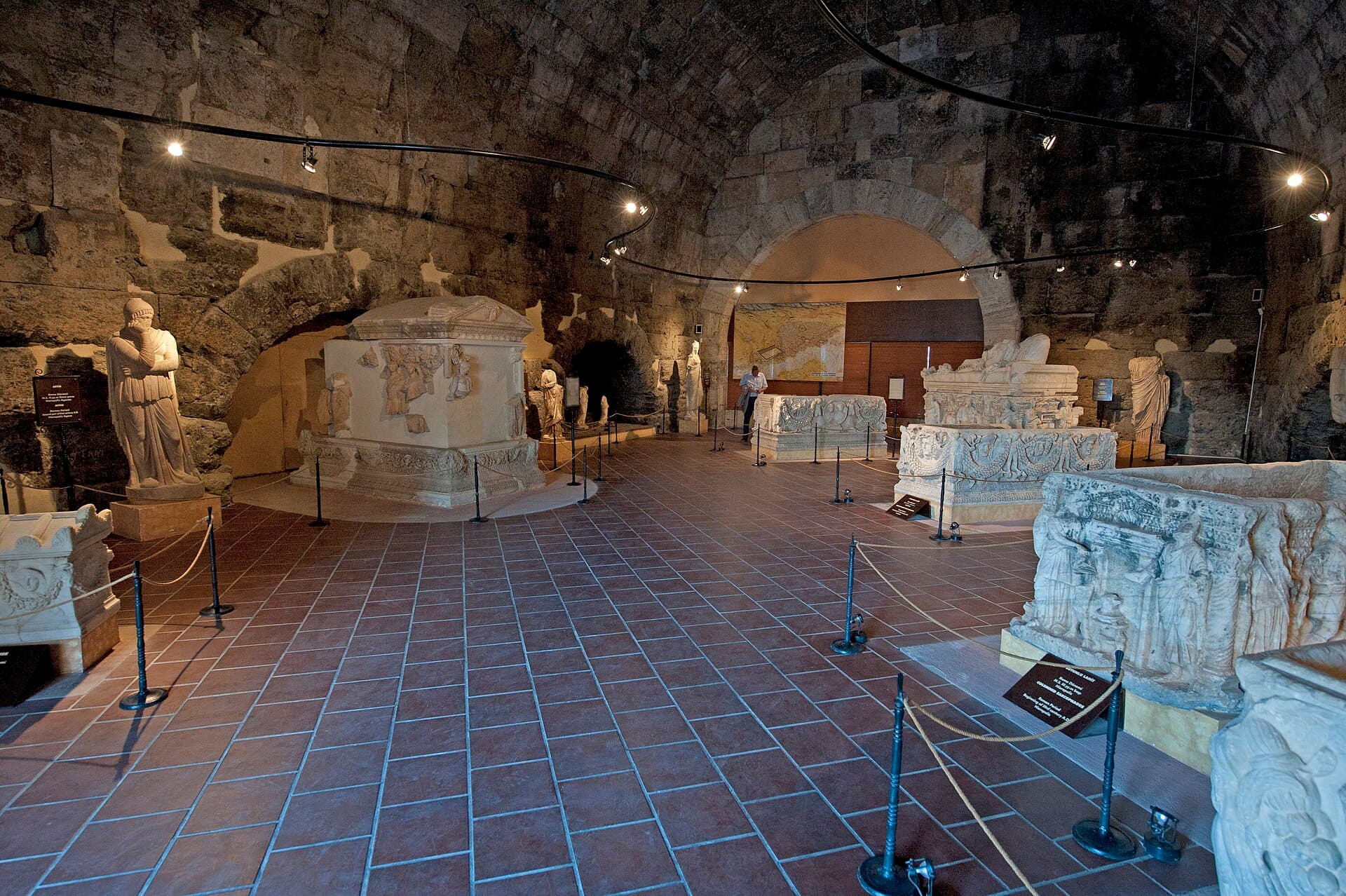
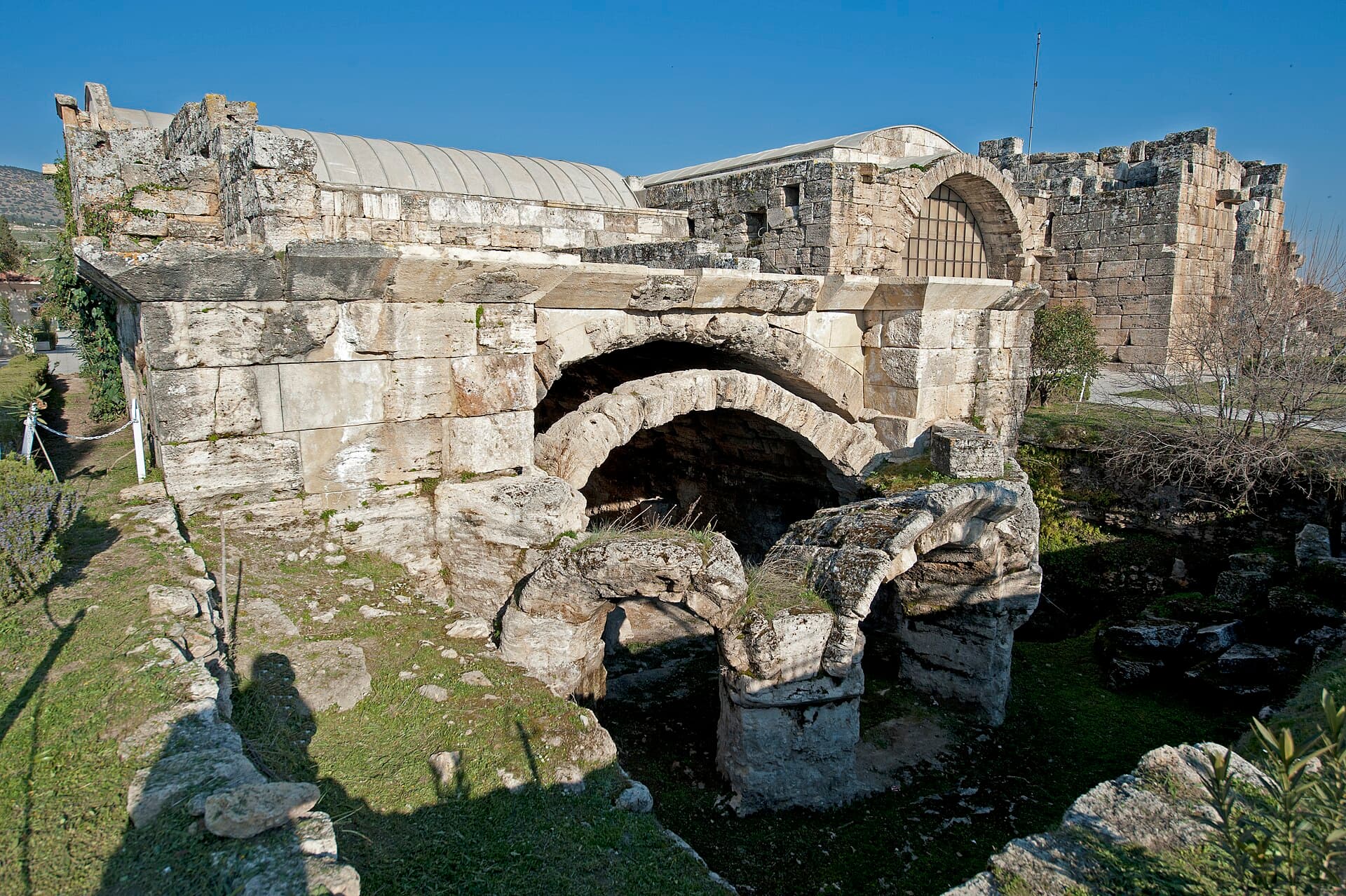
The museum occupies the Great Baths, a 2nd-century thermal complex whose vaulted halls survived partly because Christians converted them. It opened as a museum in 1984 and was reworked in 2000. The galleries hold what excavators lifted from the theatre stage, the necropolis and the sanctuary of Apollo, plus finds from Laodikeia, Tripolis and Colossae.
What to know before you go
The building is half the exhibit. This is the Great Baths of Hierapolis, second-century, and the sculpture is displayed inside vaulted halls that survived because Christians repurposed them — so you are looking at Roman marble in a Roman room. Two things justify the hour. The first is the theatre sculpture: what you inspected up the hill an hour earlier was cast, and the originals are here, which turns a nice stage front into a legible programme of gods and emperors. The second is a sarcophagus lid that matters far beyond Anatolia. It belonged to Marcus Aurelius Ammianos, a third-century miller, and it shows his water-powered stone saw in working detail — waterwheel, gear train, connecting rod and crank. It is the earliest known machine combining a crank with a connecting rod, which is to say the ancestor of every reciprocating engine. Go after the theatre rather than before, and be aware the museum sits inside the ticketed site near the Antique Pool, so it cannot be dropped in separately, and it shuts before the site does.