Antique Pool (Cleopatra's Pool)
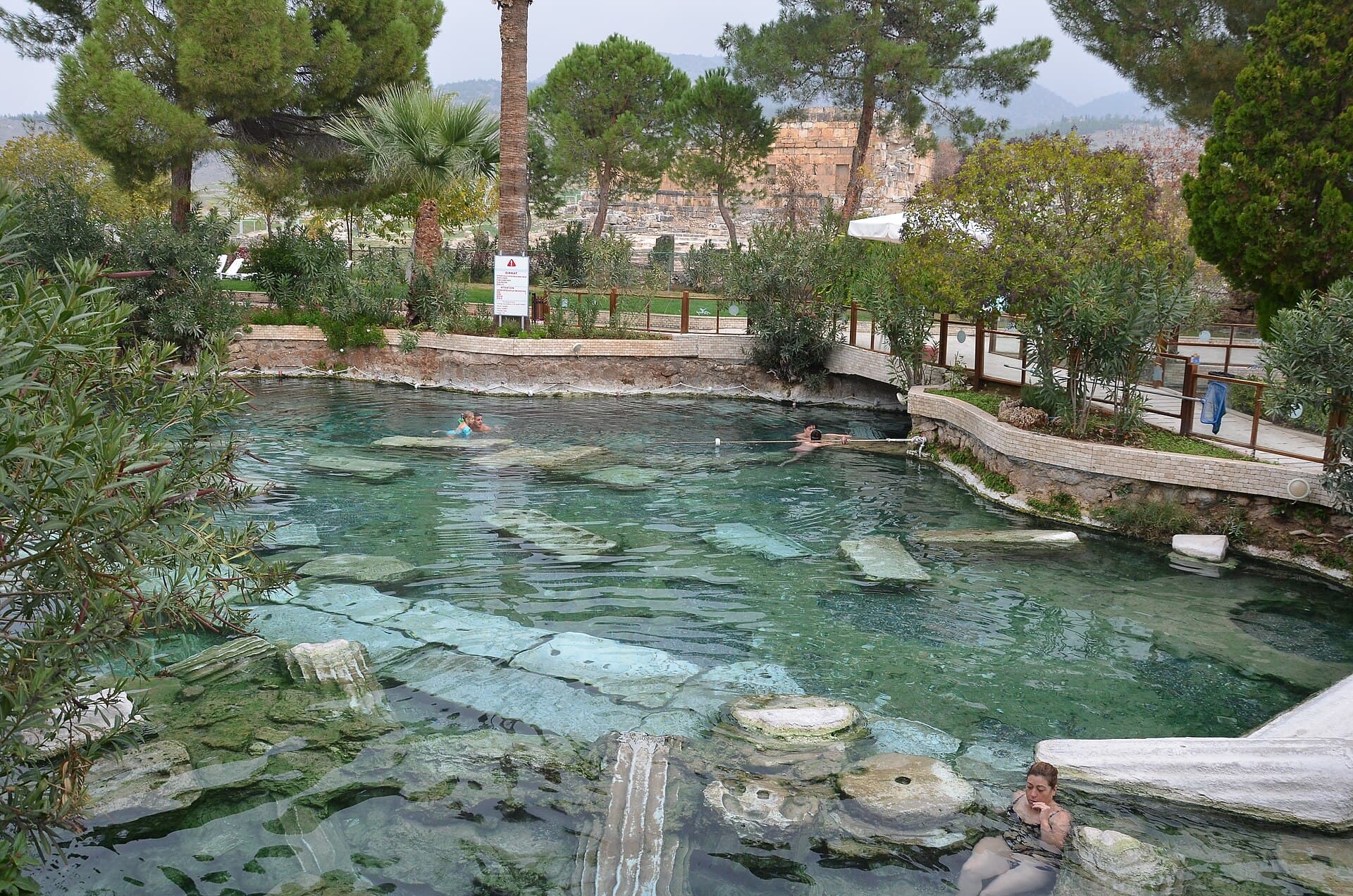
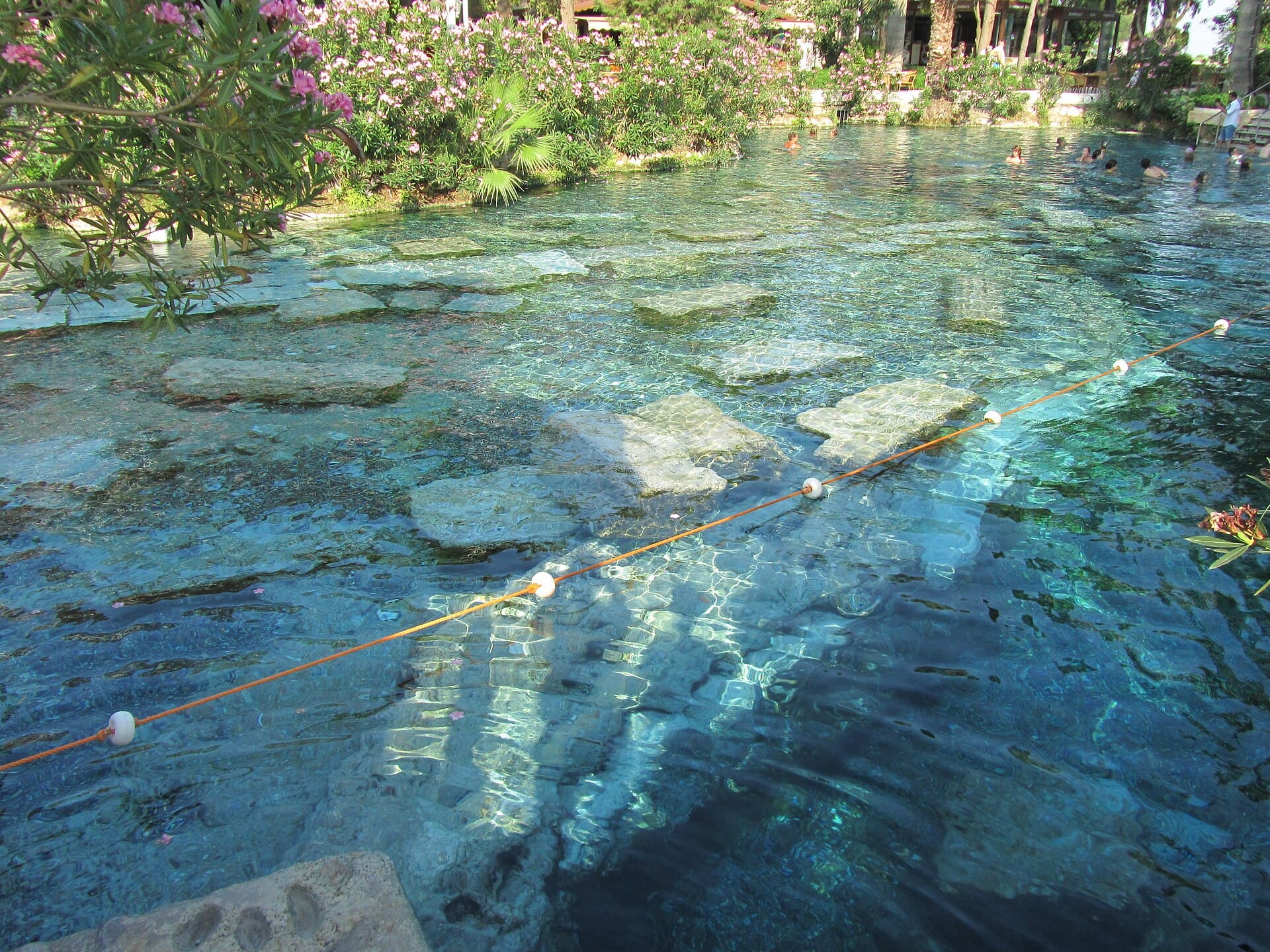
Swim over a fallen marble colonnade in 36°C spring water — the one place in Hierapolis where you get into the ruins.
Enough context, no spoilers
Why it matters
The pool sits directly on the sacred spring that made the city. A 7th-century earthquake dropped the marble portico of a Roman building into the basin, and the fluted column drums and capitals have lain on the floor ever since. The Cleopatra name is modern marketing with no ancient basis; the bathing complex in its current commercial form dates from the 20th century.
What to know before you go
The proposition is simple and genuinely unusual: you swim, in warm mineral water, directly over a collapsed Roman colonnade. The columns are not decoration placed for effect — a 7th-century earthquake dropped the portico into the spring and nobody moved it. Water sits around 36°C and fizzes gently with dissolved carbon dioxide, which is the same geology that makes the Plutonion up the slope deadly. Set against that: this is the most commercial thing at Hierapolis. It needs a second ticket on top of the site admission, it fills with coach groups from mid-morning, the changing rooms are functional at best, and the pool is not large. Two consequences for planning. First, go at opening or not at all. Second, remember the site ticket is single-entry, so you cannot nip out for a towel. The pool closed in January 2025 for restoration and has reopened, with new pricing from 1 May 2026 — check the current fee rather than trusting a blog. Do not drink the water, whatever anyone tells you about cures.