Hierapolis Theatre
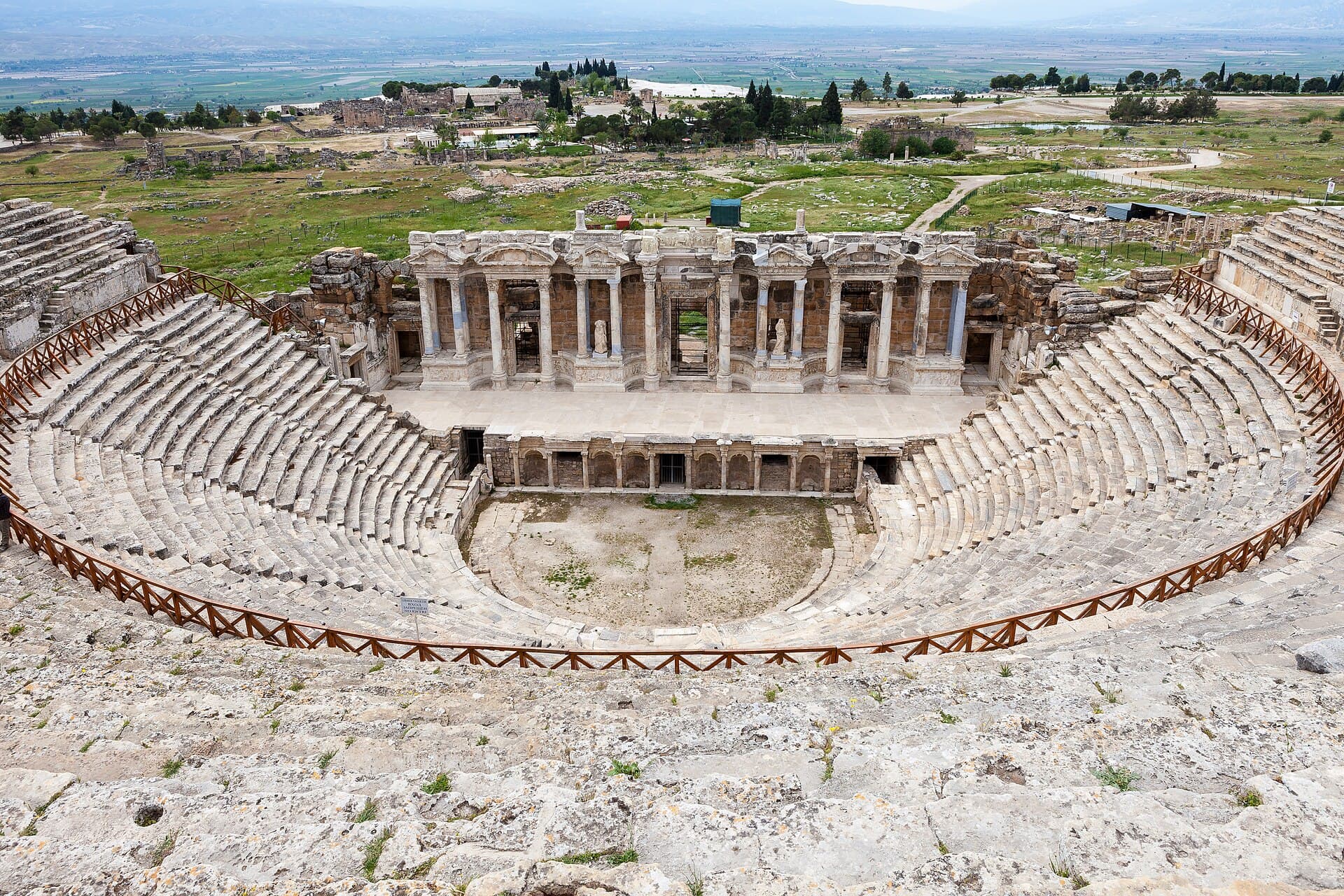
Fifty rows for 12,000 people, and a stage wall still standing with its emperors, Apollo and Artemis carved in place.
Enough context, no spoilers
Why it matters
Built for Hadrian's visit around AD 129, replacing a theatre wrecked by the earthquake of 60, then lavishly rebuilt under Septimius Severus (AD 193–211) whose masons carved the stage front with gods and the imperial family. Italian archaeologists have worked here since 1957; the stage building was re-erected in campaigns running to 2014, with replicas standing in for sculpture now in the museum.
What to know before you go
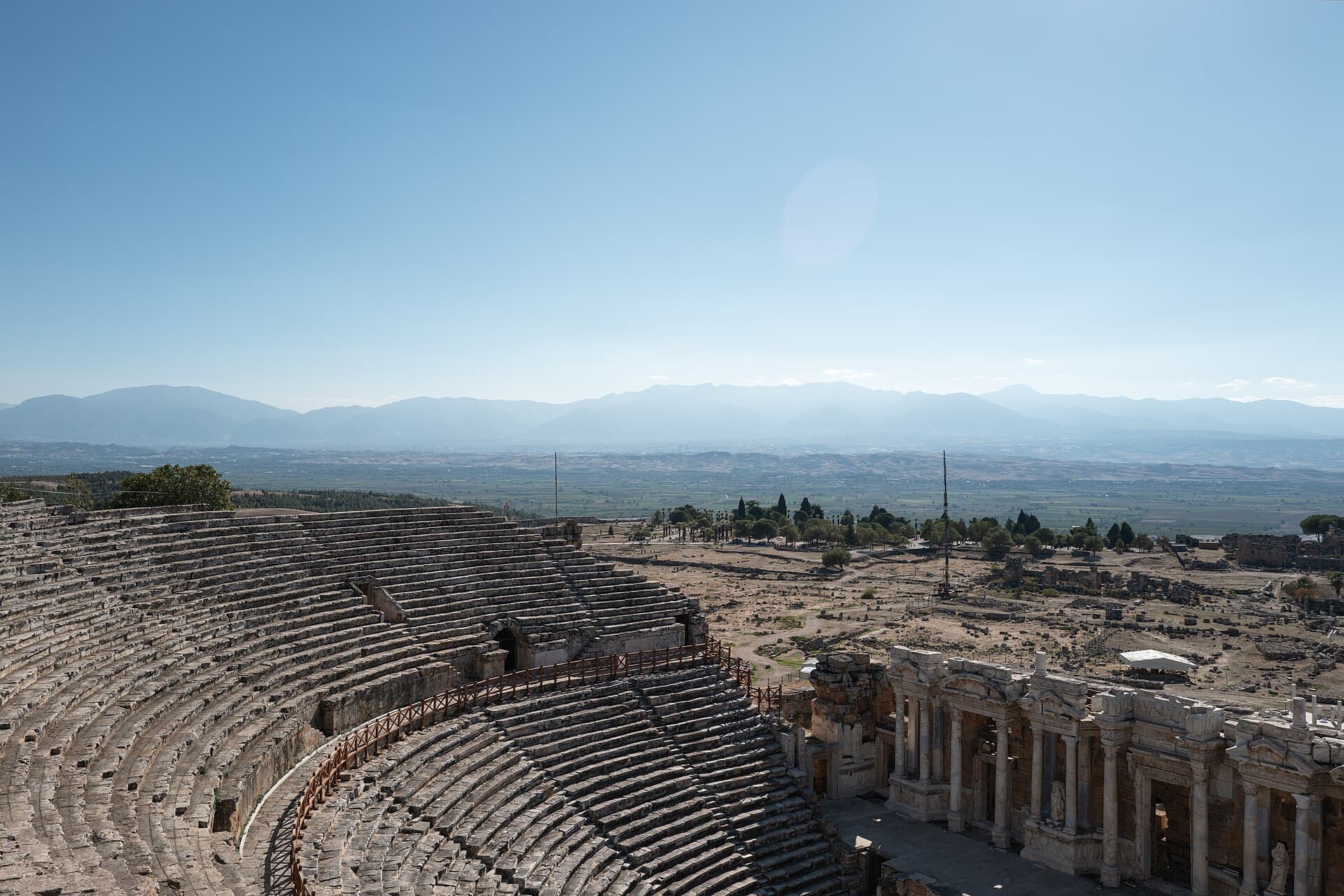
This is the reason to climb. Most Roman theatres survive as a bowl of seats with the stage building reduced to foundations; at Hierapolis the scaenae frons still stands, re-erected block by block by the Italian mission, with its columns, niches and carved frieze in place. The effect from the top row is that you are looking at a working building rather than a plan. The climb is short but steep and entirely unshaded, and the seating stone is uneven with nothing to hold, so it is not a casual detour for anyone unsteady on their feet. Do it early — by late morning in summer the cavea is an oven. The orchestra and stage floor are normally roped off, so you experience the building the way an audience did, from above. Note what is a cast and what is not: the sculpture you can inspect at close range on the stage front is replica, and the originals are down at the museum in the Roman bath, which is the strongest argument for saving the museum until after you have been up here.