Northern Necropolis
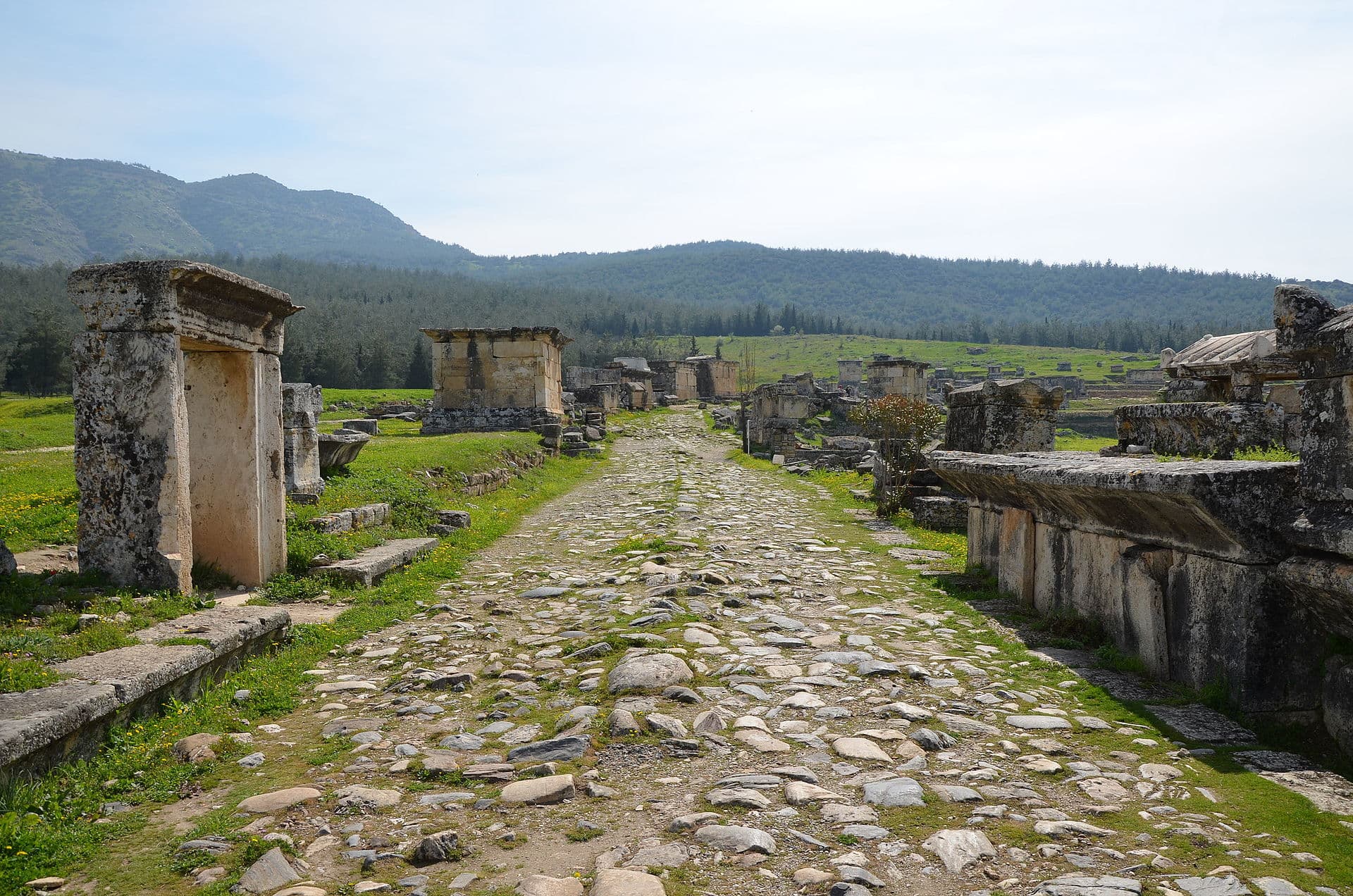
Two kilometres of tombs along the old road north: house-tombs, tumuli and more than a thousand sarcophagi.
Enough context, no spoilers
Why it matters
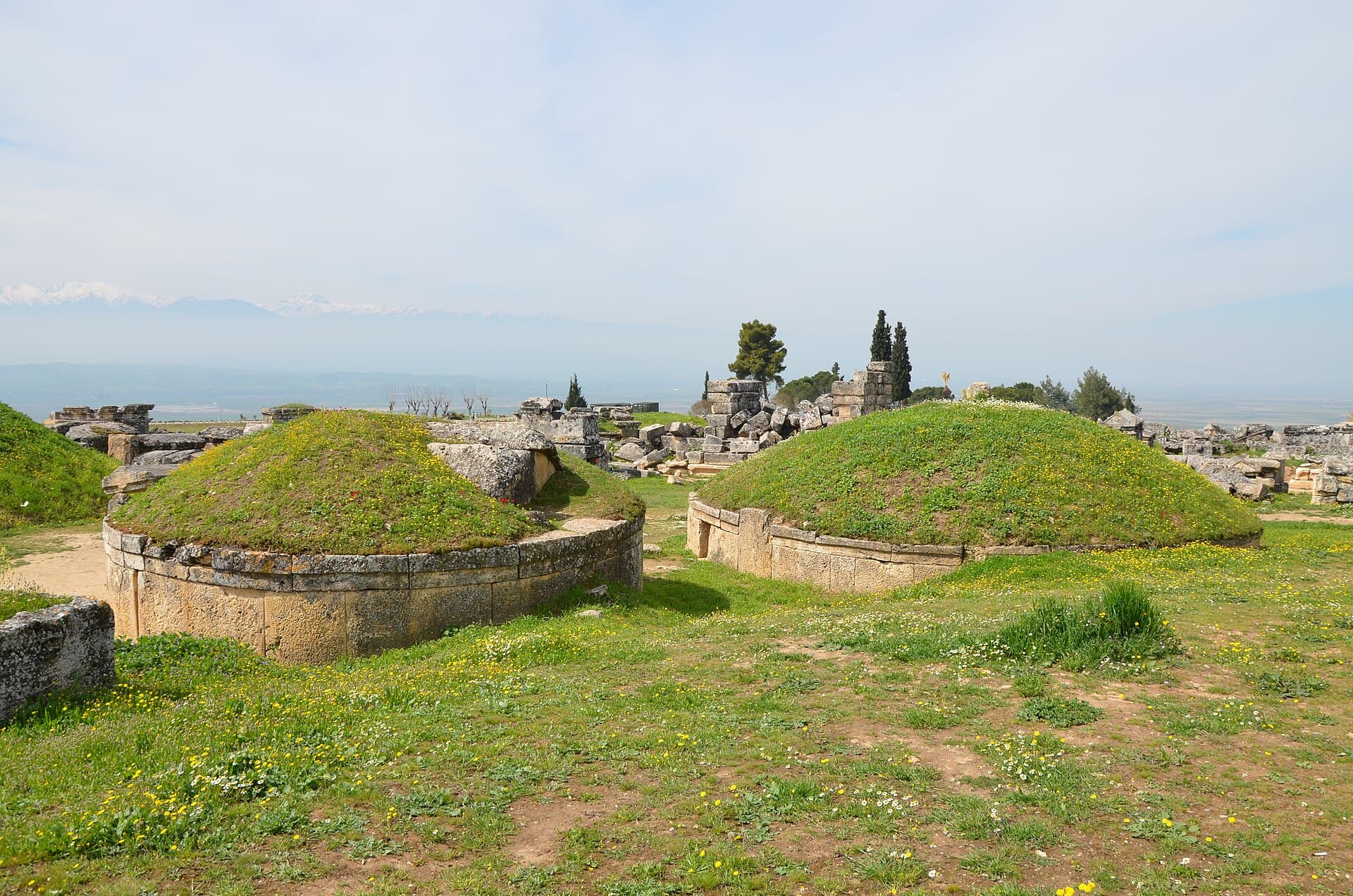
People came to Hierapolis to be cured by the water and a great many stayed permanently. From the Hellenistic period to the Byzantine, the road to Tripolis and Sardis was lined with graves of every rank — plain cists, marble sarcophagi on plinths, circular tumuli with vaulted chambers, and temple-fronted family mausolea. Around 1,200 tombs survive.
What to know before you go
The necropolis is the part of Hierapolis that explains the rest of it. This was a spa town people travelled to when they were already ill, and a strikingly large number of them did not travel home. The result is one of the biggest cemeteries in Anatolia: roughly 1,200 tombs strung for two kilometres along the road running north, arranged by wealth as clearly as any modern suburb. Simple stone cists at the bottom. Above them marble sarcophagi raised on plinths, many with the family name still cut into the lid in Greek. Above those, circular tumuli with vaulted burial chambers, and finally house-tombs and mausolea built with pediments and columns like small temples. Almost nobody on a half-day stop gets here — it is the furthest point in the site from the south gate, along a completely unshaded route. That is precisely why it works: an hour of near-solitude at a UNESCO site receiving over two million people a year. Go early, carry water, and treat the walk as part of the visit rather than an approach to it.