Martyrium and Tomb of St Philip
An octagon on a hilltop where an apostle was killed, and the 1st-century tomb found 40 m away in 2011 that may be his.
Enough context, no spoilers
Why it matters
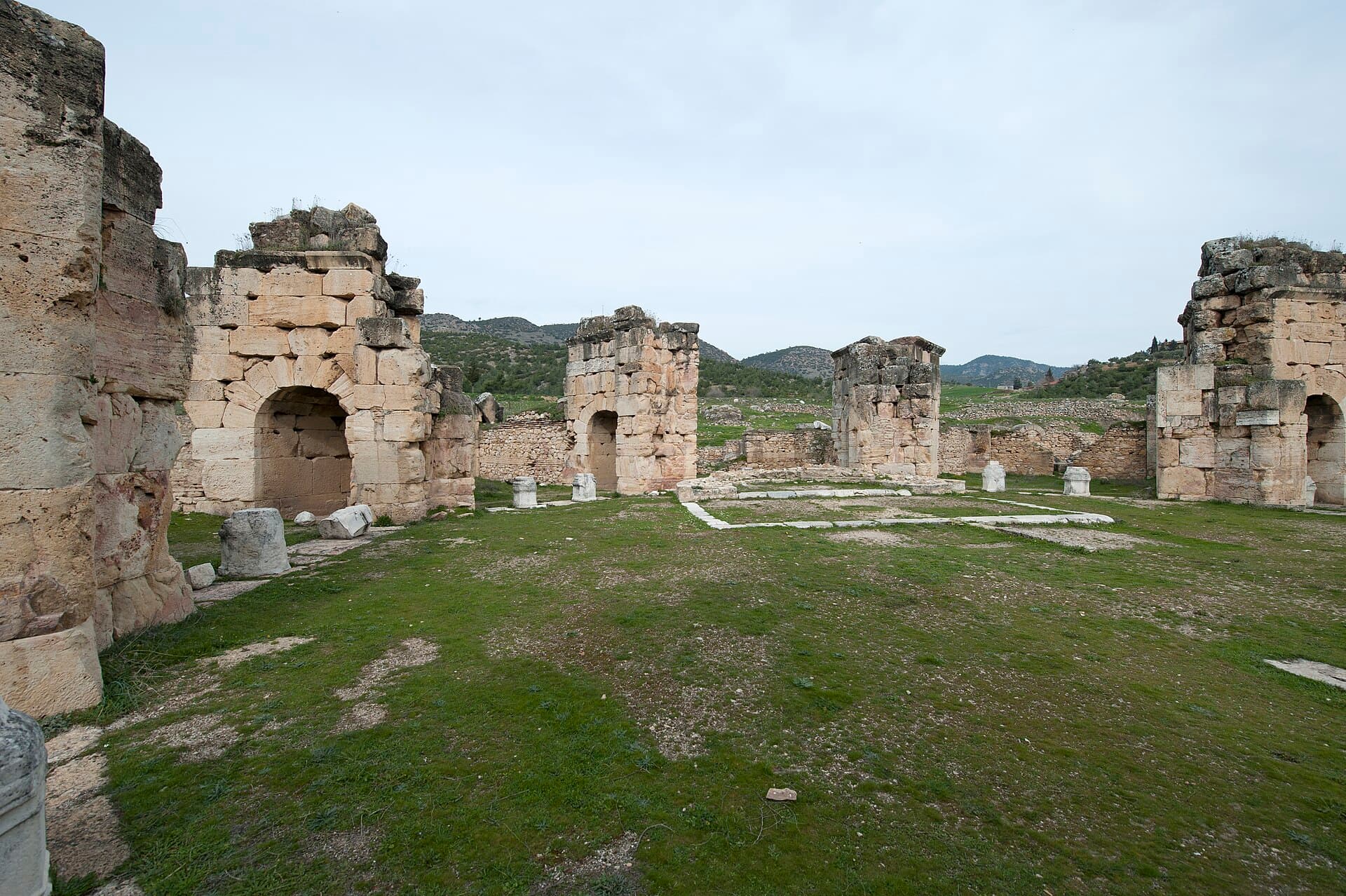
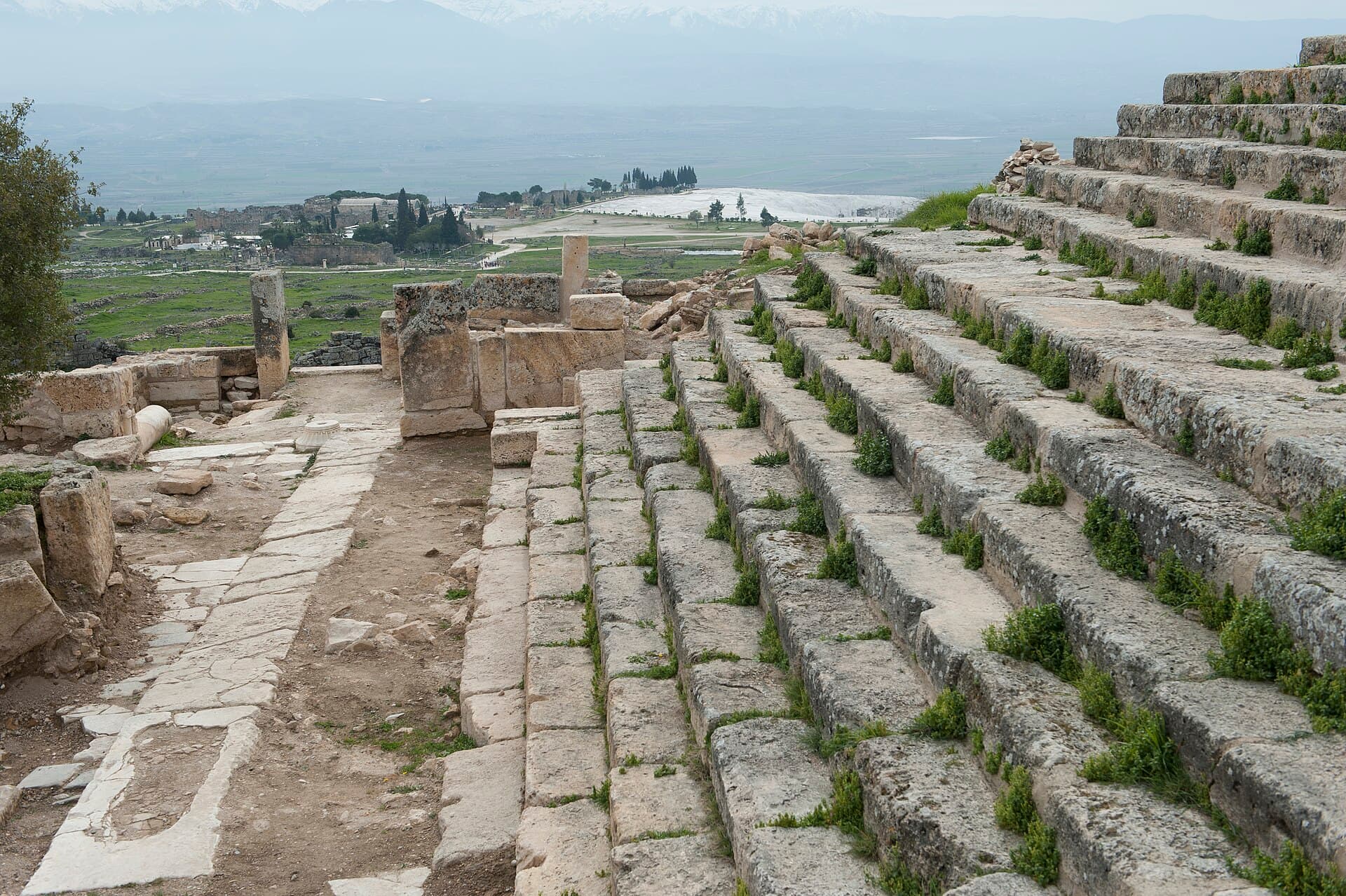
Philip is held to have been martyred at Hierapolis around AD 80. A 5th-century octagonal pilgrim complex, 20 m across under a timber dome, was raised on the hill and burned within a century. Excavators assumed the grave lay at its centre; in 2011 Francesco D'Andria announced the Roman tomb itself, in a separate church about 40 m downhill, reached by a travertine stair from a pilgrims' bath.
What to know before you go
For a thousand years pilgrims walked to this hill, and the archaeology preserves their route in order. At the bottom, an octagonal bath where they washed. From it, a broad stair of travertine slabs climbing the slope. At the top, a martyrium: an octagon twenty metres across, once roofed with a timber dome, ringed by eight radiating rooms alternating chapels with lodgings for those who had come to sleep beside a saint. It burned within a century of being built and was never fully restored. The twist came in 2011. Excavators had always assumed Philip's grave sat at the centre of the octagon; Francesco D'Andria's team found instead a first-century Roman tomb in a separate church about forty metres downhill, in the position a genuine early grave would occupy. Whether the bones were ever Philip's is not something archaeology can settle, but the sequence of buildings around that tomb is real evidence of what people in the fifth century believed. Practically, this is a hard-won corner of the site: a steep unshaded climb in the far north-east, thin signage, and two structures easy to mistake for each other.