Pamukkale Travertine Terraces
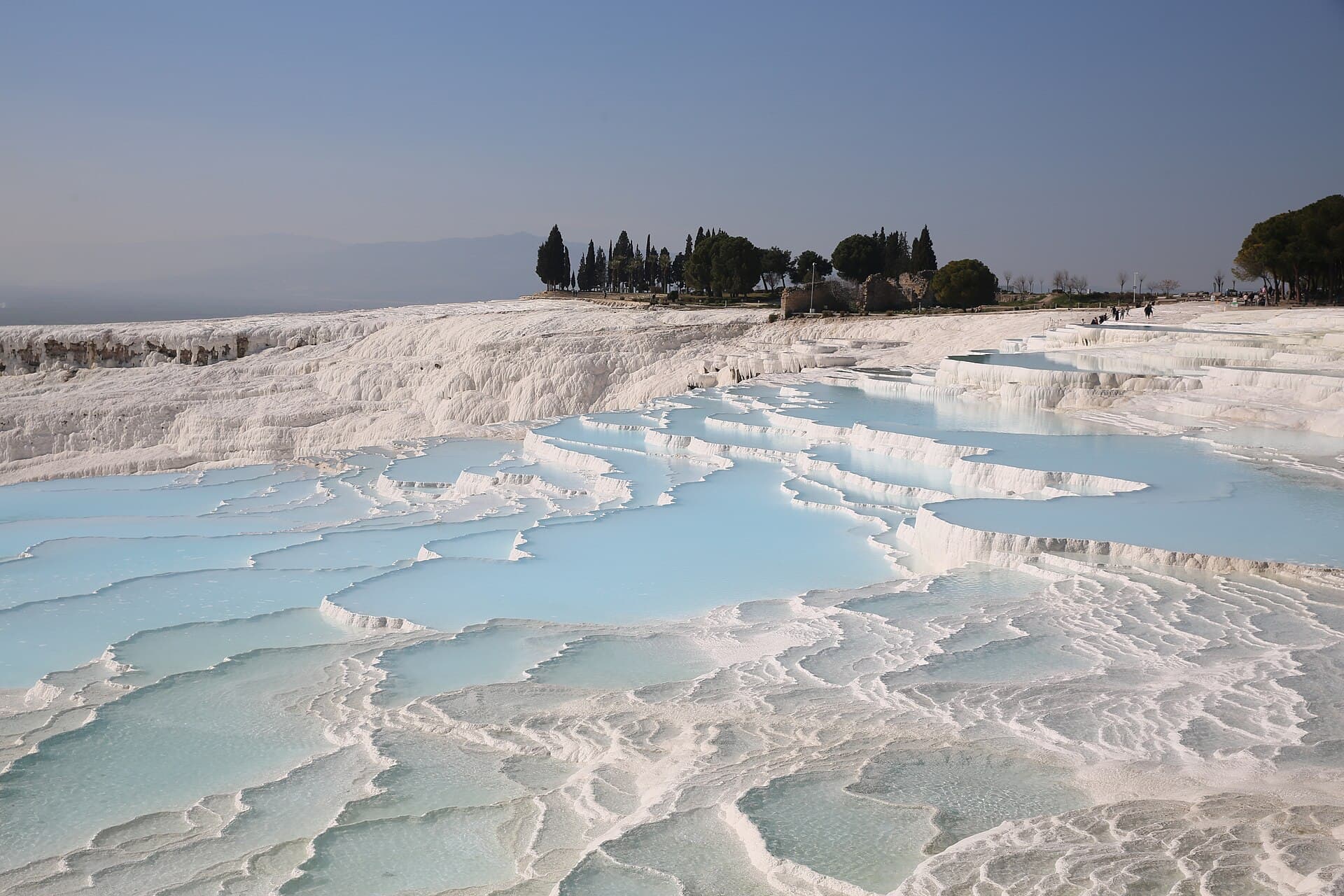
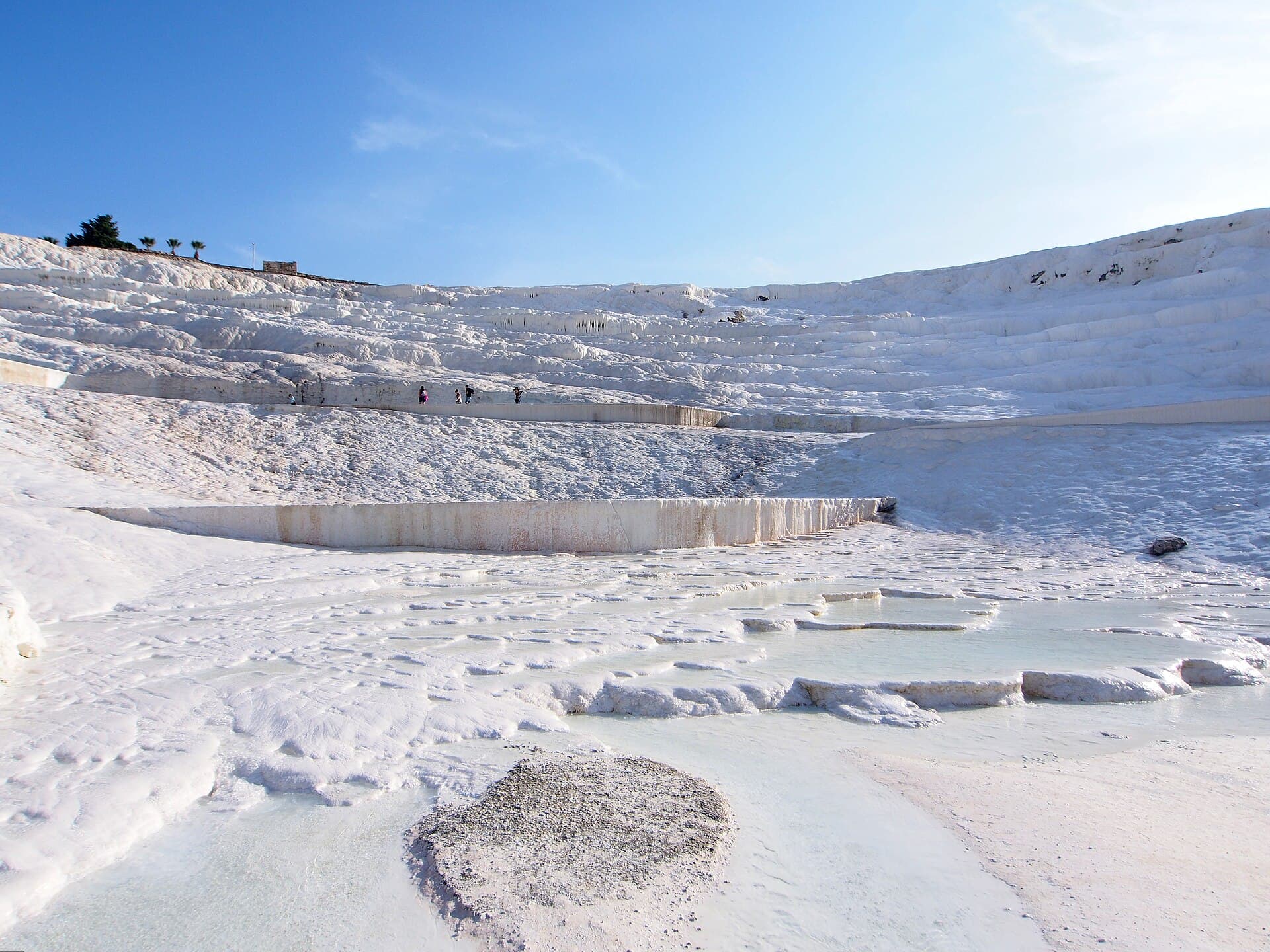
A white limestone cliff 2.7 km wide. Barefoot is compulsory, most basins are dry by design, and one narrow channel is open to walk.
Enough context, no spoilers
Why it matters
Calcium-saturated water at about 35°C has poured over this cliff for hundreds of thousands of years, laying down travertine as it degasses. The Romans built a spa city on the source. By the 1980s hotels stood on the terraces, a road cut through them and the stone had gone grey; UNESCO listing in 1988 forced the hotels down — the last two in 2001 — and put the water on a managed rotation.
What to know before you go
Set expectations before you arrive, because the gap between the marketing image and the site is the single biggest source of disappointment here. The postcard shows dozens of brimming turquoise basins. What you get is a mostly dry white cliff with water running down one managed channel — about 630 metres of it, dropping 64 vertical metres — and that is deliberate: the authorities rotate the flow so emptied basins can harden and bleach in the sun instead of going green. On top of the rotation, thermal flow itself is reduced — IUCN's 2025 assessment names climate change as a threat to the water. Bathing in the natural pools is prohibited outright; you walk a marked route, and you walk it with nothing on your feet. Shoes, socks and slippers are all banned and guards do enforce it. The surface alternates between jagged dry stone that hurts after ten minutes and algae-slick wet stone that is genuinely slippery, so take it slowly and expect to be uncomfortable. The reward is real but specific: warm water over your feet, a 2.7 km white escarpment, and a view over the plain. The photograph you actually want is taken from the bottom looking up, not from the walkway.