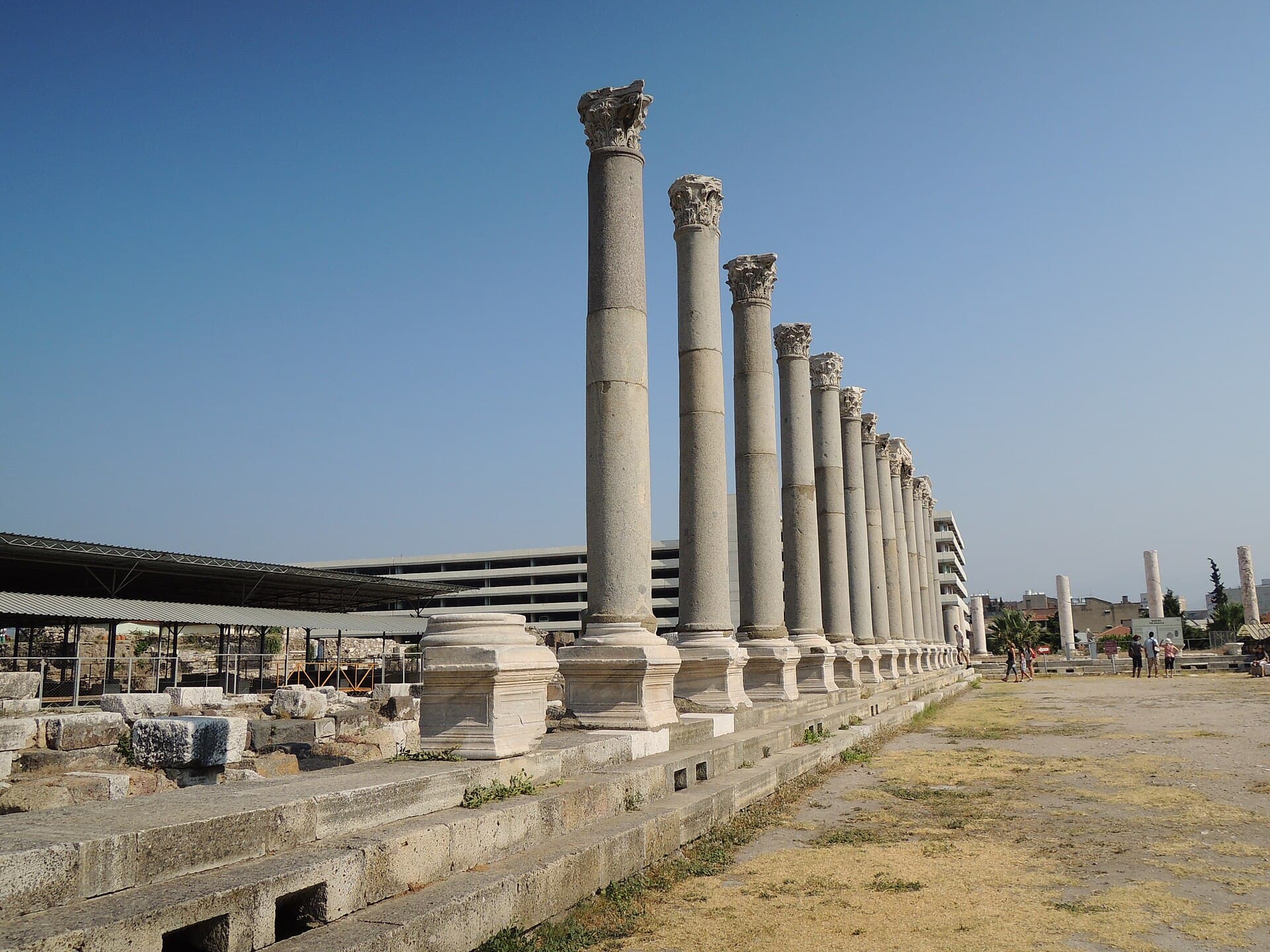
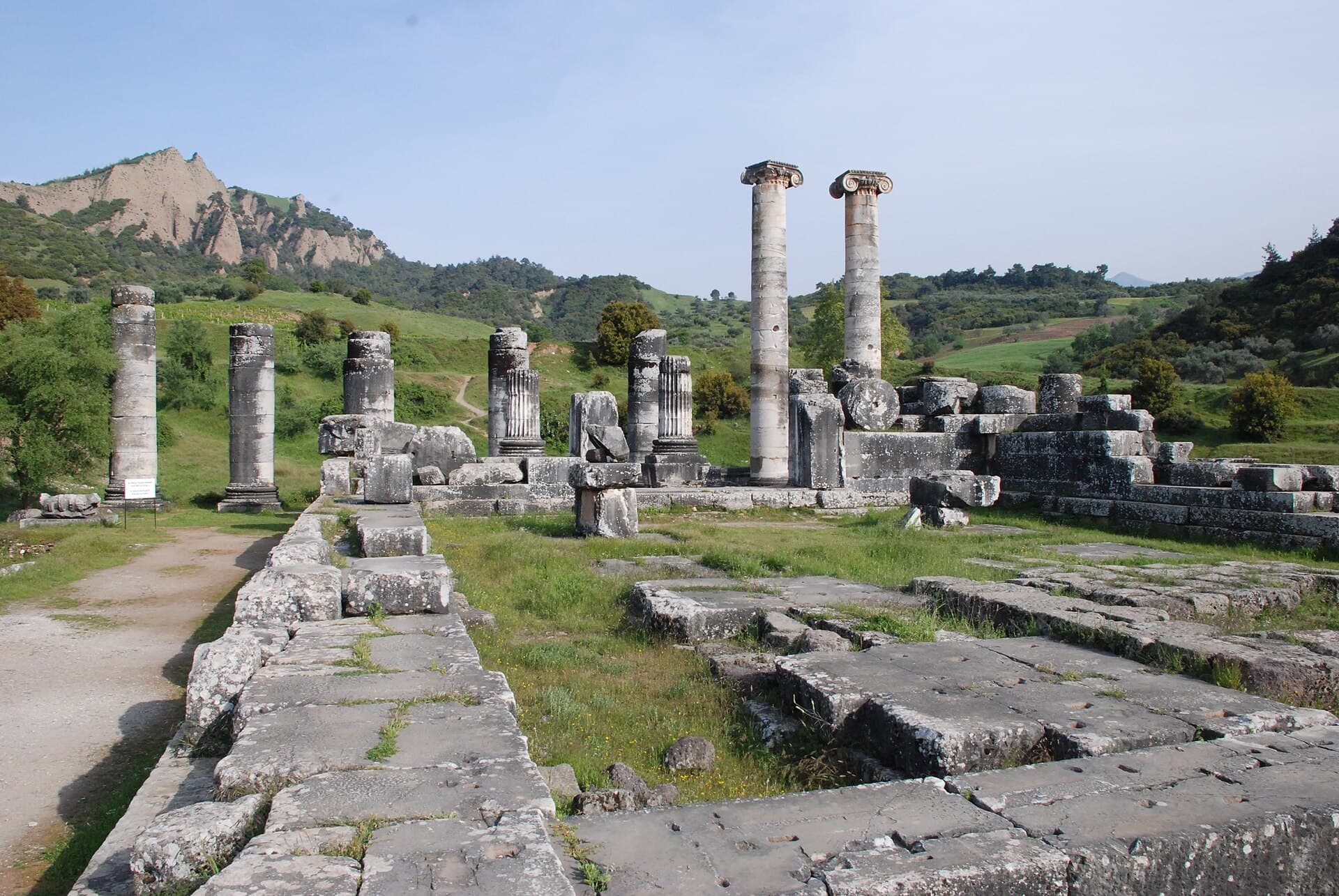
Croesus's capital: two Temple of Artemis columns stand unrestored, and the ancient world's largest synagogue hides in a Roman bathhouse.
Capital of Lydia under King Croesus. At Pactolus North, excavators found Croesus-era furnaces refining electrum into pure gold and silver — the basis for the world's first standardized coinage; cruder electrum coins likely predate him, under Alyattes. Rome rededicated half the Temple of Artemis to empress Faustina. Sasanian Persians sacked the city in 616 AD; Sardis and Bin Tepe joined UNESCO's list in July 2025.
€3 for foreign visitors (2026); one ticket covers both the Temple of Artemis and the Gymnasium–Synagogue complex, though the two gates sit roughly 1–1.5 km apart by road with no shuttle between them. MüzeKart valid for Turkish citizens (free entry, twice yearly; unlimited with MüzeKart+). Reported hours: summer (1 Apr–1 Oct) 08:00–19:00, ticket office to 18:30; winter (1 Oct–1 Apr) 08:00–17:00, ticket office to 16:30. Bin Tepe has no entry fee and no gate.
150 minRoughly 90 km / 1–1.5 hours by car from central İzmir (via Turgutlu and Ahmetli) — realistically a full day out, not a quick half-day bolt-on, once you add Bin Tepe or an unhurried pace.The Temple of Artemis and the Gymnasium–Synagogue complex are separate, gated areas about 1–1.5 km apart on one ticket. Budget the walk or a short drive between them.None of the Bin Tepe tumuli — including the looted Tomb of Alyattes — has a chamber open to visitors. See them from outside only; this is a drive-and-view landscape, not a walk-inside one.+2 more to know
No car? A direct regional train runs İzmir Basmane–Sart a few times a day (roughly 2 hours 45 minutes each way) — much slower than driving, and it makes a full day unavoidable regardless of what else you plan to see.Little shade across the open site in summer; carry water, as at İzmir's other outdoor ruins.