Kadifekale
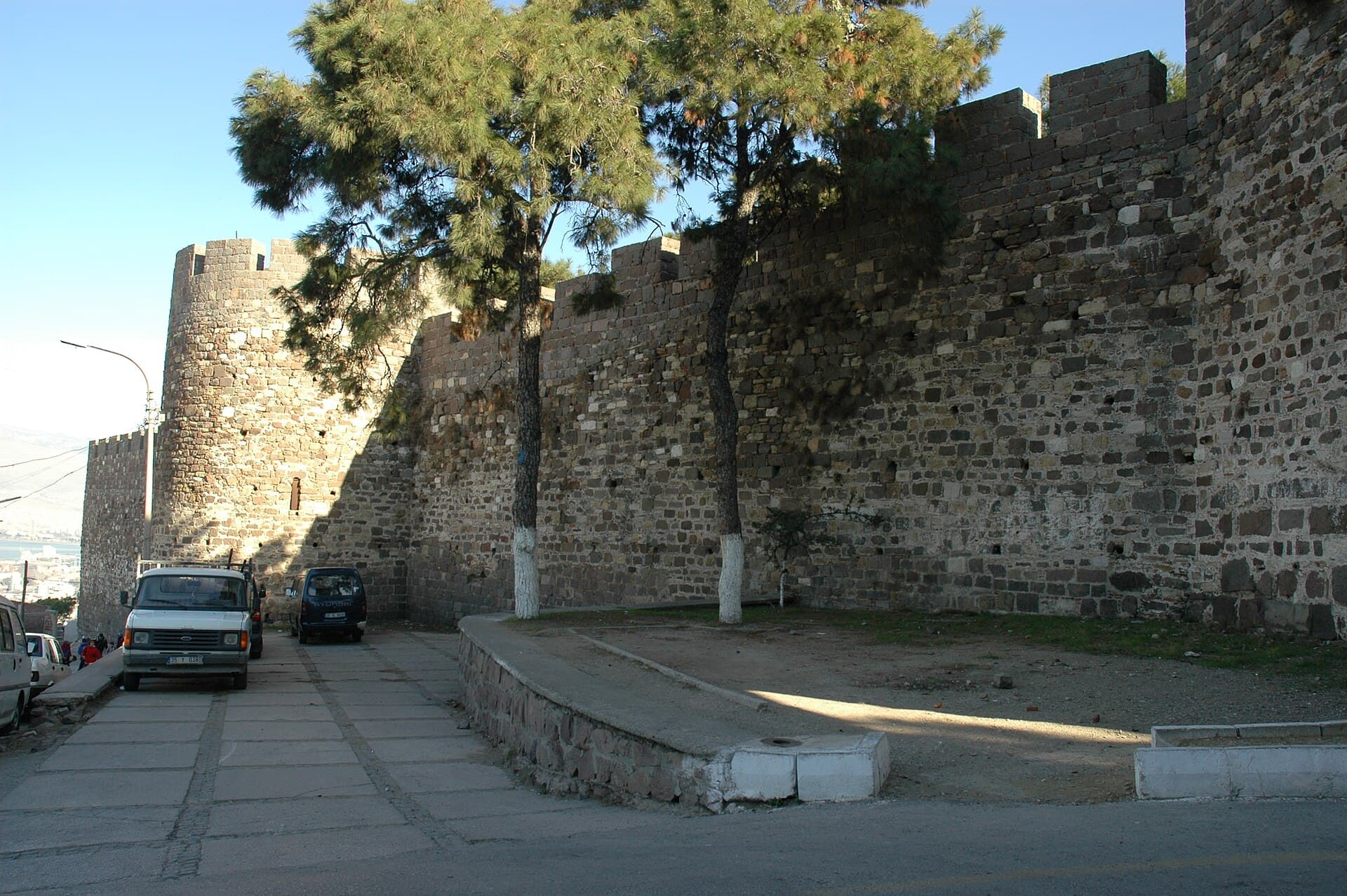
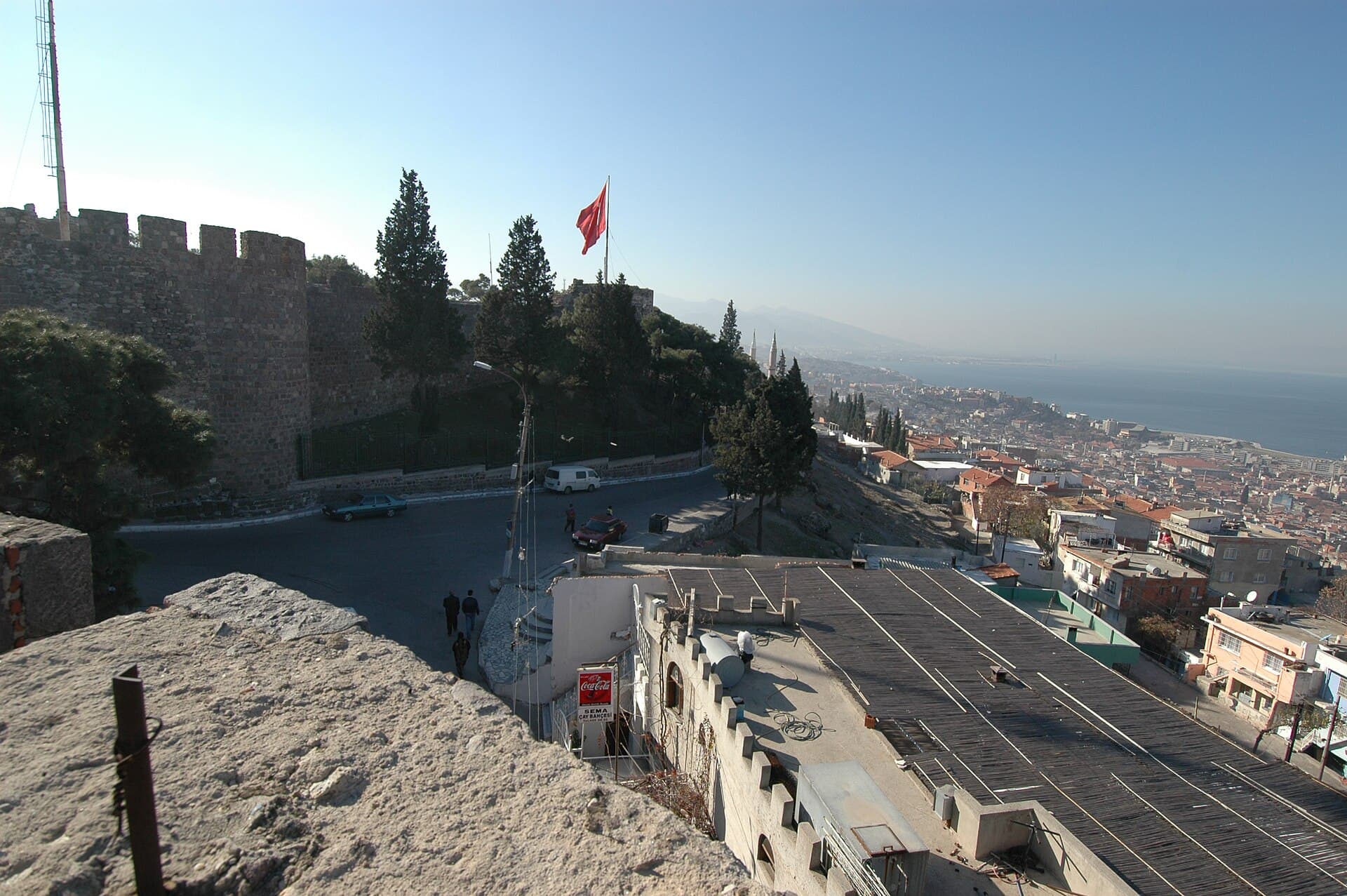
Alexander's general walled this hill around 300 BC; 'Velvet Castle' now trades ramparts for the widest free view in town.
Enough context, no spoilers
Why it matters
When Smyrna moved off the Bayraklı mound around 300 BC, Lysimachos — Alexander's successor-general — fortified Mount Pagos and the city spilled down its slopes. Byzantines and Ottomans patched the walls for centuries. Tradition places St Polycarp's martyrdom (c. 155 AD) in the stadium on the hillside below. A lived-in quarter, not a groomed site.
What to know before you go
When Smyrna relocated off the Bayraklı mound around 300 BC, it did so under the direction of Lysimachos, one of Alexander the Great's own successor-generals, who chose Mount Pagos as the new city's defensible high ground and walled it accordingly — the beginning of a fortification history that both Byzantine and Ottoman rulers would continue patching and rebuilding for the better part of two millennia after him. What survives today, known locally as Kadifekale, "Velvet Castle," is less a preserved monument than a genuinely lived-in hillside quarter, its ancient and medieval walls interspersed with modern houses rather than fenced off as an archaeological showcase — an honest, unglamorous kind of survival that some visitors find more interesting than a groomed ruin would be. There's a solemn thread running through the hill's history too: local tradition places the martyrdom of St Polycarp, bishop of Smyrna and a direct pupil of John the Apostle, around 155 AD in the stadium that once stood on the slope below the fortress — a detail with real weight for visitors tracing early Christian history through Anatolia, even though nothing physical marks the exact spot today. The reason to make the climb regardless of your interest in any of that history is simple and visual: from the west ramparts in late afternoon, Kadifekale delivers the widest free view in İzmir, the full gulf laid out below, ferries visibly mid-crossing on the very route described elsewhere on this page, and the bazaar's rooftops directly underneath you, close enough to feel continuous with the hill rather than separate from it. There's no gate and no fee — this is simply an open hilltop, accessible any time. That said, go by day rather than evening: the site genuinely empties out after dark, and a hillside with no lighting, no staff presence, and a lived-in-but-sparse character is not somewhere to linger once the sun is down. An hour covers the ramparts properly; the shadeless, bare hilltop makes July and August visits considerably harder than spring or autumn ones.