Agora of Smyrna
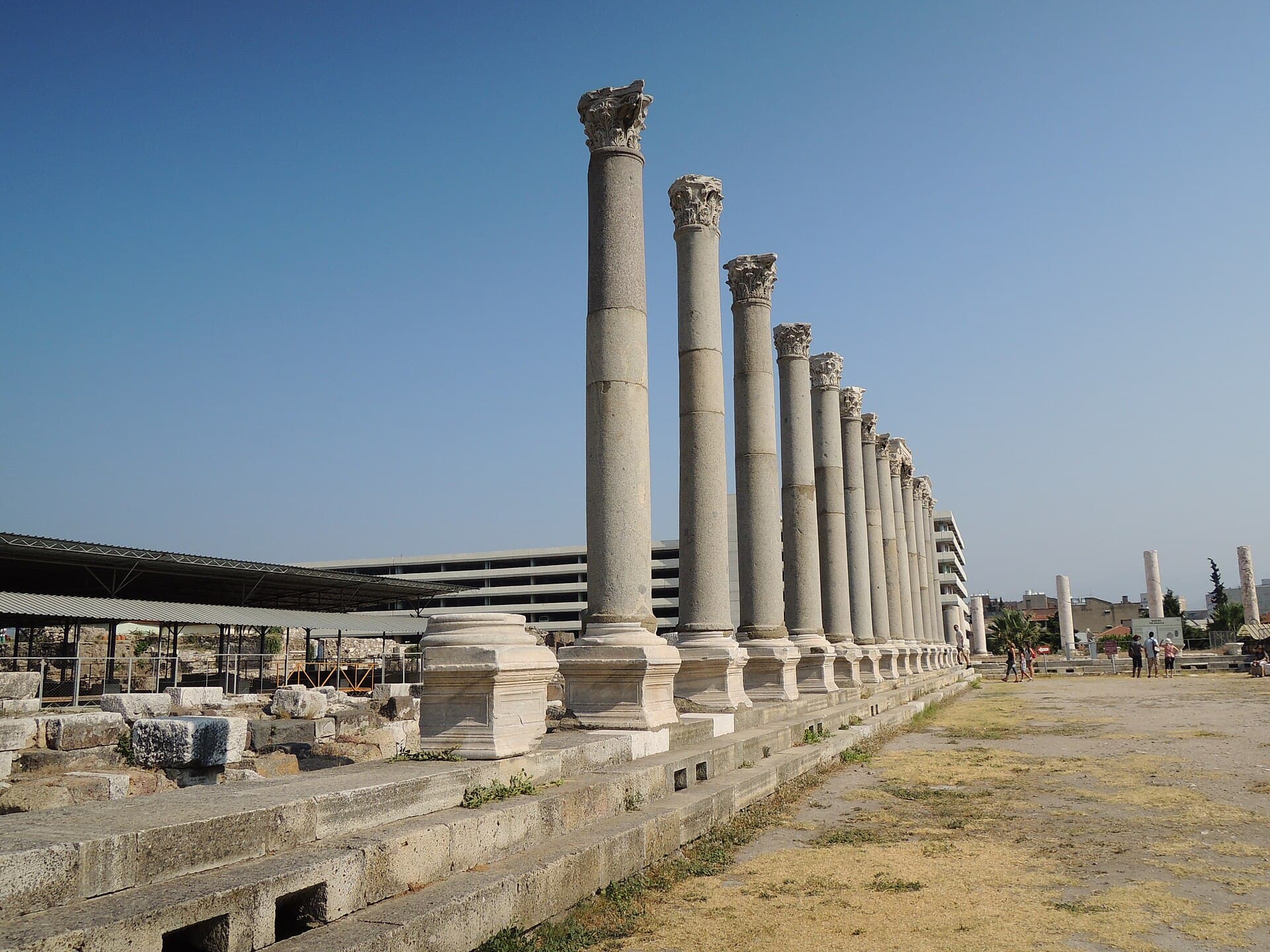
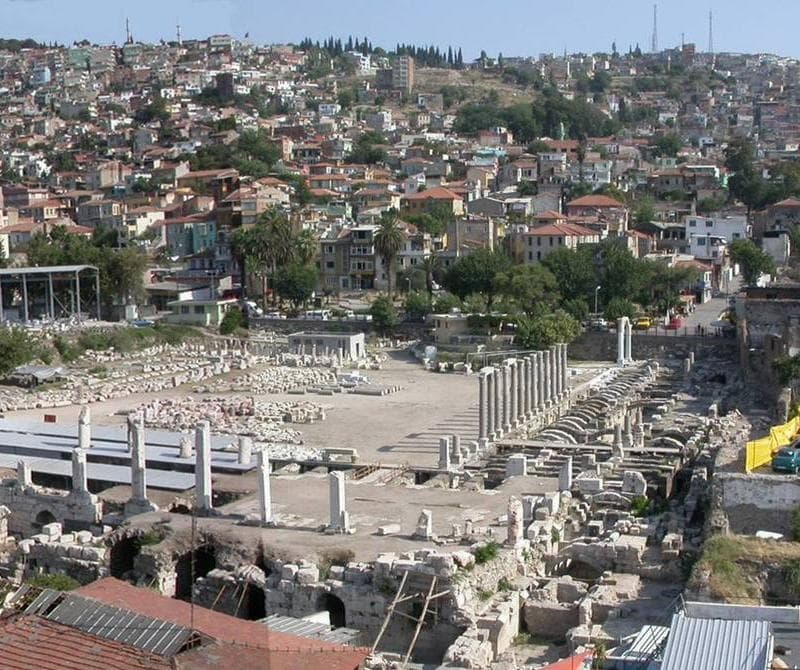
Rome rebuilt this forum after the 178 AD quake; its basement arcades still stand, scribbled with ancient graffiti.
Enough context, no spoilers
Why it matters
Laid out with the new Smyrna of the 4th century BC and levelled by the earthquake of 178 AD, the agora was rebuilt under Marcus Aurelius — the Faustina Gate carries his empress's portrait. The basilica's vaulted basement preserves one of antiquity's richest graffiti collections, from gladiators to lovers' names.
What to know before you go
Smyrna's Roman forum has an unusually blunt origin story: an earthquake levelled the previous one in 178 AD, and what you're walking through is the rebuild that followed, commissioned under Marcus Aurelius and finished within his reign — quick, by the standards of ancient reconstruction, and confident enough to put the emperor's wife on the gate. That gate, the Faustina Gate, carries her portrait and gives the whole site an unusually specific, dateable identity rather than the generic "Roman ruins" label a less well-documented site might carry. The agora itself sits within the newer Smyrna laid out in the 4th century BC, on a plan that outlived the earthquake even though the buildings on it didn't, and the rebuilt structure follows the same footprint its predecessor did. What earns this a slow visit rather than a walk-through is underground: the basilica's vaulted basement, cool and shaded even at midday, preserves one of antiquity's richest surviving collections of casual graffiti — gladiator match results scratched by spectators who'd watched them, riddles, lovers' names, ships sketched by someone waiting for something, all cut in an oak-gall-and-iron ink mixture that has stayed legible for close to two thousand years. This is not monumental inscription; it's ordinary Roman İzmir residents leaving marks the way people still do today, and reading through it is the closest thing this site offers to actually meeting the people who used the space rather than just admiring what they built. Go in the morning if you can — the site is genuinely shadeless above ground, and Aegean summer sun by midday makes lingering at the standing colonnades uncomfortable rather than pleasant. The €6 foreign-visitor ticket (2026 tariff) covers both levels; budget a little over an hour if you want to actually read some of the graffiti rather than just walk past it.