Sardis
Croesus's capital: two Temple of Artemis columns stand unrestored, and the ancient world's largest synagogue hides in a Roman bathhouse.
Enough context, no spoilers
Why it matters
Capital of Lydia under King Croesus. At Pactolus North, excavators found Croesus-era furnaces refining electrum into pure gold and silver — the basis for the world's first standardized coinage; cruder electrum coins likely predate him, under Alyattes. Rome rededicated half the Temple of Artemis to empress Faustina. Sasanian Persians sacked the city in 616 AD; Sardis and Bin Tepe joined UNESCO's list in July 2025.
What to know before you go
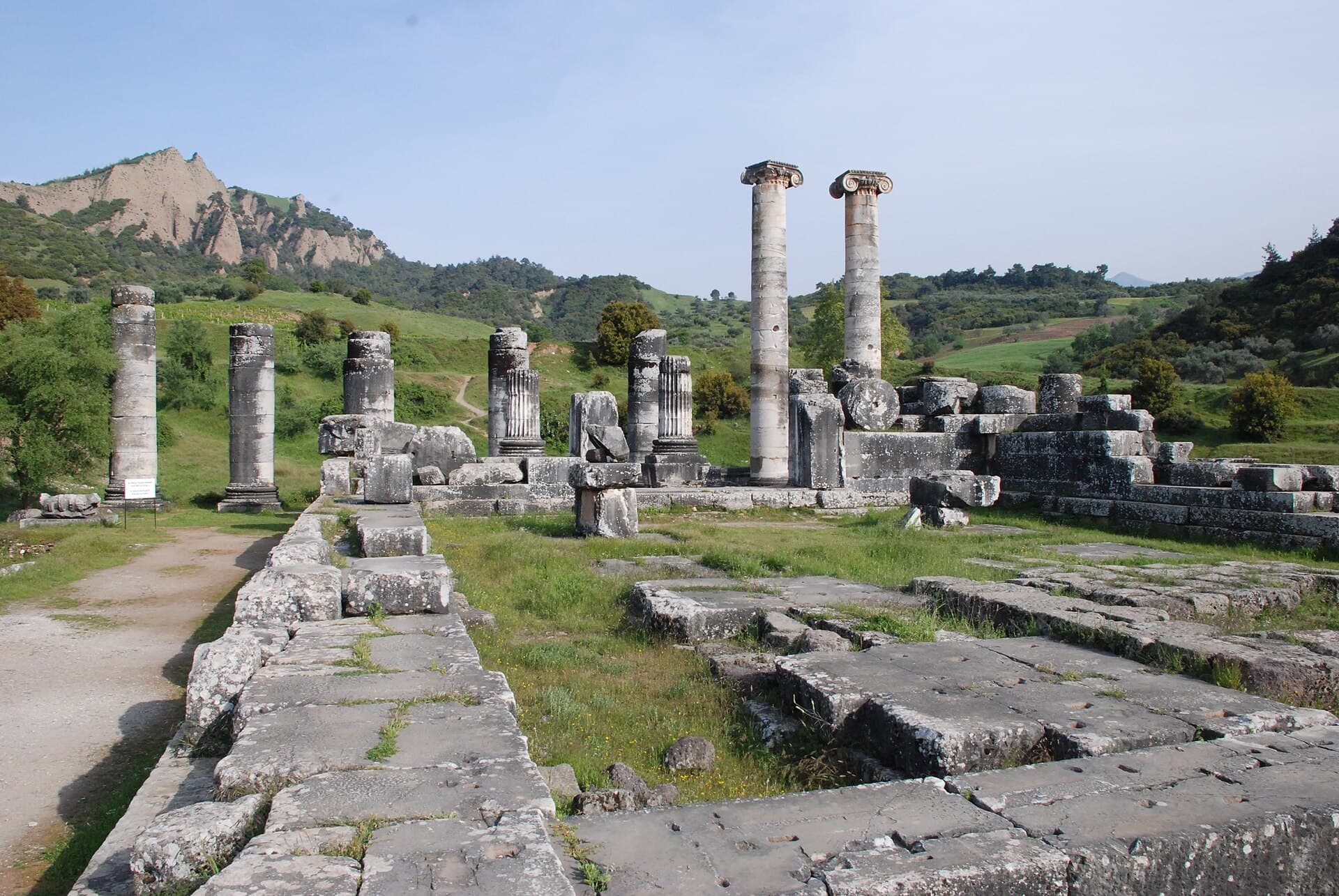
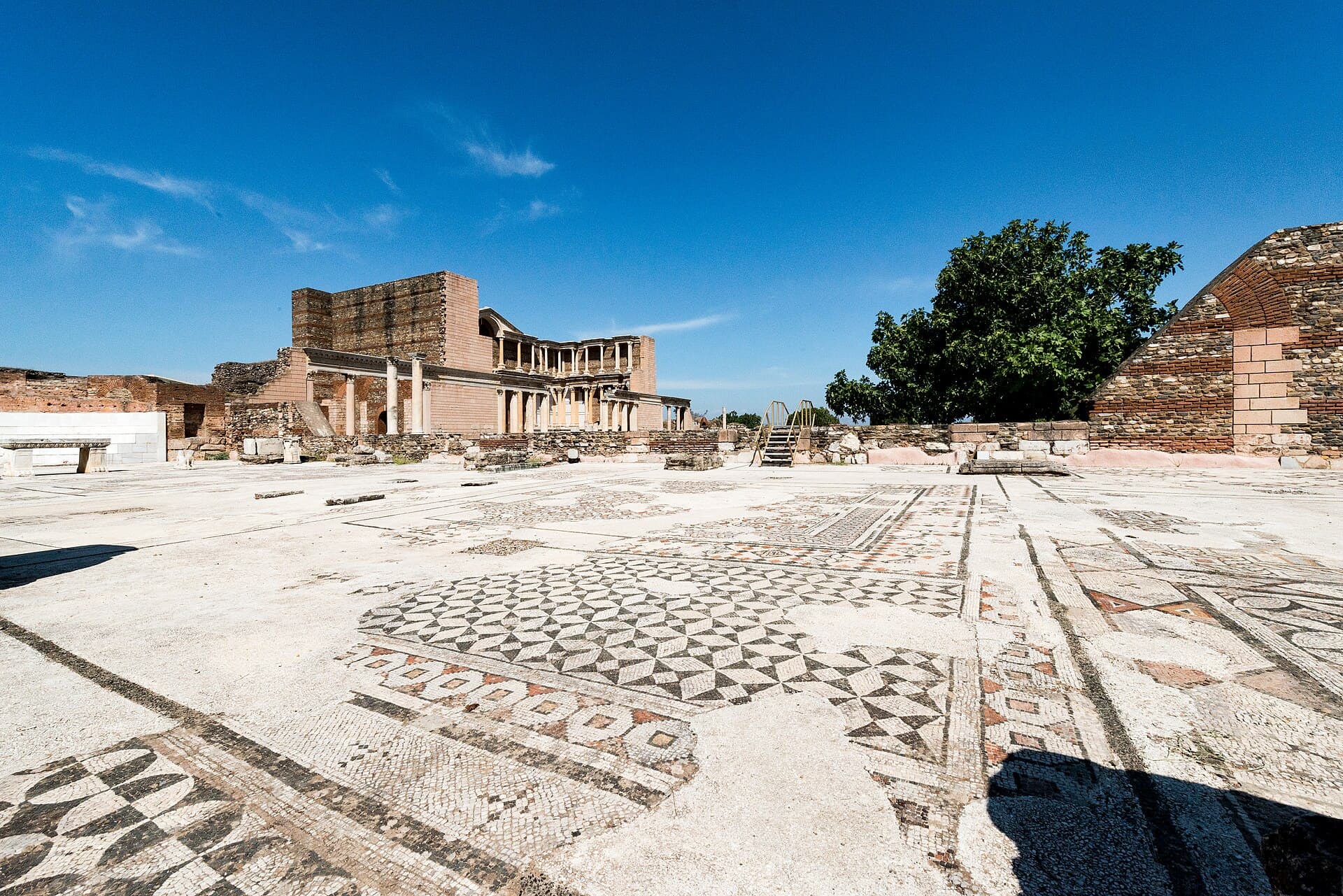
Sardis does not perform for visitors the way Ephesus does, and that is a large part of its appeal: you are likely to have the Temple of Artemis nearly to yourself. What stands there is more honest than Ephesus's rebuilt Library facade — two Ionic columns, just over 17 metres each, that have stood since antiquity without a single restorer's hand on them, remnants of what was ranked the fourth-largest Ionic temple anywhere. Begun in the third century BC and never quite finished, the temple got an unusual Roman-era renovation: its inner chamber was split in two, one half kept for Artemis, the other rebuilt for a colossal statue of the empress Faustina — a temple shared, quite literally, between a goddess and an emperor's wife. About a kilometre and a half away, through a separate gate on the same ticket, the Roman bath-gymnasium holds the site's real showstopper: a synagogue over 50 metres long, holding close to a thousand worshippers, its floor still carrying some 1,400 square metres of geometric mosaic and a marble table where the Torah was read aloud from the fourth century onward. It is usually counted among the largest and best-preserved synagogues surviving from antiquity — worked, unusually, into the corner of a Roman gentile leisure complex rather than standing apart from it. The coinage story deserves more care than it usually gets. Herodotus credits "the Lydians," not Sardis specifically, with striking the first gold-and-silver coinage, and the earliest electrum coins that back the claim mostly surfaced at Ephesus, not here, and are usually dated to Croesus's father Alyattes. What Sardis can show for itself is the excavated refinery at Pactolus North: furnaces and cupels from Croesus's own reign that separated raw electrum into pure gold and pure silver, the real technical leap behind the first standardized bimetallic currency. Croesus refined money at Sardis even if, strictly, he did not invent it. Bin Tepe, the royal tumuli field that shares Sardis's 2025 UNESCO listing, lies a further several kilometres north — worth the detour for scale alone (the largest mound runs 355 metres across) but not for going inside; no tomb here is open to visitors, so this is a landscape to drive through and stand beside, not to enter. Treat the trip as a full day from İzmir, not a tidy half one. The round drive alone runs about three hours; add ninety unhurried minutes across Sardis's two gates plus any time at Bin Tepe, and a relaxed morning departure gets you back after dark, not before lunch.