Kemeraltı Bazaar
A 17th-century harbour filled in and roofed over: 250 streets of coffee, wedding dresses, synagogues and lokma smoke.
Enough context, no spoilers
Why it matters
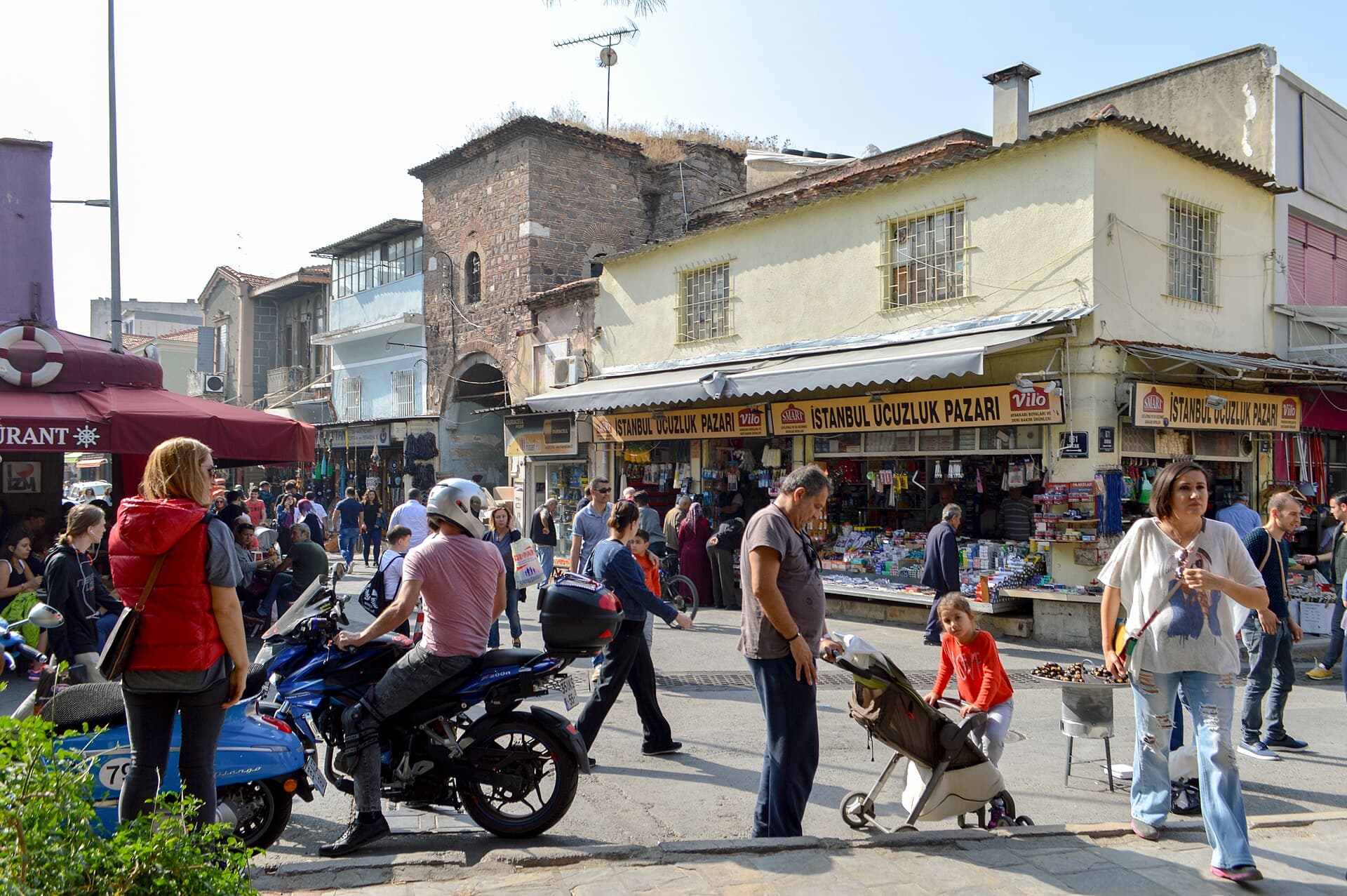
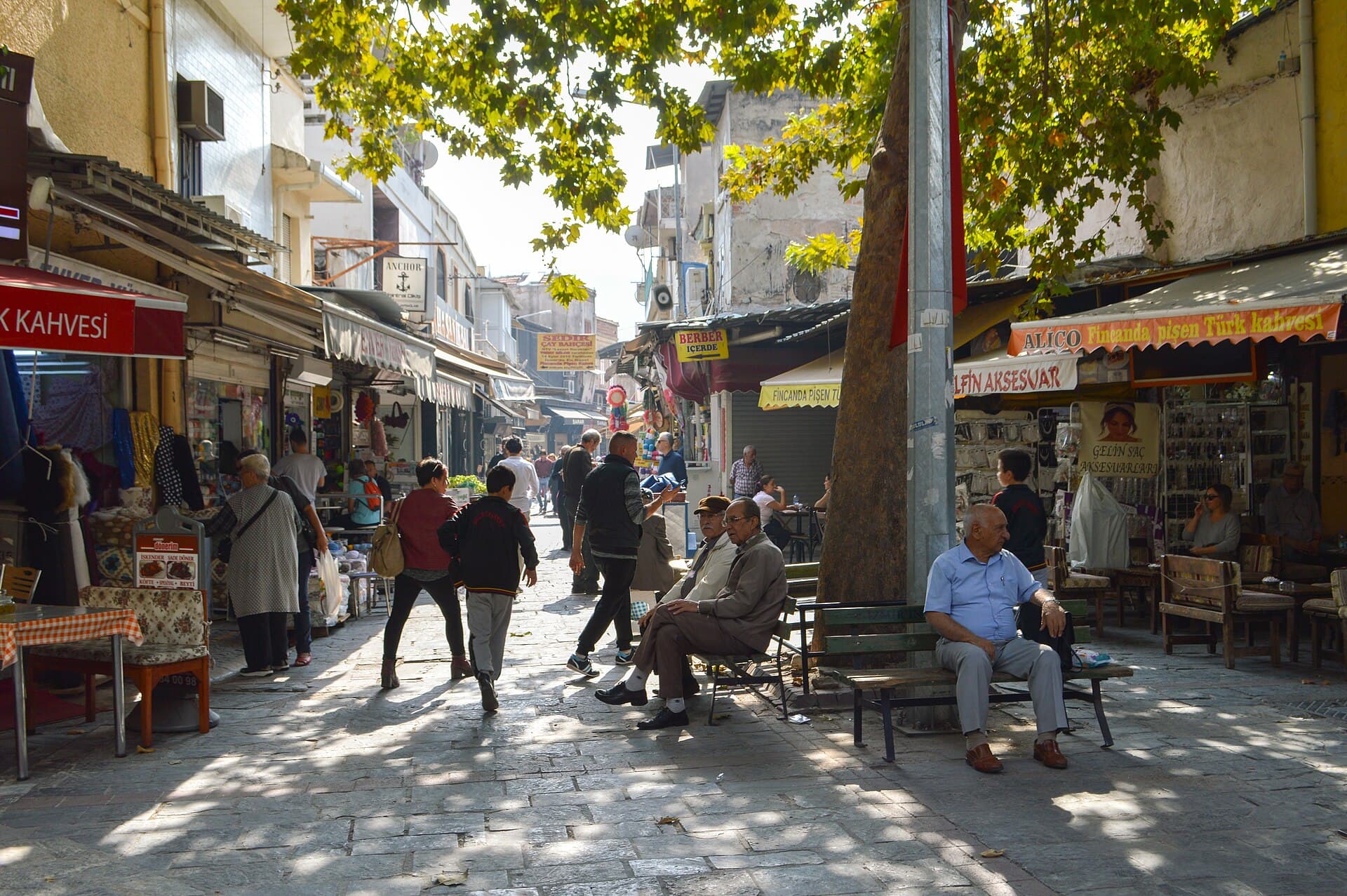
Kemeraltı grew over the silted inner harbour of Smyrna from the 1650s, knitting itself into a covered market around the Hisar Mosque quarter. Persian caravans unloaded here; hans like Kızlarağası (1744) survive. It still feeds the city daily rather than performing for tourists.
What to know before you go
Kemeraltı is not a curated bazaar experience — it is İzmir's actual, working commercial district, and that distinction shapes everything about visiting it well. The 250-odd streets you're walking were, until the 1650s, open water: the silted inner harbour of ancient Smyrna, filled in and built over rather than drained on purpose, then knitted into a covered market around the Hisar Mosque quarter as the city grew. Persian caravans once unloaded goods here; a handful of the hans that stored and taxed those goods, Kızlarağası among them, still stand with their original vaulting intact, now filled with antique dealers and coffee roasters instead of camel drivers. What makes Kemeraltı different from a tourist-facing grand bazaar elsewhere in Turkey is that it still feeds the city daily rather than performing for visitors — the rug sellers and the fish stalls and the wedding-dress shops are here because İzmirlis actually shop here, not because a tour bus schedule expects them to be. Head first for Kestane Pazarı and follow the smell of roasting coffee to the row of coffee sellers, a genuinely good orientation point before the lanes fan out into specialised pockets — textiles, gold, spices, secondhand books. Along the way you'll be offered gevrek from a cart; call it simit, the sesame-ring bread it resembles, and you'll get corrected, kindly but firmly — Kemeraltı takes this distinction seriously, and getting it right is a small, easy way to be a good guest here. Budget genuine time rather than a quick pass-through: two and a half hours is a realistic minimum to see more than the entrance lanes, and going slowly is the whole point in a market built for browsing over centuries, not for a single transaction. One planning note worth internalising rather than discovering the hard way: most shops close Sundays, though the lanes themselves stay open as ordinary public streets — Sunday is not the day to come here expecting the market at full pitch, however atmospheric an empty covered street can be at that particular hour.