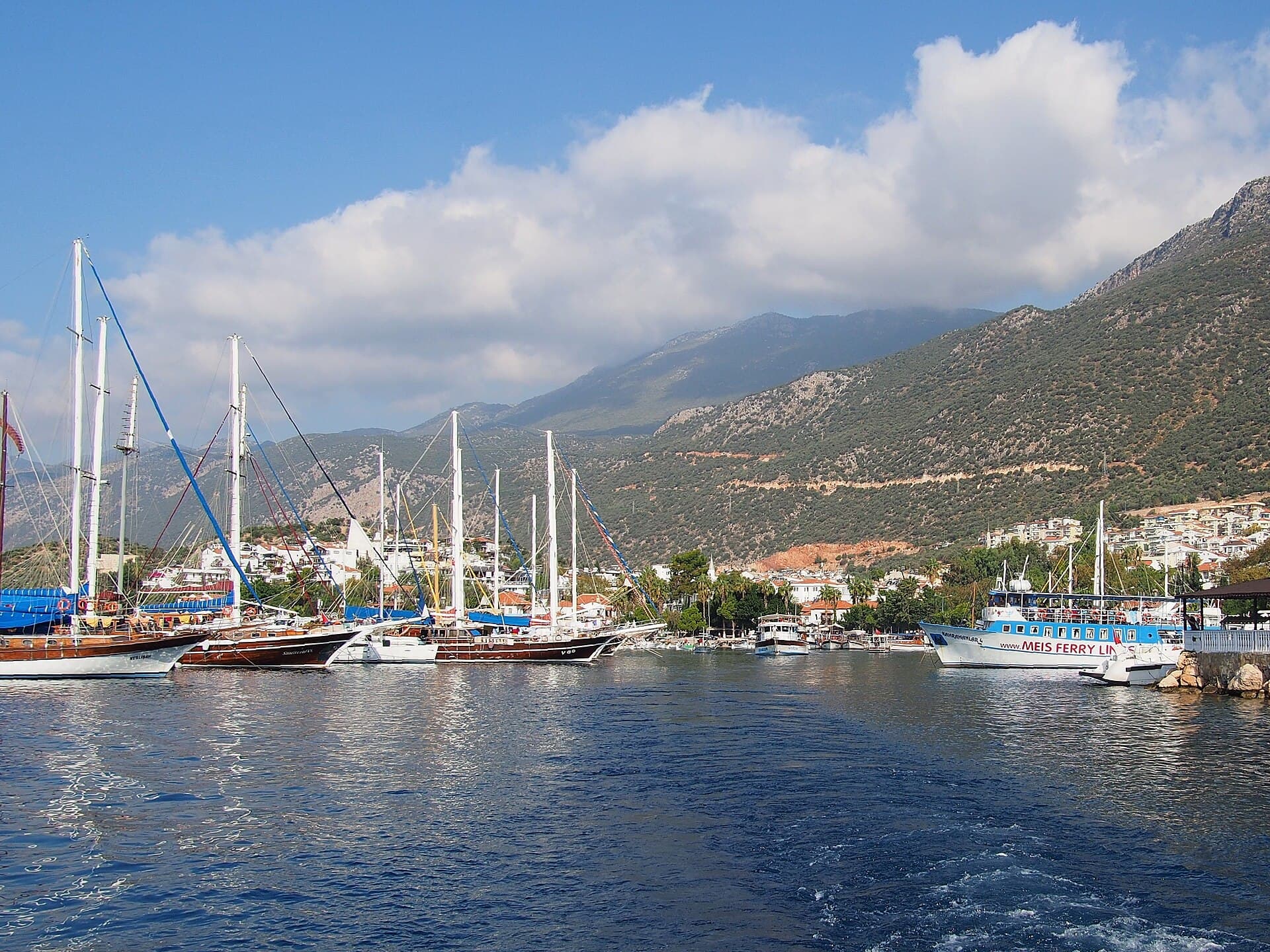
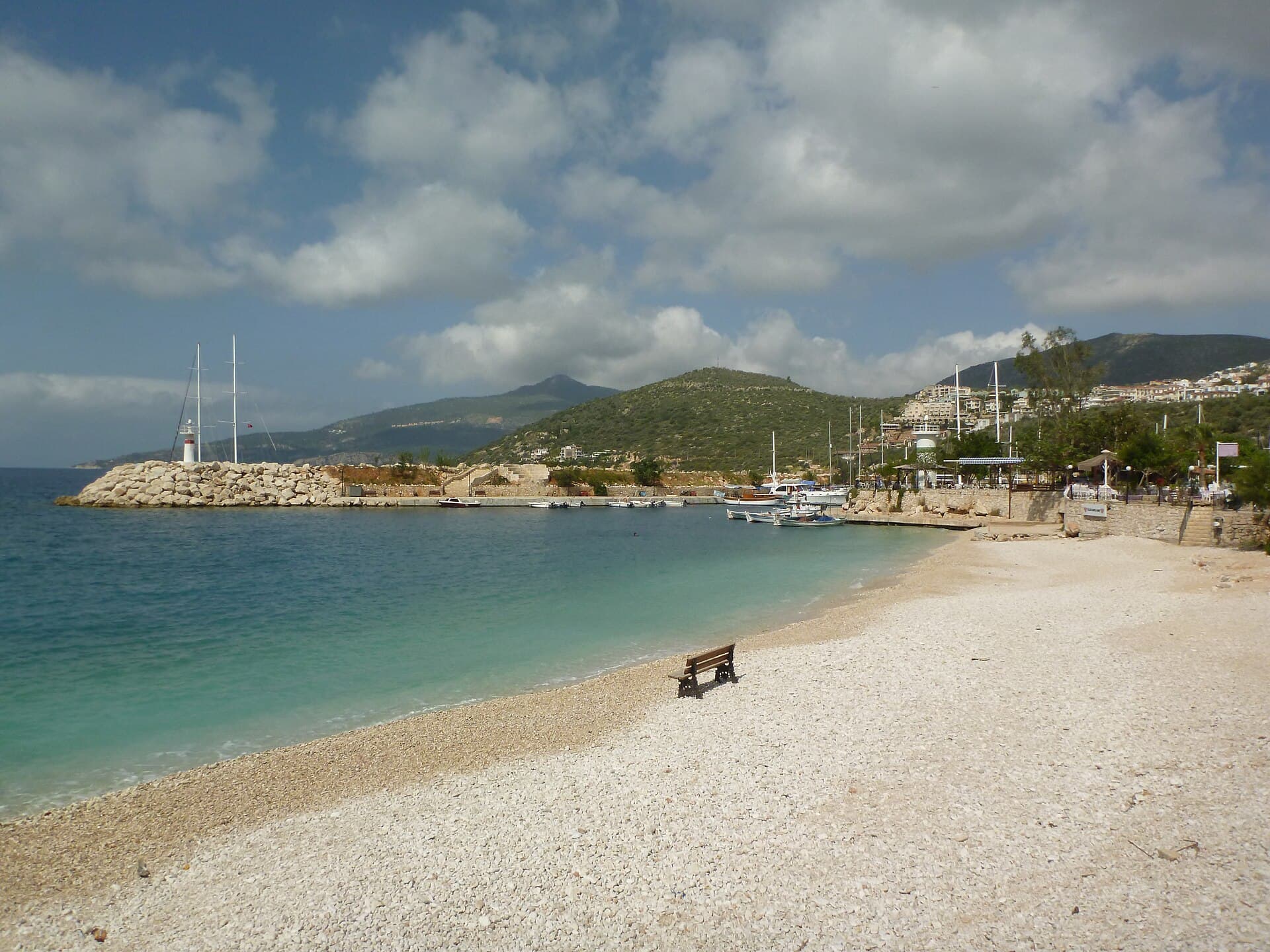
Kaş and Kalkan sit 25 minutes apart and suit different travellers: Kaş is a diving and hiking harbour town with backpacker energy; Kalkan is quieter and upmarket, stone lanes above its own small harbour. Both are a base for Kekova's sunken city, Patara's ruins and turtle beach, and Kaputaş. Two days is tight — book a dive or Kekova boat day first, then build the rest around it.
Start with the essentials, add what genuinely interests you, and leave the rest for another visit. Every place includes a concise story, practical timing, a Maps link, and a one-tap route planner action.
Make the route work
Anticipate the practical details.
Getting there
Fly into Dalaman (DLM), the closer airport for both towns — roughly 1.5 hours by road to Kalkan and 2 to 2.5 hours to Kaş. Antalya (AYT) has more flight choice but is further: about 2.5 to 3 hours to Kaş, and longer again to Kalkan, since the coast road runs Antalya–Kaş–Kalkan in that order. Neither town has its own airport; every arrival ends with a transfer or an intercity coach.
Getting around
Dolmuş minibuses run the 25km between Kaş and Kalkan constantly through the season, often enough that you can simply turn up; service thins out and stops earlier in winter. Neither Kekova, Patara nor Xanthos has useful public transport — a rental car, a taxi day rate, or joining a tour is the realistic way to reach any of them. Kaleköy is the exception: no road reaches it at all, only boat or footpath.
Money
Carry a payment card and some Turkish lira. State-run sites price foreign visitors in euros at the gate (Patara €15, Xanthos and Letoon €3 each) but take lira and cards on the day. Kalkan's restaurants and boutiques run noticeably higher than Kaş's — budget the two towns differently rather than assuming one price level for the whole destination.
Connectivity
Mobile coverage is reliable in both towns and along the coast road between them. It weakens on Kaleköy's boat approach and on the inland run out to Xanthos and Letoon — download offline maps before those trips.
Etiquette
Kekova's sunken city and Patara Beach both carry real, enforced restrictions — no swimming or anchoring over the Kekova ruins, no beach access between 8pm and 8am at Patara from May to September. Treat both as hard rules, not suggestions. Dress modestly at active religious sites and avoid prayer times.
Safety and comfort
The real hazards here are the sea and the sun rather than the ruins: currents and boat traffic around Kekova and the dive sites, very little shade at Patara, Xanthos and Kaputaş, and a coast that has seen serious wildfire activity in recent summers, including around Kaş itself in 2021. Check local conditions in July and August, carry water everywhere, and treat any posted beach or trail closure as current rather than assuming an old guide is still right.
Where to stay
Pick the area first.
The property is your call — the area decides how the trip feels. Each card says why, who it suits, and the thing a booking site won't tell you.
Kaş old town & harbour
First visit
Bougainvillea lanes, the harbour, swimming platforms and dozens of restaurants sit on the flat lower town, so most evenings need no transport.
First visit, dinner on foot, divers and boat trips
Worth knowing: The centre is flat but the town climbs fast behind it — hillside rooms with views mean a steep walk home, and there is no proper sandy beach.
Çukurbağ Peninsula (Kaş)
A quiet peninsula west of town with sea-view hotels, swimming platforms and sunsets towards the Greek island of Meis.
Couples, quiet evenings, sea views
Worth knowing: You are a few kilometres from town along a road with patchy pavements, so count on the dolmuş, taxis or hotel shuttles for every meal out.
Kalkan old town
Whitewashed lanes and rooftop restaurants sloping straight down to the harbour, with the main beach and beach clubs reachable on foot.
Romantic dinners, rooftop views, harbour strolls
Worth knowing: The whole town is built on a steep hillside with steps everywhere and no step-free route to the harbour — hard going for limited mobility.
Kısla & Kalamar Bay (Kalkan)
Villa-and-pool territory on the slopes either side of Kalkan bay, with big sea views and beach clubs on the water below.
Families and groups in villas, pool days
Worth knowing: Gradients are serious and the walk back from town is a long uphill slog in summer heat — most visitors rely on taxis or a hire car.
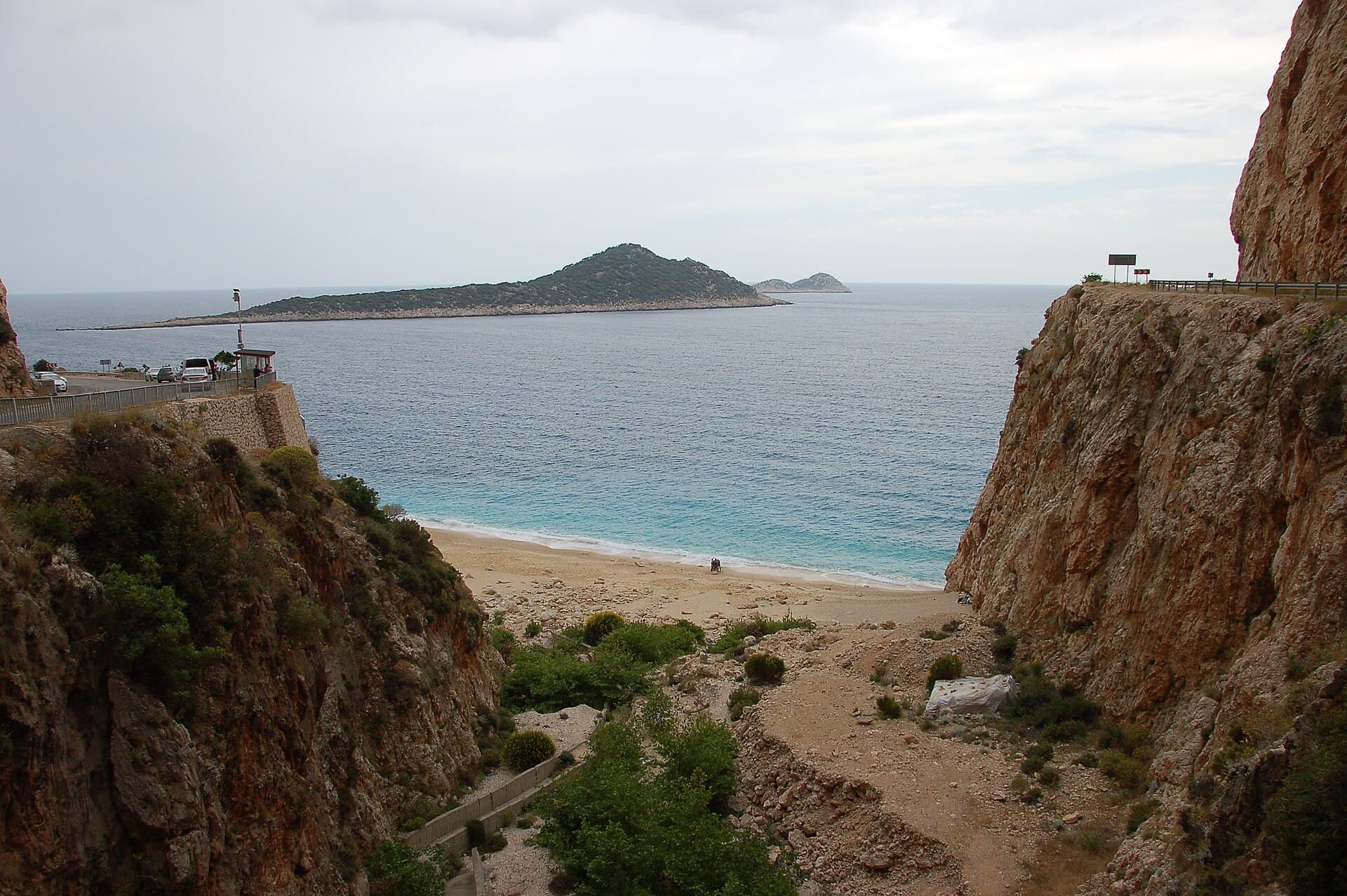
A sliver of turquoise at the foot of roughly 170 steps, wedged in cliffs between Kaş and Kalkan — arrive by 9am or skip the car entirely.
A canyon carved by seasonal floodwater meets the sea in a narrow gap in the cliffs on the D400 coast road, 20km from Kaş and 7km from Kalkan. The beach has no ancient history to speak of; its fame is entirely modern, built on the colour of the water and its position directly below the road.
A small entrance fee is collected locally (around 35 TL as of summer 2024 — two years stale; confirm the current price on arrival).
120 minAround 170 steps down from the road (some sources count closer to 187), steeper than they look in photos, with the same climb back up — factor it in for kids, knees, or midday heat.Parking is a handful of roadside spaces on a blind bend of the D400; it fills by mid-to-late morning in season and the road itself backs up. Arrive by 9:30 or expect to circle.The beach is small; this is a swim-and-photo stop, not a full-day sprawl of sand.+1 more to know
A separate sea cave locally called the Blue Cave is sometimes sold as a nearby boat-tour add-on — don't confuse it with the better-known Blue Cave on Kastellorizo/Meis, a different cave entirely.
Look for: The short canyon on the inland side of the road, walkable a couple of hundred metres in when it's dry. Water that turns from turquoise to deep blue within a few strokes of the shore — it drops off fast.
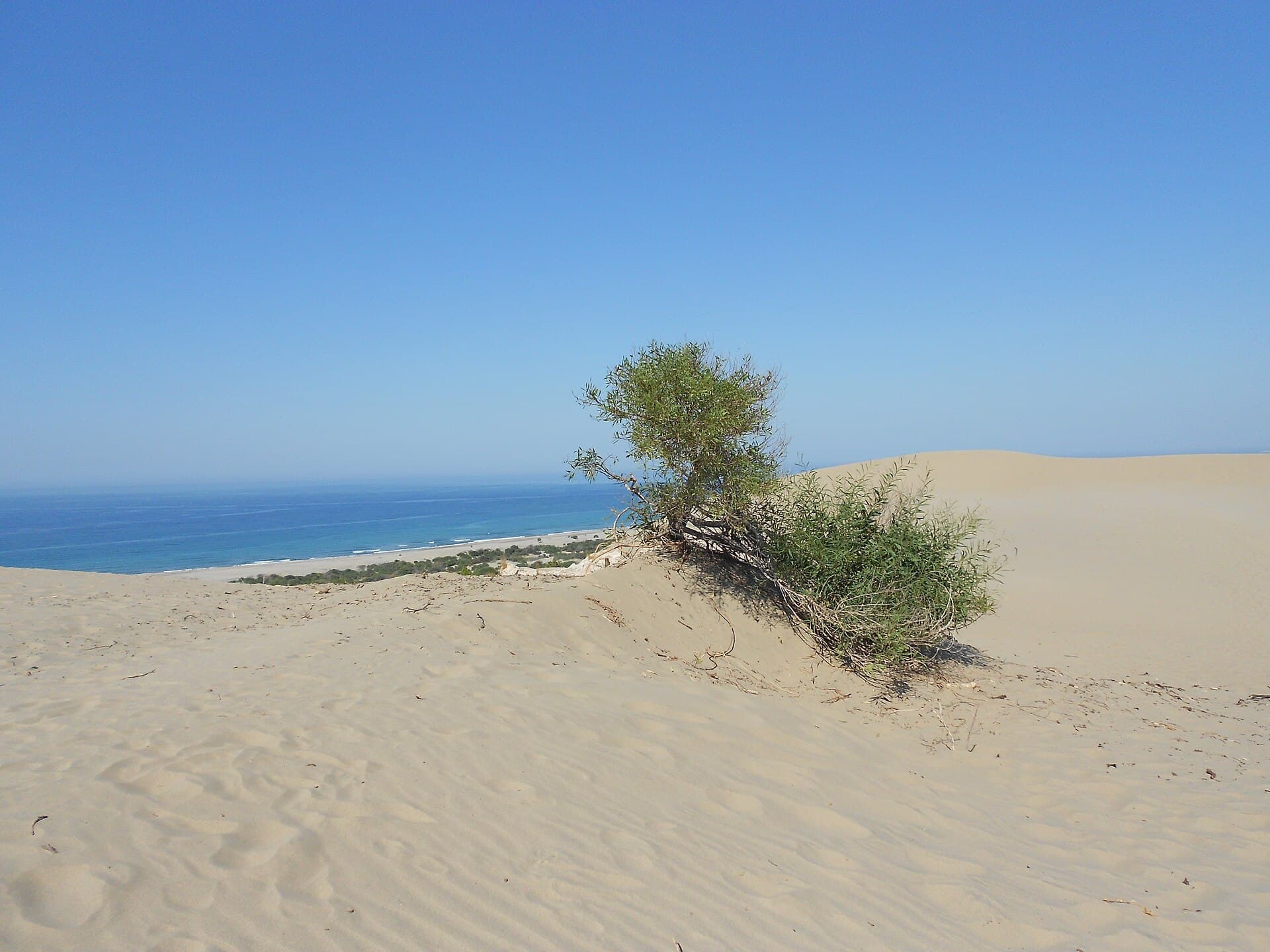
Türkiye's longest beach, backed by dunes instead of hotels — closed to everyone from 8pm to 8am all summer so loggerhead turtles can nest.
Sand dunes built up over centuries as Patara's harbour silted and the sea receded, leaving a long open beach where the ancient port once stood. It's one of the Mediterranean's significant nesting beaches for the loggerhead turtle, Caretta caretta, monitored and protected for decades.
Covered by the Patara Ancient City ticket (€15, DÖSİMM tariff, verified Aug 2026) — one gate, one ticket for both.
120 minClosed to the public from 8pm to 8am every night from 1 May to 30 September under a nationwide loggerhead-turtle protection rule. Camping, fires, tents and vehicles on the sand are banned outright, with fines reported up to roughly 700,000 TL for individuals. This is enforced, not a formality.Marked, roped sections of sand are active turtle nests — walk around them.Very little shade across the dunes; midsummer sand gets scorching underfoot by midday.
Look for: Marked-off, roped sections of sand where volunteers have flagged turtle nests — walk around them, not through. The dune field behind the beach, some of the largest on this coast.
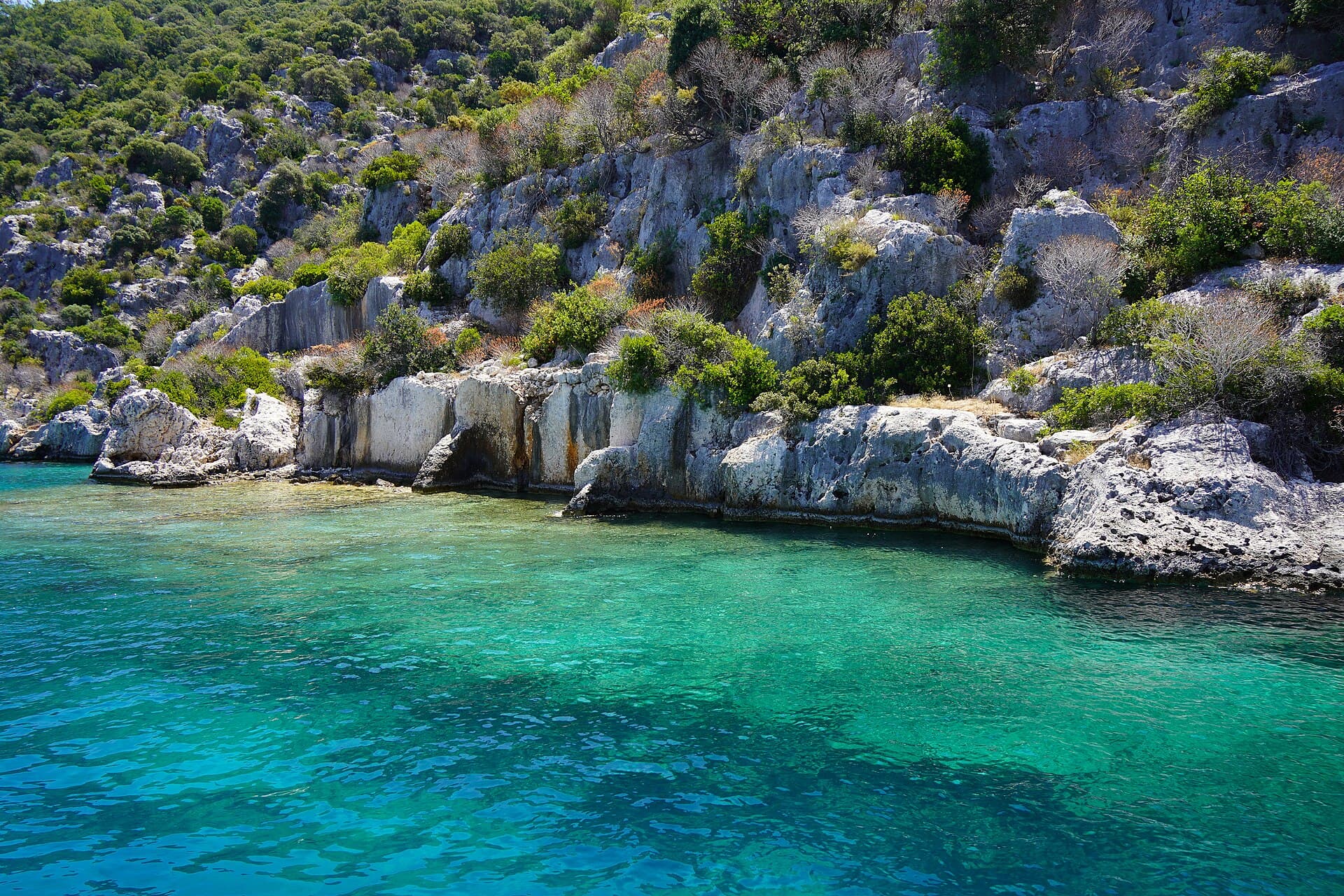
A Lycian-Roman town dropped into the sea by an earthquake — seen through clear water from a boat, its walls and stairs, never swum over.
Kekova island's north shore held Dolichiste, a Lycian-Roman town dropped into the sea by an ancient earthquake; house foundations, a stairway and wall sections now sit just under the surface. Türkiye protected the bay as a Special Environmental Protection Area on 18 June 1990, one of the country's earliest marine conservation zones, after years of undocumented looting.
Boat tours priced per operator — full-day from Kaş around 2,250 TL including lunch per one 2026 operator price page; shorter Üçağız departures cost less. Treat any figure as a moving target and confirm when booking.
480 minSwimming, diving, snorkelling and anchoring directly over the sunken ruins are banned and enforced by coast guard patrols, with real fines. This is a hard rule, not a soft suggestion.Not every boat tour idles long enough at the sunken city to actually see it well — ask what the operator's stop pattern is before booking, especially on cheaper, larger group boats.A full day from Kaş is a long day on a boat with sun exposure throughout; there's little shade on deck on most vessels.
Look for: The rock-cut staircase running straight into the water, best seen at midday sun with the boat engine cut. Swimming, diving and anchoring are banned over the ruins; boats stop at Tersane and Aquarium bays nearby for a swim instead.
Twice, when a siege was lost, the city chose mass suicide over surrender — the ruins left are the first Turkish site UNESCO ever listed.
Capital of the Lycian League. In 540 BC, cornered by the Persian general Harpagos, Xanthians burned their families and treasure on a pyre inside the city and died fighting rather than surrender — Herodotus records it. In 42 BC, besieged by Brutus, they did it again; he reportedly wept. Xanthos-Letoon became Türkiye's first UNESCO World Heritage Site in 1988.
€3 (DÖSİMM tariff, verified Aug 2026).
90 minLittle shade and no on-site café; bring water, especially outside the current 08:00–20:00 hours, which look like extended summer-season hours and may shorten off-season.Much of the finest carved stonework, including the Nereid Monument, was removed to the British Museum in the 1840s — the site is ruins and setting, not sculpture.About 45 minutes by road from Kaş or Kalkan; there's no realistic way to reach it without a car, taxi or tour.
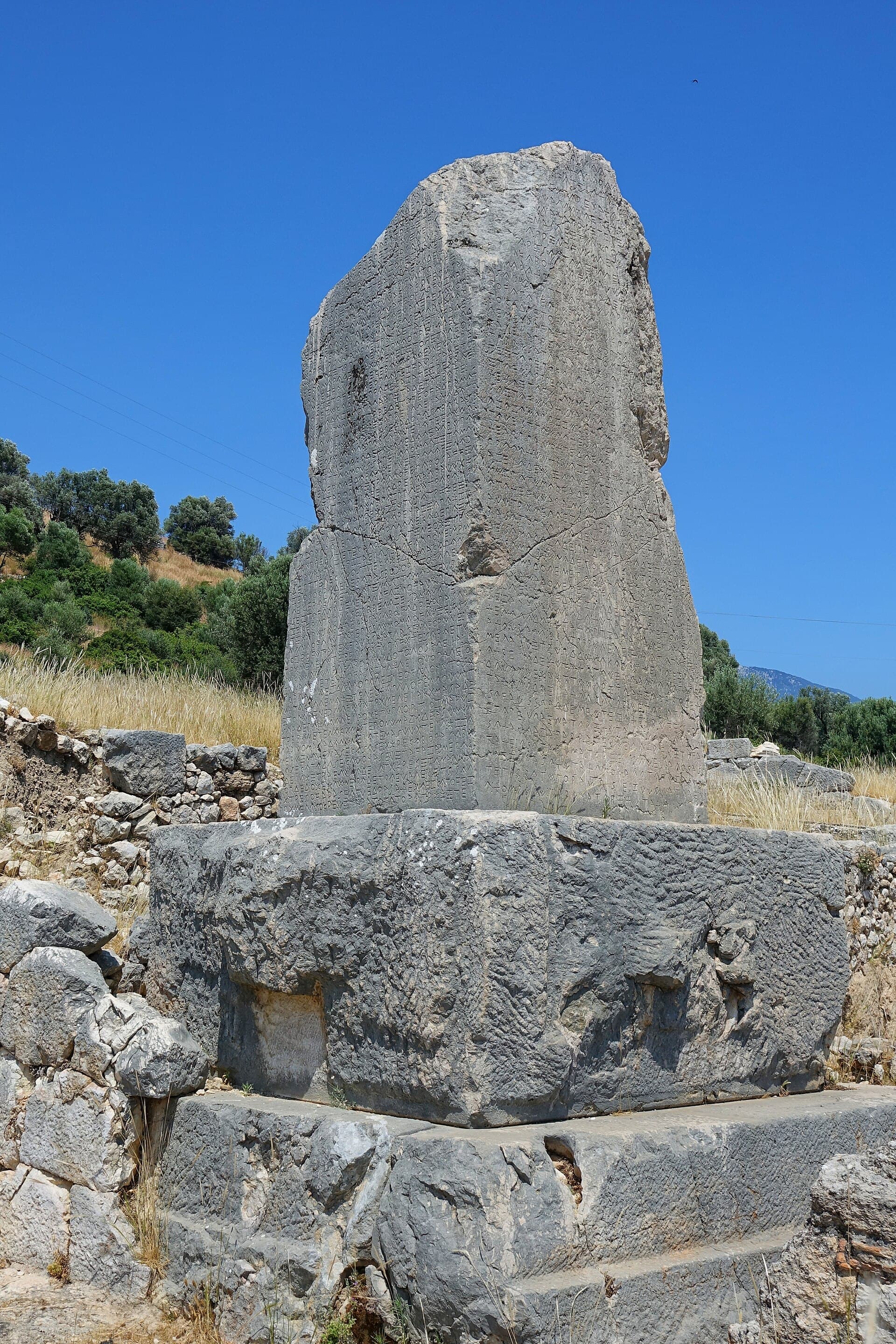
Look for: The Inscribed Pillar Tomb, four metres tall, carrying the longest surviving Lycian inscription. Fifteen monumental tombs, more than any other Lycian site. The spring İnpınarı still irrigates local fields through the ancient water system.
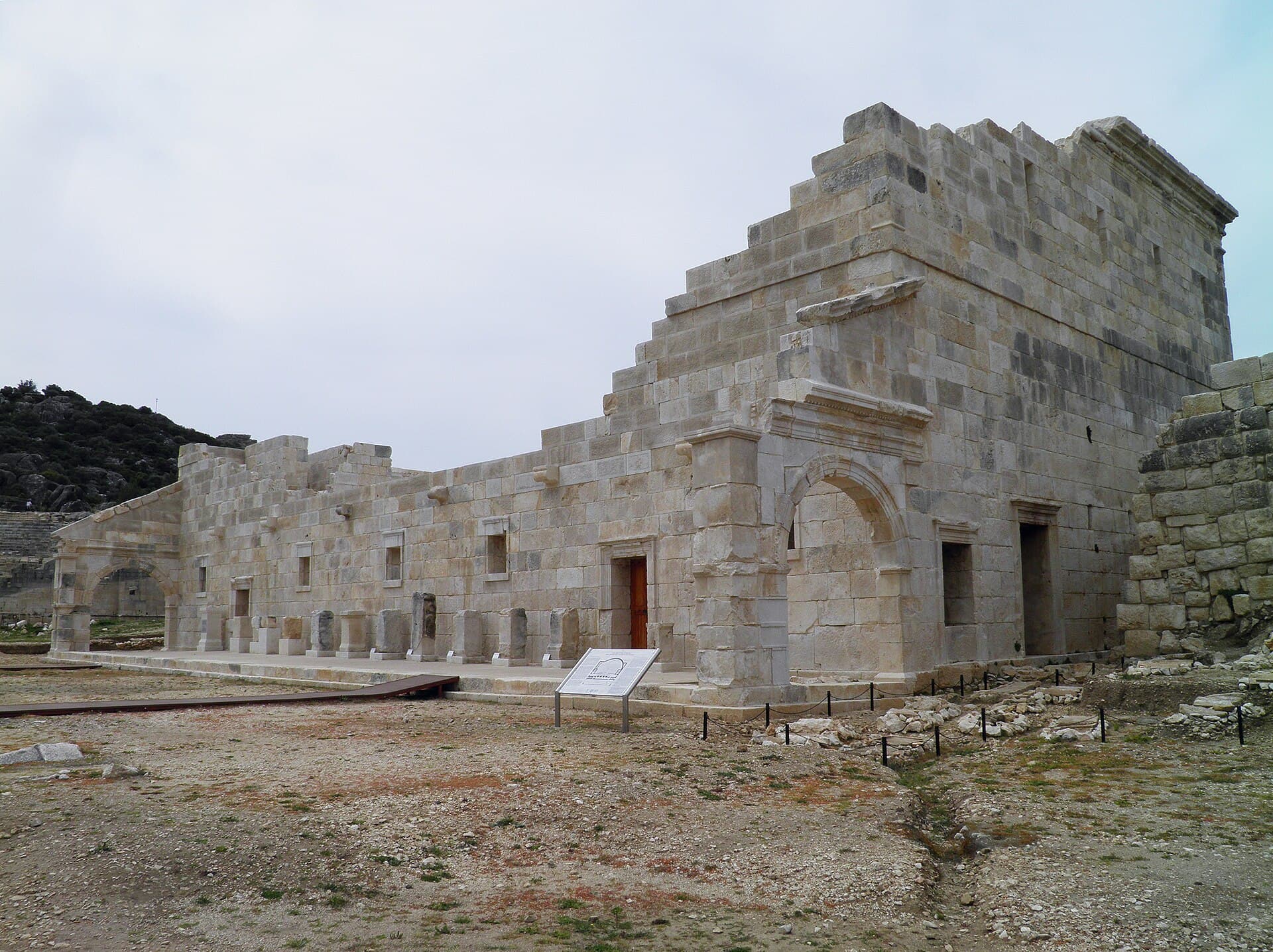
The Lycian League's federal capital, with its own parliament building still standing — and Saint Nicholas's actual, historical birthplace.
Lycia's most powerful city for much of antiquity, given the maximum three votes in the Lycian League's assembly after 176 BC. Alexander took it in 333 BC; Rome annexed it in 43 AD. Saint Nicholas, the historical figure behind Santa Claus, was born here around 270 AD. Its harbour, once Lycia's busiest, silted over centuries and the city was deserted by around 1340.
€15 (DÖSİMM tariff, verified Aug 2026) — confirm at the gate; the ticket also covers Patara Beach (consistent across secondary sources, not independently confirmed on a primary Ministry page).
150 minVery little shade across most of the site; the walk between the theatre and the far end of the aqueduct is longer than it looks — carry water.The €15 fee is current as researched (Aug 2026) but DÖSİMM tariffs change with little notice — confirm before you go.The site and the beach share one ticket and gate; keep it if you plan to walk through to the sand.
Look for: The bouleuterion, the League's actual assembly hall, restored enough to read as a building. The Nero-era lighthouse ruin near the dunes. The 22.5km Roman aqueduct's inverted siphon at Delikkemer, a short drive inland.
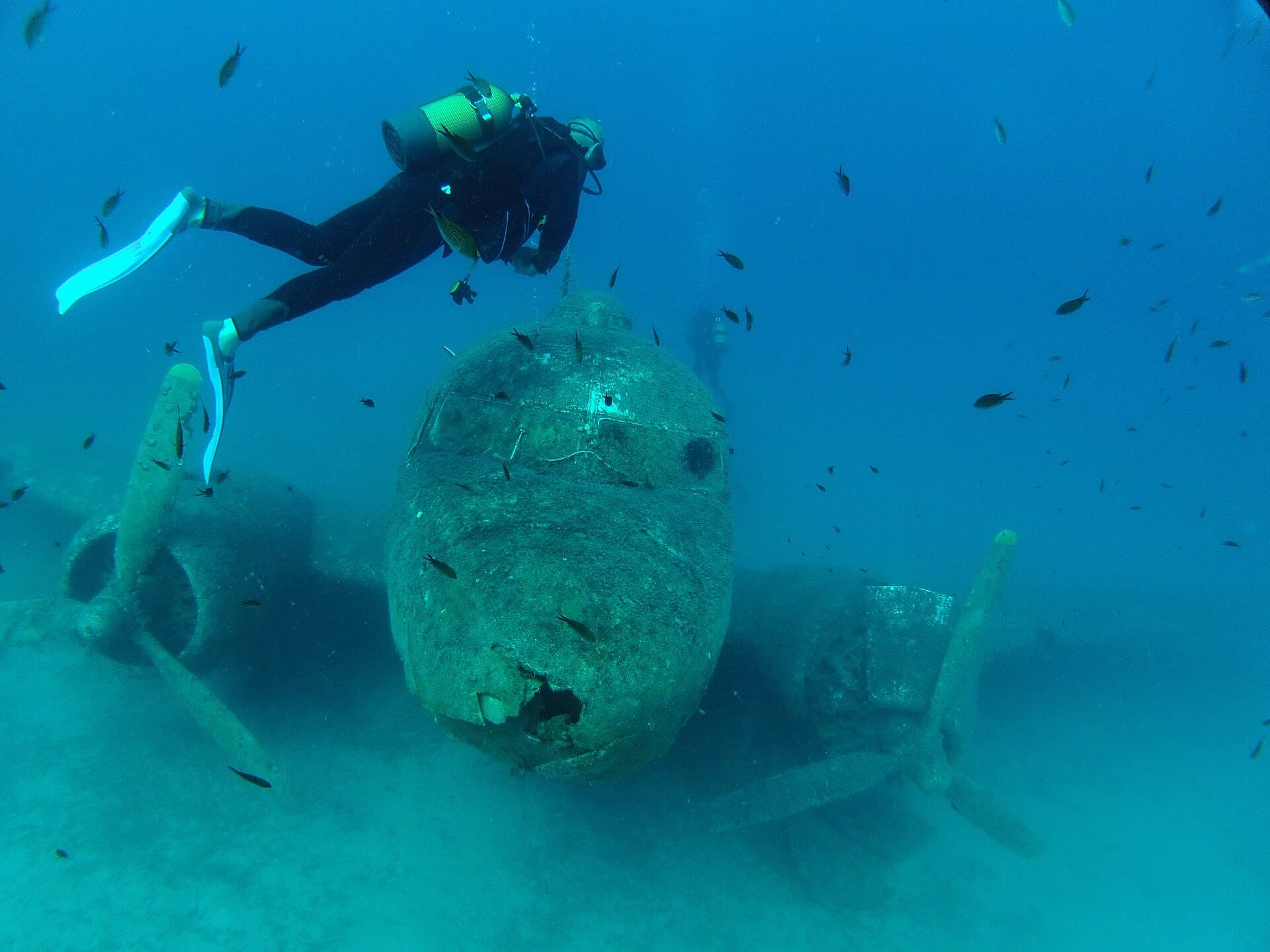
Twenty-plus dive sites within a short boat ride and visibility that regularly reaches 30 metres — the best-regarded dive base on this coast.
Kaş's dive scene grew from the 1990s onward around exactly what still draws divers: clean water with little river silt nearby, a rocky coastline riddled with caves, canyons and drop-offs, and a scatter of wartime and artificial wrecks within easy boat range. It now holds more dive centres than anywhere else on this stretch of coast, several holding PADI 5-Star status.
Two-tank trips and try-dives are priced per operator, typically in EUR — get a current quote when booking; no single Kaş-wide rate exists.
300 minThe C-47 Dakota (about 22m, open to newer divers with a guide) and the "Flying Fish" wreck (50–65m, technical divers only) are frequently confused when booking — confirm which is actually on the day's plan.Water temperature swings from around 20°C in May to the high 20s°C in August and back down by October — bring or hire the right wetsuit for the month, not just the season.Bring your certification card. Reputable operators check it before any dive beyond a shallow try-dive.
Look for: Assı Island's reef for octopus, barracuda and grouper. A scuttled C-47 Dakota at around 22m, an accessible wreck. The much deeper "Flying Fish" wreck at 50–65m is technical-only — the two are easy to confuse.
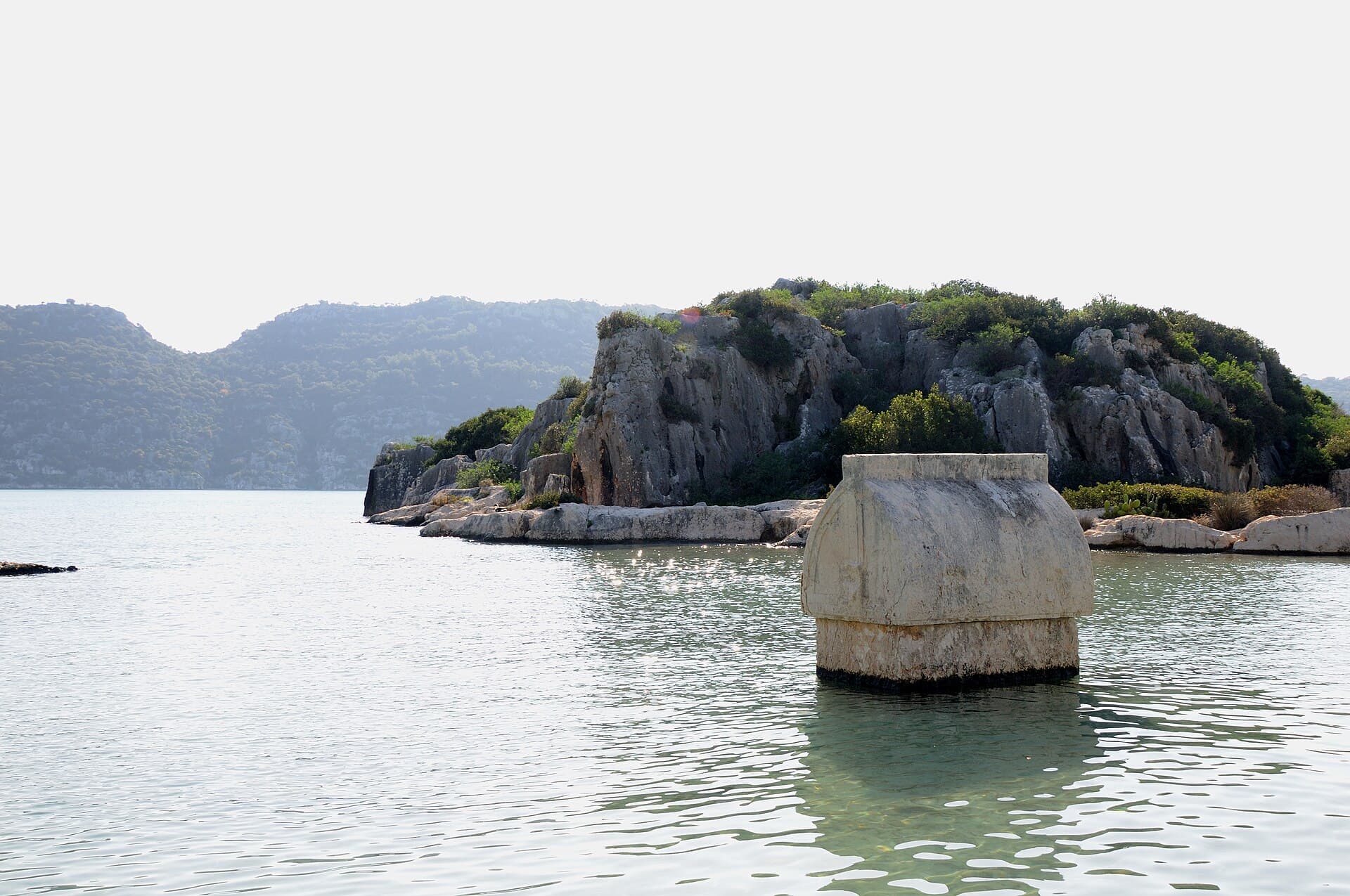
No road reaches it, only a boat or footpath — the payoff is a castle with a rock-cut theatre inside it and a sarcophagus half-sunk offshore.
Ancient Simena, a minor member of the Lycian League, dwindled to a fishing hamlet after antiquity and stayed cut off from the road network that reached everywhere else on this coast. A Byzantine-era castle crowns the hill above the harbour, built partly to watch over the same bay where Kekova's ruins now sit submerged.
A small entrance fee is charged locally to climb into the castle — exact current amount not verified; confirm on arrival.
90 minReachable only by boat (from Üçağız in a few minutes, or a longer trip from Kaş or Demre) or on foot via a roughly 30-minute coastal path from Üçağız — there is no road and no vehicle access of any kind.Most visitors see it as a stop on a wider Kekova boat tour, which usually means a fixed amount of time before the boat moves on — say so if you want longer.Uneven stone paths and a genuine climb to the castle; not easy going in flip-flops or with limited mobility.
Look for: The rock-cut theatre seats inside the castle walls, a genuinely unusual pairing. The half-submerged Lycian sarcophagus a few metres offshore, tipped by the same ancient earthquake activity that sank Kekova's ruins nearby.
A whitewashed harbour town built over the ancient theatre-city of Antiphellos, with Lycian sarcophagi standing in ordinary side streets.
Kaş grew on the site of ancient Antiphellos, once a dependency of Phellos that outgrew its parent city under the Lycian League. Greek Orthodox residents, who knew the town as Andifli, left in the 1923 population exchange; a new tourism-driven identity — divers, hikers and independent travellers rather than package coaches — took shape from the 1990s onward.
Free to walk; the town itself has no admission.
150 minThe town's own coastline is small pebble coves, not a swimming beach — the real beaches and boat trips are day excursions, not a walk from your hotel.Harbour-front restaurant touting is a normal part of the evening here, as on most of this coast; a polite decline works better than engaging.Çukurbağ peninsula hotels a few kilometres out are a longer walk or short dolmuş/taxi from the old town centre than they can look on a map.
Look for: Lycian sarcophagi standing between ordinary houses, a five-minute walk from the harbour. The dive boats, Kekova tour boats and the Kastellorizo ferry all working the same small harbour at once.
The quiet, upmarket half of this destination — stone lanes and rooftop dinners above a harbour once the only safe anchorage near Fethiye.
Built by a Greek Orthodox fishing community that knew it as Kalamaki, left in the 1923 population exchange; Turkish families, many originally from Crete, resettled it. Cut off for decades once the coastal road bypassed it, it declined into a quiet backwater before rebuilding itself from the 1980s onward as a small, deliberately upscale resort, long dominated by British visitors and buyers.
Free to walk; the town itself has no admission. Expect meaningfully higher restaurant and hotel prices than Kaş.
120 minSteep, narrow, stepped lanes throughout the old town; awkward with luggage or limited mobility, and largely closed to vehicles.Genuinely upmarket pricing for this coast — restaurants and hotels run noticeably higher here than in Kaş or almost anywhere else nearby.The town itself has little in the way of a swimming beach — Kalkan's coastline is mostly rock and small jetties; Kaputaş and Patara are the swimming destinations, both a drive away.
Look for: Two- and three-storey stone houses with carved wooden balconies and pantiled roofs, climbing steeply from the harbour. Domed cisterns tucked between buildings, a quiet holdover from when the town had to store its own water.
A Hellenistic theatre cut into the hillside and turned to face the sea, not away from it — free to enter, and Kaş's best sunset seat.
Built in the 1st century BC for ancient Antiphellos, seating an estimated 3,000. Restored in 2008. Its orientation toward open water rather than inland is unusual among Anatolian theatres of its period.
Free.
30 minA short uphill walk from the harbour on uneven stone; sits open and unfenced, so watch footing on the seat rows, especially after dark.No shade at all — a sunset or evening visit works far better than midday.
Look for: The horseshoe-shaped auditorium and round orchestra typical of Hellenistic design. The sea view straight down the rows — sit anywhere in the upper tiers for it.
A 4th-century BC royal sarcophagus with carved lions on the lid, standing on Kaş's main bazaar street as if it were just another shopfront.
Known locally as Kral Mezarı, carved from a single block in the 4th century BC and raised on a high base, with an eight-line Lycian inscription on its lower body. Further rock-cut tombs, temple-facade style, are set into the cliffs directly above the old town and lit at night.
Free; no ticket booth — it stands in the open street.
15 minIt's a working shopping street, not a fenced monument — treat the tomb with the same respect you would inside a museum, even without a barrier.
Look for: The twin lion-head reliefs on the sarcophagus lid and the Lycian inscription beneath them. The cliff tombs above town, visible from several points around the harbour after dark when they're lit.
The burial church of the historical bishop behind Santa Claus, 45 km from Kaş.
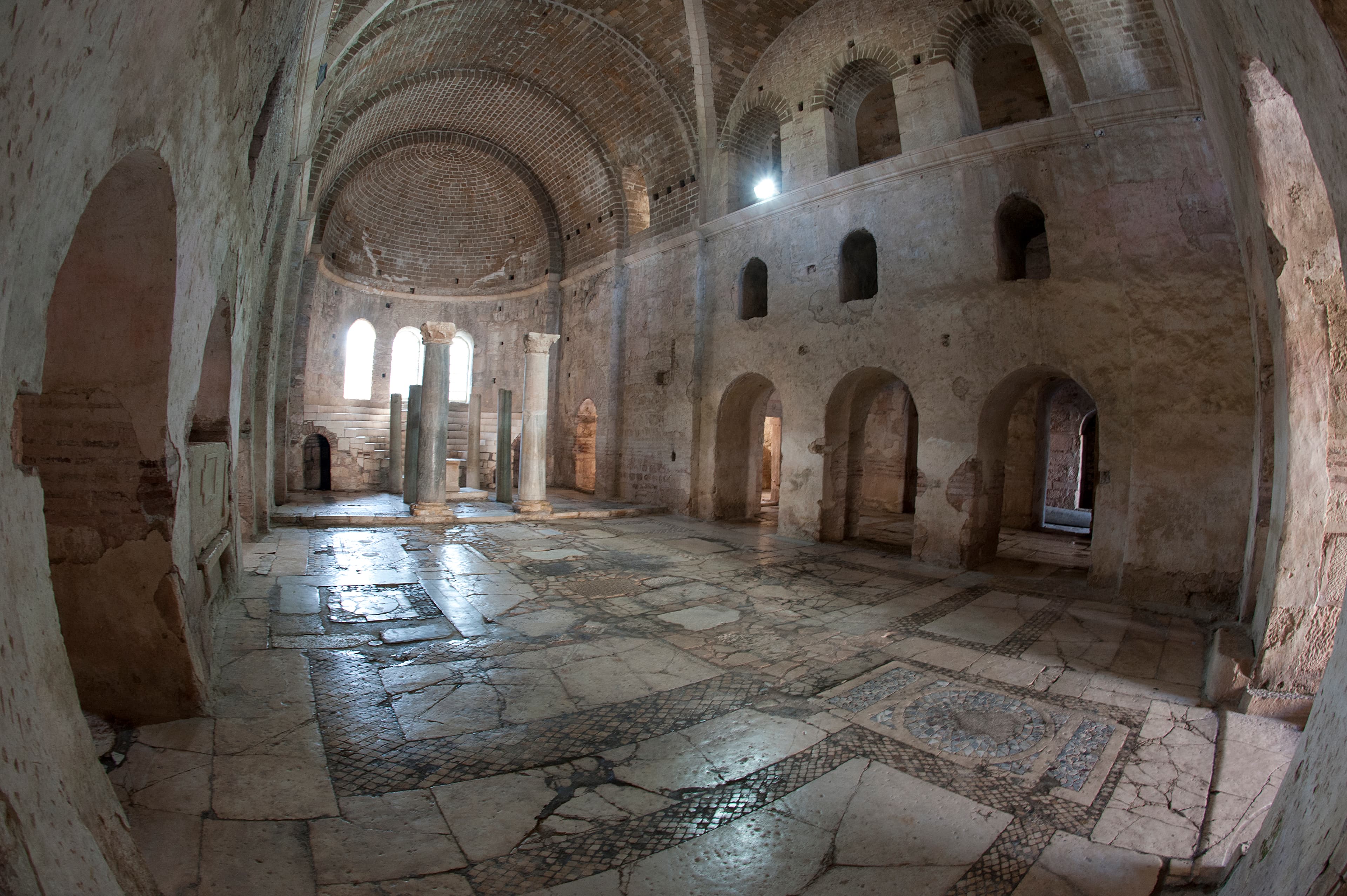
Built around AD 520, the basilica stands over the burial place of Nicholas, a 4th-century bishop of Myra who became the source of the Santa Claus legend. Active until 1923, it is now a museum. Russian Tsar Nicholas I funded a 19th-century restoration; a sarcophagus once thought to hold Nicholas's remains survives inside — his bones were moved to Bari, Italy in 1087.
Paid entry, payable on site
60 minCan be crowded with tour groups middayFrescoes are faded and fragmentary in places
Look for: Byzantine wall frescoes depicting scenes from Nicholas's life, opus sectile floor and wall decoration, and the marble sarcophagus associated with his original burial.
Three temples to Leto, Apollo and Artemis — the Lycian League's religious counterpart to Xanthos, and part of Türkiye's first UNESCO site.
A sanctuary rather than a city, in cult use from around the 7th century BC and the religious centre of the Lycian League. Excavators found a stele here in 1973 inscribed in Lycian, Greek and Aramaic — central to deciphering the Lycian language — now held at Fethiye Museum. Xanthos-Letoon together became Türkiye's first UNESCO World Heritage Site in 1988.
€3 (DÖSİMM tariff, verified Aug 2026).
45 minThe famous trilingual stele that helped decipher the Lycian language is not on site — it's in Fethiye Museum, about an hour away.Low-lying ground; can be damp underfoot after rain.Usually visited as a short add-on to Xanthos, 4km north — few visitors treat it as a standalone trip, and that's a reasonable read of it.
Look for: The three temple foundations, set in a row, dedicated to Leto, Apollo and Artemis. A well-preserved Hellenistic theatre nearby. The find-spot of the trilingual stele, whose actual stone is in Fethiye, not here.
The road-accessible fishing village most Kekova boats leave from — ancient Teimiussa's tombs sit right at the waterline by the harbour.
Known in antiquity as Teimiussa, a minor Lycian port that served as the harbour and, later, a favoured burial ground for citizens of larger inland cities like Myra and Kyaneai. Its modern name, meaning "three mouths," refers to the three channels of water meeting at the village.
Free to walk; boat tours priced separately per operator.
60 minThis is a functioning fishing harbour turned boat-tour hub, not a polished sight in itself — the appeal is the tombs, the setting, and being the practical gateway to Kekova.Boats here run shorter, more focused Kekova routes than the full-day tours from Kaş — confirm what's actually included (Kaleköy stop, swim bays) before booking.
Look for: Rock-cut tombs and sarcophagi right along the shoreline east of the harbour, some partly in the water. Shorter, cheaper Kekova boat departures than the full-day tours out of Kaş.
Kastellorizo — Meis in Turkish, Megisti to its own residents — is Greece's easternmost inhabited island, closer to the Turkish coast than to any other Greek land. A seasonal ferry link with Kaş has run for years, built entirely around day-tripping tourists rather than any practical transport need between the two countries.
Around €28 return per one 2026 operator's quoted price, plus port taxes of roughly €10–18 total paid in cash — confirm current pricing when booking; it is operator- and season-dependent.
A passport (or valid ID accepted for the crossing) is required — this is an international border into Greek territory, not a boat trip within Türkiye.Runs 1 May to 31 October only. Outside that window there is no way to make this trip.Port taxes are typically paid separately, in cash, in euros, on both the Kaş and Kastellorizo sides — budget for this beyond the ticket price.+1 more to know
Don't confuse this island's Blue Cave with the different sea cave of the same name near Kaputaş, back on the Turkish mainland.