Patara Ancient City
The Lycian League's federal capital, with its own parliament building still standing — and Saint Nicholas's actual, historical birthplace.
Enough context, no spoilers
Why it matters
Lycia's most powerful city for much of antiquity, given the maximum three votes in the Lycian League's assembly after 176 BC. Alexander took it in 333 BC; Rome annexed it in 43 AD. Saint Nicholas, the historical figure behind Santa Claus, was born here around 270 AD. Its harbour, once Lycia's busiest, silted over centuries and the city was deserted by around 1340.
What to know before you go
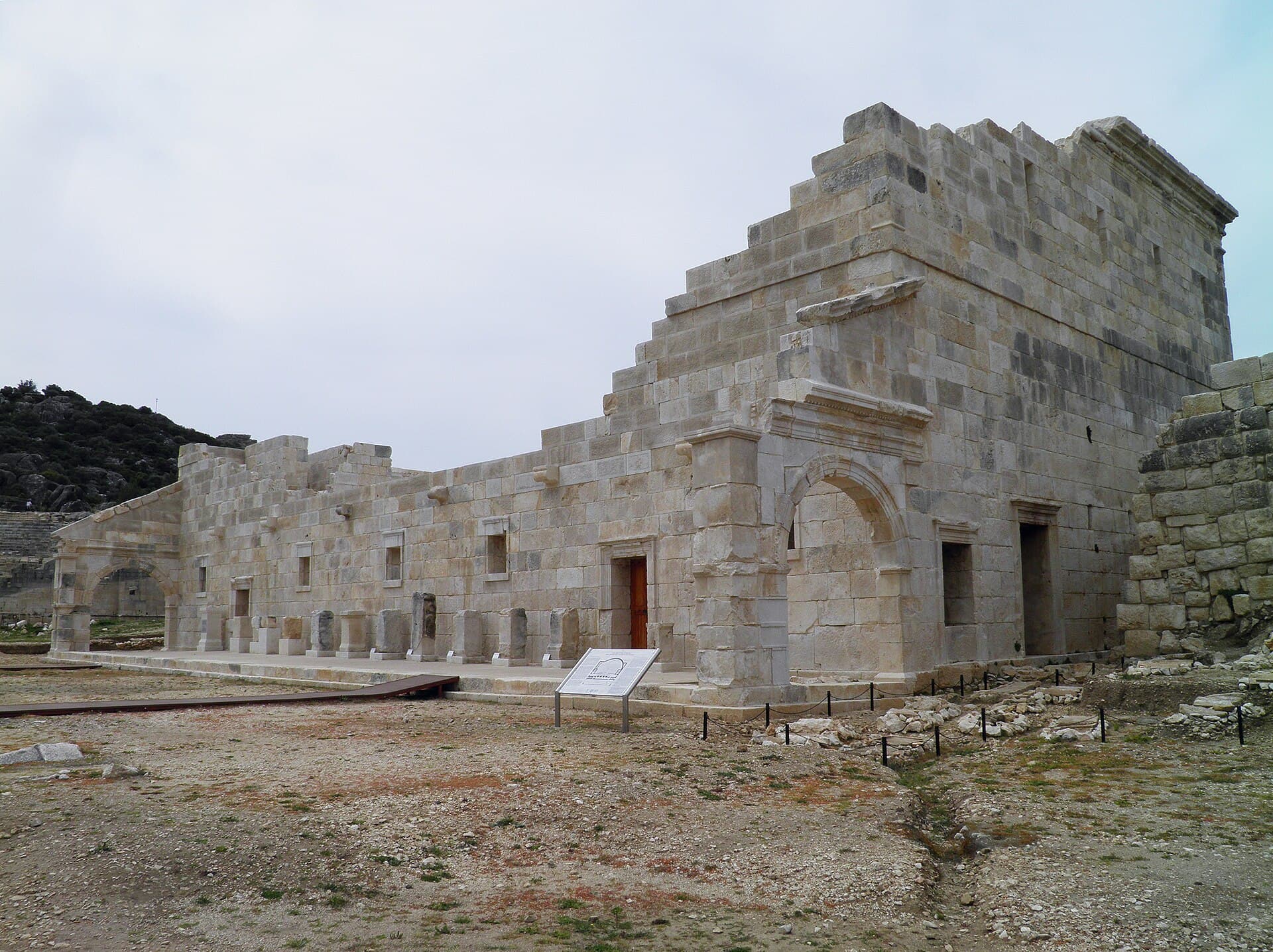
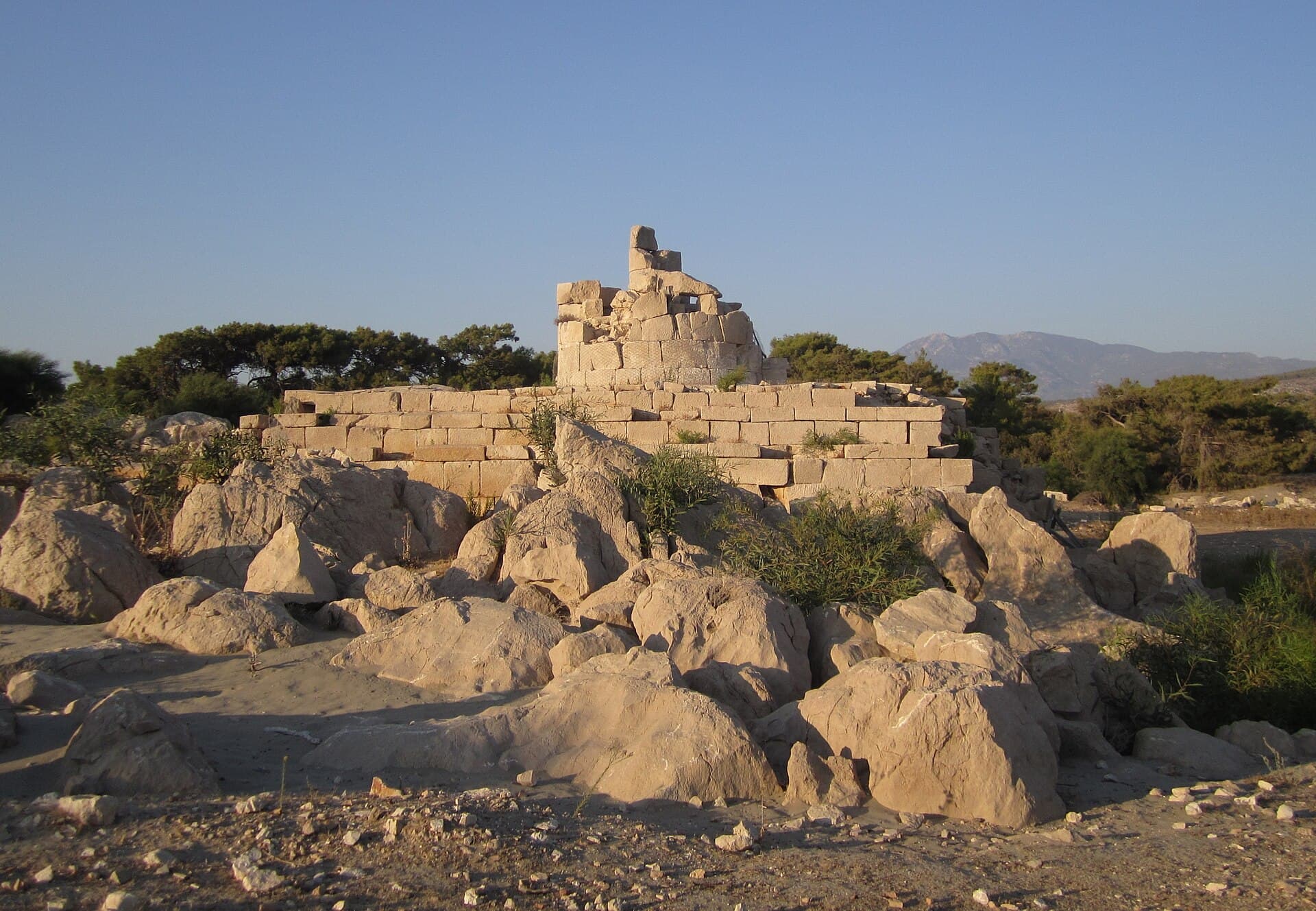
Patara's ruins ask more of you than most Lycian sites, because the city that stood here mattered more than almost any other in the region, and very little of that is obvious on a casual walk-through. This was not a satellite town. From 176 BC the Lycian League — a federation of Lycian cities that met, argued and voted here — gave Patara the maximum three votes of any member, more than Xanthos itself. Its bouleuterion, the League's parliament building, restored enough in recent years to read clearly as a semicircular hall rather than a heap, is the closest thing on this coast to standing inside actual Lycian self-government rather than just admiring its temples. The city's wealth came from its harbour, the busiest in Lycia, marked at its mouth by a lighthouse Nero's engineers built in 60 AD. That harbour is the whole reason Patara is a ruin rather than a town: it silted, slowly, over centuries, until ships couldn't reach it, the population drained away, and by around 1340 the city was empty. What used to be open water is now the dune field you cross to reach the beach. There is a second story worth carrying with you here, less architectural and more strange: Patara is where Saint Nicholas was born, about 270 AD, decades before he became bishop of nearby Myra and many centuries before Dutch and German immigrants turned him into Santa Claus in America. Nothing at the site marks this in a way that will move you — no shrine, no plaque with any weight to it — but it's worth having in mind while you walk past the theatre (rebuilt under Antoninus Pius, seating about six thousand) and the long line of the Roman street, because it's a reminder that this dead federal capital produced a figure who is, in a roundabout way, still opening presents in half the world's living rooms every December. Go in the morning if you can, both for the heat and because the ticket also covers the beach — genuinely worth timing so you finish the ruins and walk straight onto the sand rather than doing them as two separate trips. Budget more time than the site looks like it needs; Patara is spread out, and the walk alone between the theatre and the aqueduct's far end is not short.