Kaş Old Town & Harbour
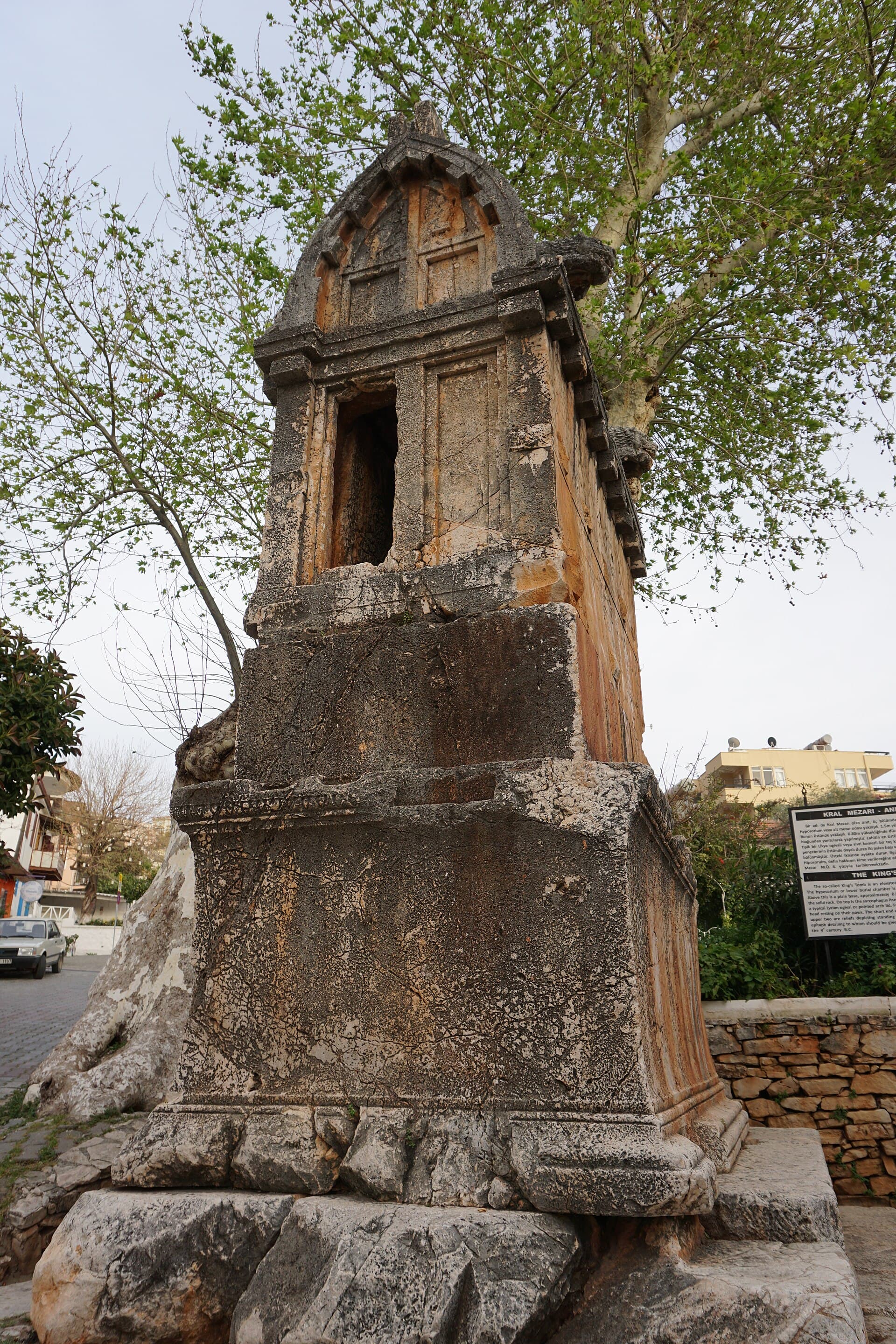
A whitewashed harbour town built over the ancient theatre-city of Antiphellos, with Lycian sarcophagi standing in ordinary side streets.
Enough context, no spoilers
Why it matters
Kaş grew on the site of ancient Antiphellos, once a dependency of Phellos that outgrew its parent city under the Lycian League. Greek Orthodox residents, who knew the town as Andifli, left in the 1923 population exchange; a new tourism-driven identity — divers, hikers and independent travellers rather than package coaches — took shape from the 1990s onward.
What to know before you go
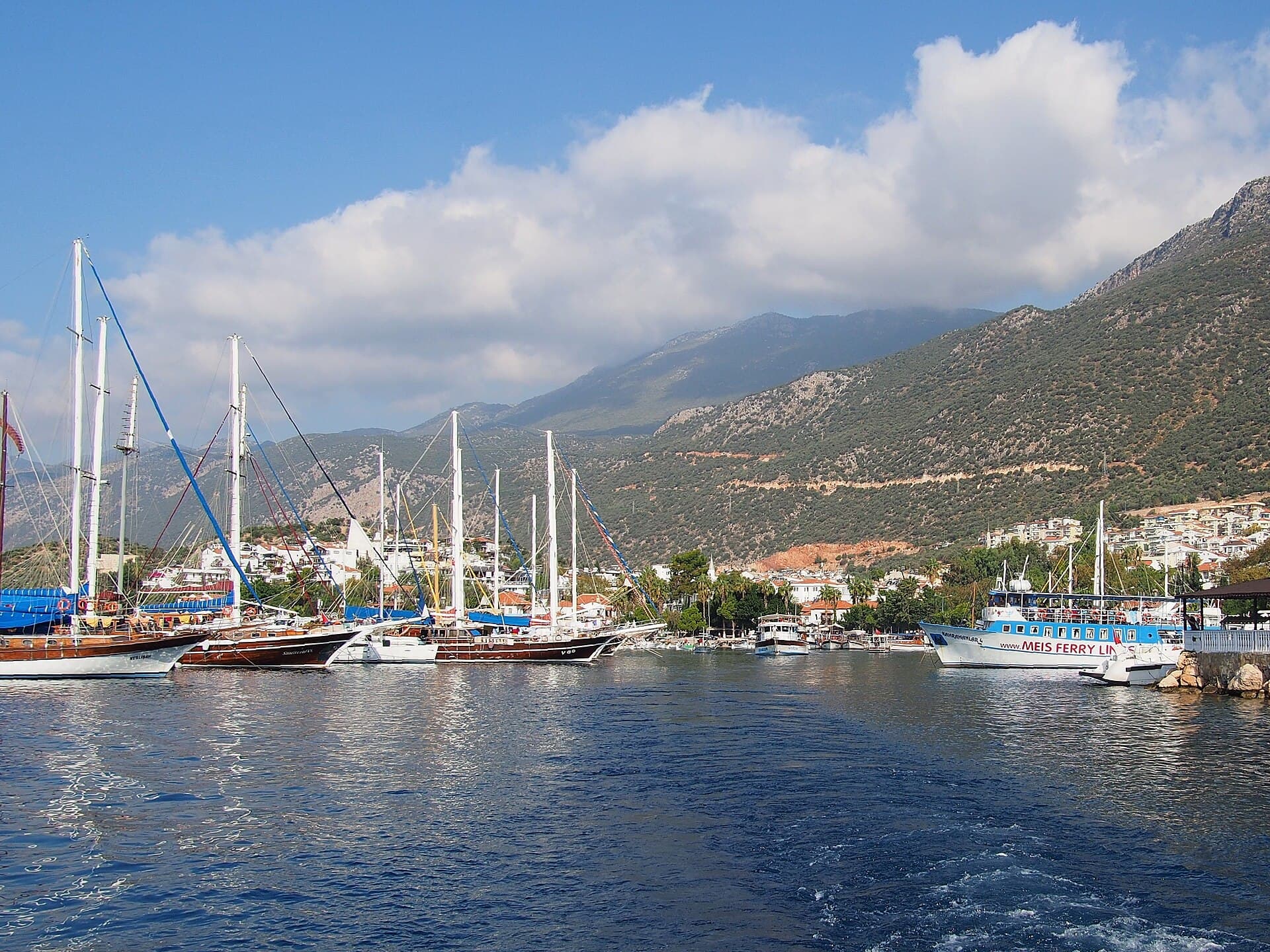
Kaş is the livelier, cheaper, younger-skewing half of this destination, and it earns that reputation honestly rather than by accident. The town is built directly on top of ancient Antiphellos, and the evidence isn't tidied into a fenced site — Lycian sarcophagi turn up between houses on ordinary residential streets, a five-minute walk from the harbour, unlabelled and unbothered by tour groups. That casualness sets the tone for the whole place. This was a Greek Orthodox town called Andifli until the 1923 population exchange sent its Greek residents to Greece and brought Muslim families from Crete and elsewhere in their place, and the whitewashed houses climbing the hill still read as more Aegean-Greek than Ottoman-Turkish in feel, even now. The harbour is small and does an unusual amount of work for its size: dive boats loading tanks before a two-tank trip, Kekova tour boats filling with day-trippers, gulets on the Blue Cruise circuit tying up for a night, and — a genuinely unusual sight on this coast — the Kastellorizo ferry taking on passengers with passports for a thirty-minute crossing to Greek territory. Kaş's whole modern identity runs through that harbour: it became one of Türkiye's best-regarded dive bases from the 1990s on, sits on the Lycian Way long-distance trail as a natural stopping and resupply point, and has consequently built up an independent-traveller, backpacker-adjacent crowd that's genuinely unusual on a coastline otherwise dominated by all-inclusive resorts. You'll notice it in the pensions instead of resort hotels, the dive-shop noticeboards, and a bar scene that runs later and cheaper than Kalkan's. Don't come to Kaş expecting a beach town in the usual sense — the coastline right in town is mostly small pebble coves rather than sand, and the real swimming happens on boat trips or at Kaputaş, not on the doorstep. What Kaş does instead is function as a base: for diving, for the Lycian Way, for Kekova and Patara day trips, and for evenings that are noticeably less expensive and less polished than twenty-five minutes down the coast in Kalkan. If that trade-off — livelier and rougher-edged over quiet and refined — sounds like your trip, this is the town to sleep in.