Diving off Kaş
Twenty-plus dive sites within a short boat ride and visibility that regularly reaches 30 metres — the best-regarded dive base on this coast.
Enough context, no spoilers
Why it matters
Kaş's dive scene grew from the 1990s onward around exactly what still draws divers: clean water with little river silt nearby, a rocky coastline riddled with caves, canyons and drop-offs, and a scatter of wartime and artificial wrecks within easy boat range. It now holds more dive centres than anywhere else on this stretch of coast, several holding PADI 5-Star status.
What to know before you go
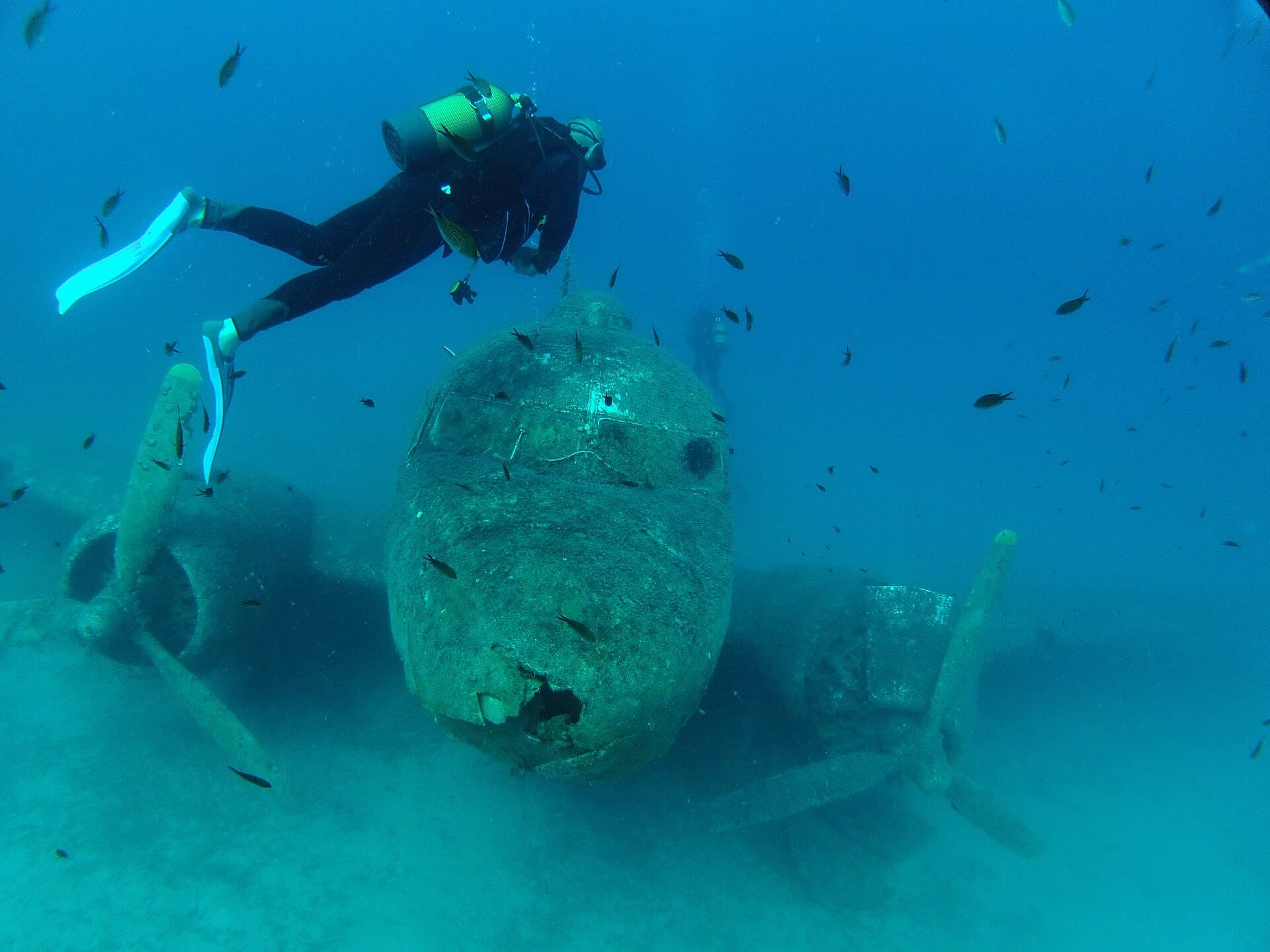
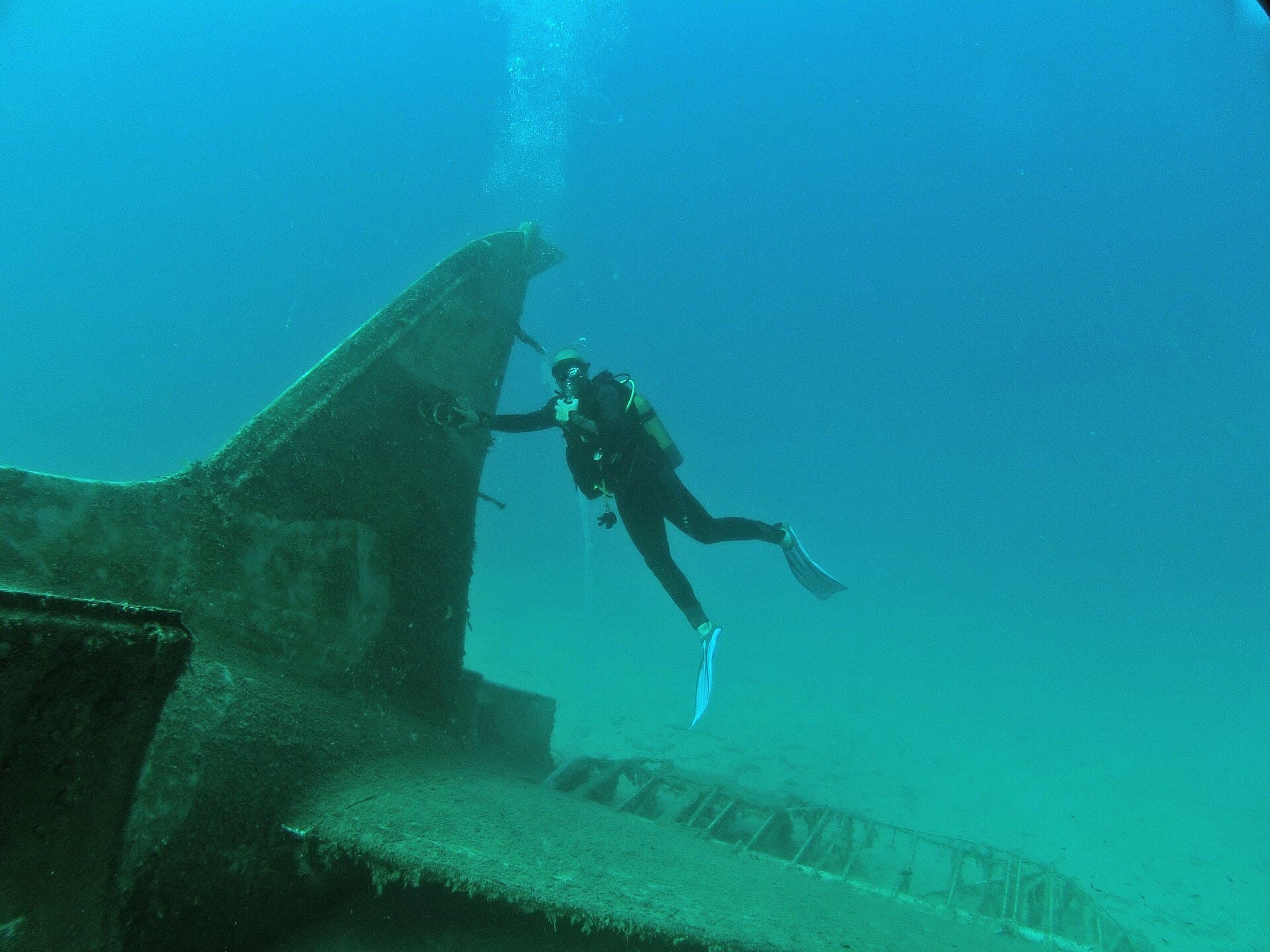
Kaş didn't get built as a dive town on marketing — it got built on geography. There's no major river silting the water nearby, the coastline is limestone riddled with canyons, caves and sheer walls rather than gentle sand, and the same currents that make the water so clear also support reef life a lot of the Turkish Mediterranean can't match: grouper, barracuda, octopus, moray eels, and the occasional loggerhead turtle drifting past. The result, on a good day, is visibility in the 25 to 40 metre range, which is genuinely rare water and the reason many divers who've spent time on this coast rate Kaş above Bodrum, Marmaris or Antalya for the diving itself, whatever those towns win on nightlife. What you actually dive depends entirely on your certification, and it's worth being precise about this before you book, because operators sell two very different wrecks under names that sound similar. A C-47 Dakota transport plane was deliberately sunk as an artificial reef at around 22 metres — sturdy, stable, and genuinely open to newer divers with a guide. The "Flying Fish" wreck, a wartime aircraft in far worse condition, sits at 50 to 65 metres and is technical-diving territory only, restricted to divers with serious depth experience and the right certification. Ask exactly which wreck is on the day's plan rather than assuming. Beyond the wrecks, Assı Island's reef, a Canyon dive with walls dropping past 20 metres, and a swim-through Tunnel site are the standard rotation for recreational divers, and most centres run two-tank half-day trips as the default. Season runs roughly May to October. Water sits around 20°C in May, climbs into the high 20s°C by August, and drops back into the high teens by October — wetsuit thickness matters more here than it sounds, since a 3mm that's fine in August leaves you cold on a May morning. If you've never dived, Kaş is a genuinely good place to try: several centres run try-dive sessions with an instructor at shallow, sheltered sites, no certification required, before you commit to anything longer. If you're already certified, bring your card — every reputable operator checks it, and that's worth trusting rather than resenting.