Kaleköy (Simena)
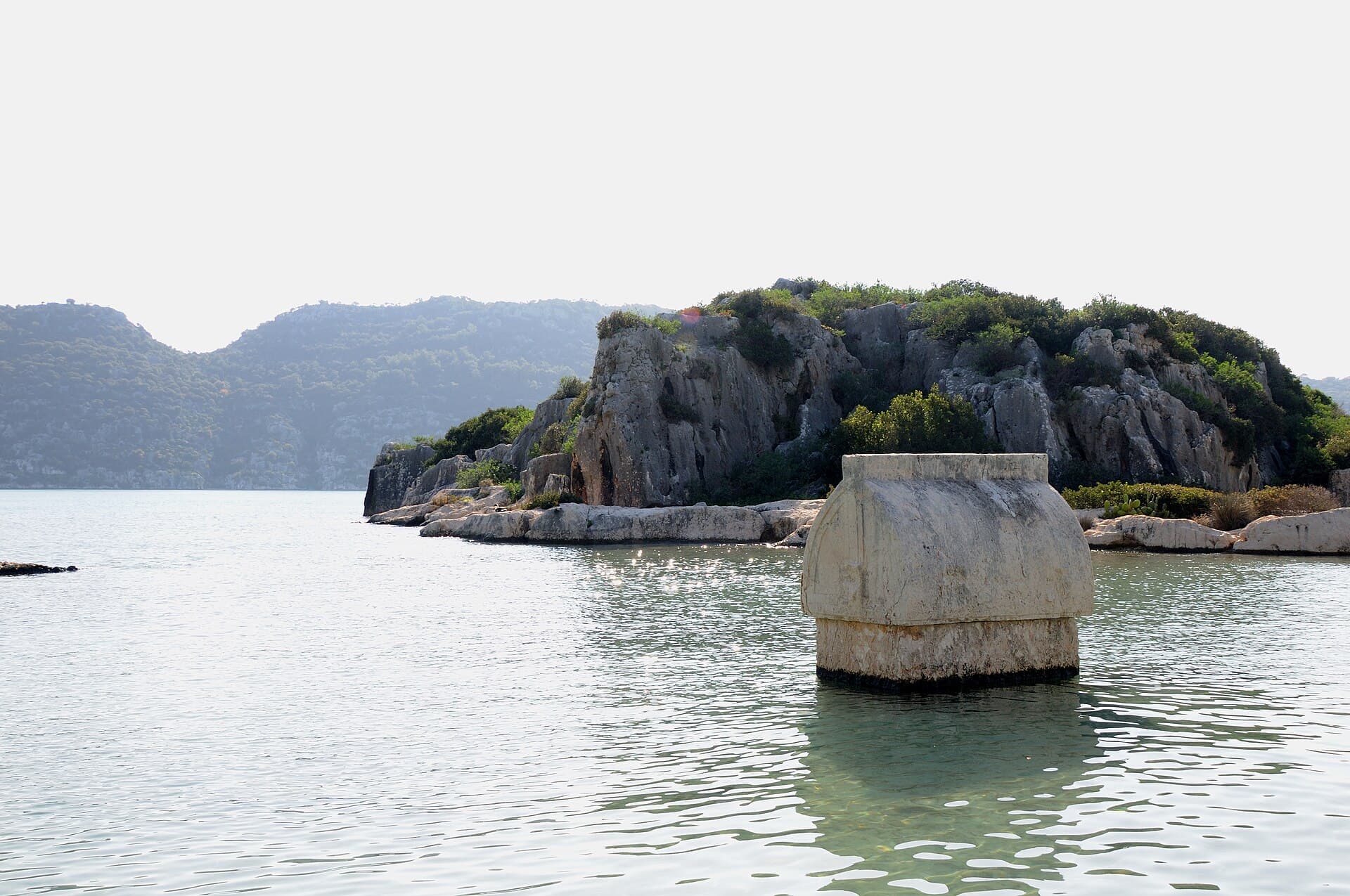
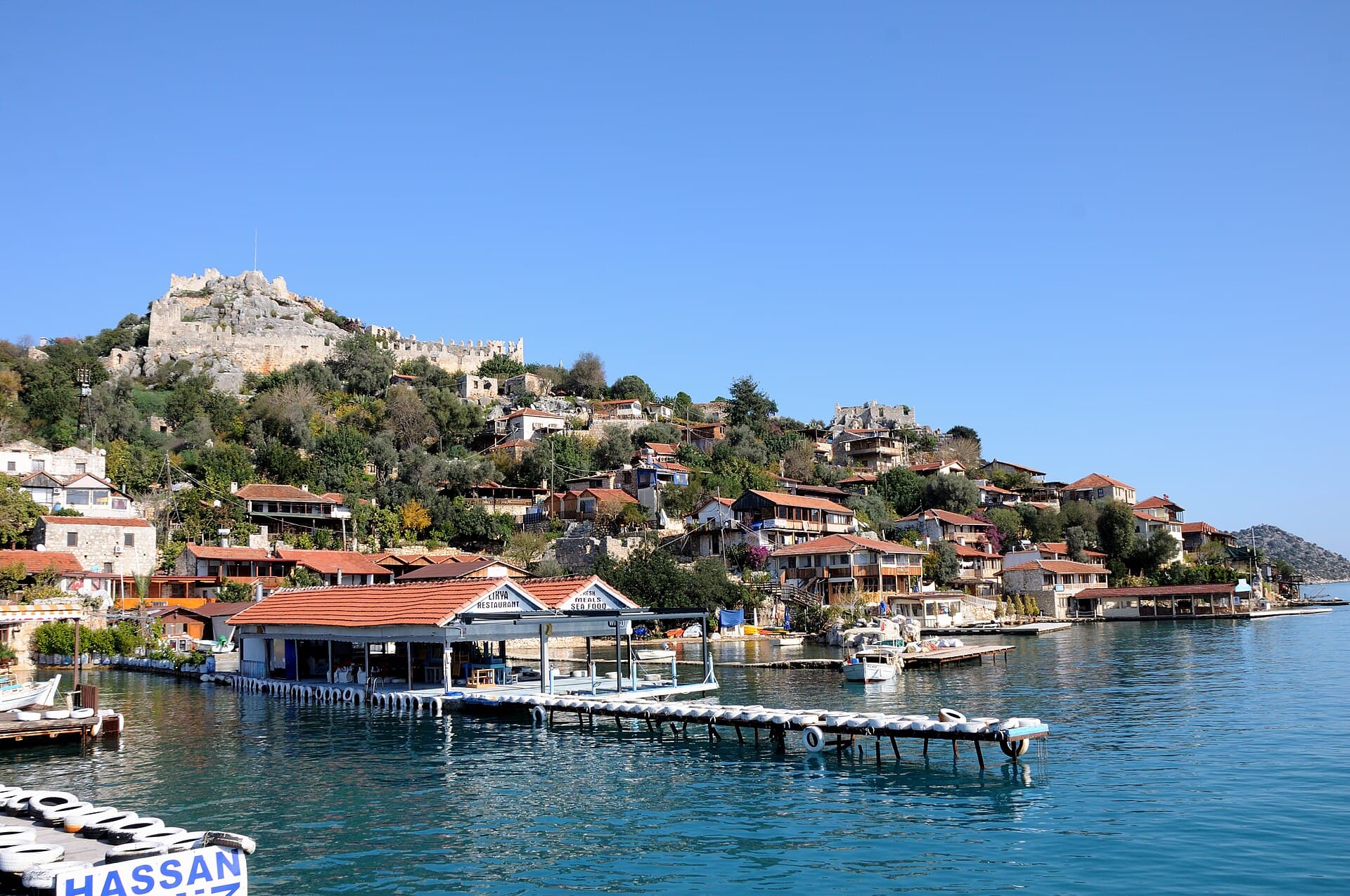
No road reaches it, only a boat or footpath — the payoff is a castle with a rock-cut theatre inside it and a sarcophagus half-sunk offshore.
Enough context, no spoilers
Why it matters
Ancient Simena, a minor member of the Lycian League, dwindled to a fishing hamlet after antiquity and stayed cut off from the road network that reached everywhere else on this coast. A Byzantine-era castle crowns the hill above the harbour, built partly to watch over the same bay where Kekova's ruins now sit submerged.
What to know before you go
Kaleköy is the payoff at the end of a Kekova boat trip, and it earns that role by being a place cars simply cannot reach. There's no road in — you arrive by boat from Üçağız in a few minutes, on a longer boat from Kaş or Demre, or on foot along a coastal path from Üçağız that takes about half an hour. That isolation is the whole character of the village: a scatter of stone houses and a handful of pensions and fish restaurants built in among Lycian tombs and Byzantine walls, with no cars, no scooters and no crowds beyond whoever else's boat happens to be tied up that hour. Climb to the castle above the harbour and you get two things most fortresses don't offer together. First, the view: Kekova bay laid out below, the sunken city's stretch of shoreline visible in the distance, and on a clear day a genuine sense of how tightly this whole coastline of bays, islands and drowned ruins fits together. Second, and stranger, a small Roman-era theatre cut directly into the rock inside the castle walls — a handful of curved rows of seats, clearly built for a community too small to need anything bigger, tucked inside fortifications that came centuries later. It's an odd, likeable combination: a functioning piece of civic Lycian life sitting inside a medieval defensive wall built by people who inherited the site without necessarily knowing what all of it was for. Down at the waterline, a single Lycian sarcophagus stands half-submerged a few metres offshore, tipped into the sea at some point — most likely by the same seismic activity that dropped Kekova's ruins under water nearby, though nobody has pinned an exact date on this one specifically. It has become the village's unofficial emblem, and it's a genuinely good encapsulation of the whole area: elegant Lycian stonework, half given back to the sea, still visible rather than gone. Give it more than the standard forty-five-minute tour-boat stop if you can. Staying for lunch at one of the harbourside pensions, after the day boats have moved on, gets you the version of Kaleköy that looks like an actual village rather than a photo stop.