Xanthos
Twice, when a siege was lost, the city chose mass suicide over surrender — the ruins left are the first Turkish site UNESCO ever listed.
Enough context, no spoilers
Why it matters
Capital of the Lycian League. In 540 BC, cornered by the Persian general Harpagos, Xanthians burned their families and treasure on a pyre inside the city and died fighting rather than surrender — Herodotus records it. In 42 BC, besieged by Brutus, they did it again; he reportedly wept. Xanthos-Letoon became Türkiye's first UNESCO World Heritage Site in 1988.
What to know before you go
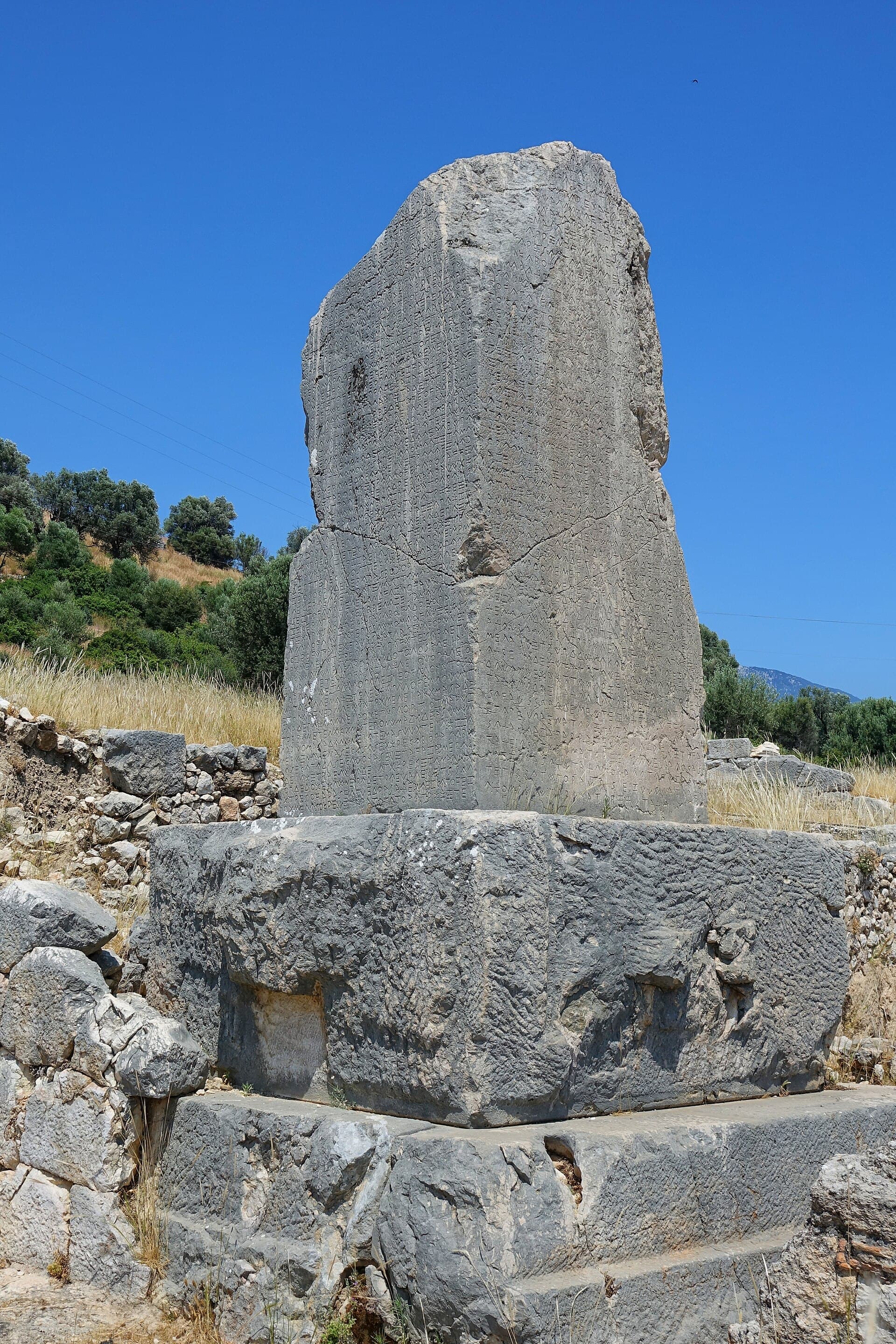
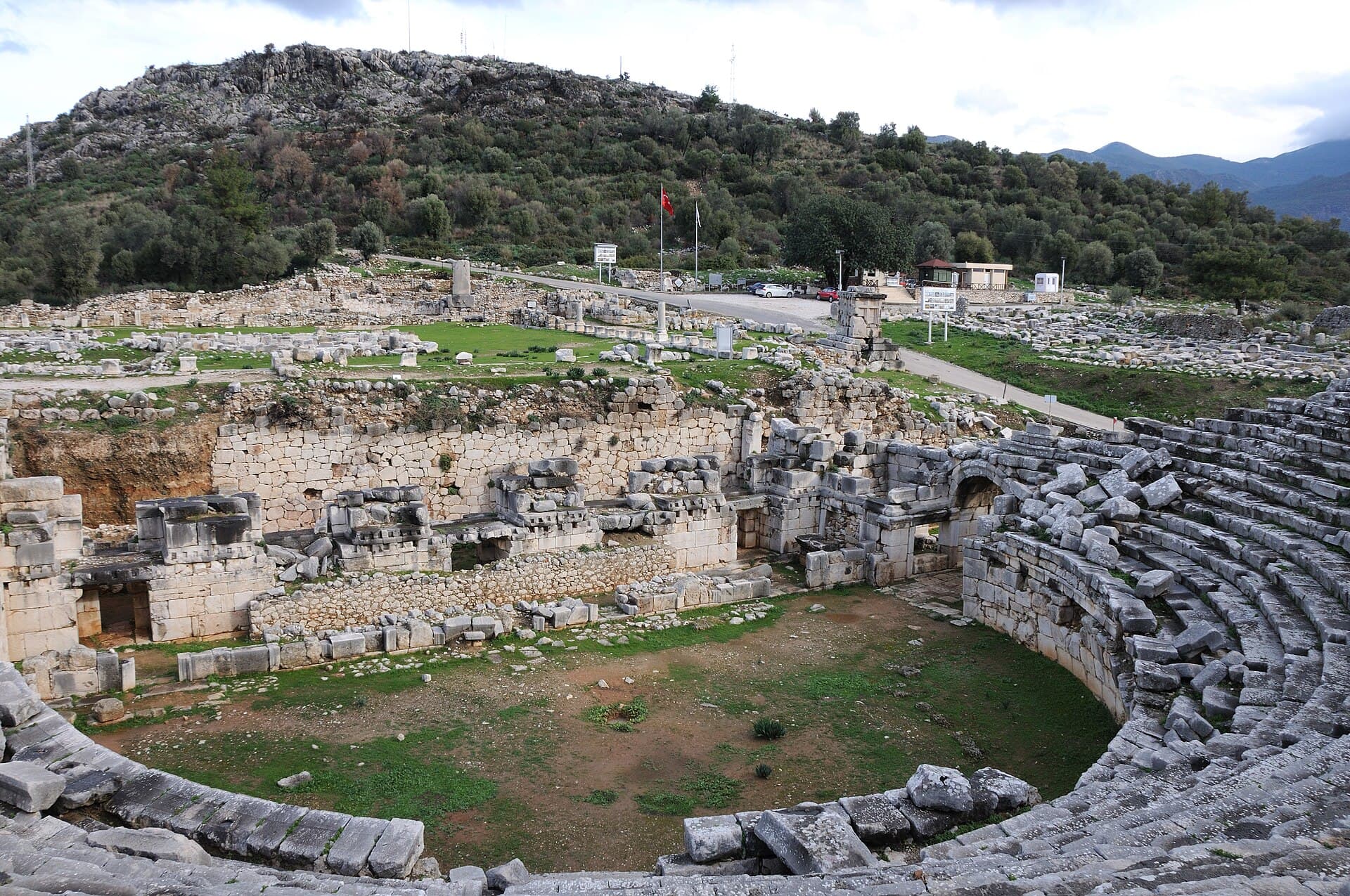
Xanthos asks you to hold two facts in your head at once, and neither is comfortable. The first is that this was the political heart of Lycia, the city whose assembly other Lycian towns deferred to, filled with the kind of civic architecture — a theatre, an agora, a forest of monumental tombs, fifteen of them, more than anywhere else in the region — that a confident, permanent capital builds. The second is that its people chose to burn it down around themselves twice rather than live under someone else's rule. In 540 BC, with the Persian general Harpagos's army at the walls, the Xanthians gathered their wives, children, slaves and valuables onto a pyre inside the city, set it alight, and marched out to die fighting. Herodotus, writing decades later, treats it as already legendary. Four centuries on, in 42 BC, with Brutus besieging the city two years after he'd helped kill Caesar, the Xanthians did it again — Appian and Plutarch both describe it, and Plutarch has Brutus in tears at what he'd caused, left holding a city of ash and around a hundred and fifty survivors rather than the population he'd meant to conquer. You are not visiting a site that fell. You are visiting a site whose answer to falling was to make sure there was nothing left to take. None of that grimness is what you'll register first, walking in. What you'll see is scale and quality: the Inscribed Pillar Tomb, a four-metre block carrying the longest Lycian inscription ever found, its language still not fully translated; a Roman theatre in good enough repair to sit in; Vespasian's Arch; a run of fifth-century BC walls. Much of the finest carved stone — including the Nereid Monument, a whole tomb-facade rebuilt as a room — was shipped to the British Museum by Charles Fellows in the 1840s, so treat what's on site as the architecture and the setting rather than the sculpture, and don't be surprised that several plinths stand empty. Xanthos paired with Letoon, four kilometres south, became Türkiye's first entry on the UNESCO World Heritage List in 1988, ahead of every other site in the country. Come for what a capital that chose to destroy itself twice actually looks like now, and go early: there's little shade and less passing trade than the coast gets, which on a hot afternoon is exactly what makes it worth the drive.