TurQuosian

Aegean

Bodrum

Once a Wonder, now a marina town

Bodrum carries two identities at once. Underneath is Halicarnassus — Herodotus's birthplace, home to one of the Seven Wonders — whose fallen marble the Knights of St John later built into a Crusader castle. On top is Türkiye's best-known marina town, where fishing coves became superyacht harbours. Base yourself in the old town and give both layers their due: three days, not a beach-club weekend.

Stay
3 days
Best months
Apr–Jun, Sep–Oct
Airport
BJV, ~40 km
Ancient name
Halicarnassus
Seven Wonders
Mausoleum of Halicarnassus
Base
Old town / marina

Every published place in one city guide

What to see in Bodrum.

Start with the essentials, add what genuinely interests you, and leave the rest for another visit. Every place includes a concise story, practical timing, a Maps link, and a one-tap route planner action.

Make the route work

Anticipate the practical details.

Getting there

Milas-Bodrum Airport (BJV) sits roughly 35–40km from central Bodrum, a 45–60 minute drive depending on traffic — a longer transfer than Ephesus or İzmir's airports. HAVAŞ shuttle buses meet flights and run to the main otogar (bus station); taxis are quicker but pricier — confirm the fare before getting in, published figures were not consistent enough to print one here. Intercity buses also reach the otogar from major Turkish cities.

Getting around

The otogar is the hub for the peninsula's dolmuş and municipal bus network, which genuinely does reach Gümüşlük, Turgutreis, Yalıkavak, Bitez and other towns — this is real public transport, not just a taxi-or-nothing peninsula — though services thin out in the evening. The old town and marina are entirely walkable. For Gümüşlük, Pedasa or the more remote stops, a rental car or taxi gives real flexibility. Ferries and catamarans run to Kos, Greece, in season for day trips (roughly 20–30 minutes each way); schedules and operators change between seasons, so check current times rather than an old timetable.

Money

Turkish lira. Cards are accepted almost everywhere in town; carry some cash for Gümüşlük's smaller places and the Turgutreis market. State museums and archaeological sites price foreign visitors in euro at the gate — Bodrum Castle and the Mausoleum both work this way.

Connectivity

Mobile coverage is strong in the old town, marina and main peninsula towns. It weakens on the approach road to Pedasa and can drop out entirely on boat trips to Karaada — download offline maps before either.

Etiquette

Bodrum is more visibly secular and beach-oriented than much of Türkiye, but dress modestly at the Süleymaniye chapel-mosque inside the castle and at any working mosque. Treat Gümüşlük's protected zone seriously: stay off Rabbit Island, and don't take anything from the submerged ruins. The marina and Yalıkavak skew upscale in the evening; dress accordingly if you're sitting down at a restaurant rather than just walking through.

Safety and comfort

Standard precautions apply around the marina and old town at night, especially in peak summer crowds. Heat is the main planning risk at exposed sites — the Mausoleum, Myndos Gate and the windmills all have zero shade — so carry water and go early or late. On boat trips, book operators with visible safety equipment and genuine reviews rather than the cheapest tout on the dock.

Essential

Don’t leave without

If you only have one day, this is the day.

Rank1
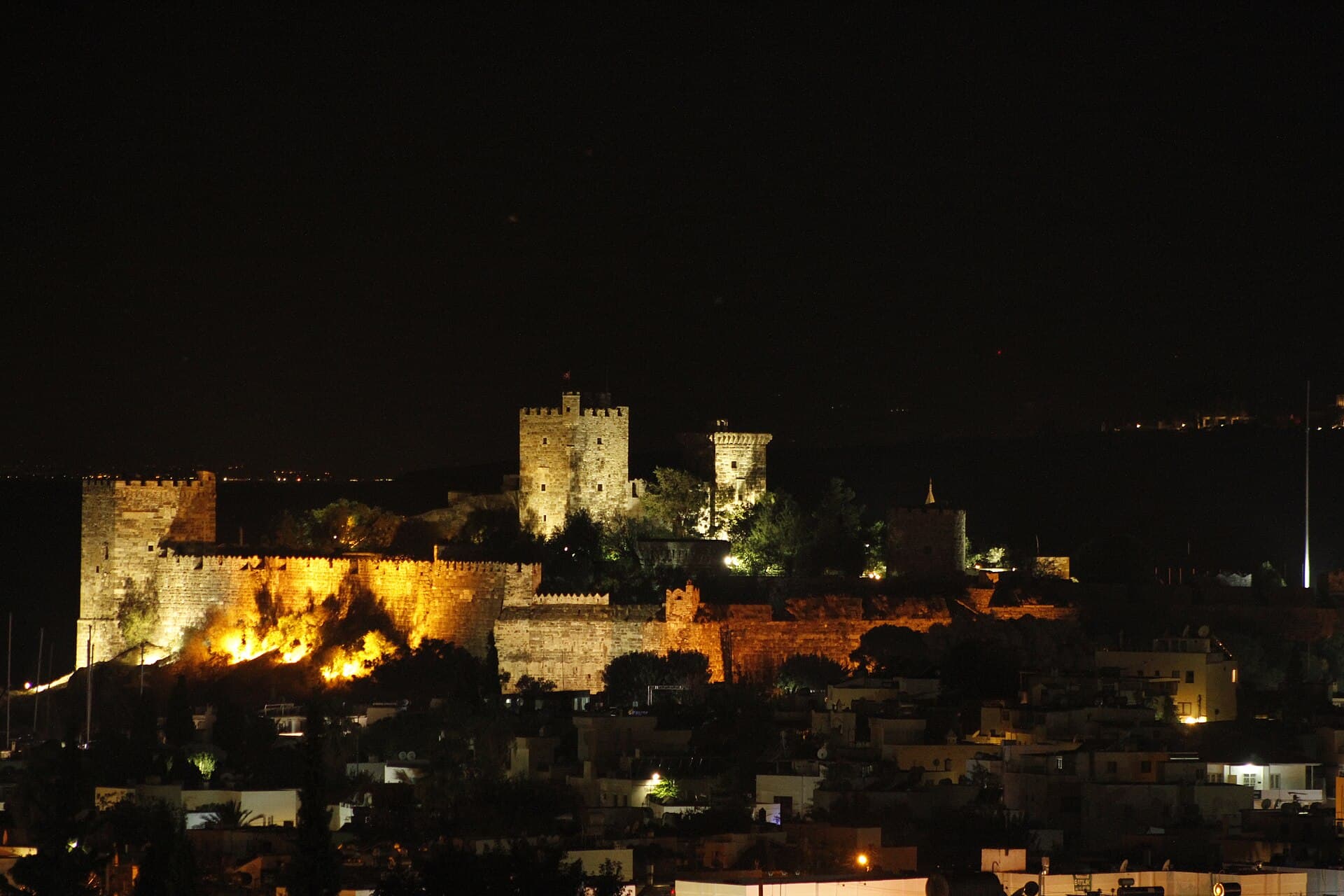
Bodrum Castle's Crusader towers illuminated against the night sky.

Built partly from the fallen Mausoleum, this Crusader castle holds the richest Bronze Age shipwreck ever found — and it is fully open.

Built from 1402 by the Knights Hospitaller as the Castle of St Peter, using stone stripped from the ruined Mausoleum after earlier earthquakes had already toppled it — by 1522 the Knights had taken nearly every remaining block. The Ottomans seized it in 1523 after the fall of Rhodes and converted its chapel to a mosque. A French warship destroyed the minaret in 1915; the museum opened in the early 1960s.

€20 for foreign visitors at the gate (2026 official DOSİM tariff), plus a separate €6 for the Serçe Limanı Glass Wreck hall — though multiple 2026 visitor reports describe paying a combined €23, so the two may sometimes be bundled. Müzekart valid.

150 minSteep, uneven stone stairs connect the towers and ramparts; ramps are limited, and a 2026 visitor report from a family with a mobility-impaired member found parts of the site genuinely difficult.The castle has a real history of extended closures (2017–2020, and conflicting reports around 2023). Every account through August 2026 describes full access, but check on arrival rather than assuming.No parking directly at the entrance — plan to park nearby and walk in.
+1 more to know
The Serçe Limanı Glass Wreck hall and other supplementary halls may be ticketed separately from the main entrance — confirm at the gate.
Look for: The English Tower's 1413 lion relief and Henry IV's coat of arms; Mausoleum reliefs of Amazons and centaurs built into the walls around 1505; and the Uluburun wreck's Bronze Age gold.
Verified · · 8 min to Bodrum Marina & Old Town · 18 min to Mausoleum at Halicarnassus
Rank2
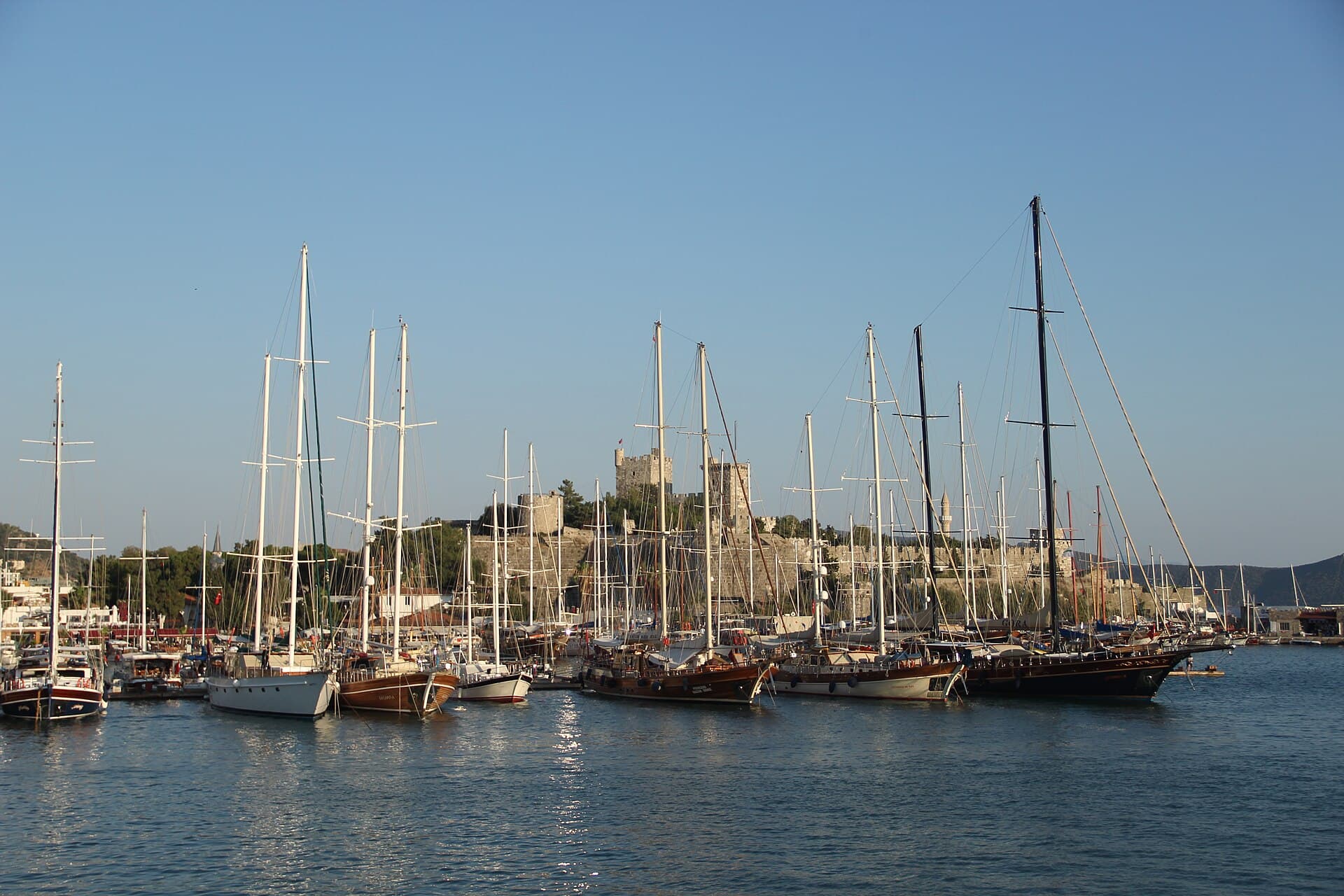
Wooden gulets moored along Bodrum's harbour with St. Peter's Castle behind.

Halicarnassus's harbour is still doing its old job 2,400 years on — gulets and superyachts where a siege fleet once anchored.

Halicarnassus's harbour is what the whole city was built to protect — Alexander's fleet blockaded it in 334 BC, and the Knights of St John chose the headland for their castle in 1402 for the same reason. The modern marina grew around Neyzen Tevfik Caddesi through the 20th century as fishing gave way to yachting, and Bodrum became Türkiye's best-known sailing town, home port to its wooden gulet-building tradition.

Free to walk; restaurant and bar prices sit at typical Aegean resort-town levels, higher directly on the quay.

120 minThe busiest, most commercial part of Bodrum — expect tourist-menu restaurant pricing and persistent touts along the main strip in season.Gulet operators and day-trip sellers work the quay hard; a polite decline works fine and is expected.Nightlife venues here open, close and rebrand quickly — don't treat any specific bar or club listing found elsewhere as current.
Look for: Wooden gulets built in the traditional Bodrum style, moored stern-to along the quay; the castle floodlit after dark; old-town lanes behind Kale Caddesi for jewellery, leather and carpet shops.
Verified · · 8 min to Bodrum Castle & Museum of Underwater Archaeology · 15 min to Mausoleum at Halicarnassus
Rank3
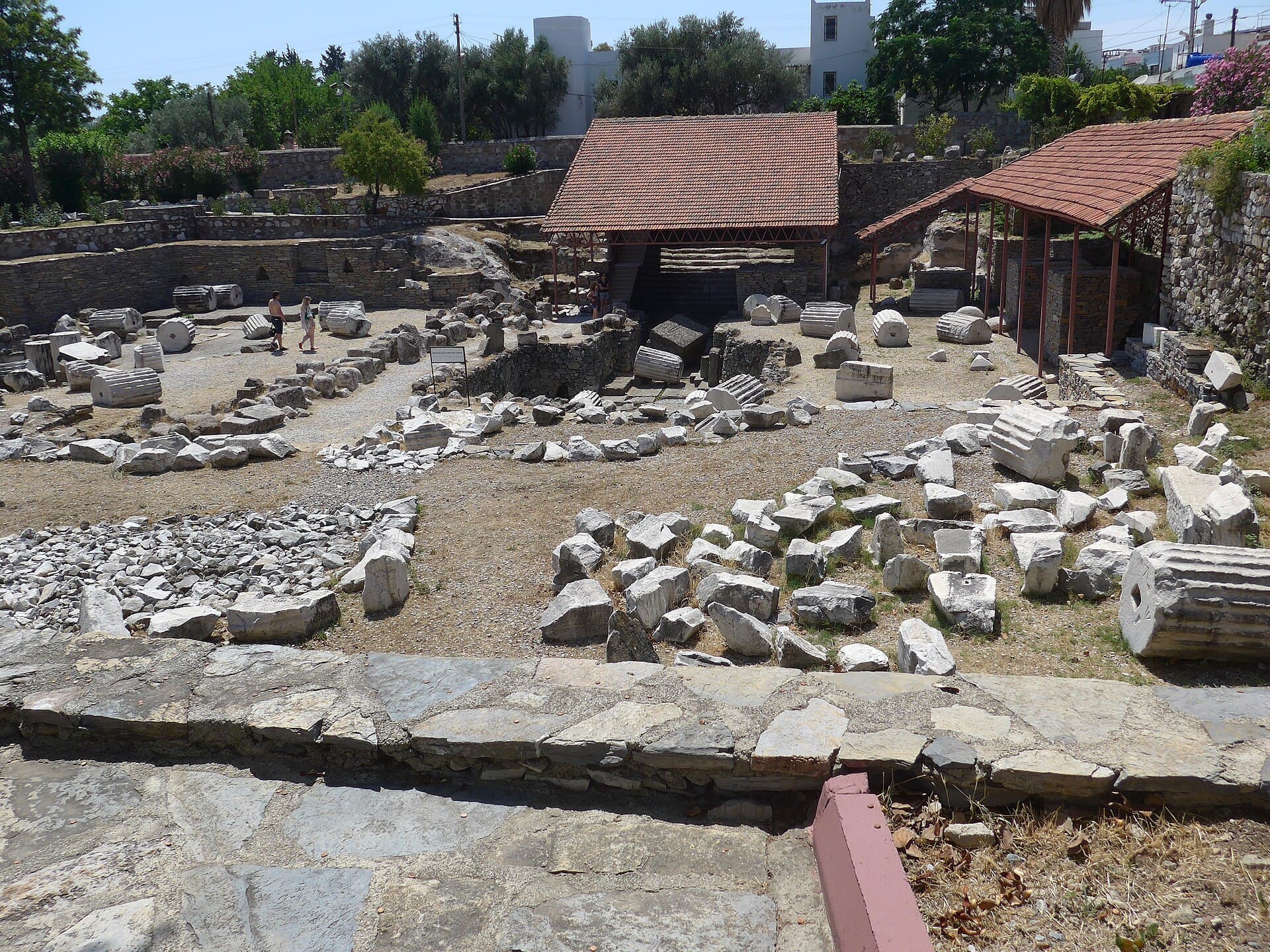
Excavated foundation pit of the Mausoleum at Halicarnassus in Bodrum.

Mausoleum at Halicarnassus

Archaeological site

One of the Seven Wonders gave the world the word 'mausoleum' — and left behind a foundation pit. The payoff is what its stones became.

Built 353–351 BC for the Carian satrap Mausolus by his sister-wife Artemisia II, designed by Satyros and Pythius, its friezes carved by four leading sculptors. Standing some 45 metres, it ranked among the Seven Wonders and gave the word 'mausoleum' its meaning. Earthquakes toppled it between the 12th century and 1402; the Knights then quarried the ruin for Bodrum Castle.

€3 for foreign visitors (2026 official DOSİM tariff, confirmed twice on independent fetches). Müzekart valid. Turkish-language sites separately quote 70 TL and 200 TL — likely stale or resident pricing from different years; do not print either without a fresh check.

40 minClosed Mondays — the single most common way to arrive and find it shut.No shade across the site; thirty to forty minutes in midday sun is the whole visit.What's on site is a foundation and a small site museum, not a standing monument — see it for what it is rather than expecting a reconstructed Wonder.
Look for: The podium and stairway to the burial chamber, precinct walls, and carved marble fragments in the small site museum. The best sculpture — including colossal statues of Mausolus and Artemisia — is in the British Museum, not here.
Verified · · 11 min to Bodrum Antique Theatre · 15 min to Bodrum Marina & Old Town
Rank4
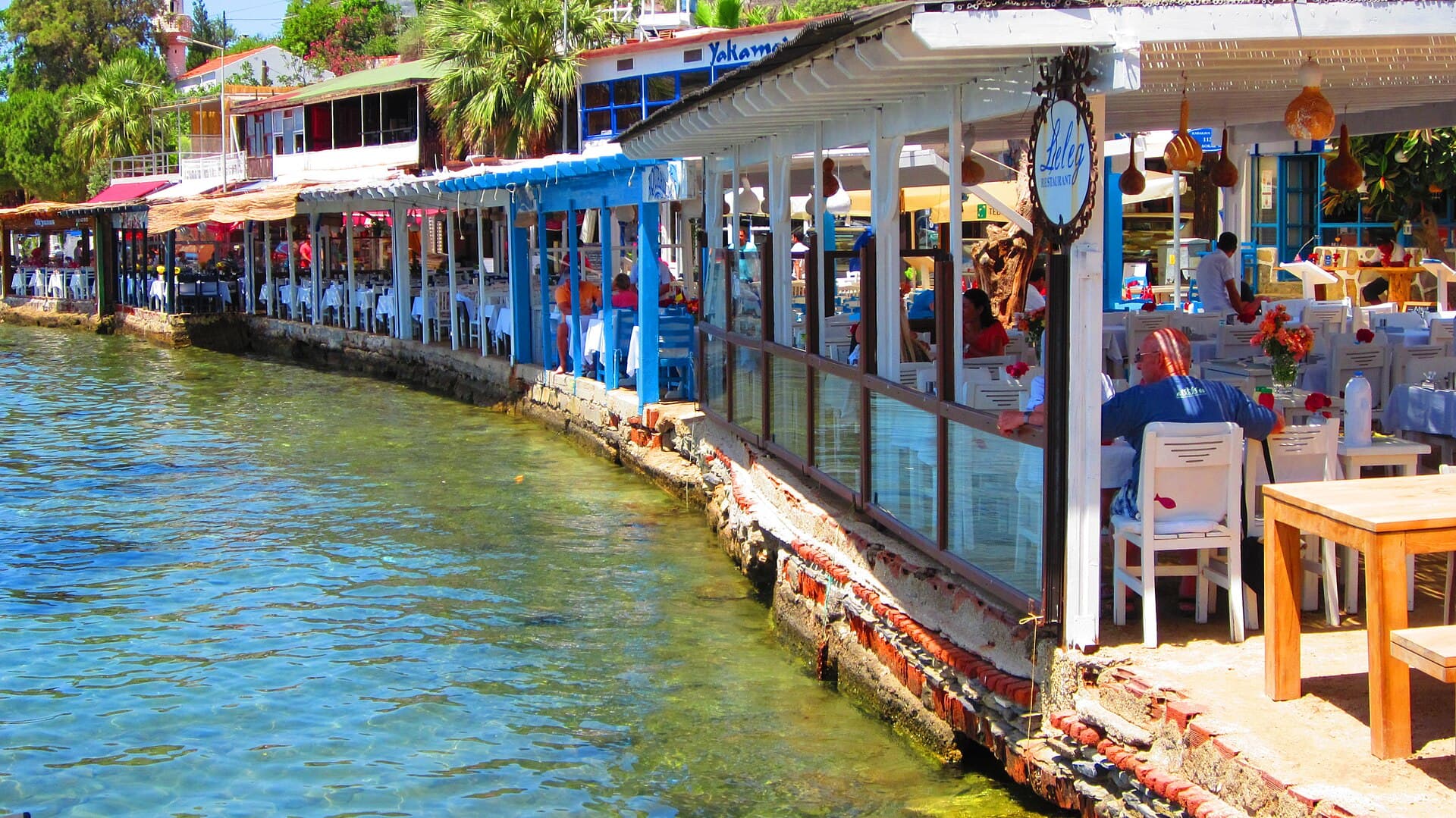
Fishing boats moored along Gümüşlük's sunlit waterfront near Bodrum, Türkiye.

Gümüşlük

Neighbourhood

A fishing village built over a sunken Greek city — swim over its walls by day, eat where the boats land at sunset.

Gümüşlük sits directly on ancient Myndos, refounded by Mausolus in the 4th century BC and walled against the same threat that took Halicarnassus — Alexander tried to seize it by a promised betrayal, and failed. An earthquake later dropped its seafront into the bay; the foundations are still visible in the shallows. A protected zone since, the village has stayed low-rise while the rest of the peninsula built upward.

Free public beach; seafood restaurants along the harbour run mid-to-high for the peninsula given the setting.

180 minEntry to Rabbit Island (Tavşan Adası) is officially banned by presidential decree; wading or walking across at low water still happens but is breaking a real rule, not a grey area.Scuba diving with tanks over the submerged ruins is prohibited for archaeological-protection reasons; snorkelling is how visitors are meant to see them.A genuine distance from central Bodrum — around 17km, roughly 30–45 minutes by dolmuş or faster by car or taxi. Don't plan it as a quick add-on to a marina evening.
+1 more to know
Sunset is the most crowded time, not the most peaceful — an early morning or off-season visit is quieter.
Look for: Submerged wall foundations visible in knee-deep water toward Rabbit Island — snorkel, don't dive with tanks. The island itself is officially off-limits by presidential decree; the walkable sandbar to it still tempts people anyway.
Rank5
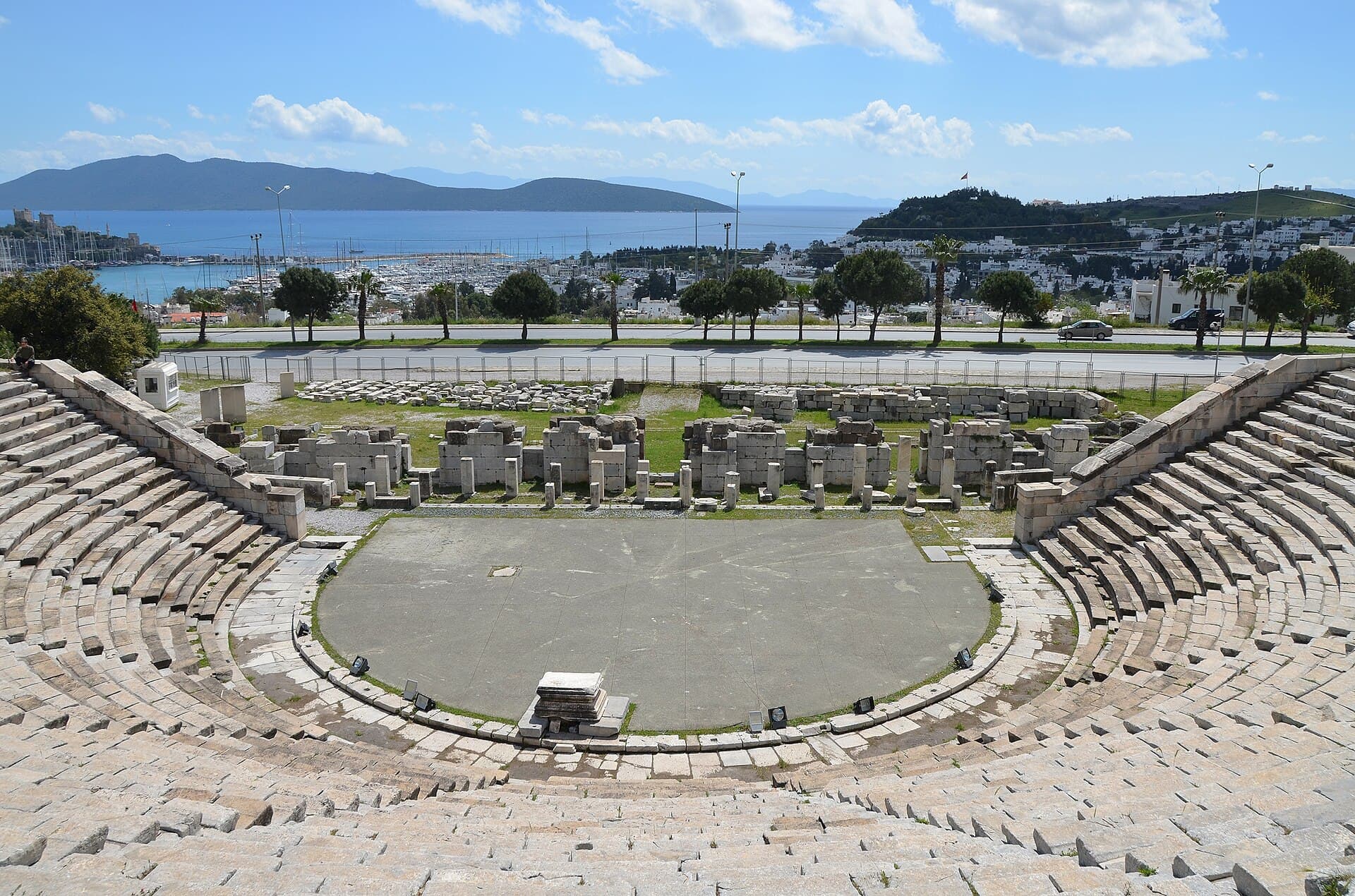
Wide view of the ancient theatre's curved stone seating bowl carved into the hillside.

Bodrum Antique Theatre

Archaeological site

The only building standing today from classical Halicarnassus — free, still in use, hosting performances again.

Cut into the slope of Göktepe under Mausolus in the 4th century BC and later enlarged by Rome, this is the only structure to survive from classical Halicarnassus into the present — everything else standing in Bodrum today is Byzantine, Crusader or later. Restored in the 1960s, it now seats around 13,000 and hosts the International Bodrum Ballet Festival and touring concerts each summer.

Free (official DOSİM tariff lists it as ücretsiz — free entry, free for all visitor categories). Ticketed separately for evening performances.

30 minNo shade on the seating; the climb up is exposed.Access to parts of the seating may be restricted around performance rehearsals and set-up days in July and August — check what's showing before visiting on a summer afternoon.Official listed hours (08:30–17:30) run shorter than what several 2026 local sources describe in summer (into the evening) — confirm same-day if visiting late afternoon.
Look for: The view over Gümbet bay from the upper rows; Roman-era modifications to the Hellenistic stage building; and, most nights in July and August, scaffolding and seating for that week's concert or ballet performance.
Verified · · 11 min to Mausoleum at Halicarnassus · 21 min to Halikarnas Balıkçısı Museum

Worth your time

Worth your time

A second day earns you these.

Rank1
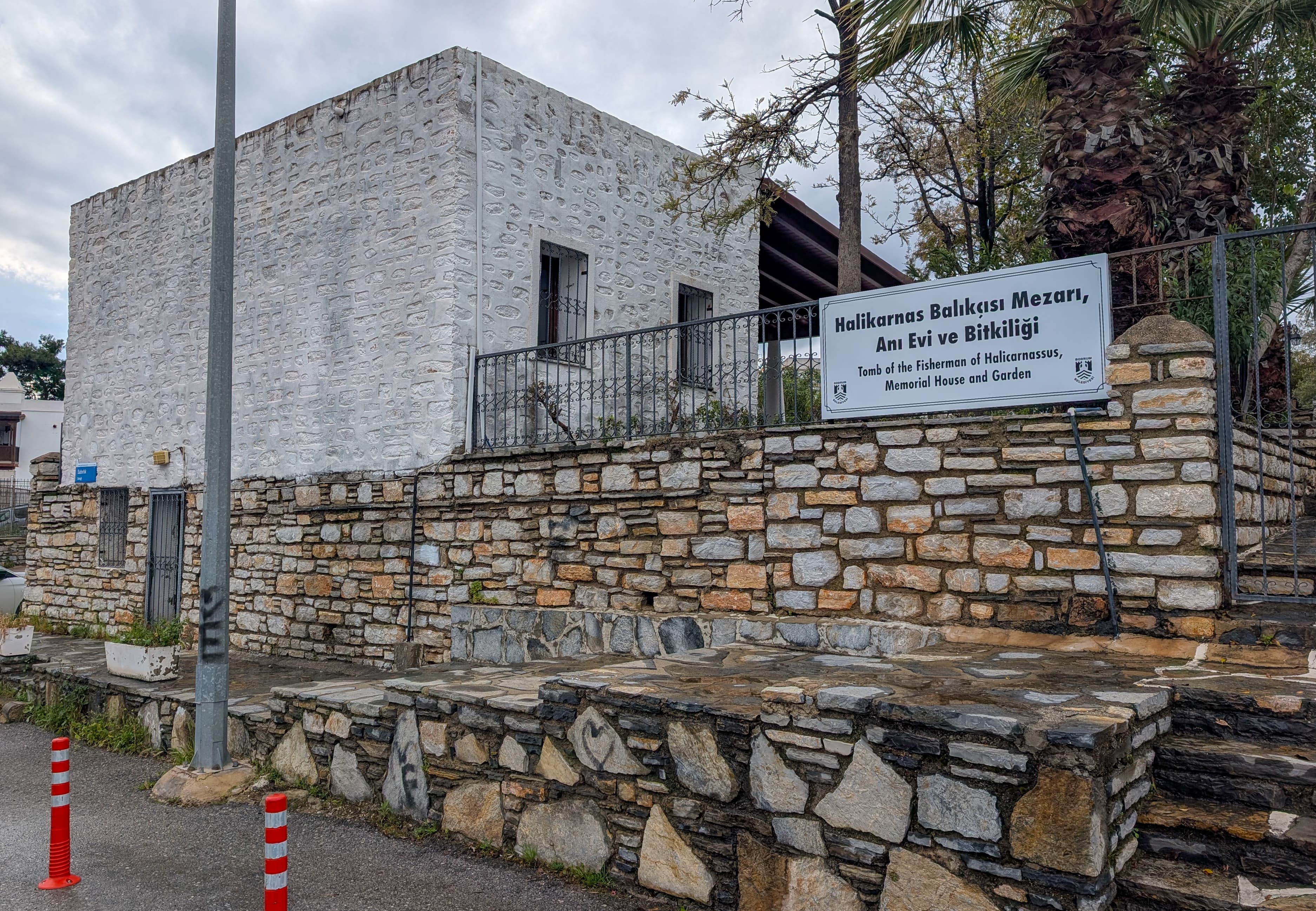
Exterior of the Halikarnas Balıkçısı house museum and tomb in Bodrum.

A writer exiled here in 1925 took the ancient city's name as his own pen name — and invented Bodrum as somewhere worth escaping to.

Cevat Şakir Kabaağaçlı was exiled to Bodrum in 1925 after an Istanbul tribunal convicted him over a story about executed draft-dodgers; a death sentence was commuted to banishment. He stayed roughly 25 years, writing as 'Halikarnas Balıkçısı' — the Fisherman of Halicarnassus — and pioneered the Blue Voyage, the simple gulet-sailing culture that gave Bodrum its identity long before the marina did.

A municipal/small-museum fee applies; specific figures found ranged too widely (10–50 TL across sources) to print one reliably — confirm at the gate.

40 minA small house museum with most of the interpretation concentrated in one room — set expectations accordingly rather than budgeting a full museum visit.It's an active memorial garden and grave as well as a museum; treat it with the same quiet respect as a cemetery.
Look for: His writing desk and personal effects, largely as he left them; the botanical garden he planted and cultivated himself, now also his memorial grave; and photographs documenting his decades on this coast.
Verified · · 21 min to Bodrum Antique Theatre · 24 min to Mausoleum at Halicarnassus
Rank2
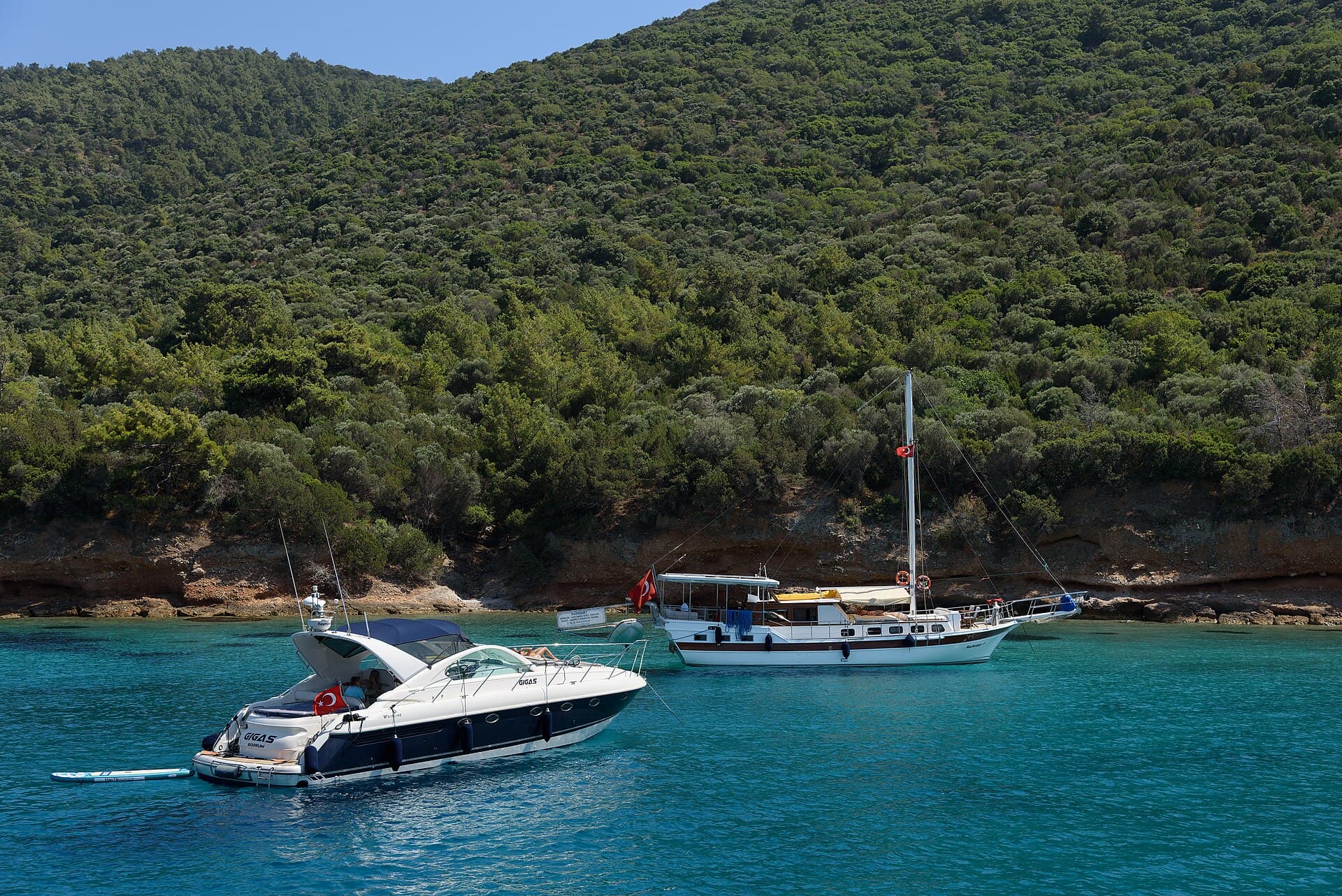
Boaters relaxing in clear turquoise water near Karaada island, Bodrum, Türkiye.

A cave of warm mineral mud, boat-trip only — sold as a 'meteor crater,' which it isn't; the real geology is a fault line.

Known in antiquity as Arkonesos, Karaada was held by the Greeks until the Middle Ages, when it passed to the Knights of Rhodes along with Bodrum itself. Today it's a routine stop on Bodrum boat tours for its cave of naturally warm, mineral-rich mud and water, popularly but inaccurately marketed as a meteor impact crater — the area's geology is fault-related, tied to the same volcanic activity that heats it.

Sold as part of half-day or full-day boat tours out of Bodrum or Gümbet (commonly bundled with lunch and swim stops); prices vary by operator and season — do not print a fixed figure.

210 minThe cave floor is slippery, muddy rock; water shoes help.Reachable only by boat tour — there is no independent way to visit, no scheduled ferry, and no facilities beyond the cave.The "meteor crater" framing sold on most tours is unverified folklore, not established geology — enjoy the mud, don't repeat the science as fact.
Look for: The mud cave itself, reachable by a short scramble from the boat landing; clear water for swimming stops on the way; and tour-guide patter about meteorites that the island's own geological surveys don't support.
Rank3

Yalıkavak

Neighbourhood

An old windmill-and-sponge-diving village now home to Palmarina's superyacht marina, a short walk from a Thursday market.

Formed in 1988 from the merged villages of Gökçebel and Geriş, Yalıkavak lived on windmilling and sponge-diving well into the 20th century. Palmarina, opened as a superyacht marina, transformed its waterfront into one of the Aegean's most upscale addresses, drawing international dining brands — while the older town above the harbour keeps its artists' street and weekly market.

Free to walk; Palmarina-front dining runs well above peninsula-average prices.

120 minRoughly 20km / 30–40 minutes from central Bodrum by road — a deliberate half-day trip, not a quick add-on.Palmarina restaurant and bar prices are among the highest on the peninsula; the older town above the marina is far cheaper.
Look for: Superyachts moored along Palmarina's quay; the restored 19th-century windmill in the main square; the Thursday market up near the bus station for clothing, produce and gifts.
Open in Maps
Rank4

Myndos Gate

Historic site

Alexander's costliest failure at Halicarnassus happened here — his men drowned when a collapsing footbridge dropped them into the moat.

Built as the western entrance to Mausolus's 7km city wall in the 4th century BC, reinforced with twin towers roughly 7 by 8.5 metres. It saw the fiercest fighting of Alexander's 334 BC siege: his troops crossed the defensive moat on a temporary bridge that collapsed, drowning many under retreat. The gate and moat traces are now a small open-air site beside the Turgutreis road.

Free.

20 minAn open, unstaffed site with no facilities — visit as part of a walk, not a standalone stop.Sits beside a functioning road (Turgutreis Caddesi); mind traffic on the approach.
Look for: Two surviving tower foundations and stretches of city wall; the excavated moat line; information panels reconstructing the siege. Open 24 hours, unstaffed, free.
Open in Maps

If you have longer

If you have longer

Keep these compact stops in mind when you build your trip.

Turgutreis

Neighbourhood

Formerly called Karatoprak, renamed for the Ottoman admiral Turgut Reis, a companion of Barbarossa. Now a town of around 6,300, it holds the Bodrum peninsula's largest weekly market — a genuine working bazaar rather than a resort souvenir strip — and, as the westernmost town, some of the coast's clearest unobstructed sunsets over the small island of Çatalada offshore.

Free to walk; market goods and restaurant prices run below central Bodrum and Yalıkavak.

Roughly 20km / 30–40 minutes from central Bodrum — plan it as a half-day trip, ideally timed around the Saturday market or sunset, not both in one short visit.Market day sourcing is secondary (travel-content, not the official municipal calendar) — confirm before publishing a specific day as fact.
100 minOpen in Maps

Around seven or eight stone windmills were built on this ridge in the 18th century to catch the Aegean's steady summer wind (the meltem) for grinding grain. Most stand roofless and sail-less today; one was privately restored in the 2000s and turned into a small square with a café. They remain free and open, unstaffed, at any hour.

Free to view; the café at the restored mill charges resort prices for the view.

No shade at all; midday visits in summer are genuinely uncomfortable.The café by the restored mill is priced for the view, not the coffee — go for the panorama, not the menu.A minor road with limited parking; arrive early for a sunset spot in season.
20 minOpen in Maps

Settled by the Leleges, a pre-Greek Anatolian people, on a pine-covered hill above modern Konacık. Mausolus's synoecism drew many Lelegian communities down into Halicarnassus in the 4th century BC, but Pedasa kept enough of a population to leave fortification walls, rock-cut tombs and traces of a temple to Athena. Unexcavated by comparison with Bodrum's other sites, and unstaffed.

Free.

Unstaffed and largely unexcavated — no signage, paths or facilities; this suits confident, self-directed visitors more than a casual stop.The access road is rough; a rental car with reasonable clearance, a taxi, or a genuine uphill walk from Konacık are the realistic options.No shade on the hilltop; carry water.
100 minOpen in Maps

Zeki Müren, a singer, composer and film actor often called Türkiye's 'Sun of Art,' lived in this two-storey house in Bodrum's Kumbahçe neighbourhood from 1980 until his death in 1996. The Ministry of Culture and Tourism restored it as a museum, opened on 8 July 2000, preserving his stage costumes, furniture and personal belongings.

Ticket price could not be reliably verified this research pass — sources ranged five-fold. Confirm before publishing a figure.A small house museum, not a large gallery — thirty to forty minutes is a realistic visit.
35 minOpen in Maps

Getting there and away

Verified routes from Bodrum.

Door-to-door times and fare ranges, checked leg by leg. Only routes where every leg verified are listed.

Getting around

Türkiye, for scale

Where it sits

See this city in the wider shape of Türkiye.

The map will load as it approaches the viewport.