Bodrum Castle & Museum of Underwater Archaeology
Built partly from the fallen Mausoleum, this Crusader castle holds the richest Bronze Age shipwreck ever found — and it is fully open.
Enough context, no spoilers
Why it matters
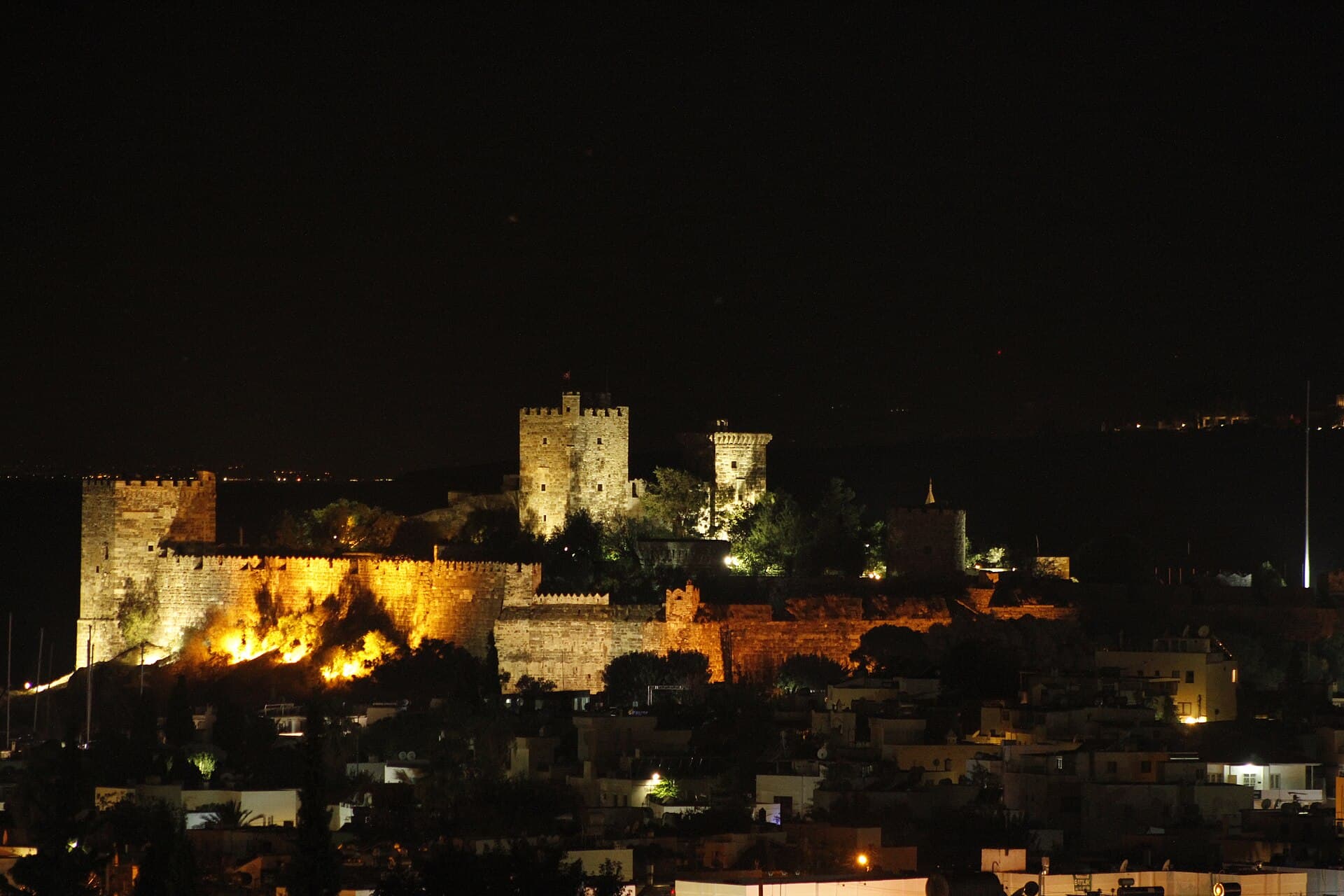
Built from 1402 by the Knights Hospitaller as the Castle of St Peter, using stone stripped from the ruined Mausoleum after earlier earthquakes had already toppled it — by 1522 the Knights had taken nearly every remaining block. The Ottomans seized it in 1523 after the fall of Rhodes and converted its chapel to a mosque. A French warship destroyed the minaret in 1915; the museum opened in the early 1960s.
What to know before you go
Every guide to Bodrum mentions that the castle used stone from the Mausoleum. Fewer make clear what that actually meant: earthquakes had already brought the Wonder down by the time the Knights Hospitaller arrived in 1402, and over the next century they treated the ruin as a quarry, until by 1522 there was almost nothing of it left standing. Look closely at the walls between the towers and, in places, you can still find the evidence — carved fragments of Amazons fighting centaurs, built into the masonry around 1505 not as decoration but because a usable block was a usable block, wherever it came from. The people who fortified this headland against the Ottoman threat were not being reverent. They were recycling the finest building in the ancient world into a defensive wall, one stone at a time.
The castle itself is worth the confusion it causes. It has had real closures — a contested, controversial restoration shut it for years around 2017 to 2020, and a plan to demolish and enlarge the museum buildings was only stopped by a Muğla court ruling against the Ministry. None of that is current: every dated visitor account through the summer of 2026 describes full access, English through Spanish towers, night opening included. Treat any claim of closure you read elsewhere with suspicion and check the day you go, but plan on getting in.
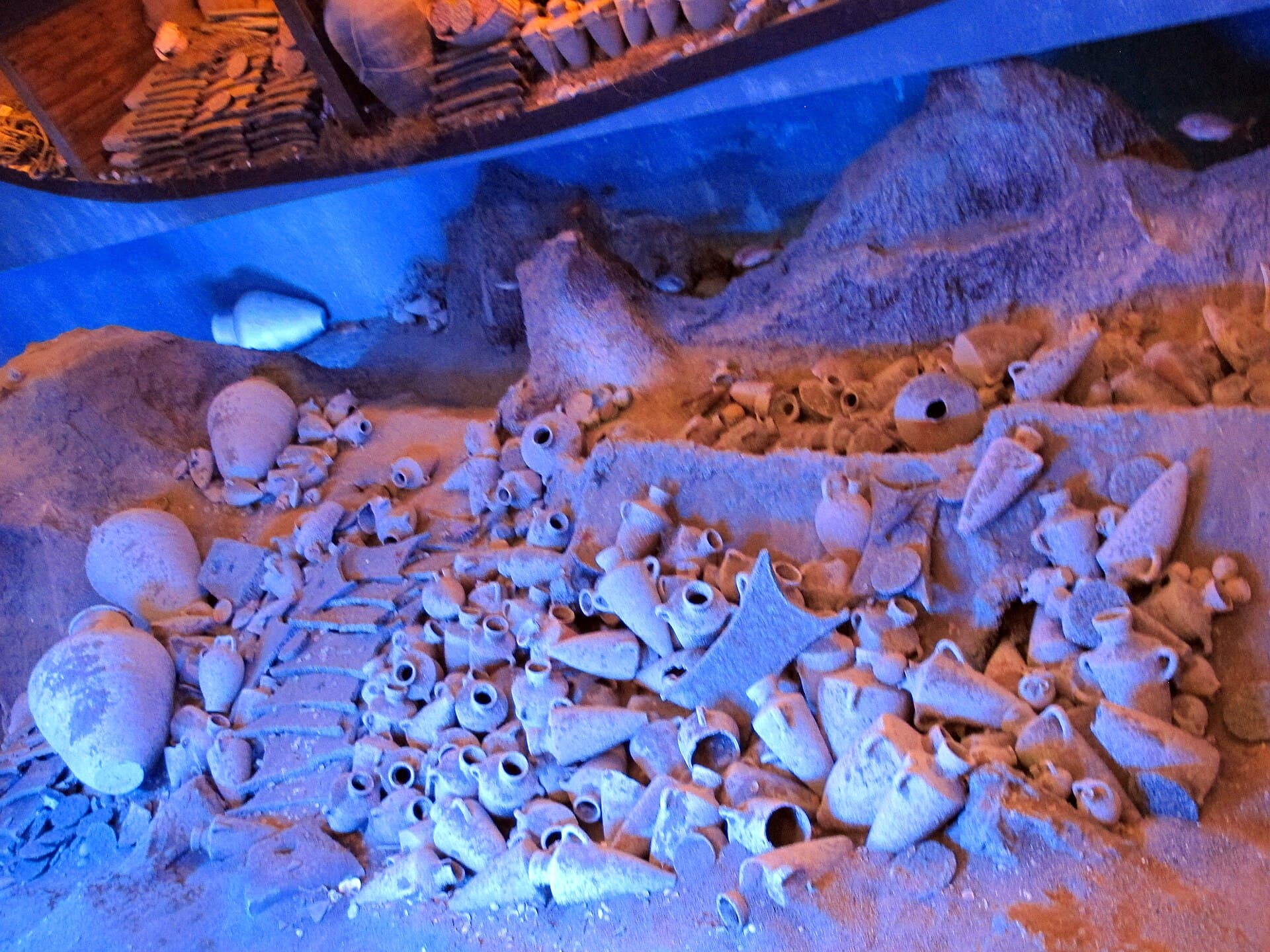
Once inside, the Uluburun shipwreck is the reason to come. A Bronze Age merchant vessel that sank off this coast around the 14th century BC, it carried Egyptian gold, Canaanite jewellery, Cypriot copper ingots and tin from as far as Afghanistan — the richest cargo ever recovered from the ancient Mediterranean, and the best physical evidence anywhere for how connected that world already was, roughly eight centuries before Herodotus was born a few hundred metres from here. Pair it with the Carian Princess hall, and budget real time: the site is large, the stairs between towers are steep and uneven, and the grounds — peacocks, cats, a small hammam, sea views from the ramparts — reward slowness rather than a checklist. Go in the morning, before the heat settles into the stone.