Mausoleum at Halicarnassus
One of the Seven Wonders gave the world the word 'mausoleum' — and left behind a foundation pit. The payoff is what its stones became.
Enough context, no spoilers
Why it matters
Built 353–351 BC for the Carian satrap Mausolus by his sister-wife Artemisia II, designed by Satyros and Pythius, its friezes carved by four leading sculptors. Standing some 45 metres, it ranked among the Seven Wonders and gave the word 'mausoleum' its meaning. Earthquakes toppled it between the 12th century and 1402; the Knights then quarried the ruin for Bodrum Castle.
What to know before you go
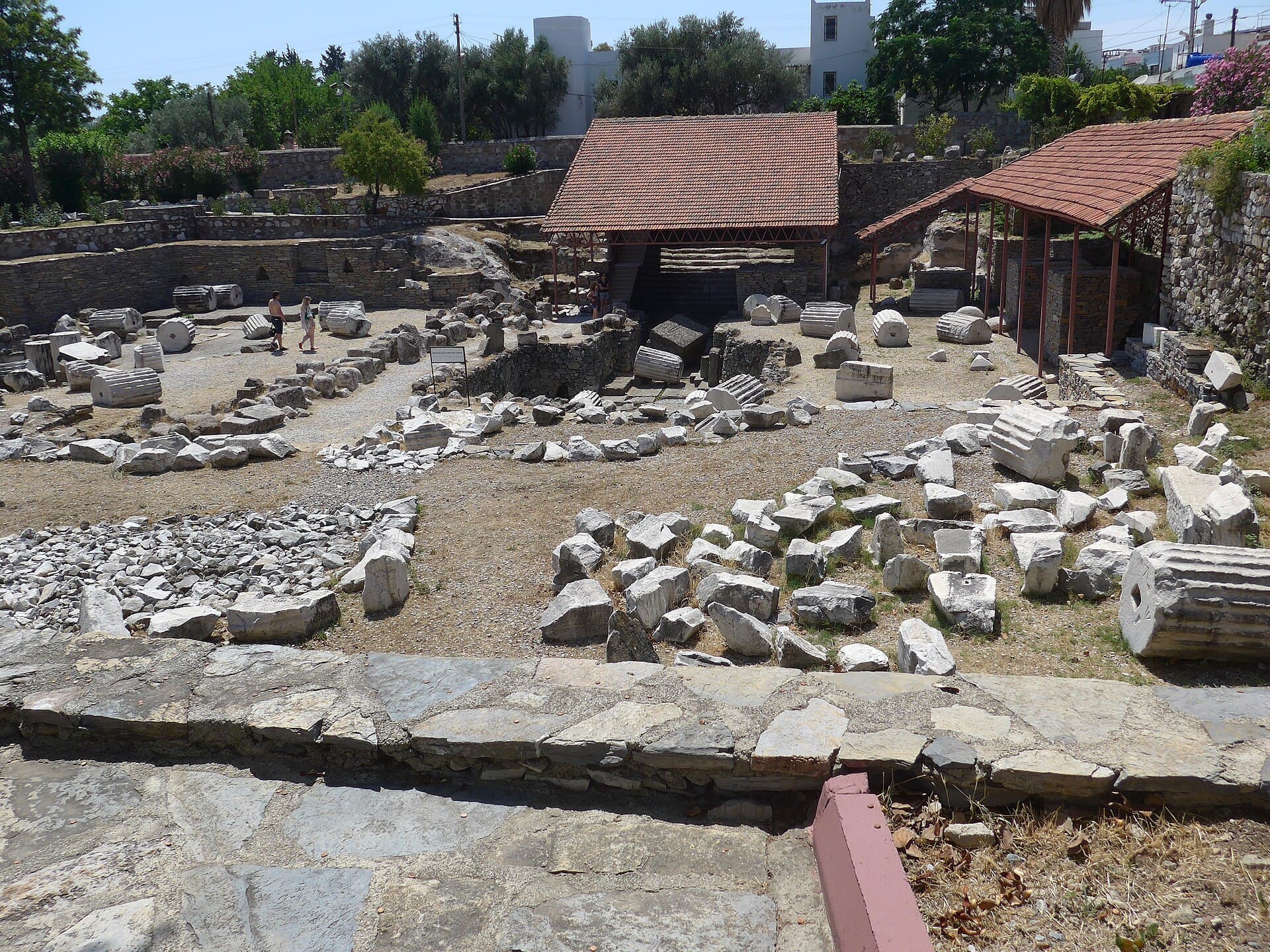
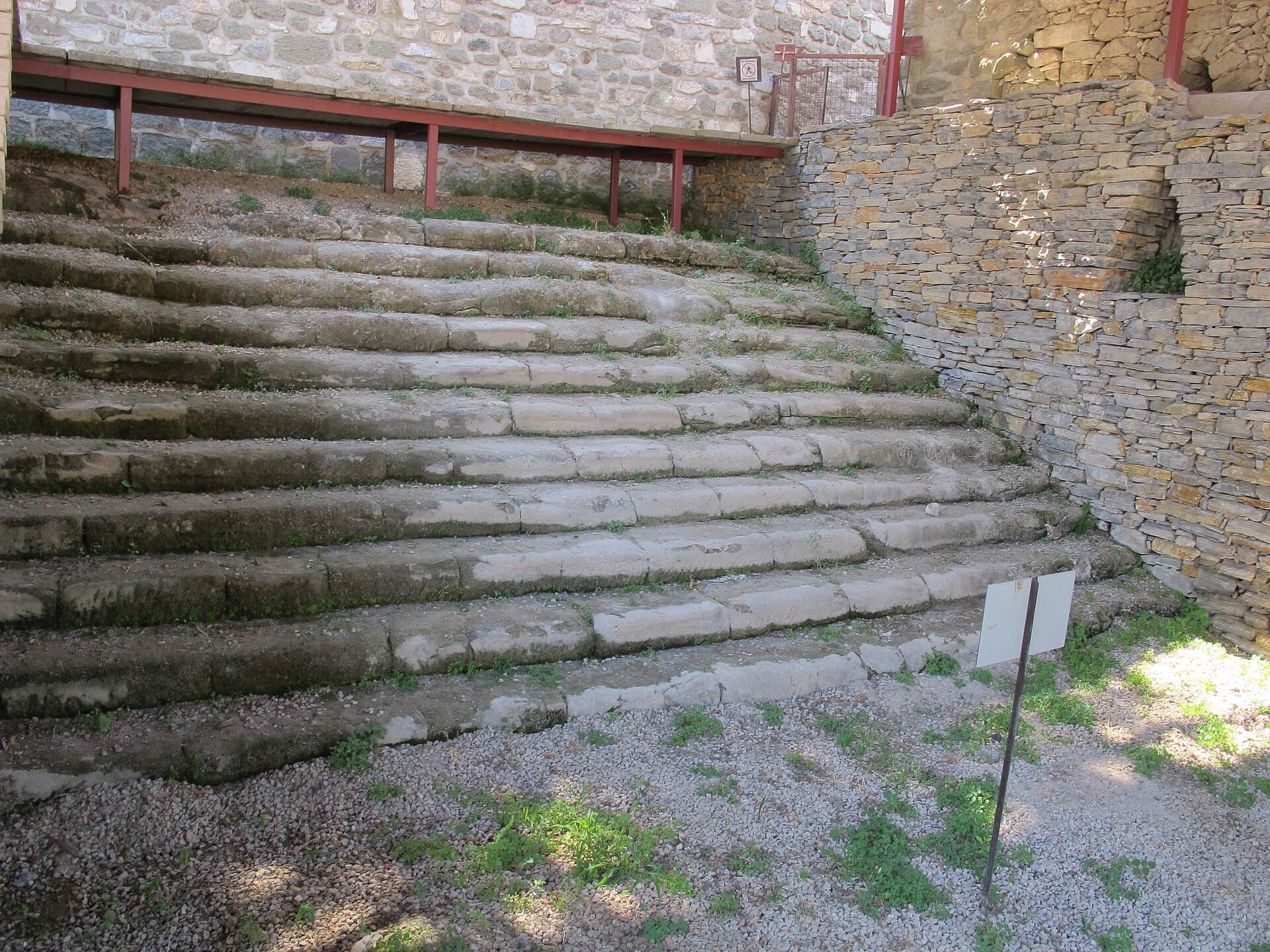
Set expectations before you come, because this is the site most likely to disappoint anyone who arrives picturing a Wonder. What's here is a rectangular pit: the foundation and podium of the tomb, a stairway down to where the burial chamber was cut into bedrock, the low stub of a precinct wall, and a scatter of carved marble in a small on-site building. Thirty to forty minutes covers it comfortably, and if that's all you take from the visit, you've missed the more interesting half.
The building that stood here for something like fifteen centuries — nobody knows exactly when the earthquakes finally brought it down, only that it was already fallen by the time the Knights of St John arrived in 1402 — was, by ancient consensus, one of the finest structures ever raised. Mausolus's widow Artemisia II commissioned it as both tomb and monument, hired two of the leading architects of the day, and put four of the era's best sculptors to work on its friezes, one to a side, in what ancient writers describe as a competition to outdo each other after Artemisia herself died before the building was finished. It stood roughly forty-five metres tall. It gave the world the word "mausoleum." None of that generic reputation survives in stone here — Charles Newton's excavations in the 1850s sent the best of what remained to the British Museum, where the colossal statues usually identified as Mausolus and Artemisia now stand.
What does survive, and what makes the modest site worth the detour, is the connection to the castle across town. When earthquakes finally toppled the tomb, it did not become a protected ruin — it became a stone quarry. The Knights Hospitaller spent the years around 1494 to 1522 stripping nearly every remaining block for their own fortress, and reused reliefs of Amazons battling centaurs are still visible today, built directly into the castle walls. See this pit first, or see the castle first — either order works — but see both, and the ancient wonder stops being an abstraction and becomes a traceable pile of stone, one building's failure funding another building's defence. Go early or late; there is no shade, and forty minutes in the midday sun over marble is enough to sour anyone on a genuinely important place.