Bodrum Antique Theatre
The only building standing today from classical Halicarnassus — free, still in use, hosting performances again.
Enough context, no spoilers
Why it matters
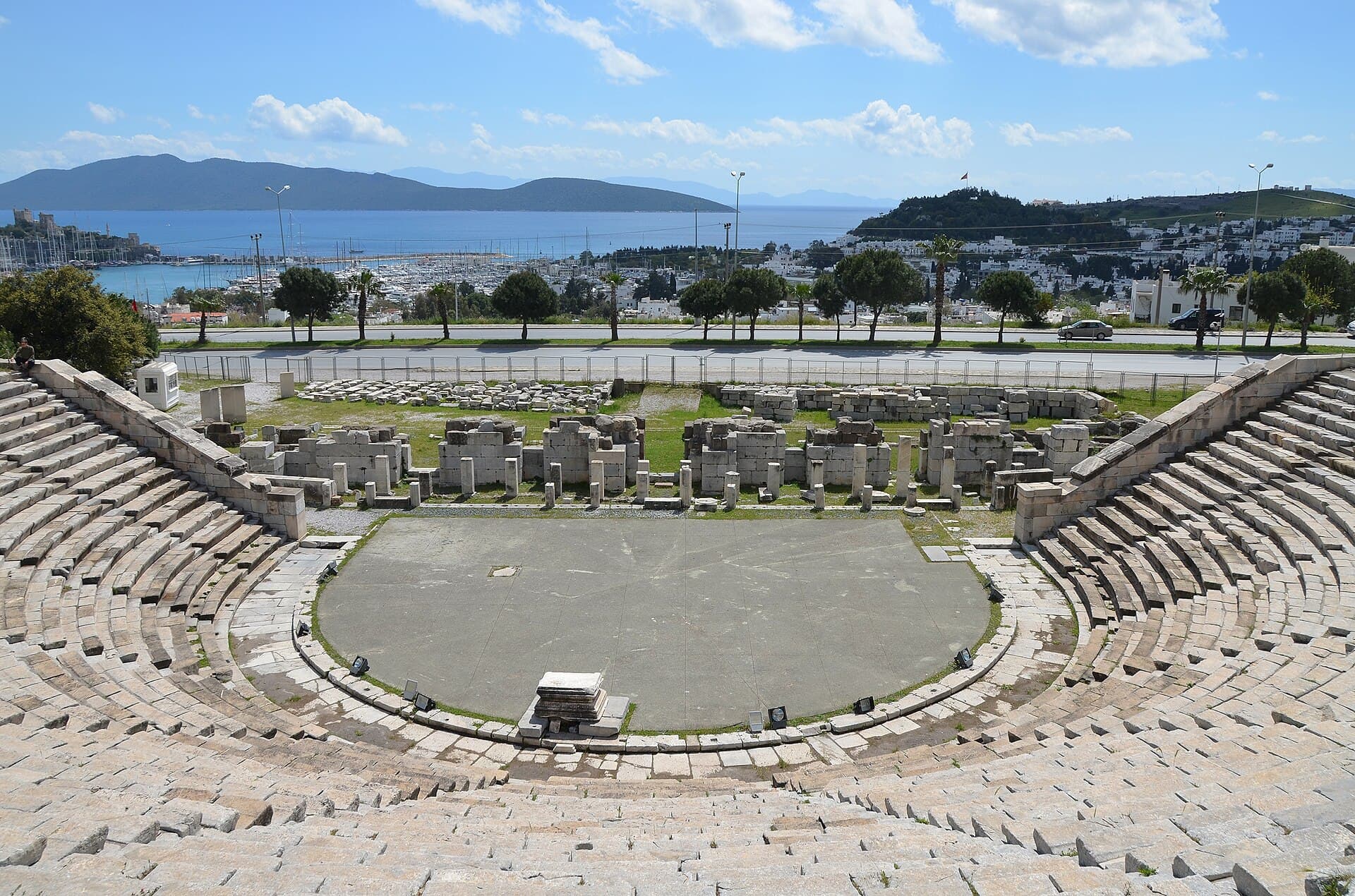
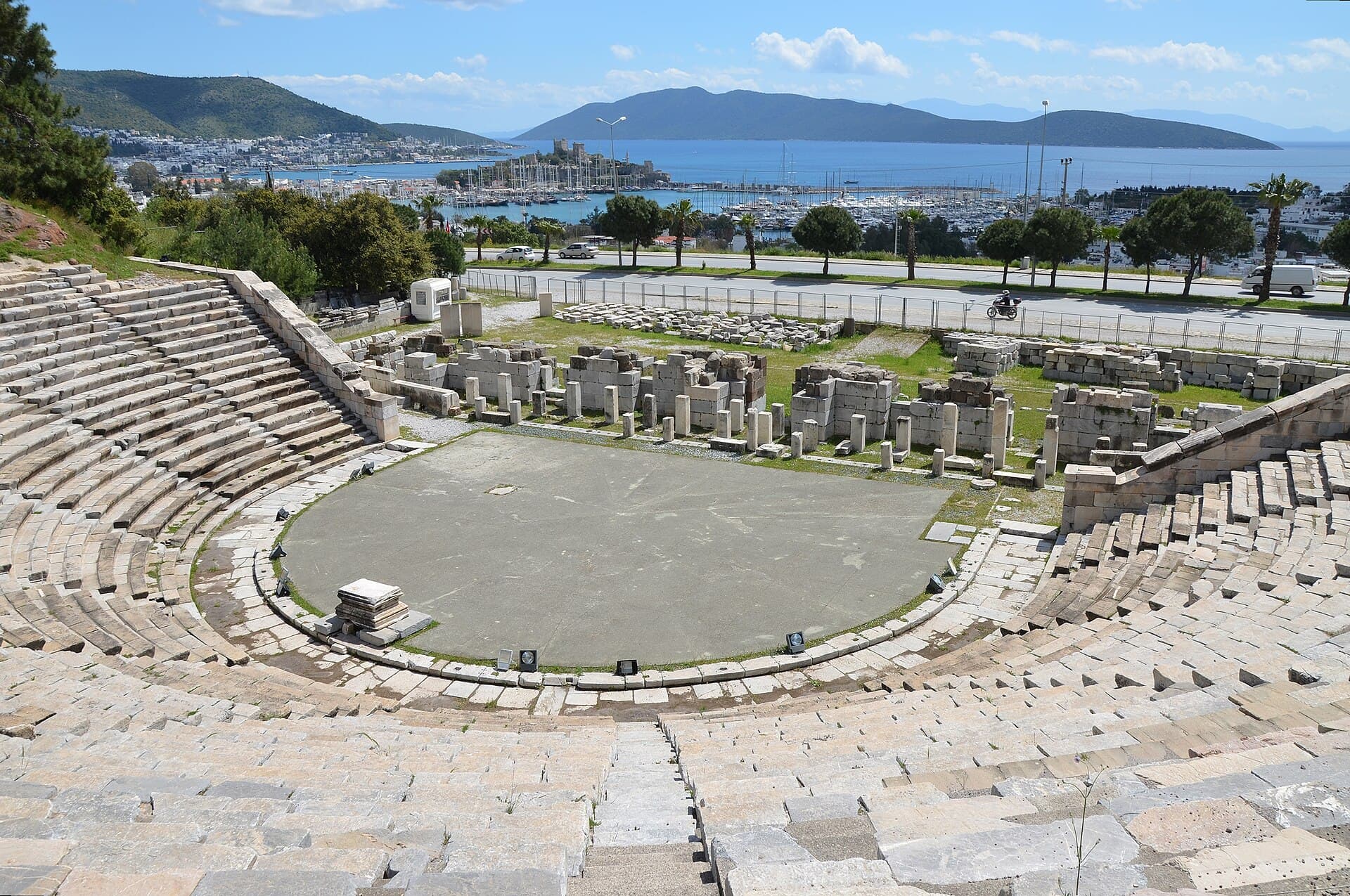
Cut into the slope of Göktepe under Mausolus in the 4th century BC and later enlarged by Rome, this is the only structure to survive from classical Halicarnassus into the present — everything else standing in Bodrum today is Byzantine, Crusader or later. Restored in the 1960s, it now seats around 13,000 and hosts the International Bodrum Ballet Festival and touring concerts each summer.
What to know before you go
Everything else you'll see in Bodrum's old town is medieval or later: a Crusader castle, an Ottoman mosque converted from a chapel, nineteenth and twentieth-century harbour buildings. This hillside bowl, cut into the slope of Göktepe under Mausolus in the 4th century BC and enlarged when Rome took over, is the single exception — the only structure standing anywhere in the modern town that was actually part of classical Halicarnassus. Everything else from that city is either underground, in the British Museum, or built into somebody else's wall.
That alone would make it worth the walk up from the Turgutreis road, but the theatre earns its place a second way: it still works. A 1960s restoration gave it back a usable bowl of around 13,000 seats, and rather than fencing it off as a monument, the city uses it as one — the International Bodrum Ballet Festival performs here most summers, and touring musicians book it for one-off concerts through July and August; Fazıl Say played a jazz set here in the summer of 2026. Sit in the same stone rows that Carian and Roman audiences used, watching a modern performance under the same sky, and the site stops being a ruin you're asked to imagine into use and becomes one you can actually watch in use, a few nights a year.
On a day without a show, it's a quieter kind of good. The climb rewards you with a clean view south over Gümbet bay, the stage building's Roman-era foundations are legible even to a non-specialist eye, and — because it's free, unstaffed and slightly uphill from where the cruise crowds and marina traffic concentrate — it tends to be one of the calmer stops in central Bodrum even in August. Thirty minutes covers the ruins themselves; check what's showing before a summer visit, because a rehearsal or get-in for that evening's performance can restrict parts of the seating for the day. Go in the morning for the quiet version, or book a summer evening for the other one — both are worth having.