Halikarnas Balıkçısı Museum
A writer exiled here in 1925 took the ancient city's name as his own pen name — and invented Bodrum as somewhere worth escaping to.
Enough context, no spoilers
Why it matters
Cevat Şakir Kabaağaçlı was exiled to Bodrum in 1925 after an Istanbul tribunal convicted him over a story about executed draft-dodgers; a death sentence was commuted to banishment. He stayed roughly 25 years, writing as 'Halikarnas Balıkçısı' — the Fisherman of Halicarnassus — and pioneered the Blue Voyage, the simple gulet-sailing culture that gave Bodrum its identity long before the marina did.
What to know before you go
Every guide to Bodrum repeats some version of the same claim: that this town's modern identity — sailing, escape, a certain literary romance about the Aegean — was essentially invented by one man. It's a strong claim, and the strange part is that it's largely true, and the man in question arrived here as a prisoner, not a promoter.
Cevat Şakir Kabaağaçlı was a well-connected Istanbul writer when, in 1925, an independence tribunal convicted him over a short story about soldiers facing execution for desertion. The death sentence was commuted; banishment to Bodrum, then a small and remote fishing town far from Ankara by the roads and rail of the 1920s, was the substitute punishment. He could have waited out his exile and gone home. Instead he stayed roughly twenty-five years, took the ancient Greek name of the town as his own pen name — Halikarnas Balıkçısı, the Fisherman of Halicarnassus — and wrote about the sea, the sponge divers, the local fishermen and the ruins around him with an intensity that made Istanbul's intellectuals want to see the place for themselves. Along with a circle of like-minded friends he gave shape to what Turks still call the Mavi Yolculuk, the Blue Voyage: slow gulet cruises along this coast with no fixed itinerary, minimal luggage, rakı and cheese instead of a hotel restaurant, and, pointedly, no newspapers or radio. That idea, not the beach club, is Bodrum's actual founding myth as a destination, decades before this coast had an airport or a marina like Palmarina.
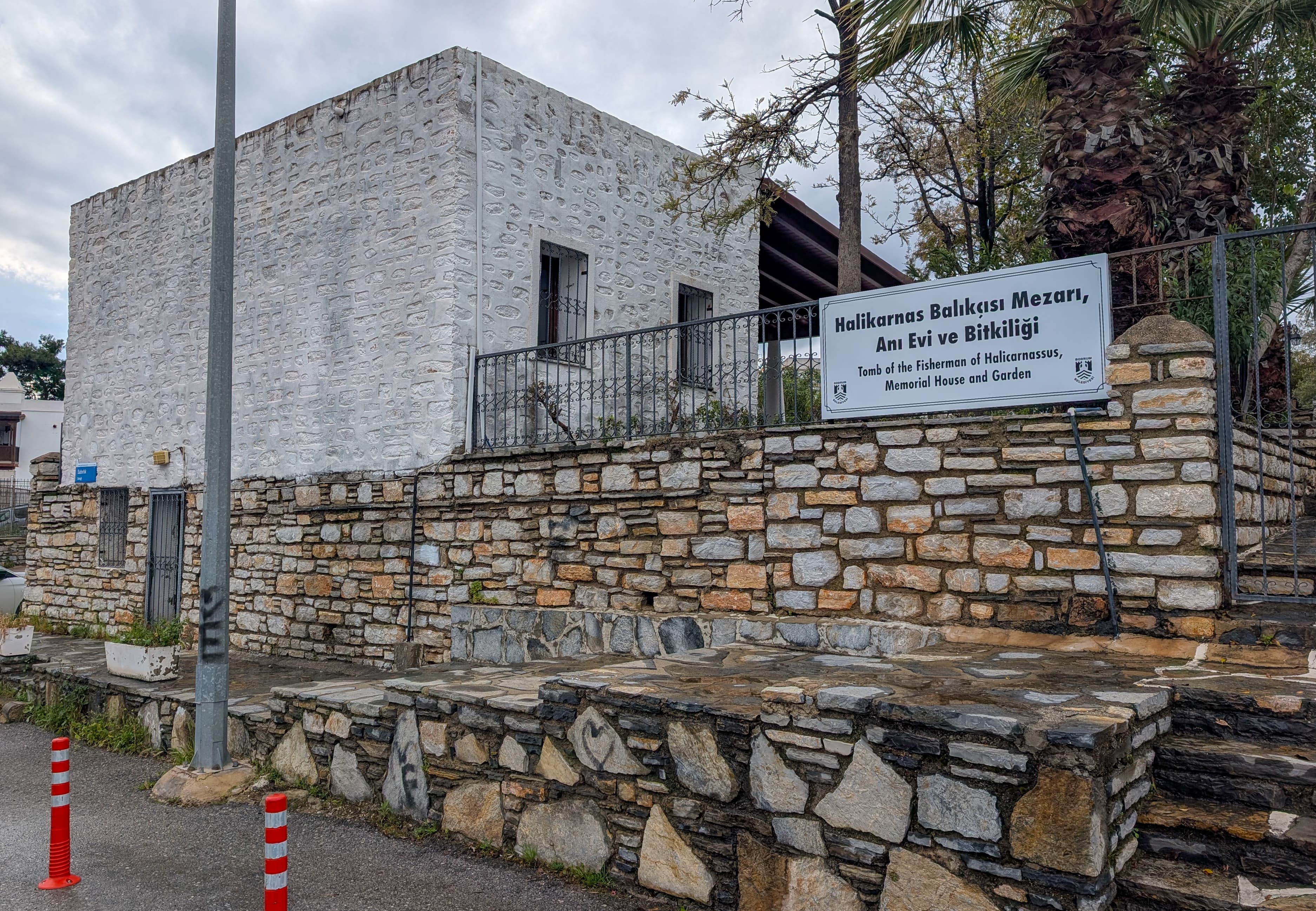
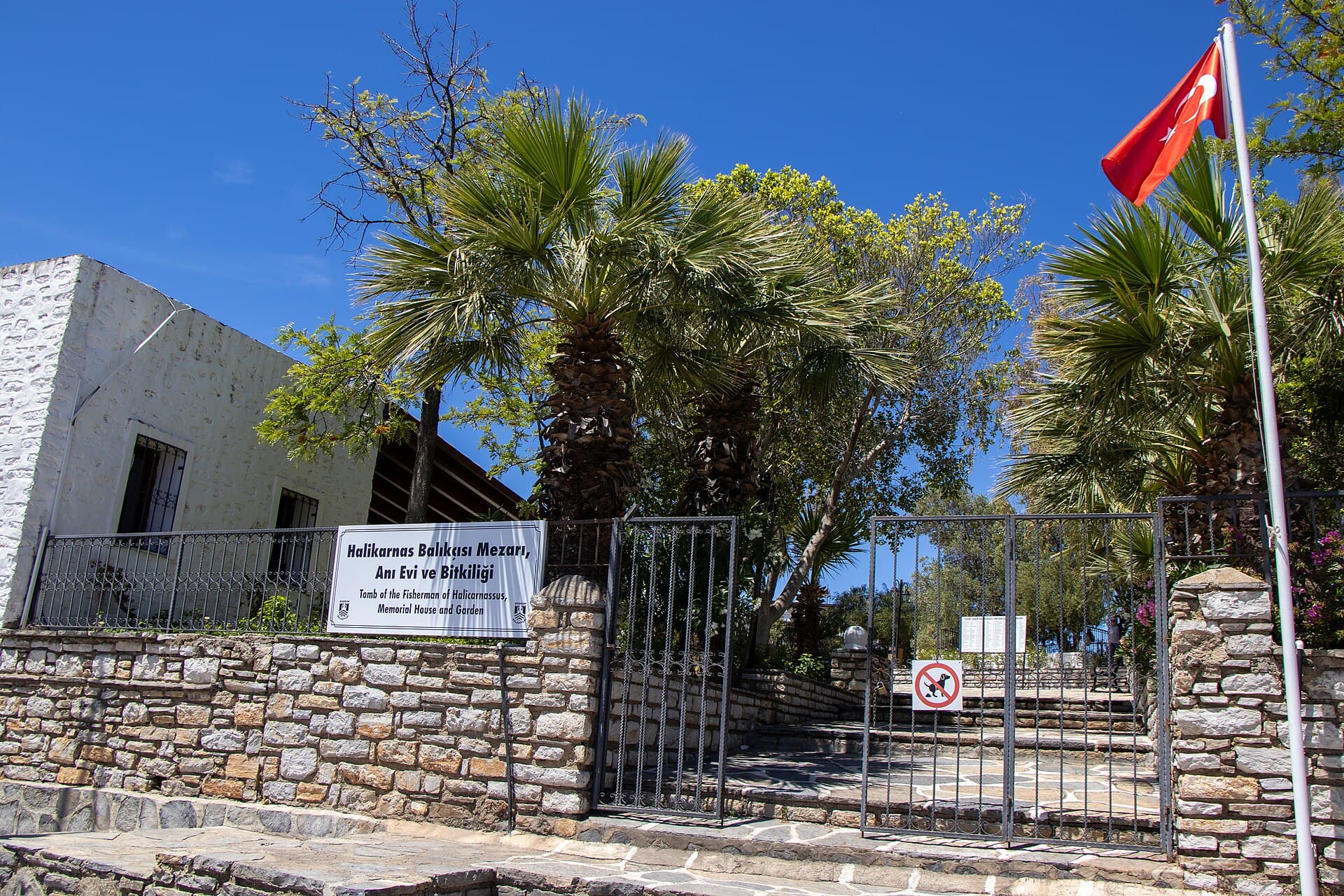
The house itself is modest, and reviewers are honest that most of the interpretation is concentrated in a single room rather than spread through a full narrative museum — go for the atmosphere and the garden rather than expecting a polished exhibition. He planted the garden himself, cultivating a wide range of species across the grounds, and it now doubles as his grave: a writer buried in the botanical work of his own hands, a short walk from the water he spent three decades writing about. Forty minutes is enough, and it pairs naturally with an evening on the harbour he helped put on the map — walk from one to the other and the connection writes itself.