Bodrum Marina & Old Town
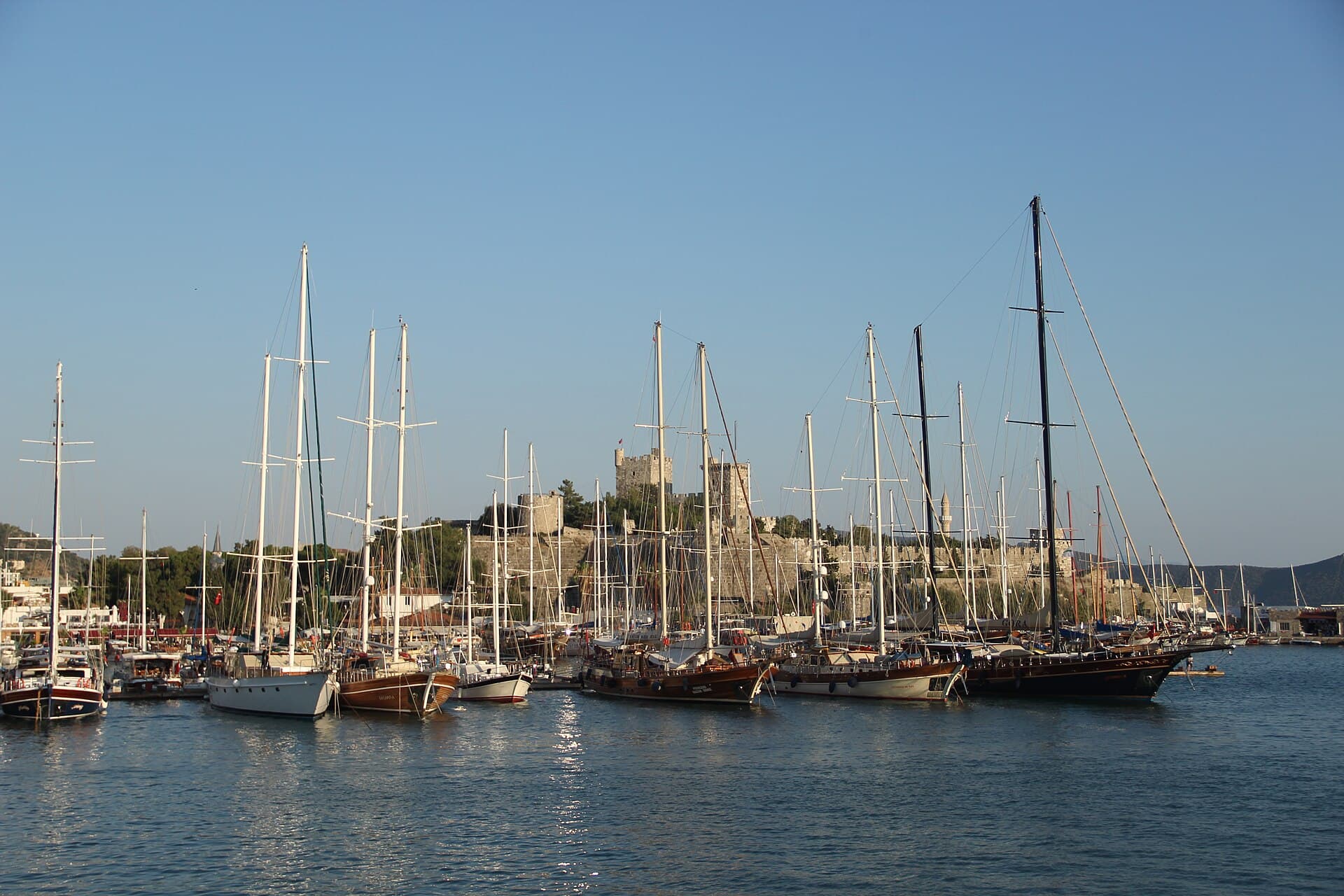
Halicarnassus's harbour is still doing its old job 2,400 years on — gulets and superyachts where a siege fleet once anchored.
Enough context, no spoilers
Why it matters
Halicarnassus's harbour is what the whole city was built to protect — Alexander's fleet blockaded it in 334 BC, and the Knights of St John chose the headland for their castle in 1402 for the same reason. The modern marina grew around Neyzen Tevfik Caddesi through the 20th century as fishing gave way to yachting, and Bodrum became Türkiye's best-known sailing town, home port to its wooden gulet-building tradition.
What to know before you go
Every layer of Bodrum's history shares the same reason for existing: this harbour. It is why Halicarnassus stood here rather than somewhere else on the peninsula, why Alexander's fleet blockaded it in 334 BC on his way through Caria, why the Knights of St John chose this exact headland in 1402, and why, six centuries later, a town of a few tens of thousands now takes in one of the Aegean's heaviest annual flows of foreign visitors. The water hasn't changed jobs. It has only changed what's floating on it.
What you're looking at today is Türkiye's best-known sailing town, built around the wooden gulet — the broad-beamed motor-sailer that Bodrum's own boatyards have been building for decades, since sponge-diving boats were adapted for pleasure cruising in the mid-20th century. They still moor stern-to along Neyzen Tevfik Caddesi in their hundreds, ordinary working charter boats parked hull to hull with the occasional actual superyacht, and the contrast between the two is worth noticing rather than resenting: this is a working harbour that got rich, not a rich harbour built from nothing.
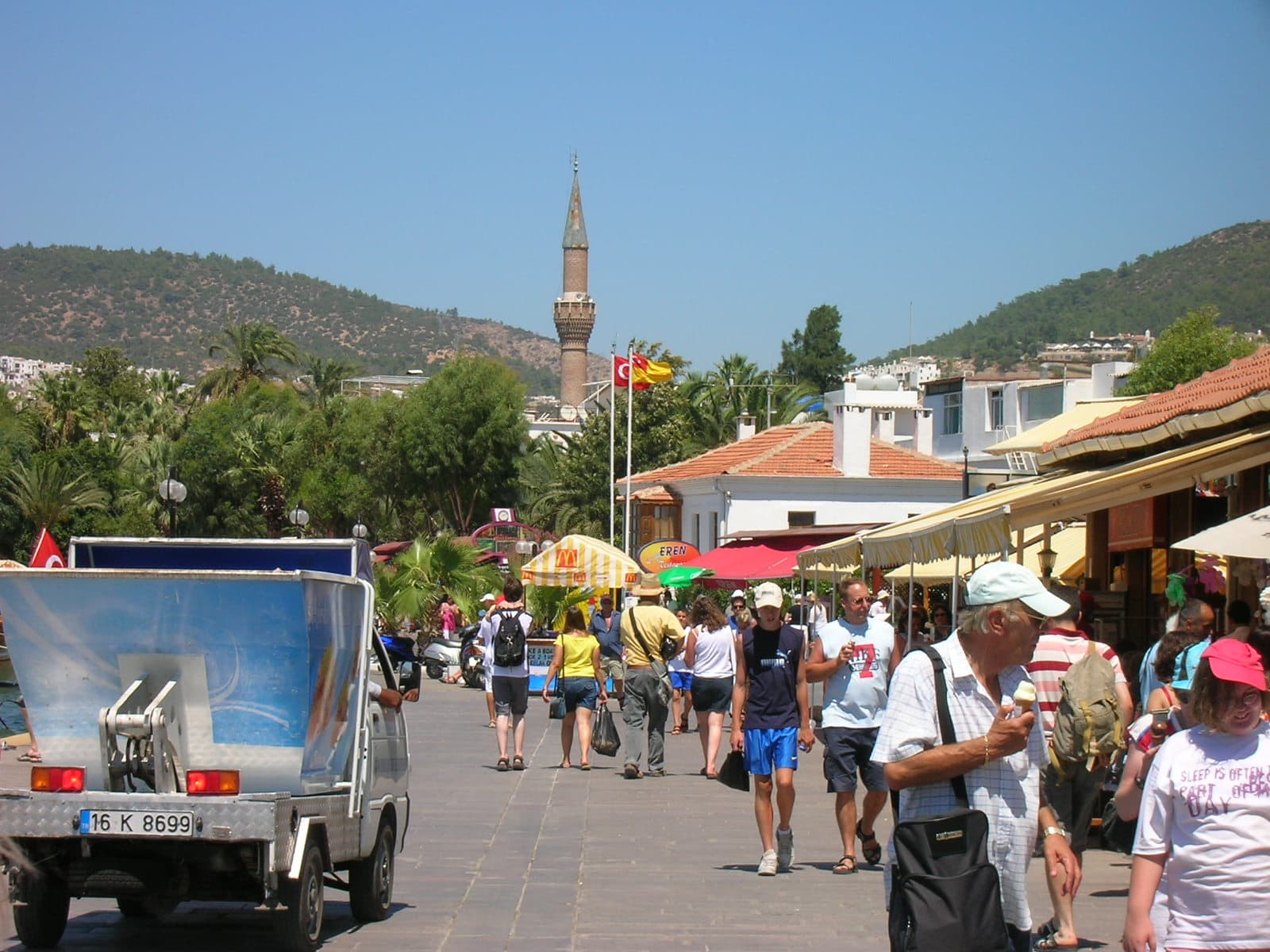
The honest way to use this place is by time of day, because it performs two completely different roles. In the morning, before the day-trip boats load and the shop shutters go up, the quay belongs to fishermen coiling lines and cats working the boat sterns for scraps, and the castle stands over all of it in clean early light — this is when to walk it if you want the working-harbour version. From early evening, it becomes the promenade: the whole town turns out, restaurant tables spread onto the pavement, the castle floods with light, and the old-town lanes behind Kale Caddesi — jewellery, leather, carpets, the usual Aegean resort-town inventory — fill with the evening trade. Neither version is more real than the other; they're both what a harbour town two and a half millennia old actually looks like doing its job. Don't mistake the shopping lanes for the point, though. The point is still the water, and what two dozen powers have found worth fighting over to control it.