Gümüşlük
A fishing village built over a sunken Greek city — swim over its walls by day, eat where the boats land at sunset.
Enough context, no spoilers
Why it matters
Gümüşlük sits directly on ancient Myndos, refounded by Mausolus in the 4th century BC and walled against the same threat that took Halicarnassus — Alexander tried to seize it by a promised betrayal, and failed. An earthquake later dropped its seafront into the bay; the foundations are still visible in the shallows. A protected zone since, the village has stayed low-rise while the rest of the peninsula built upward.
What to know before you go
Say the words "sunken city" and most people picture something dramatic — columns visible from a glass-bottomed boat, an Atlantis moment. Gümüşlük's version is quieter and, once you understand it, more interesting. Wade out from the middle of the bay toward Rabbit Island and the water stays knee-deep for a long way, shallow enough that the rectangular foundations of ancient Myndos are simply there, underfoot, in full sun, no boat or mask required, though a snorkel makes it easier to look down rather than just feel around with your feet. This is what's left of a city Mausolus refounded and walled in the 4th century BC specifically to guard Halicarnassus's western flank — a plan good enough that when Alexander's army came through in 334 BC, he tried to take Myndos by a promised betrayal rather than by force, and the gate he was counting on never opened.
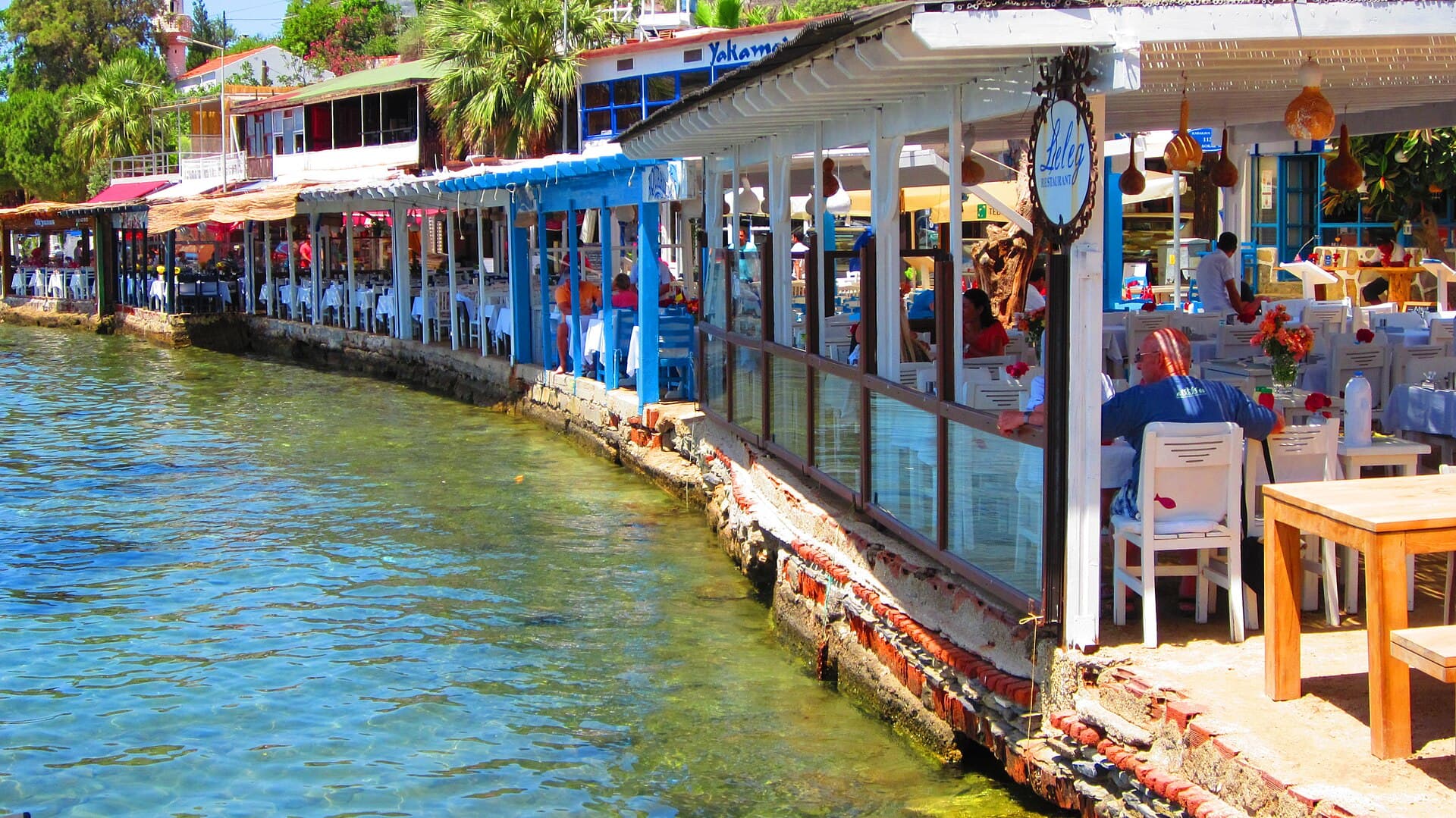
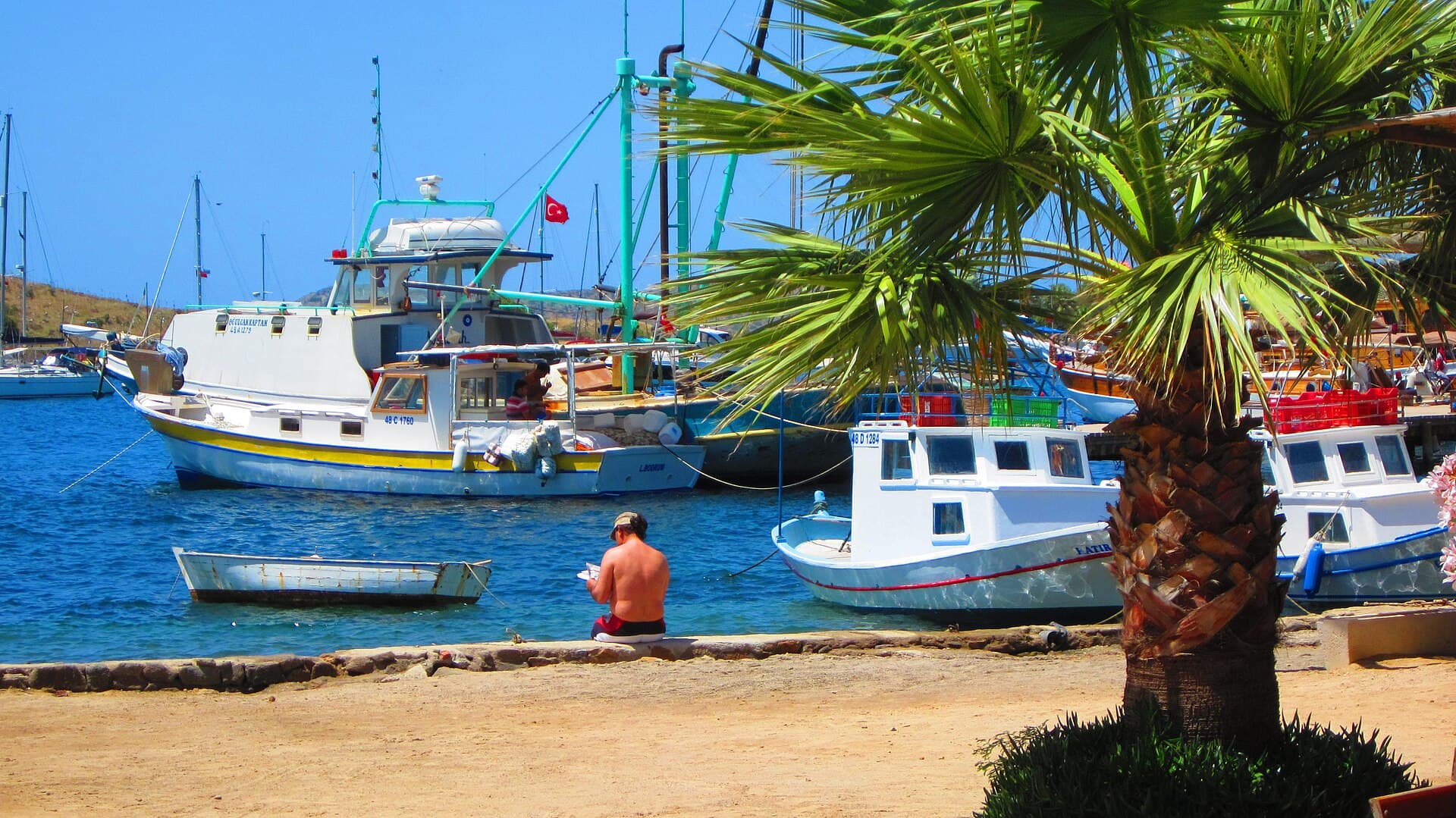
The village on shore has done something rarer than preserving ruins: it has stayed small. Protected-area status keeps the hillsides free of the concrete that covers most of the peninsula, and Gümüşlük remains a genuine fishing harbour with a few dozen seafood restaurants along the water rather than a resort strip. That reputation is earned but also crowded — come for sunset in July or August and you are sharing the view with everyone else who read the same advice. It is also a real trip from central Bodrum, roughly 17km west, not a stroll from the marina.
Two restrictions are worth knowing before you go, because they get confused with each other. Swimming in the bay is completely normal and popular — there's a public beach, Blue Flag rated, and nobody will stop you wading over the ruins or snorkelling above them. What is restricted is Rabbit Island itself: a presidential decree declared it a protected zone and entry is officially banned, ongoing excavation the usual reason given. People still wade or walk the sandbar across at low water because the prohibition is barely enforced, but that is a choice to break a real rule, not a grey area. See the ruins from the water. Leave the island alone.