TurQuosian

Southeastern Türkiye

Mardin

Honey stone above the Mesopotamian plain

Mardin climbs a limestone ridge above the Mesopotamian plain in one unbroken run of honey-coloured stone, a skyline shared by mosques and Syriac churches after nine centuries of Artuqid rule. Base yourself in the old city itself, then reach out to Deyrulzafaran Monastery and Dara, an underrated ancient city most visitors never hear about. Two days, done properly.

Stay
2 days
Best months
Apr–Jun, Sep–Nov
Airport
MQM
Old city
Car-free
UNESCO
Tentative List (2000)

Every published place in one city guide

What to see in Mardin.

Start with the essentials, add what genuinely interests you, and leave the rest for another visit. Every place includes a concise story, practical timing, a Maps link, and a one-tap route planner action.

Make the route work

Anticipate the practical details.

Getting there

Mardin Airport (MQM) sits about 20km southwest of the old city and has domestic connections, mainly via Istanbul and Ankara — there is no scheduled international service. Long-distance coaches connect Mardin to major Turkish cities; Diyarbakır, the nearest large hub, is roughly 1.5 hours away by road.

Getting around

The old city is a pedestrian ridge: narrow, stepped, and largely closed to cars, linked by covered passages called abbaralar. The newer town (Yenişehir) below has more modern services and is connected to the old city by dolmuş and taxi. Neither Deyrulzafaran Monastery nor Dara has reliable public transport — taxi or an organised tour, often combining both sites in one day, is the practical way to reach them.

Money

Turkish lira. Cards are widely accepted in old-city restaurants and hotels, but carry cash for bazaar stalls, soap and silver workshops, and for Deyrulzafaran and Dara, where card machines are not guaranteed.

Connectivity

Mobile coverage is generally reliable across the old and new city. It can weaken around Dara and other rural sites near the border, so download offline maps before those day trips.

Etiquette

Mardin is home to working mosques and active Syriac Christian churches and monasteries standing side by side — dress modestly and time visits around services rather than treating them as museums, especially at Kırklar Kilisesi and Deyrulzafaran. The old city's houses behind their carved stone doors are still occupied homes, not a stage set — ask before photographing residents or private courtyards.

Safety and comfort

Mardin is a well-visited, welcoming city with normal urban precautions and strong summer heat to plan around. It also sits within Türkiye's southeastern border region. Central Mardin and Deyrulzafaran are well inland of it; Dara is not — reports place it only a handful of kilometres from the Turkey–Syria border, potentially inside the zone some governments advise against entering entirely. Check your government's current travel advisory for this specific area before booking, and again before the Dara day trip.

Essential

Don’t leave without

If you only have one day, this is the day.

Rank1
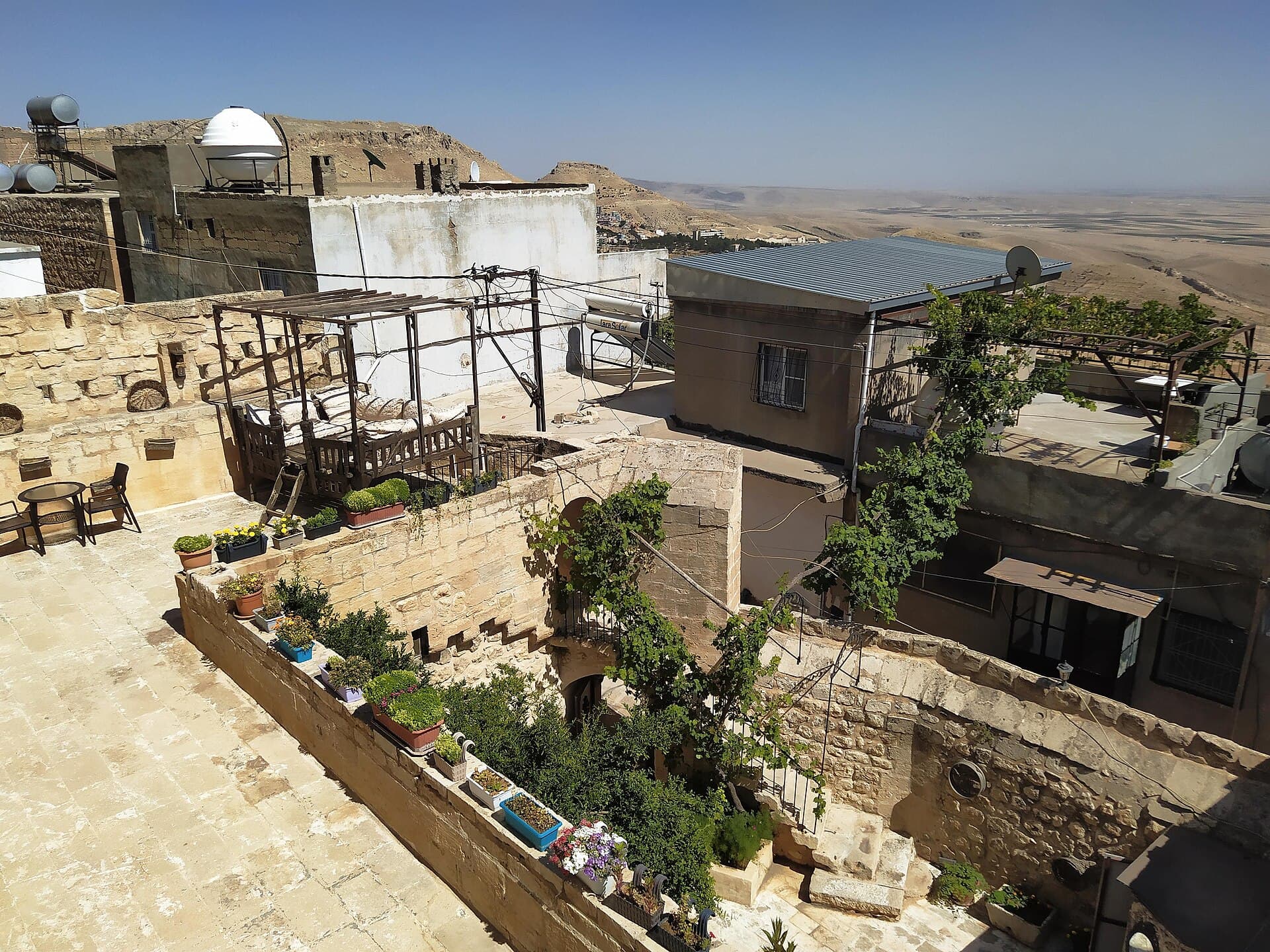
Sunlit honey-stone rooftop terrace in old Mardin overlooking the hazy plain.

Mardin Old City

Neighbourhood

Mardin has no separate "old quarter" — the whole city is one unbroken run of honey-stone terraces climbing a ridge over the plain.

Artuqid capital from 1103, then Akkoyunlu and Ottoman (from 1517), built almost entirely from local cream limestone by generations of the same stonemasonry tradition. Long home to a mixed Muslim, Syriac Christian and, until the WWI-era genocides, large Armenian population. On Türkiye's UNESCO Tentative List since February 2000, still awaiting full inscription.

Free to walk; no ticket for the old city itself.

180 minEntirely stepped and cobbled — no flat or step-free routes through the old city, and rain or ice makes the stone genuinely slippery.The lanes below 1. Cadde are occupied private homes, not a museum quarter — ask before photographing open doors, courtyards or residents.Minimal shade on the upper street through the middle of the day in summer.
Look for: Abbaralar — vaulted stone passages linking the steep cross-lanes below 1. Cadde (First Street). Carved lintels and rosette windows on private house doors, and, from several points along the ridge, uninterrupted views south across the plain.
Verified · · 1 min to Mardin Museum · 4 min to Kırklar Kilisesi (Church of the Forty Martyrs)
Rank2
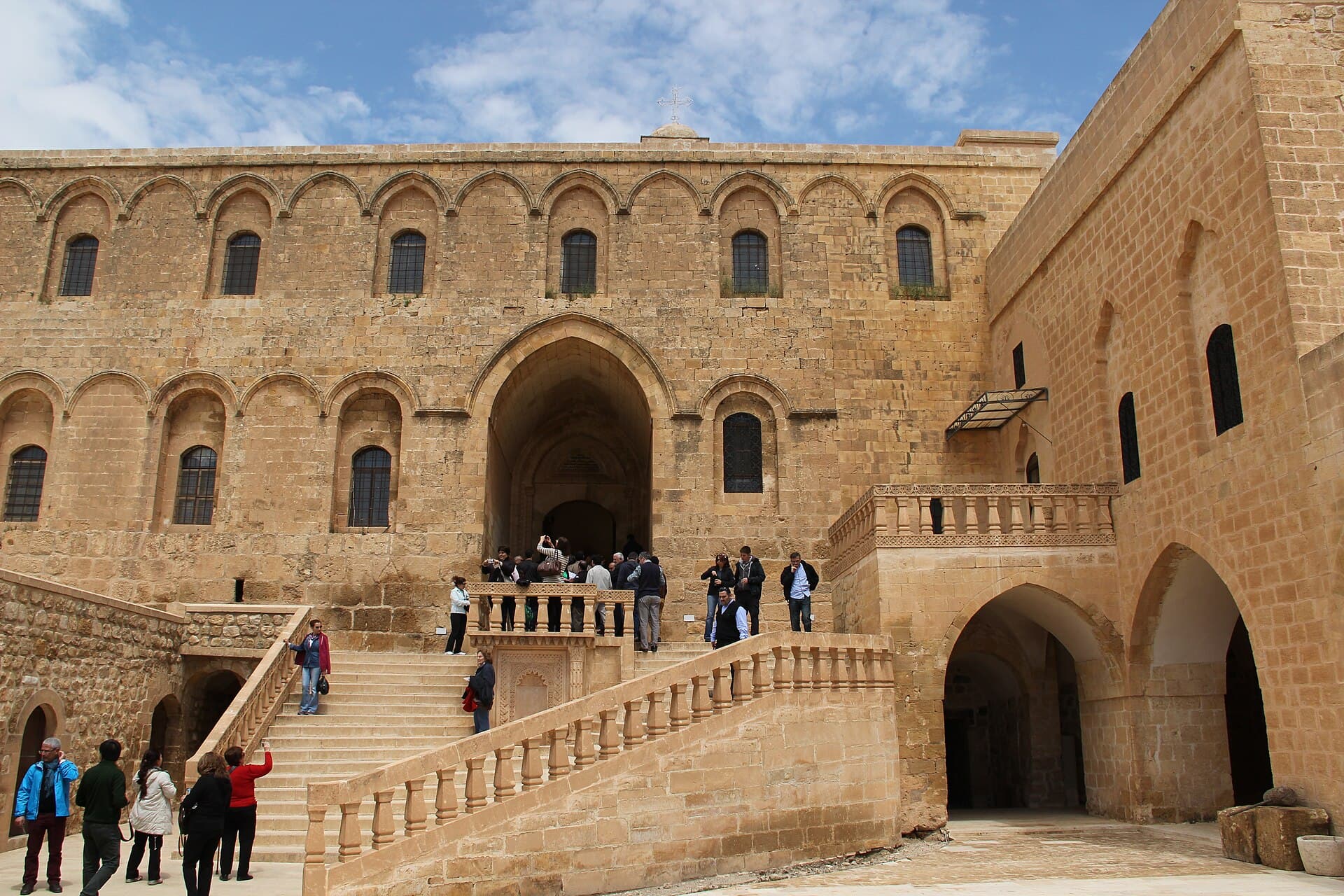
Visitors climb the grand staircase toward Deyrulzafaran Monastery's honey-stone church entrance.

A working Syriac Orthodox monastery on a site legend calls a sun-temple — seat of the Patriarchate for centuries, until it left in 1932.

Tradition holds a temple to the Mesopotamian sun god Shamash once stood here; unverified, but still shown. Bishop Mor Hananyo rebuilt and expanded the monastery around 793 AD, giving it the name it still carries alongside "Deyrulzafaran" (Saffron Monastery). It served for centuries as the seat of the Syriac Orthodox Patriarchate, until the office relocated away from Mardin in 1932–33.

A modest entrance fee applies; reported figures range widely (roughly 50–150 TL depending on source and whether a guided tour is bundled in) — confirm on arrival rather than trust any fixed number here.

60 minCloses for a long midday break (reported as roughly 11:30–14:00) — confirm current hours before setting out; arriving in the gap is a common wasted trip.About 6km outside Mardin with no reliable public transport — taxi or an organised tour is the practical way to reach it, often combined with Dara.An active monastery, not a museum — most of the complex is off-limits, and visits run as a short guided tour rather than free-roam.
+1 more to know
Modest dress expected; no posted dress-code specifics were found, so err conservative.
Look for: The older chamber beneath the main church, shown as part of the pre-Christian structure — legend, not confirmed archaeology. The courtyard, the old Syriac printing press, and the daily service conducted in Aramaic.
Rank3
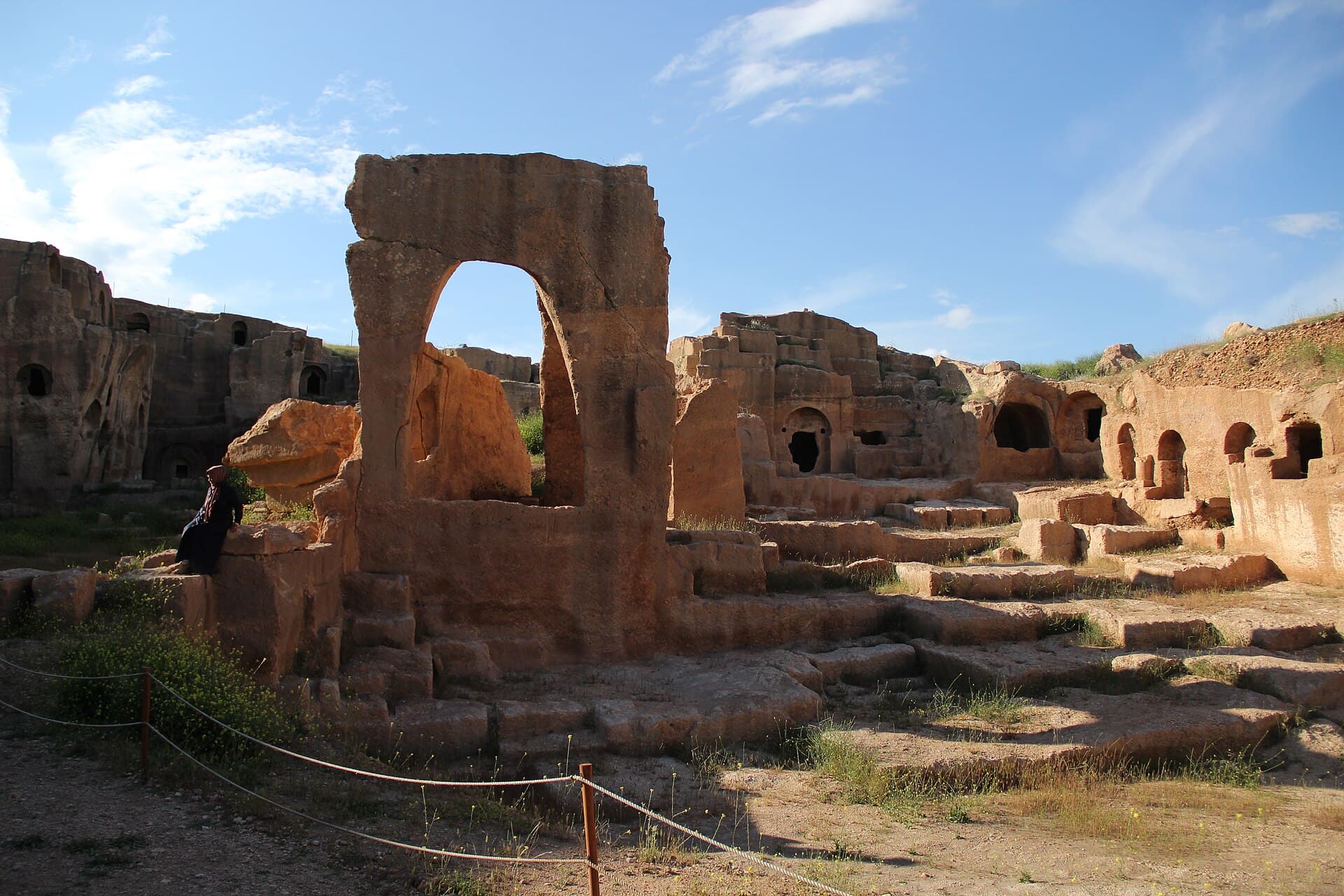
Sunlit rock-cut tomb galleries and ruined archway at Dara's ancient necropolis.

Dara Ancient City

Ancient city

An underrated Byzantine frontier city — walls, a rock-cut necropolis, a 25m cistern — free to enter and only about a tenth excavated.

Built in 505 AD by Emperor Anastasius I as a fortress against the Sasanian Persian Empire; renamed Iustiniana Nova under Justinian. Endured major sieges in 530, 540, 544, 573 and 604, then was abandoned after the Arab conquest of 639. Excavation, led by the Mardin Museum Directorate, began in 1986 and continues today.

Free. A posted sign warns visitors to report anyone asking for money to the site authorities.

100 minSits close to the Turkey–Syria border — reported distances range from roughly 6 to 10km, which may place it inside a zone your government advises against entering entirely. Check your government's current advisory for this specific area before going, separately from any general Türkiye advisory.Free entry — a sign at the site explicitly asks visitors to report anyone requesting payment. Do not pay an unofficial "fee."Minimal infrastructure: uneven ground, unlit and unrailed cistern stairs, little shade, and no facilities to rely on.
+1 more to know
Only around 10% excavated and still an active dig — some areas may be fenced or restricted depending on current work.
Look for: The rock-cut necropolis — multi-storey tomb galleries from the 5th–6th centuries, now viewed from a glass platform. The main cistern, cut 25m into bedrock. The stone-paved agora street and the remains of an early arch dam.
Rank4
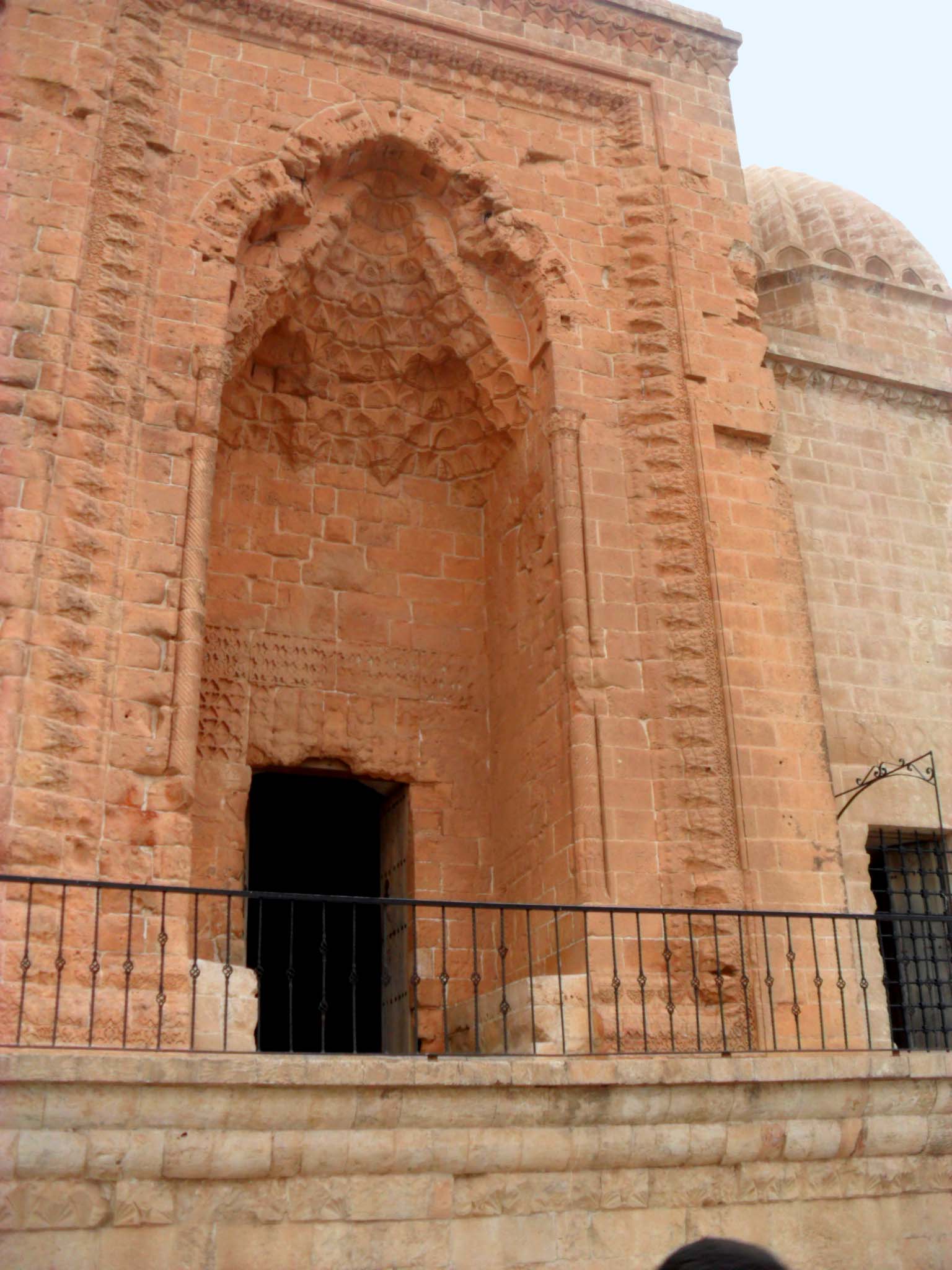
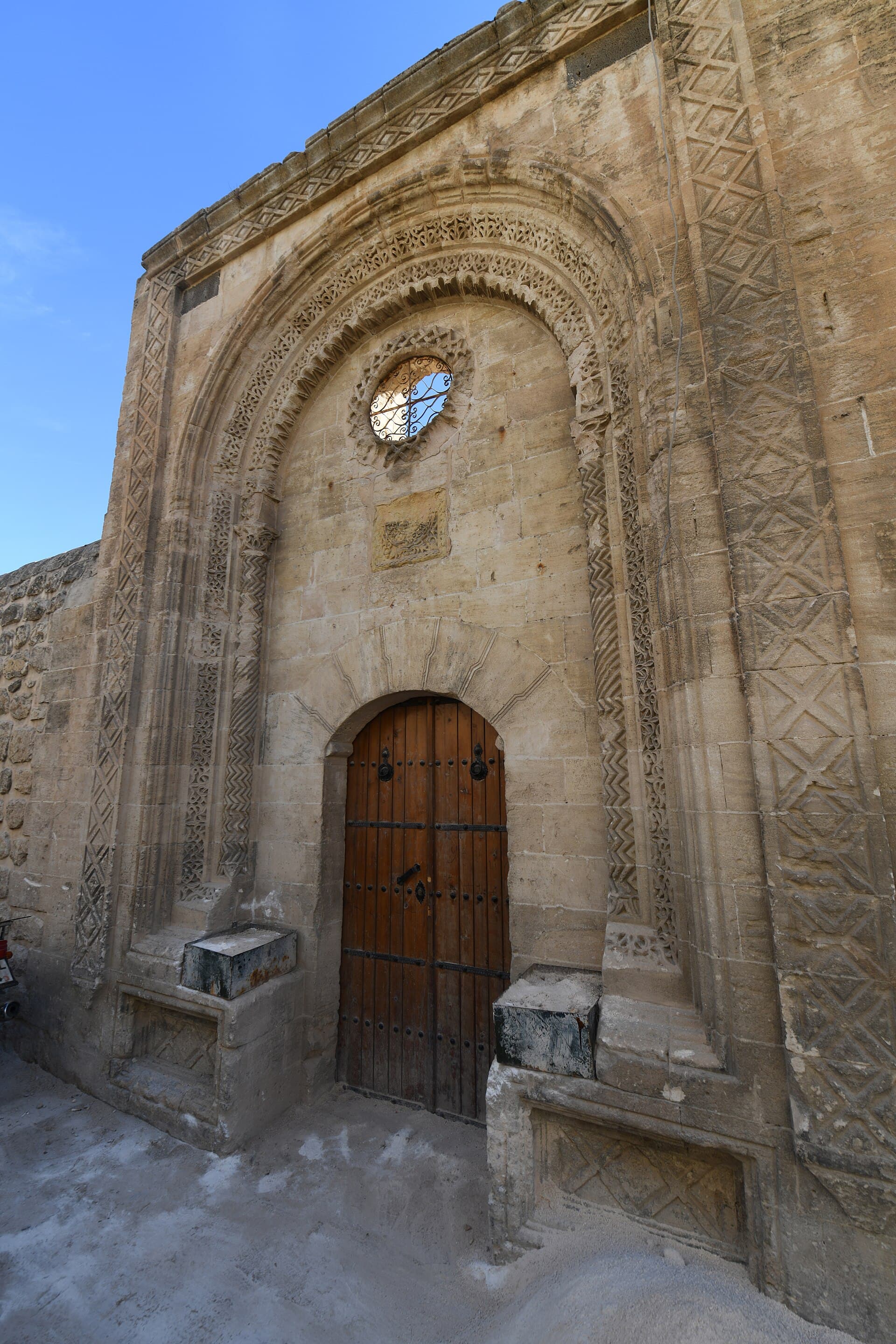
Stone entrance portal of the Kasımiye Medresesi in Mardin, Türkiye.

Kasımiye Medresesi

Historic site

Mardin's finest Artuqid–Akkoyunlu building: two courtyards, a pool fed by its own eyvan, and the old city's best open view of the plain.

Begun in the late Artuqid period and completed around 1469 under the Akkoyunlu ruler Kasım Padişah, whose name it carries. A külliye (religious and teaching complex) rather than a single building, reportedly the best-endowed and highest-earning religious institution in 16th-century Mardin, teaching medicine, astronomy and mathematics alongside religious law.

Reported around 30 TL (single source, unconfirmed); reported open until ~19:00 in summer (single source, unconfirmed) — confirm both on arrival.

45 minTwo-terrace complex with steps throughout — limited step-free access.A modest entrance fee is reported (around 30 TL by one source, unconfirmed) — confirm on arrival.Popular with tour groups, often paired with Zinciriye — late afternoon is generally quieter than late morning.
Look for: Barrel-vaulted arcades around the colonnaded courtyard; water channelled from a large eyvan into a central pool; the pendentive-domed mosque; the upper terrace view south over the plain.
Verified · · 29 min to Mardin Old City · 30 min to Mardin Museum

Worth your time

Worth your time

A second day earns you these.

Rank1
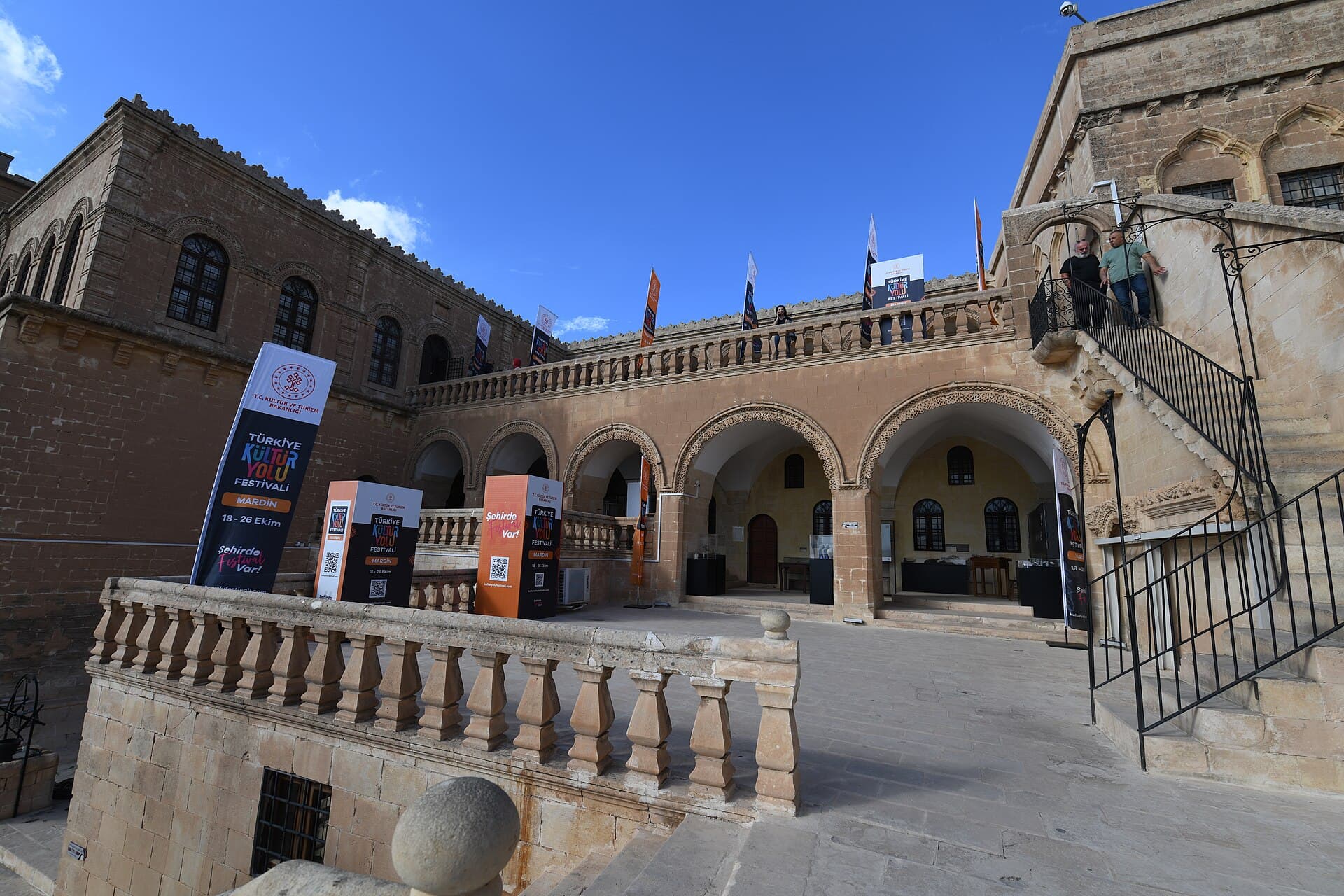
Sunlit courtyard of Mardin Museum showing carved stone arches and balustrade.

An 1895 Syriac Catholic patriarchate, converted into Mardin's archaeology and ethnography museum — the building is half the exhibit.

Built in 1895 by Patriarch Ignatios Behnam Banni as the Syriac Catholic Patriarchate, incorporating the Church of the Virgin Mary. The Ministry of Culture purchased and restored the building in the 1990s, opening it as a museum in 1995. Holds material from the Bronze Age through the Ottoman period, plus a regional ethnography collection.

Reported around 90 TL (single-source listing — confirm before publishing).

60 minClosed one day a week (Monday, per available listings) — confirm before planning around it, unlike the privately-run religious sites nearby.The historic building has uneven original stone flooring and level changes between the former church spaces.A modest entrance fee applies; one listing gives around 90 TL — treat as approximate pending confirmation.
Look for: Carved stone vaulting, arches and column heads original to the church-era building, visible above the display cases. Upstairs, the ethnography hall covers regional silver craft, textiles and objects from Mardin's mixed communities.
Verified · · 1 min to Mardin Old City · 4 min to Kırklar Kilisesi (Church of the Forty Martyrs)
Rank2

Ulu Cami (Grand Mosque of Mardin)

Religious site

Mardin's Grand Mosque, begun in 1176 — one surviving minaret of an original two, rebuilt in 1888 after the first was lost.

Artuqid-era construction, with inscriptions dating it to 1176–1186. The mosque originally had two minarets; the surviving cylindrical, ribbed minaret at the northeast corner was rebuilt in 1888–89 in an eclectic style after the earlier one was lost. Remains the city's principal working mosque.

Free.

20 minA working mosque — avoid visiting during the five daily prayers and Friday midday prayer; shoes off, modest dress.Sits at the centre of the bazaar cluster and gets busy with foot traffic through the middle of the day.
Look for: Exterior stonework carved with an external fluting technique, the domed mihrab hall inside, and sixteen inscriptions around the building recording repairs across the centuries.
Open in Maps
Rank3
Ornate carved stone entrance portal of Kırklar Kilisesi church in Mardin.

Mardin's Syriac Orthodox cathedral, in continuous use since the sixth century — a working church you can actually step into.

Built in 569 AD and dedicated to the Syriac saints Mor Behnam and his sister. Took its current name in 1170, when relics said to belong to forty Roman soldier-martyrs, frozen on a lake near Sebasteia (modern Sivas) under Emperor Decius, were brought here. Today it is the Metropolitan Church of the Syriac Orthodox Church of Mardin, one of seven Syriac churches remaining in the city.

Free; donations welcome.

25 minActive church, not a museum — no fixed visitor hours; a service in progress takes priority. Wait quietly or come back rather than interrupt.Modest dress expected; ask before photographing worshippers.One of a shrinking number of active Syriac churches in the old city — visit accordingly.
Look for: The interior carried on twelve stone pillars, with carved detailing around the doors and windows. Paintings depicting the forty martyrs' story, and, during services, an active congregation praying in Aramaic.
Verified · · 4 min to Mardin Old City · 4 min to Mardin Museum
Rank4
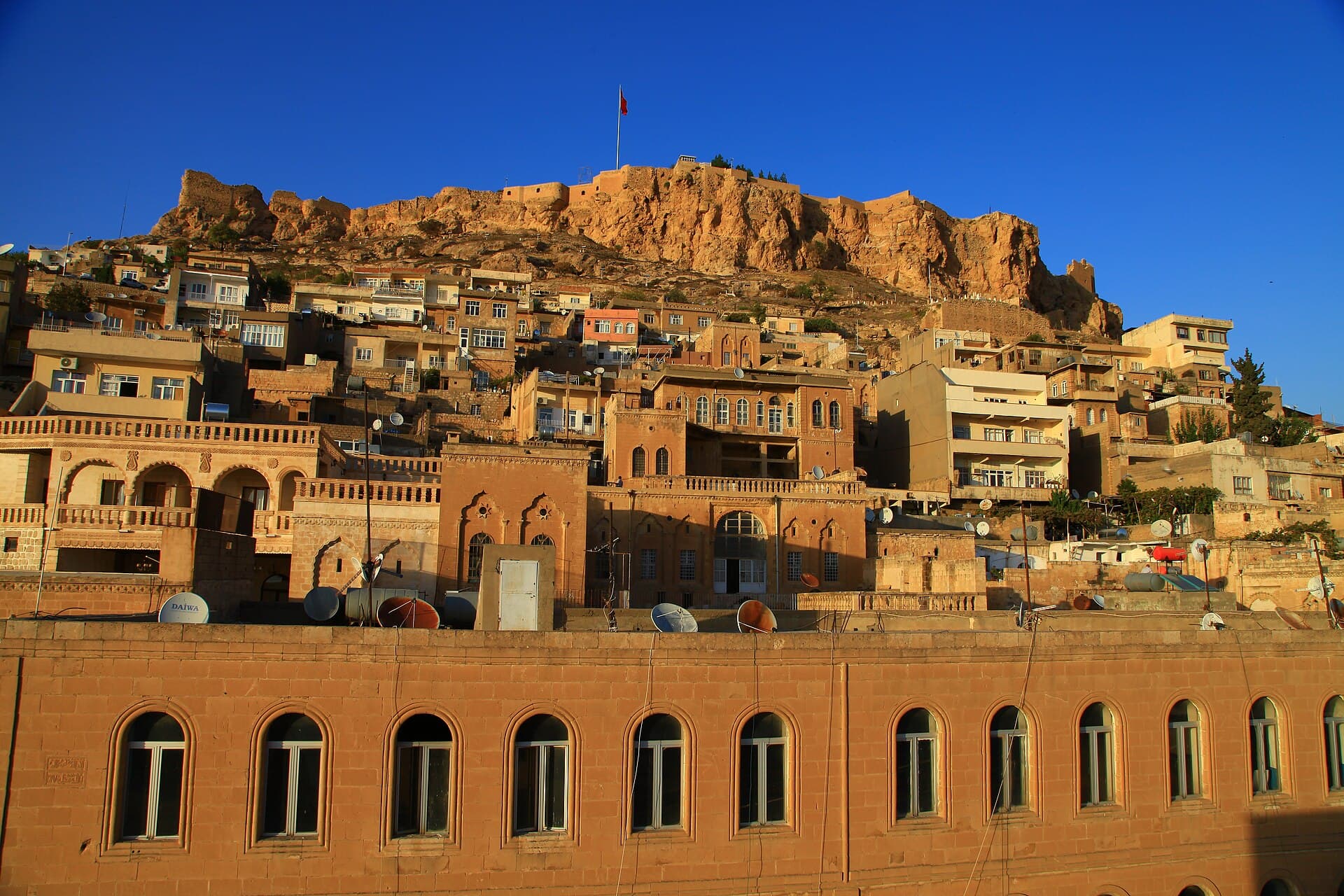
Mardin Castle crowns the old city's golden stone rooftops in warm sunlight.

Mardin Castle

Historic site

The "Eagle's Nest" crowning Mardin's skyline — an active NATO radar base, closed to the public for as long as anyone can plan around.

Fortified since at least the Hamdanid period (10th century) and held in turn by Artuqid, Akkoyunlu and Ottoman rulers for its commanding position over the plain. Mardin's provincial governor's office has formally requested the military relinquish the site for civilian and tourism use since at least 2008, without success; renewed access and excavation efforts began around 2022 under Mardin Artuklu University.

Not applicable — no public access.

20 minClosed to the public — active military site with a NATO radar installation. There is no visitor access, and this has been the case for decades despite repeated requests to reverse it.Do not approach the perimeter on foot seeking a closer look — it is a working military boundary, not a scenic trail.Re-check before travelling: access status has been the subject of periodic reopening efforts (most recently reported from 2022). If you encounter a claim that it has opened, verify independently before planning around it.
Look for: There is nothing to look for up close — the castle is not enterable. From below or from Zinciriye Medresesi's terrace, look for the walls, towers, and the radar domes marking its current military use.
Verified · · 40 min to Kırklar Kilisesi (Church of the Forty Martyrs)
Rank5

Zinciriye Medresesi

Historic site

The closest public terrace to Mardin Castle, and the best place to actually see it. Built 1385 by Mardin's last Artuqid sultan.

Commissioned in 1385 by Melik Necmeddin İsa, the last Artuqid ruler of Mardin, as a külliye combining medrese, mosque and his own mausoleum. Said to have been briefly used as a holding place for Sultan İsa himself after Timur's forces took Mardin in 1401. Functioned as a religious school until closures in the 1920s.

30 minSteps throughout a multi-level complex — limited step-free access.Often paired with Kasımiye on the same visit; the two look in different directions, so budget time for both terraces separately.
Look for: Fluted domes at each end of the complex, a star-vaulted portal ceiling, and a muqarnas dome over the mihrab. Climb to the terrace specifically for the view of Mardin Castle and the Ulu Cami minaret together.
Open in Maps
Rank6

Mardin Bazaar (Revaklı Çarşı / Kayseriye Bedesteni / Bakırcılar Çarşısı)

Market

Three linked historic bazaars below the Grand Mosque — coppersmiths, a domed bedesten, and covered stone arcades still doing real trade.

A cluster of historic market structures around Ulu Cami on Mardin's old trade routes: Revaklı Çarşı (arcaded market street), Kayseriye Bedesteni (a domed covered market hall) and Bakırcılar Çarşısı (coppersmiths' market). Long a centre for soap-making, silver telkari (filigree) work, and the regional spice trade.

Free to browse; goods at normal market prices.

90 minGenuine working craft shops sit alongside tourist-facing storefronts on the main pedestrian street — prices and authenticity vary; look for actual workbenches rather than assuming any shopfront is a workshop.Covered sections are naturally cooler and a reasonable midday heat refuge, but narrow lanes get crowded with tour groups late morning.
Look for: Coppersmiths hammering pots to order, stacks of handmade Mardin soap, silver-filigree workbenches, and the domed stone ceiling of the Kayseriye Bedesteni. Spices include a saffron-cardamom coffee blend, sumac and Urfa pepper.
Open in Maps

If you have longer

If you have longer

Keep these compact stops in mind when you build your trip.

Housed in a cavalry barracks building from 1889, restored and reopened as the Sakıp Sabancı Mardin City Museum, named for the Turkish industrialist and philanthropist family. Displays local handicrafts, traditional jewellery, weaving and soap-making, alongside the Dilek Sabancı Art Gallery's rotating exhibitions.

A smaller, quieter museum than Mardin Museum — a good pairing with it rather than a substitute for it.Current hours and fee not independently confirmed — check locally.
45 minOpen in Maps

Midyat (day trip)

Neighbourhood

Old Midyat (Estel) is built in the same regional limestone tradition as Mardin, historically home to a significant mixed Syriac Christian and Muslim population and long a centre of telkari (silver filigree) craftsmanship. Mor Gabriel Monastery, founded 397 AD and among the oldest continuously functioning Syriac Orthodox monasteries anywhere, lies about 20km further out.

Free to walk the old town; individual workshops and Mor Gabriel Monastery may have their own entry terms, not covered by this page.

About 64km / roughly 50 minutes each way from Mardin by road — this is a half-to-full day commitment, not a quick add-on.This page deliberately does not decompose Midyat into its own sites (Mor Gabriel, individual workshops, Old Midyat's streets) — treat this entry as a pointer to a day trip, not a complete guide.No reliable public transport confirmed for this pass — taxi, organised tour, or self-drive is the practical way to go.
240 minOpen in Maps

Türkiye, for scale

Where it sits

See this city in the wider shape of Türkiye.

The map will load as it approaches the viewport.