Deyrulzafaran Monastery
A working Syriac Orthodox monastery on a site legend calls a sun-temple — seat of the Patriarchate for centuries, until it left in 1932.

Enough context, no spoilers
Why it matters
Tradition holds a temple to the Mesopotamian sun god Shamash once stood here; unverified, but still shown. Bishop Mor Hananyo rebuilt and expanded the monastery around 793 AD, giving it the name it still carries alongside "Deyrulzafaran" (Saffron Monastery). It served for centuries as the seat of the Syriac Orthodox Patriarchate, until the office relocated away from Mardin in 1932–33.
What to know before you go
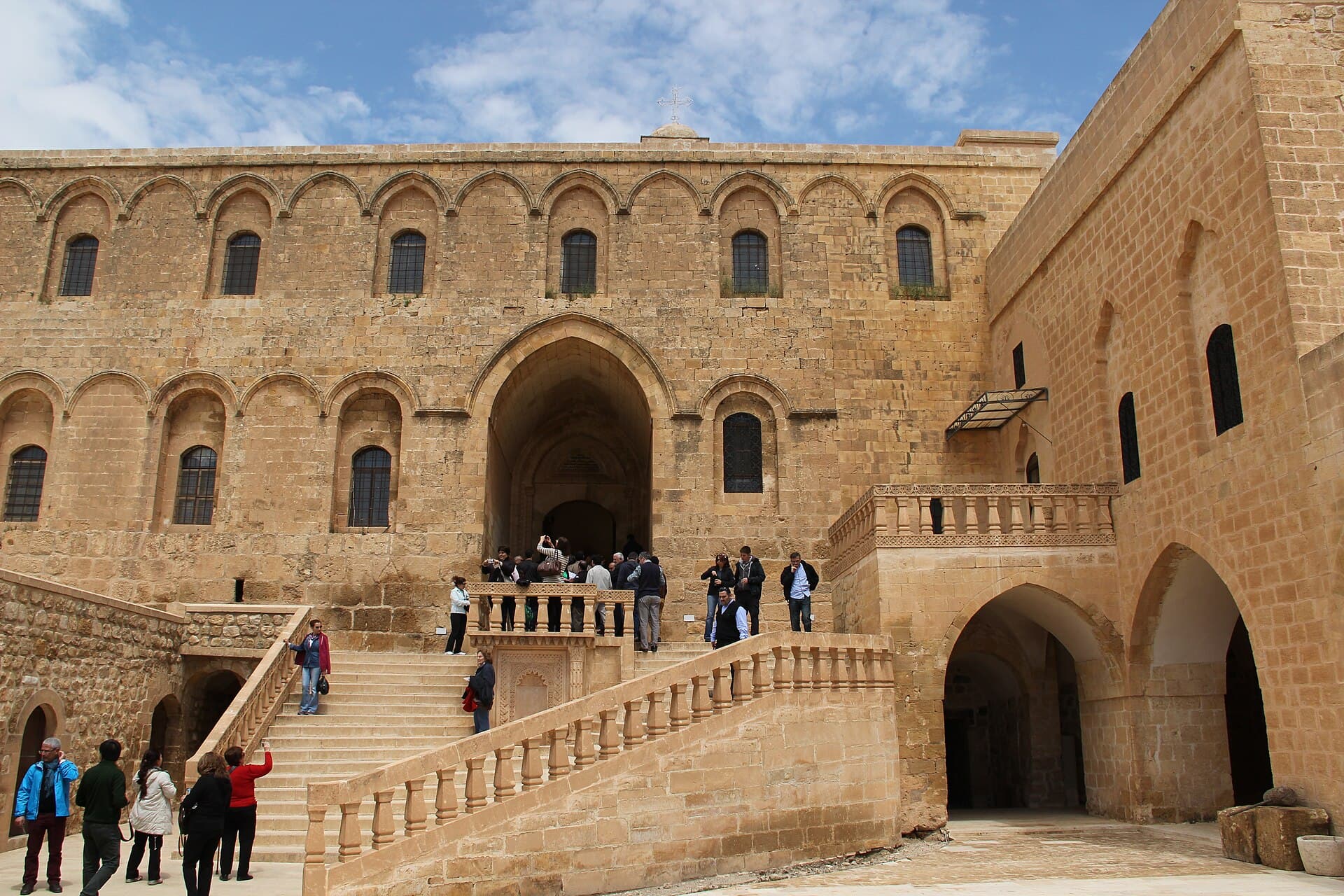
Deyrulzafaran earns its English nickname, the Saffron Monastery, from the honey-gold stone it shares with Mardin itself — not, whatever some guides claim, from saffron mixed into the mortar, a story nobody has been able to substantiate. What's older and stranger is well short of proven either: tradition holds a temple to the Mesopotamian sun god Shamash stood on this exact spot, and the monastery's oldest surviving chamber, a small windowless room beneath the main church, is still pointed out as part of that pre-Christian structure. Take it as legend worth hearing, not confirmed fact — nobody has excavated to prove it. What is well documented is the Christian history built on top of it. A bishop named Hananyo rebuilt and expanded the site around 793 AD, thoroughly enough that the monastery still carries his name — Mor Hananyo — alongside the Arabic one most visitors use. For centuries afterward this was the administrative centre of the Syriac Orthodox Church, seat of its Patriarch, until the office relocated away from Mardin in 1932–33, ending a very long run as the working centre of a church that once stretched from here toward India. It is not a museum today. A small community, led by the Metropolitan of Mardin, still lives and prays here, and the daily service is conducted in Syriac Aramaic — the closest living relative of the language most scholars believe Jesus spoke. You'll be shown around on a short guided tour rather than left to wander freely, which is fair: most of the complex, including the upper floors where clergy and occasional guests stay, simply isn't open to visitors. What you see is the courtyard, the main church, and the older chambers beneath it. The formal tour runs about twenty minutes; budget longer to sit afterward in the courtyard, the most peaceful stretch of stone anywhere near Mardin. Come in the morning — the monastery closes for a long midday break, and arriving into that gap is a genuinely common mistake that wastes the trip out. Modest dress is expected, as at any active place of worship; there's no dress-code sign to rely on, so err conservative rather than find out at the gate.