Konya is the spiritual home of Rumi and the Mevlevi order — a devout, unhurried city built around his tomb, not a resort. One night covers the Mevlana Museum and Alâeddin Hill's Seljuk core well. A second day earns Çatalhöyük, a 9,000-year-old proto-city on the plain outside town: genuinely worth it, but a real day trip, not a casual add-on.
Start with the essentials, add what genuinely interests you, and leave the rest for another visit. Every place includes a concise story, practical timing, a Maps link, and a one-tap route planner action.
Make the route work
Anticipate the practical details.
Getting there
Konya Airport (KYA) sits roughly 15km northeast of the centre, about 30–40 minutes by taxi, bus or Havaş shuttle; Turkish Airlines, Pegasus and SunExpress fly in. Many independent travellers prefer the YHT high-speed train instead — 1h45 from Ankara, 4h40 from Istanbul's Söğütlüçeşme station, arriving at Konya's central station. Frequent buses also link Konya to Cappadocia (Göreme, around 3 hours, roughly hourly) and on to the Mediterranean coast.
Getting around
The historic core — Mevlana Museum, Alâeddin Hill, the Seljuk medrese cluster — is compact and walkable, with a tram line connecting the station to outer neighbourhoods. Çatalhöyük is a separate matter: roughly 45–70 minutes southeast near Çumra, served only by a handful of weekday minibuses and a Tuesday–Sunday tourist bus from Mevlana Square, so most visitors go by taxi or organised tour rather than public transport. See the Çatalhöyük entry for the full access picture.
Money
Turkish lira is standard; cards are widely accepted at museums and restaurants in the centre. Konya's major religious sites — the Mevlana Museum, Şems-i Tebrizi, Sahip Ata, Alâeddin Mosque, Aziziye Mosque — are free to enter; the Seljuk-era medrese museums (Karatay, İnce Minareli, Sırçalı) charge a small fee and accept the Müze Kart pass. Çatalhöyük charges €5 for non-Turkish visitors.
Connectivity
Mobile coverage is reliable throughout the city centre and out to Çatalhöyük. Wi-Fi is standard in hotels and cafés around the Mevlana Museum area.
Etiquette
Konya is one of Turkey's more religiously conservative cities — dress modestly around town generally, not only inside mosques and the Mevlana Museum's mausoleum, where shoe covers are provided and headscarves are expected for women. Stay quiet and keep distance from anyone praying at Rumi's tomb; it remains an active shrine, not only a museum. Alcohol is far less visible here than on the coast.
Safety and comfort
Konya is a safe, orderly city with none of the region-specific risks flagged elsewhere on this site. The main practical hazard is heat and sun exposure on the open, largely unshaded mound at Çatalhöyük — carry water and a hat, especially June–August. Roads out to Çatalhöyük are unlit rural roads after dark; allow extra care if self-driving in the evening.
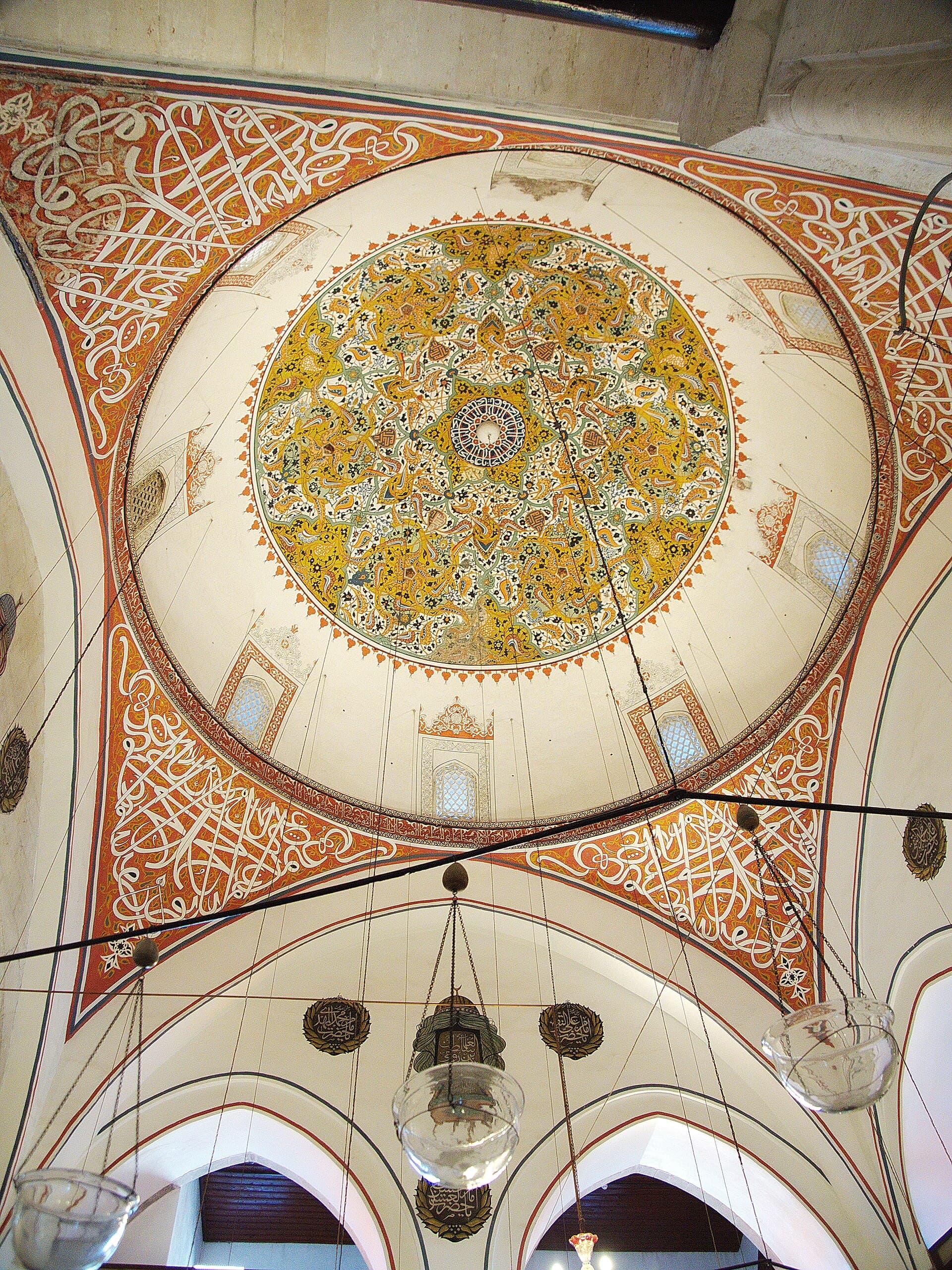
Rumi's sarcophagus under a turquoise dome, in Turkey's second most-visited museum — and still a working shrine where people come to pray.
Sultan Alaeddin Keykubad gave his rose garden for the burial of Rumi's father, Bahaeddin Veled, in 1231. When Rumi died on 17 December 1273, his son built a mausoleum over both graves, finished in 1274. Atatürk's 1926 decree turned the dergah into a museum, opened 2 March 1927 — the tomb never stopped being a place of prayer.
Free admission — DOĞRULANDI (official muze.gov.tr listing and an independent guide both confirm free entry).
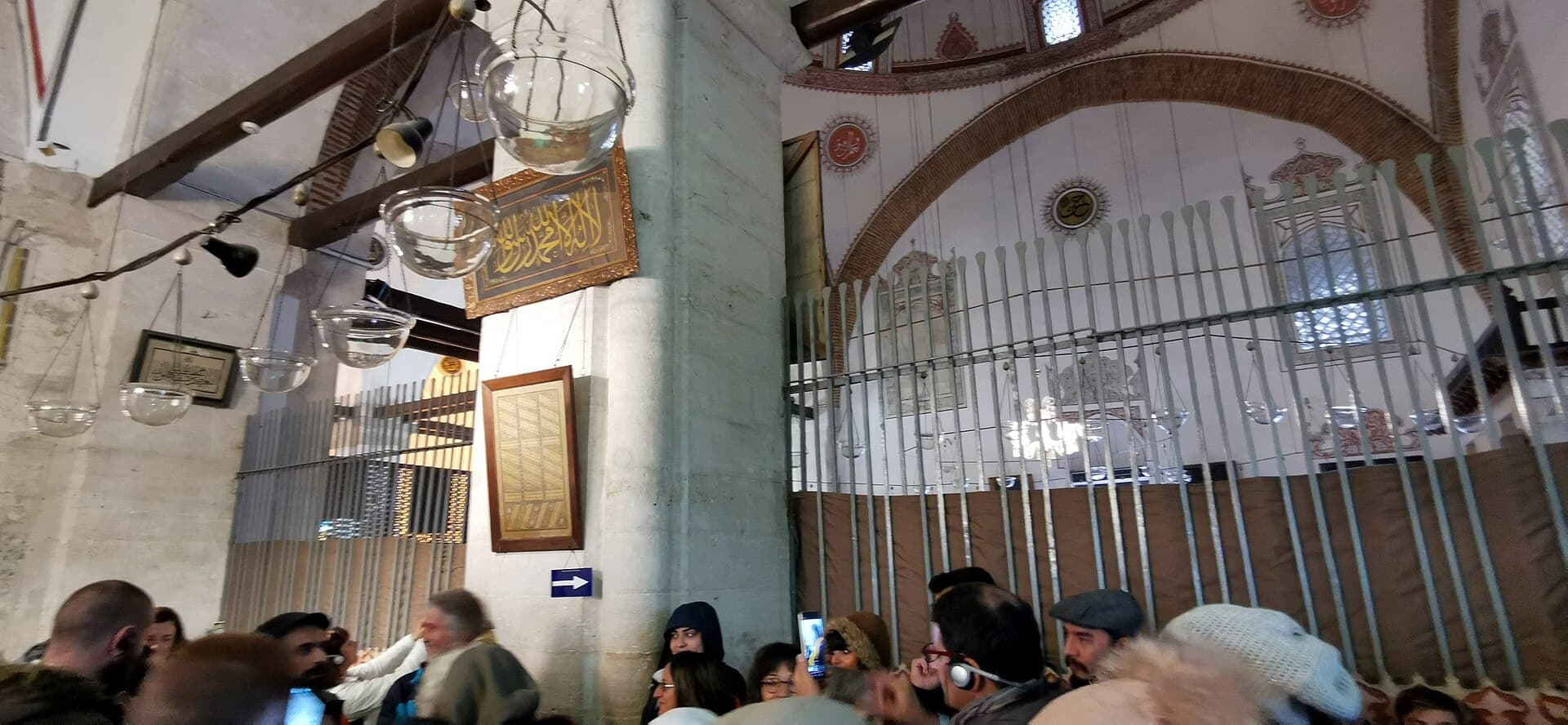
30 minThis is an active shrine as much as a museum — pilgrims pray and weep at the tomb. Move quietly, keep a respectful distance from anyone praying, and don't treat it purely as a photo stop.Shoe covers are compulsory and provided at the entrance; women should bring or borrow a headscarf, and shorts or sleeveless tops are not appropriate here.One of Turkey's most-visited sites (3.46 million visitors in 2019) — expect real crowding and queuing from mid-morning through mid-afternoon in season.+1 more to know
Opening hours run seasonally (roughly 09:00–19:00 April–October, 09:00–17:00 October–April, with the ticket window closing 20 minutes earlier) — confirm current hours on arrival.
Look for: Rumi's sarcophagus, draped and crowned with an oversized turban. Beside it, his father's coffin stands upright — legend holds it rose in reverence when Rumi was buried. Shoe covers are provided; headscarves expected for women.
Verified · · 1 min to Mevlana Museum — Semahane and Dervish Lodge · 16 min to Mevlevi Sema Ceremony
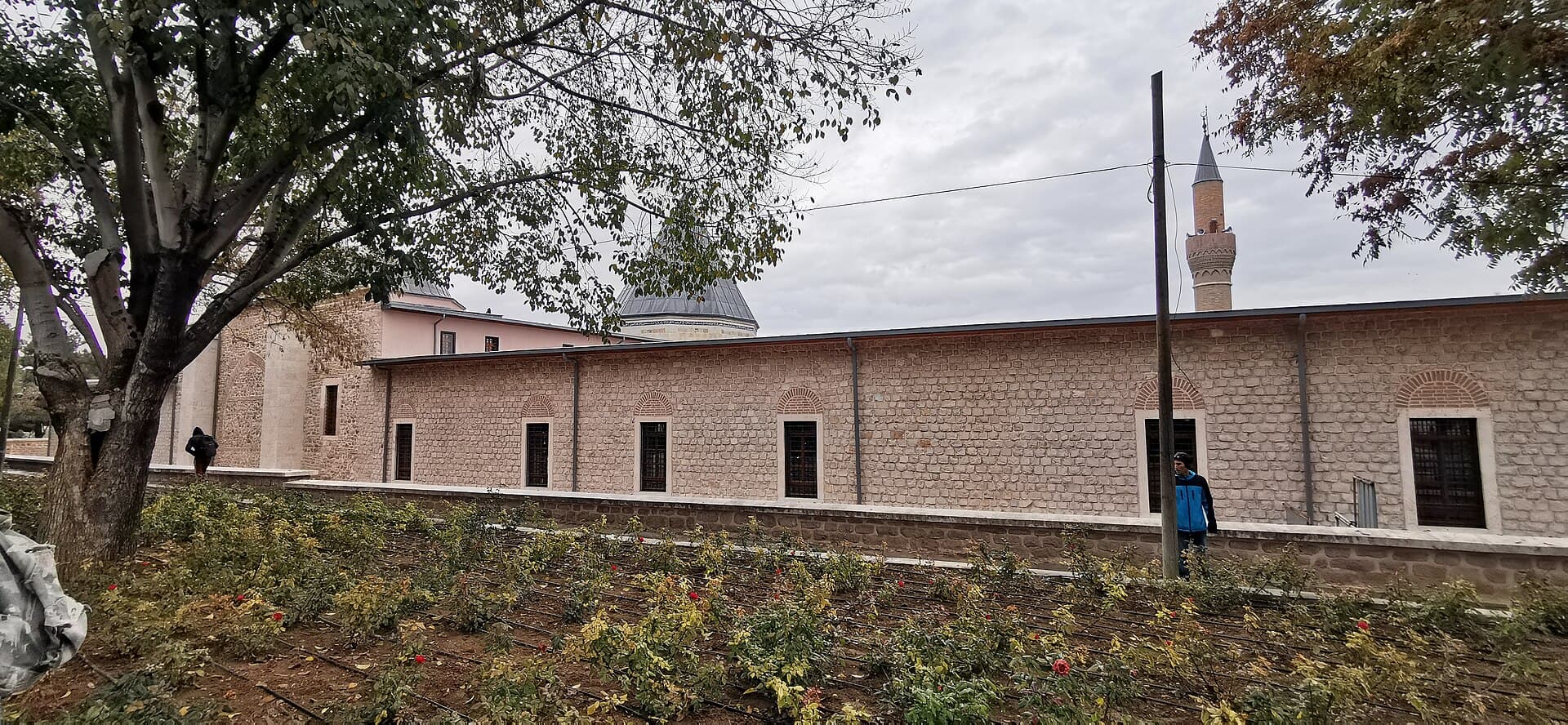
The hall where dervishes whirled, the cells where they trained for years, and the instruments that explain what it meant.
The semahane (ritual hall) and surrounding dervish cells were added and enlarged under Ottoman patronage, including Murad III in the 1590s, turning Rumi's tomb into a working Mevlevi lodge. Dervishes trained in the seventeen small domed cells for up to 1,001 days before earning lodge status. The order was banned nationwide in 1925.
Free admission — same single free ticket as the mausoleum (DOĞRULANDI).
45 minShares the mausoleum's entrance, crowding, and dress-code requirements — see that entry for shoe-cover and headscarf details.The dervish-cell mannequins and instrument cases are behind glass but the rooms themselves are small; expect single-file movement when tour groups are through.Photography is generally allowed but flash is discouraged, especially near worshippers elsewhere in the complex.
Look for: Ney flutes and kudüm drums used in real ceremonies; a Masnavi manuscript copied in 1278, five years after Rumi's death; and the dervish cells, each fitted with a mannequin group showing a stage of lodge life, from kitchen novice to sheikh.
Verified · · 1 min to Mevlana Museum — Mausoleum · 16 min to Mevlevi Sema Ceremony
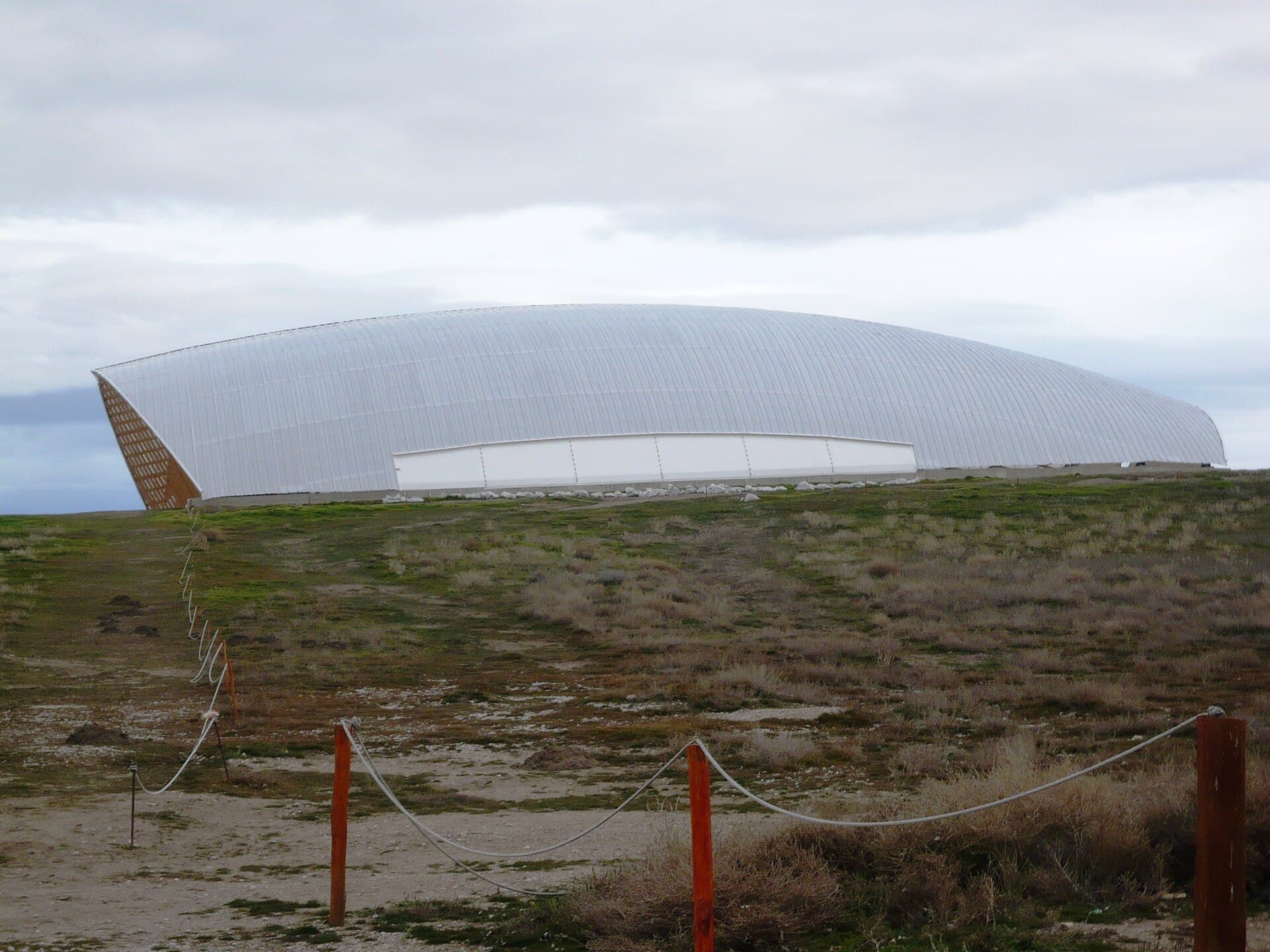
A 9,000-year-old proto-city on the open plain, among the most important Neolithic sites on Earth — a real day trip, not an add-on.
Settled from roughly 7500 to 5600 BC, Çatalhöyük held up to 8,000 people in mudbrick houses packed wall-to-wall with no streets — residents crossed rooftops and entered through the roof. Excavated from 1961, most intensively under Ian Hodder from 1993–2018, it's a UNESCO World Heritage Site (2012) under continuing Turkish-led excavation.
€5 for non-Turkish visitors — DOĞRULANDI, two independent sources converge on this figure.
150 minThe North Shelter (one of two roofed excavation areas) was reported temporarily closed as of mid-2026 — confirm current status before travelling.A real distance from Konya (42–52km) with sparse, schedule-dependent public transport — most visitors need a taxi or organised tour to make the round trip work in a day.Almost no shade across the open mound; carry water and sun protection regardless of season.+1 more to know
This is an active excavation, not a finished attraction — expect fenced-off working areas and year-to-year changes in what's visible.
Look for: Wall paintings and bull-horn installations, reconstructed in the museum's underground house replica; the shelters over the excavated mound; and the newly found "House of the Dead," fourteen burial platforms still being excavated.
Konya's highest ground, built by five thousand years of settlement — and, for two centuries, the Seljuk Sultanate's walled seat.
First settled around 3000 BC, the mound built up through Phrygian, Hellenistic, Roman and Byzantine layers before the Seljuks made it their citadel. The mosque begun under Rükneddin Mesud I around 1150 was finished in 1221 under Alaeddin Keykubat; the kümbet of Kılıçarslan II, from 1197, holds eight Seljuk sultans.
Free — public park, no gate. The mosque itself is free to enter outside prayer times, standard for any working mosque (DOĞRULANDI on the general norm; no Alâeddin-specific closure report found).
45 minThe Alâeddin Mosque is an active place of worship — modest dress, and avoid visiting during the five daily prayers or the Friday midday prayer.The hill is a genuine public park as much as a monument; expect families, tea gardens and local foot traffic alongside the historic core.Ground is uneven around the excavated and partially-reconstructed areas — reasonable footwear matters.
Look for: The mosque's prayer hall, its columns recycled from Byzantine and Roman buildings; the pyramid-roofed kümbet in the courtyard; and, on the hill's north side, a single standing wall — all that's left of the Seljuk sultans' own palace.
Verified · · 1 min to İnce Minareli Medrese · 18 min to Mevlana Museum — Mausoleum
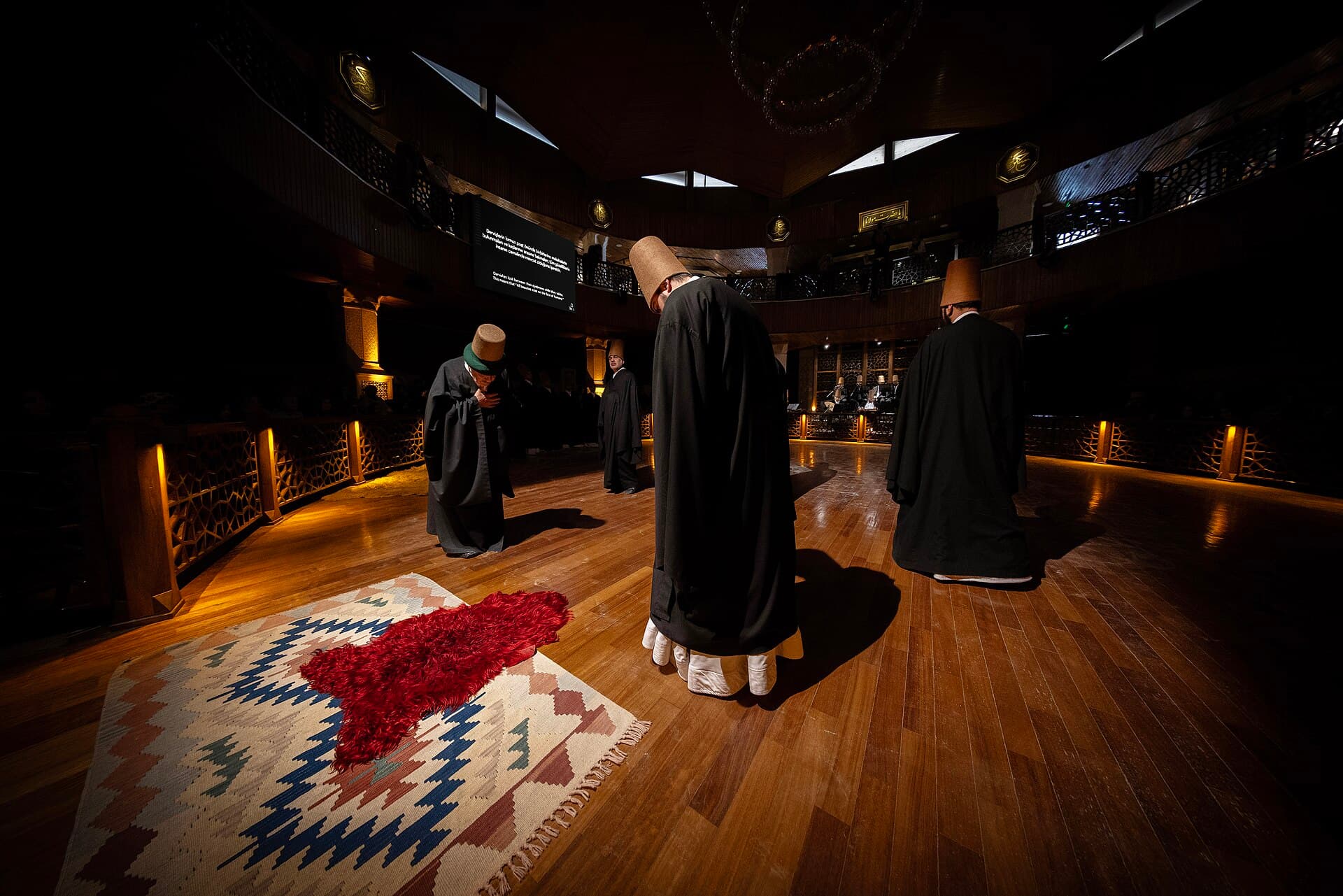
The turning you came to see — but reliably scheduled only on Saturday nights, which most one-night visitors to Konya will simply miss.
Rumi's son Sultan Veled formalised the turning into structured ritual; Mevlevi lodges performed it for over six centuries until the Republic banned Sufi orders in 1925. UNESCO listed it as Intangible Cultural Heritage in 2008. Public performances now run at Konya's purpose-built Mevlana Cultural Center, opened December 2004.
Ticketed, reported in the rough 50–100₺ range via the Biletinial platform — KISMEN, no current official figure found; confirm before travel. Free admission is not offered outside a guardian-supervised viewing at the December festival, where seating is separately, heavily oversubscribed.
90 minScheduled reliably only on Saturday evenings outside the December festival. On a typical 1–2 night visit, most travellers will not be in Konya on a Saturday — check the calendar before building an itinerary around this.Tickets can sell out; buy in advance rather than assuming walk-up availability, especially in summer and around the December festival.Audience etiquette is real, not a formality: stay silent during the turning, don't applaud between selams, and avoid flash photography, which visibly disrupts the semazens' concentration.+1 more to know
This is a formal ticketed performance in a purpose-built modern hall, not an informal glimpse into a monastery — a different (and still legitimate) experience from stumbling on a ritual in progress.
Look for: The camel-hair sikke hat, read as the ego's tombstone, and the white tennure skirt as its shroud. Watch the raised right hand and lowered left as the semazen turns, through four selams — the ceremony's four distinct movements.
Verified · · 16 min to Mevlana Museum — Mausoleum · 16 min to Mevlana Museum — Semahane and Dervish Lodge
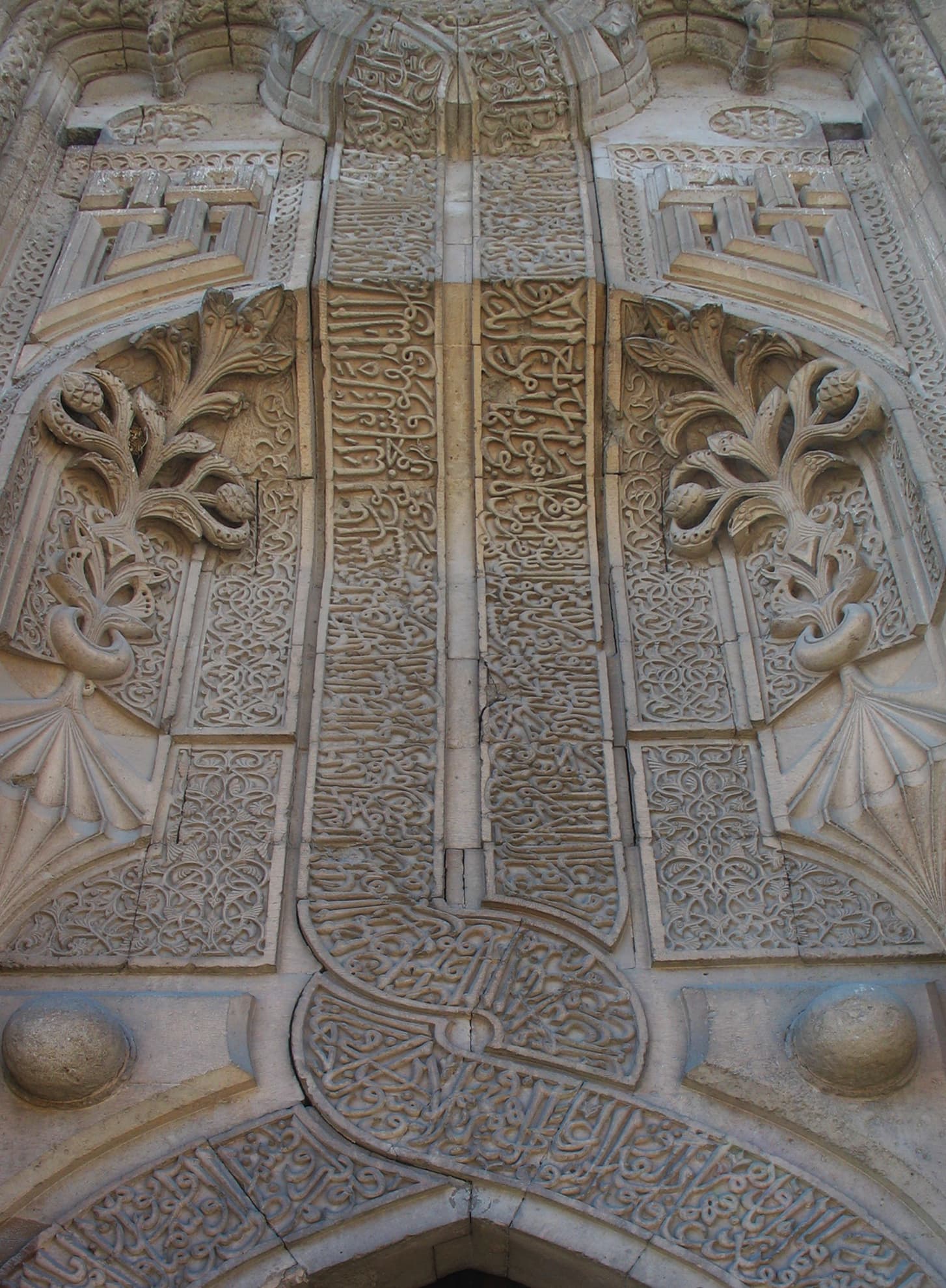
Seljuk Konya's most celebrated portal, on a minaret literally cut down to size by lightning in 1901.
Built 1264–79 for vizier Sahip Ata Fahreddin Ali — the same patron behind the Sahip Ata Complex across town — as a medrese for hadith studies. Its fluted turquoise-tiled minaret gave it the popular name İnce Minareli, "slender minaret"; a lightning strike in 1901 destroyed its upper section and brought down part of the mosque dome with it.
Small entrance fee; Müze Kart accepted — KISMEN, exact current figure not confirmed.
30 minThe coordinate used here is an estimate based on its confirmed adjacency to Karatay Medrese and Alâeddin Hill, correcting a Wikipedia infobox coordinate error found roughly 40km off during research.The minaret's top section is permanently gone, not under restoration — don't expect the "slender minaret" of the name to look intact.
Look for: The portal's dense Seljuk carving and Qur'anic inscription bands, among the finest in Anatolia. Inside, carved stone and wood — including a Seljuk double-headed eagle and lions — defying the usual restriction on figural imagery.
Verified · · 1 min to Alâeddin Hill · 16 min to Mevlana Museum — Mausoleum
The traditional grave of Shams of Tabriz, the wandering dervish whose arrival in 1244 turned a respected jurist into Rumi.
Shams of Tabriz vanished from Konya in 1247; tradition holds he was killed by disciples resentful of his hold over Rumi. A mosque was raised over his traditional grave in 1510, during the Ottoman period, expanding an earlier shrine on the site.
Free — KISMEN, single clear source but consistent with how active shrine-mosques of this kind are treated across Turkey.
20 minAn active mosque built around a venerated tomb — modest dress and quiet conduct expected, same as any working mosque.Coordinate is an address-based estimate (Şems Park, near Kılıçarslan Meydanı) rather than a surveyed figure.
Look for: A simple, unshowy prayer hall built around the tomb, within Şems Park a short walk from both Alâeddin Hill and the Mevlana Museum — a quieter pilgrimage stop than either.
Seljuk Konya's tile museum, in a 1251 medrese facing the ruins of the sultans' own palace across the square.
Commissioned in 1251 by vizier Celaleddin Karatay under Sultan İzzeddin Keykavus II, this closed-courtyard medrese taught hadith and Qur'anic exegesis. It became the Tile Artefacts Museum in 1955 and now holds roughly 5,000 Seljuk and Ottoman tiles, ceramics and plaster fragments.
Small entrance fee; Müze Kart accepted — KISMEN, conflicting figures found (roughly 12.5–40₺ depending on source and date), no figure printed as fact.
30 minFaces directly onto the excavated remains of the Seljuk sultans' palace and Alâeddin Hill — easy to combine with that visit in one stop.
Look for: Glazed tile and glass finds from the Kubad-abad Palace excavations on Lake Beyşehir, and the medrese's own turquoise-tiled dome, seen from directly underneath in the entrance hall.
Founded in 1901, in its current Meram-district building since 1962. The collection runs Neolithic to late Ottoman, drawing heavily on Çatalhöyük, Çumra-area sites and the Alâeddin Hill excavations, alongside Roman sarcophagi and Phrygian and Urartu material.
Entrance fee applies — KISMEN, no current figure confirmed.
Coordinate is estimated from its confirmed adjacency to the Sahip Ata complex (same street/neighbourhood) rather than an independently surveyed figure.Worth visiting before or after Çatalhöyük itself, since the site's most portable and striking finds are here, not on the mound.
Built 1258–83 for vizier Sahip Ata Fahreddin Ali — the same patron behind İnce Minareli Medrese — the külliye combined mosque, mausoleum, dervish lodge, hammam and shops in one endowment. Only the mosque's portal, mihrab and some tile mosaic survive from the original structure; the medrese now houses an ethnography museum.
Free — KISMEN, aggregator sources agree but no official listing independently checked.
The mosque portion remains a working place of worship even though most of the original building is gone — modest dress applies there.
Built in 1242 under Sultan Kaykaus II for Islamic legal studies, taking its name ("glazed") from blue-tiled decoration now largely lost to weathering. Converted to a museum of funerary monuments in 1960, formalised under the Ministry of Culture in 1990.
Small entrance fee — KISMEN, no current figure confirmed.
A short walk from Sahip Ata Museum and the Archaeological Museum — the three combine naturally into one Meram-district stop.
First built in 1676 under Sultan Mehmed IV; fire gutted it in 1867, and Sultan Abdülaziz's mother funded a full rebuild in 1875, giving it the ornate Ottoman Baroque form that stands today, at the edge of Konya's old market streets.
Free — DOĞRULANDI (a working mosque; free entry is structural, not a specific claim needing its own source).
An active mosque — modest dress, and avoid visiting during the five daily prayers or Friday midday prayer.Sits at the edge of Konya's old commercial streets — a natural pairing with a walk through the surrounding market district rather than a standalone stop.