Mevlevi Sema Ceremony
The turning you came to see — but reliably scheduled only on Saturday nights, which most one-night visitors to Konya will simply miss.
Enough context, no spoilers
Why it matters
Rumi's son Sultan Veled formalised the turning into structured ritual; Mevlevi lodges performed it for over six centuries until the Republic banned Sufi orders in 1925. UNESCO listed it as Intangible Cultural Heritage in 2008. Public performances now run at Konya's purpose-built Mevlana Cultural Center, opened December 2004.
What to know before you go
Be honest with yourself about timing before you plan around this. The one dependable, publicly ticketed sema in Konya outside December runs once a week — Saturday, 19:00, at the Mevlana Cultural Center, a 3,000-seat hall built for exactly this in 2004. Konya's average visitor stays under two nights. If your one night here isn't a Saturday, you will not see it, and no amount of asking around town will conjure a substitute; the free weekday performances sometimes mentioned online are more reliably an Istanbul phenomenon, at Silivrikapı, not Konya's.
What you'd be watching, if the calendar cooperates, is not a folk dance. Rumi's son Sultan Veled formalised the turning into a structured ritual after his father's death, and Mevlevi lodges performed it for over six centuries until the Republic banned all Sufi orders in 1925 — the same year that emptied the dervish cells you may have just walked through at the museum. UNESCO listed it as Intangible Cultural Heritage in 2008, which is the diplomatic way of saying it survived a state ban and is still substantially what it was.
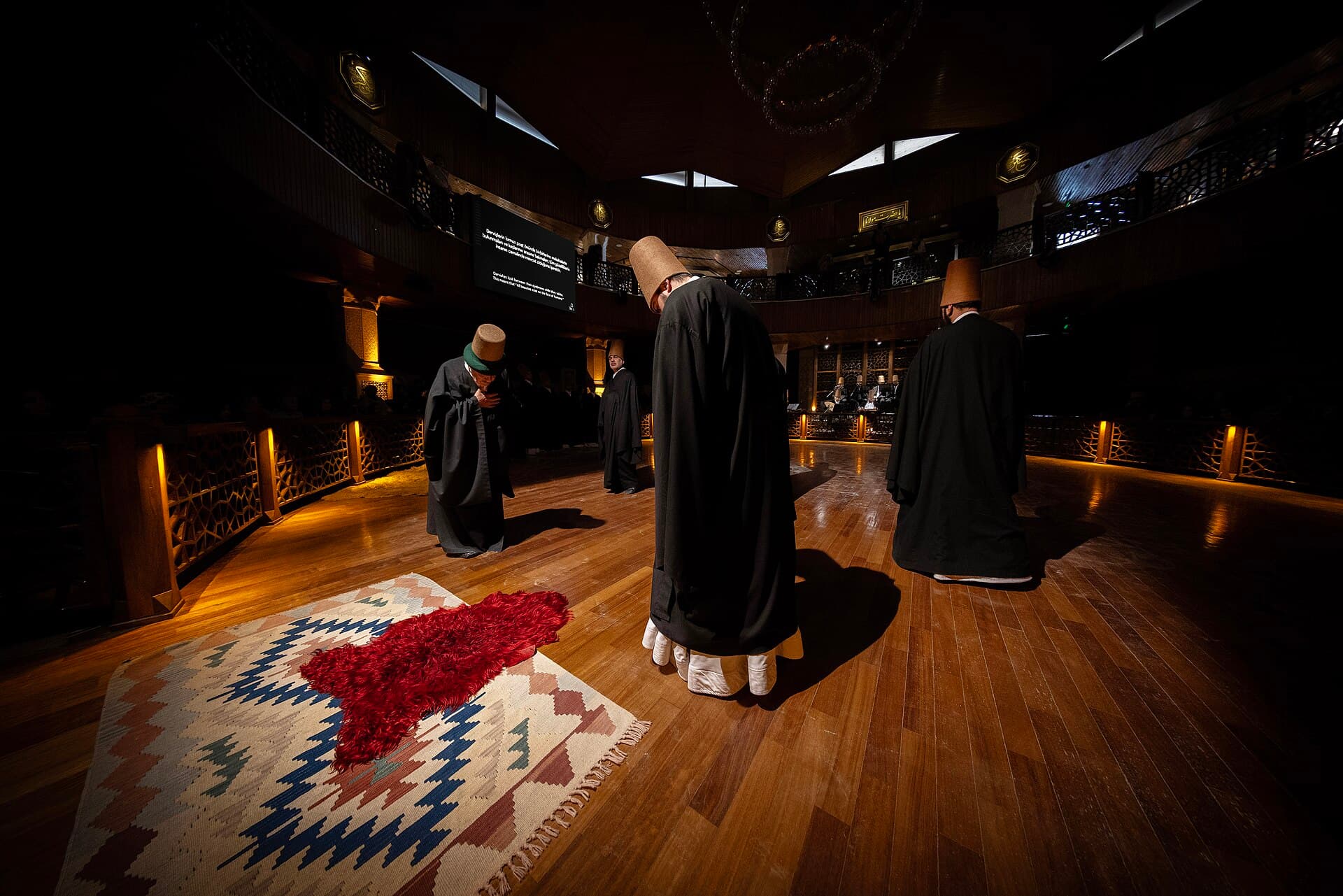
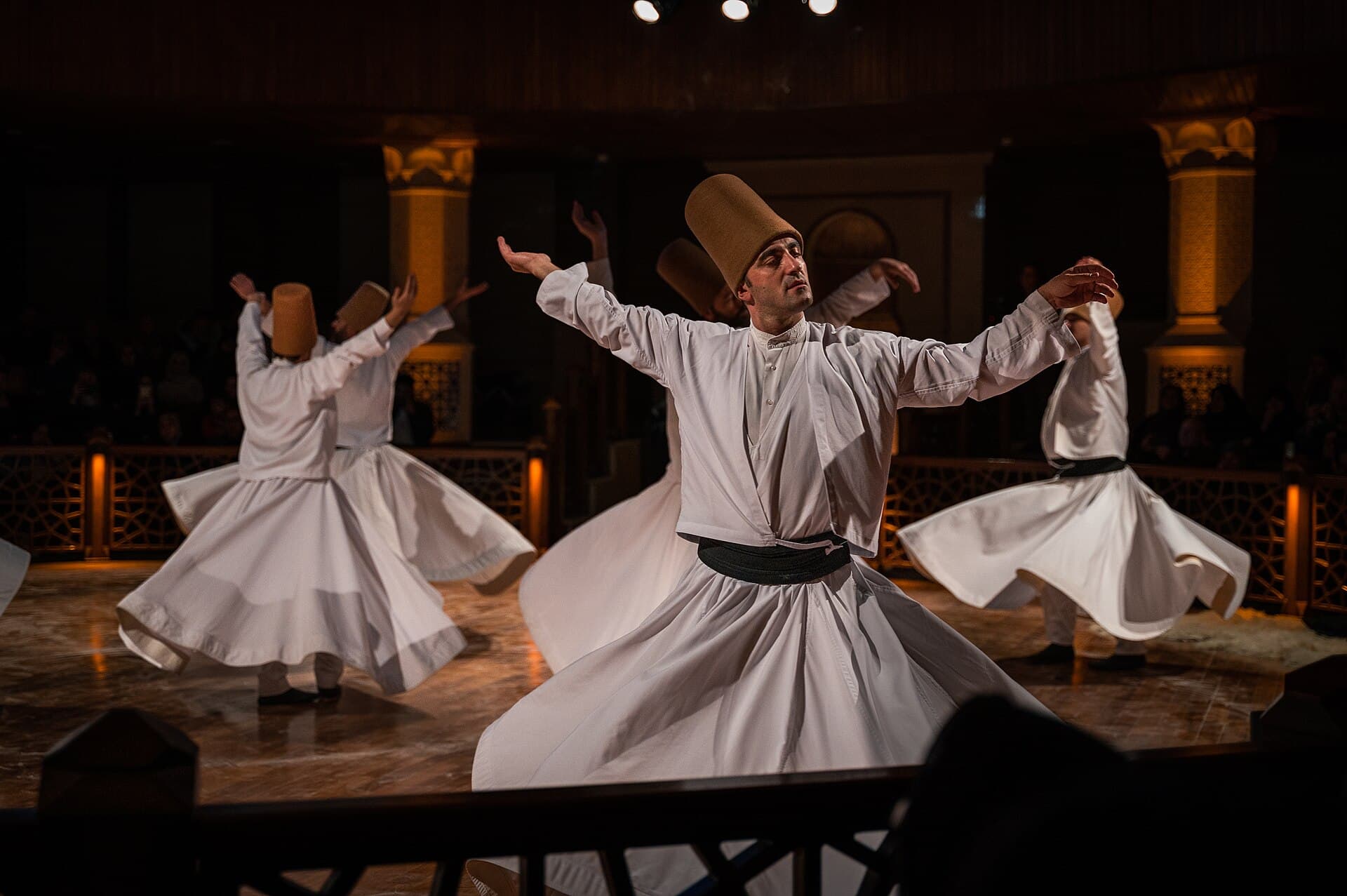
The costume is the ceremony's first sentence. The tall camel-hair hat, the sikke, stands for the ego's tombstone; the wide white skirt, the tennure, is its shroud. The semazen removes a black cloak partway through to signal a kind of rebirth. Turning begins with arms crossed over the chest — the number one, a testimony to God's unity — before opening: right palm up to receive, left palm down to transmit what's received to the earth and the people watching. The whole thing unfolds across four selams, four movements read as stages: recognising your own servitude, standing in awe of the divine, awe turning into love, and a return to ordinary service with all of that settled inside you. None of it is improvised and none of it is performed for effect — the order's own framing is that the choreography is the theology, not decoration on top of it.
If you can only be here on a weeknight, don't manufacture disappointment: the museum itself, done properly, explains everything this ceremony means without you having to see it performed. But if a Saturday lines up, take it.