İnce Minareli Medrese
Seljuk Konya's most celebrated portal, on a minaret literally cut down to size by lightning in 1901.
Enough context, no spoilers
Why it matters
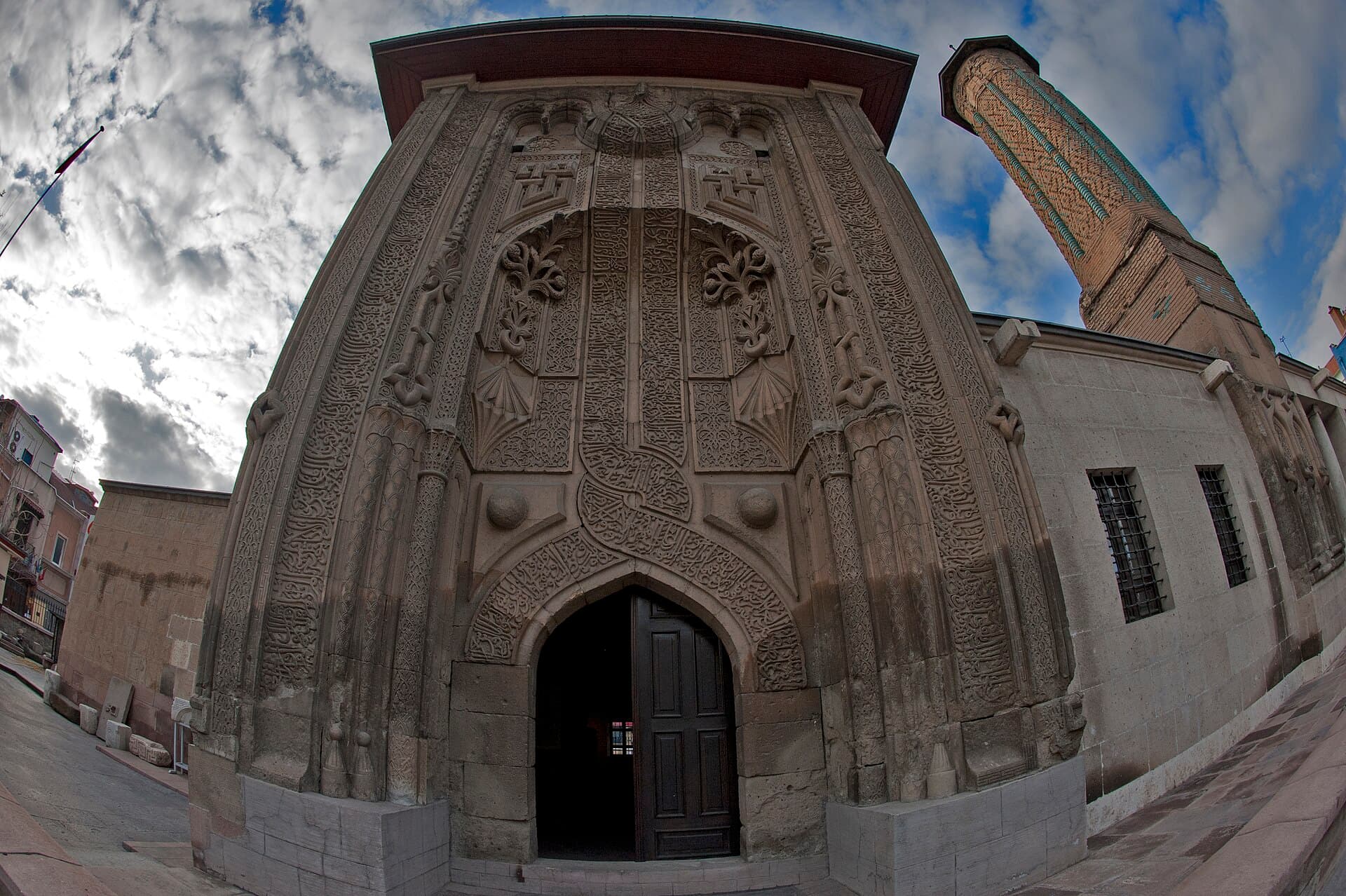
Built 1264–79 for vizier Sahip Ata Fahreddin Ali — the same patron behind the Sahip Ata Complex across town — as a medrese for hadith studies. Its fluted turquoise-tiled minaret gave it the popular name İnce Minareli, "slender minaret"; a lightning strike in 1901 destroyed its upper section and brought down part of the mosque dome with it.
What to know before you go
The building's own name is a joke at its own expense. İnce Minareli means "slender minaret," and the minaret standing over the entrance today is a stump — its top third sheared off when lightning struck in 1901, bringing enough of the impact down with it to collapse the mosque's dome. What survives is still fluted and tiled in the turquoise brickwork that gave the medrese its nickname in the first place; it's just shorter than the people who named it ever intended you to see.
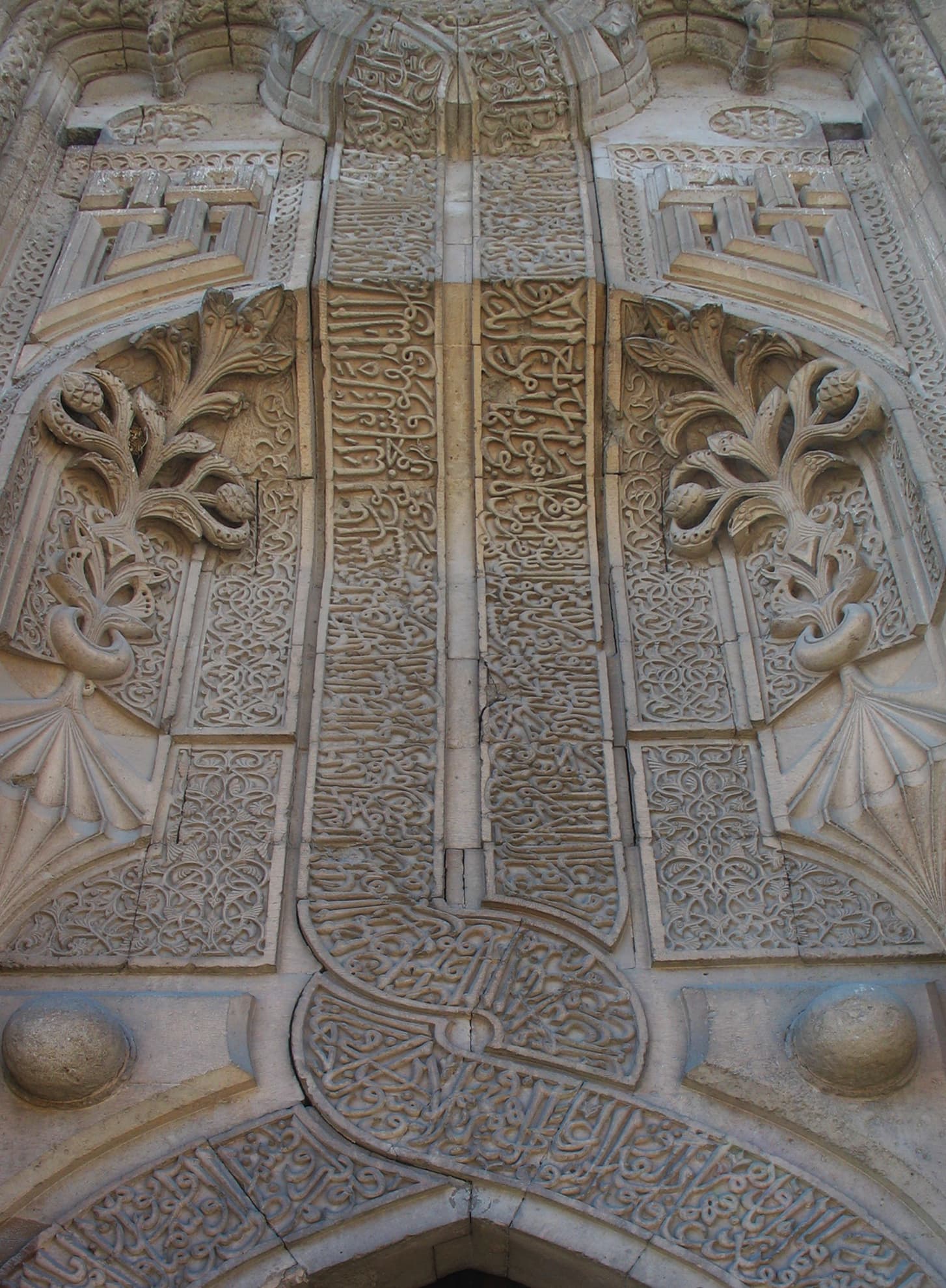
Come for the portal regardless. Built between 1264 and 1279 for Sahip Ata Fahreddin Ali — the same Seljuk vizier who endowed the külliye across town that now bears his name — this was originally a medrese dedicated to hadith studies, and its entrance is reckoned among the finest Seljuk portals anywhere in Anatolia: bands of carved inscription and geometric relief cut so densely into the stone that the wall barely reads as flat anymore.
Inside, the building now holds Konya's Museum of Stone and Wood Art, and the collection makes a point the Seljuks apparently didn't take as seriously as later, stricter interpretations of the tradition: figural carving. Alongside the expected geometric and calligraphic panels are stone reliefs of a double-headed eagle, lions, leopards and human figures — imagery a more conservative reading of Islamic practice would have ruled out, carved anyway into a religious teaching building. Wooden ceiling roses, carved window screens, and a room of Seljuk, Karamanid and Ottoman tombstones and sarcophagi round out the collection. Budget half an hour: the portal is most of the reason to come, the collection is the reason to stay for the rest of it.