Alâeddin Hill
Konya's highest ground, built by five thousand years of settlement — and, for two centuries, the Seljuk Sultanate's walled seat.
Enough context, no spoilers
Why it matters
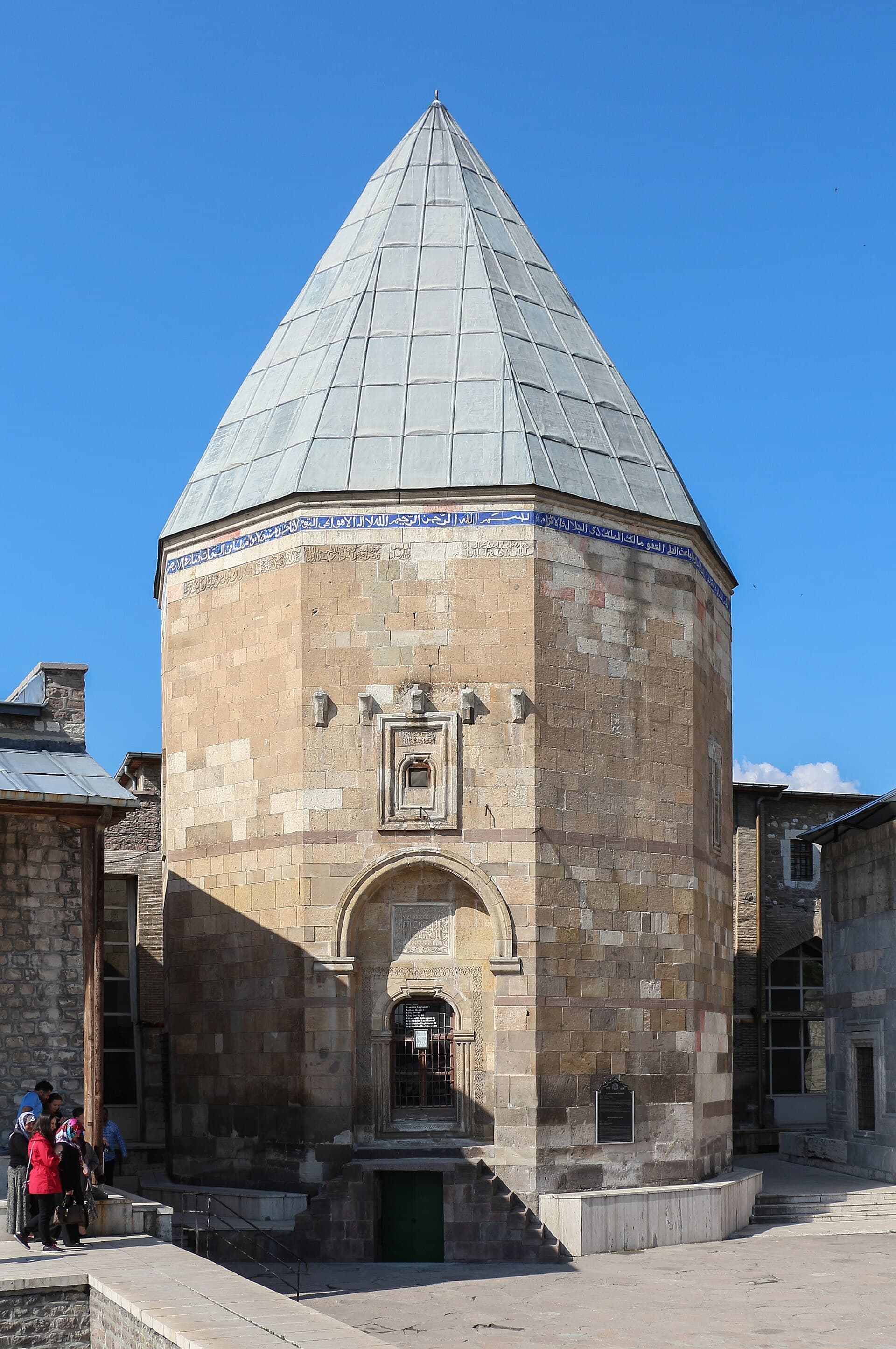
First settled around 3000 BC, the mound built up through Phrygian, Hellenistic, Roman and Byzantine layers before the Seljuks made it their citadel. The mosque begun under Rükneddin Mesud I around 1150 was finished in 1221 under Alaeddin Keykubat; the kümbet of Kılıçarslan II, from 1197, holds eight Seljuk sultans.
What to know before you go
Every Seljuk site in central Konya points back to this hill, and it's worth understanding why before you walk up it. Alâeddin Tepesi isn't a natural rise — it's an artificial mound, built up in layers by roughly five thousand years of continuous settlement, first excavated by the Turkish Historical Society in 1941 and again in 2010–2015. Early Bronze Age Konya is under your feet here, then Phrygian, Hellenistic, Roman and Byzantine city on top of it, each period adding to the height. Fragments from every one of those layers — Phrygian painted pottery, Urartu bronze figurines — are now a short walk away in the Archaeological Museum. By the time the Seljuks arrived in the twelfth century, they weren't founding a capital on empty ground; they were the latest of at least six.
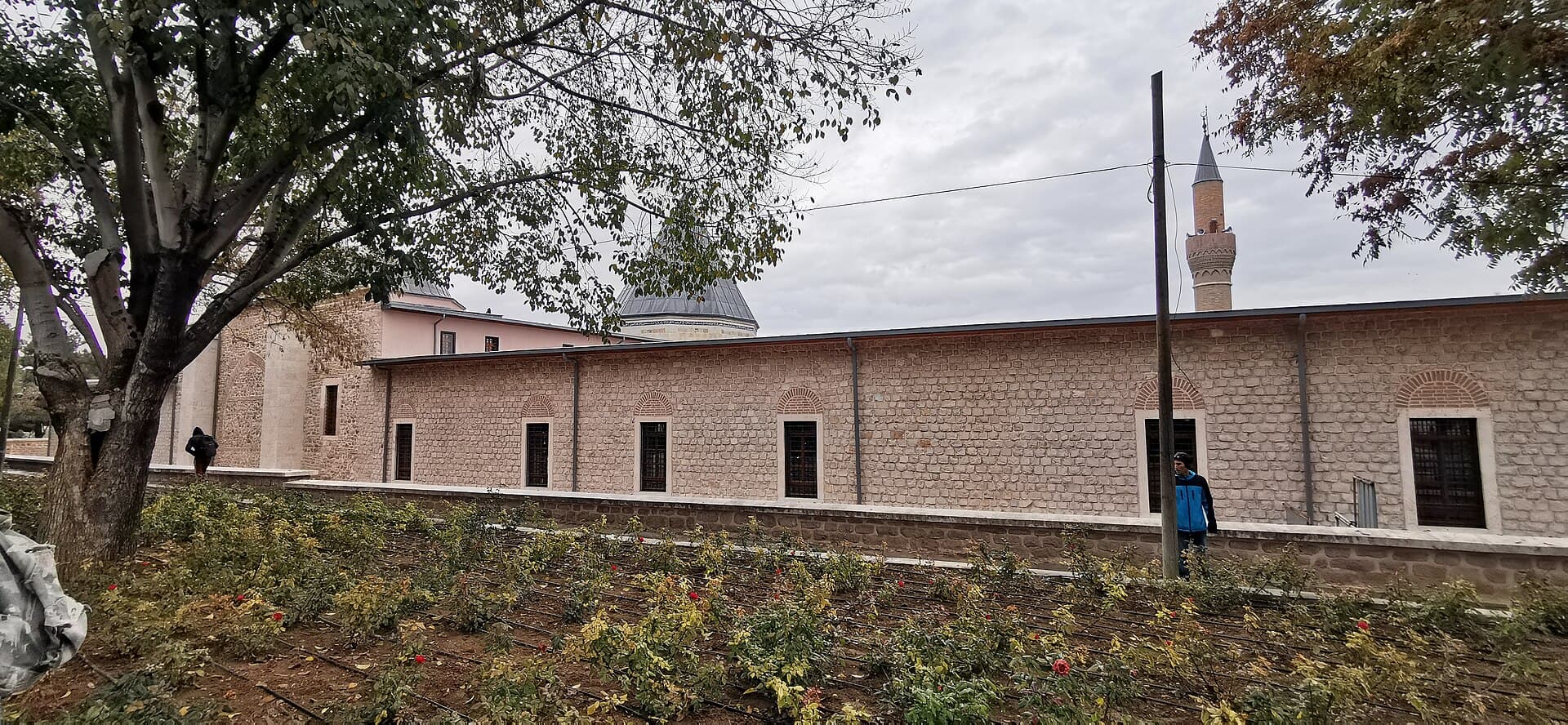
What they built stayed. The Alâeddin Mosque that now dominates the hilltop was begun under Sultan Rükneddin Mesud I around 1150, continued through Kılıçarslan II's reign and finally finished in 1221 under Alaeddin Keykubat, for whom both the hill and the mosque are named. It's one of the oldest mosques in Anatolia still standing close to its original form, and its long prayer hall makes no secret of where the material came from: the columns are a mismatched set of Roman and Byzantine spolia, different heights and orders standing side by side, doing a job their original architects never intended. In the courtyard, the kümbet built for Kılıçarslan II in 1197 — its conical roof still carrying a few original blue tiles — holds the remains of eight Seljuk sultans, a concentration of dynastic burial you won't find anywhere else in the country.
Walk to the hill's north edge and the story turns melancholy. This is where the Seljuk sultans' own palace stood, the Kılıçarslan Köşkü, sited within the citadel walls at the empire's political centre. Almost none of it survived: a single wall is what's left of a royal residence that once anchored an empire's capital. Between the mosque, the tombs and that one wall, the hill tells the whole arc of Seljuk Konya in about forty-five minutes — rise, permanence, and almost total loss.