Trabzon was Trebizond, capital of a Byzantine empire that outlasted Constantinople by eight years — its churches now stand as working mosques above a real Black Sea port, not a resort. Most foreign visitors here come from the Gulf, not Europe, and this page says so plainly. Base here three days: the old city, then Uzungöl in the mountains behind it — a real day trip, not an afternoon.
Start with the essentials, add what genuinely interests you, and leave the rest for another visit. Every place includes a concise story, practical timing, a Maps link, and a one-tap route planner action.
Make the route work
Anticipate the practical details.
Getting there
Trabzon Airport (TZX) sits roughly 5–6km east of the city centre — a 10–15 minute taxi or dolmuş ride, genuinely one of the shortest airport transfers of any city on this site. It has strong domestic connections via Istanbul and Ankara, plus real international and charter traffic that reflects who actually visits: expect the route map to lean toward Gulf and Central Asian connections more than Western European budget carriers. Long-distance coaches also run the coastal highway to other Turkish cities.
Getting around
The Ortahisar old town — the castle walls, Fatih Camii, the bazaar streets — is walkable end to end. Boztepe and Atatürk Köşkü are short taxi or dolmuş rides from the centre, or reach Boztepe by the Beşirli cable car. Uzungöl is a different scale of trip — roughly 100km and 1h45 each way — so treat it as a full day by organised tour, rental car, or the intercity dolmuş from Trabzon's otogar, not a quick add-on. Public transport genuinely exists here, but organised tours and private drivers carry more of Trabzon's foreign visitors than independent travel does, which is worth planning around rather than assuming a Bodrum-style dolmuş-and-backpack culture.
Money
Turkish lira. Cards are widely accepted in the city centre; carry cash for Uzungöl's lakeside stalls and smaller highland restaurants. State-run museums price foreign visitors in euros at the gate — Trabzon Museum is €3. Atatürk Köşkü is administered separately, by the Presidency's National Palaces authority rather than the Ministry's museum system, and its lira price has moved with inflation across every source checked — confirm at the gate rather than trusting a printed figure.
Connectivity
Mobile coverage is reliable in the city and along the coastal highway. It weakens climbing the Solaklı valley toward Uzungöl and can drop out in patches in the highlands, so download offline maps before that trip.
Etiquette
Trabzon's foreign visitors are overwhelmingly from the Gulf and elsewhere in the Middle East rather than Europe — modest dress and conservative norms are the mainstream local expectation here, not a special accommodation for tourists. Hagia Sophia, Ortahisar Fatih Camii and Gülbahar Hatun are all active mosques: covered shoulders and knees, headscarves for women, and visits timed around the five daily prayers, especially Friday midday. Arabic-language signage and service are common in the tourist-facing parts of town; English is spoken less consistently here than on Türkiye's more Western-oriented coasts.
Safety and comfort
Trabzon is a safe, welcoming city with normal urban precautions. The real planning risk is the Uzungöl road: heavy snow followed by rapid thaw has caused documented rockfalls and landslides on the Çaykara–Uzungöl route, occasionally closing it to controlled single-direction access — a genuine reason this page steers visitors away from December–February rather than a generic caution. Black Sea rain can arrive in any month, so pack a light rain layer even in summer.
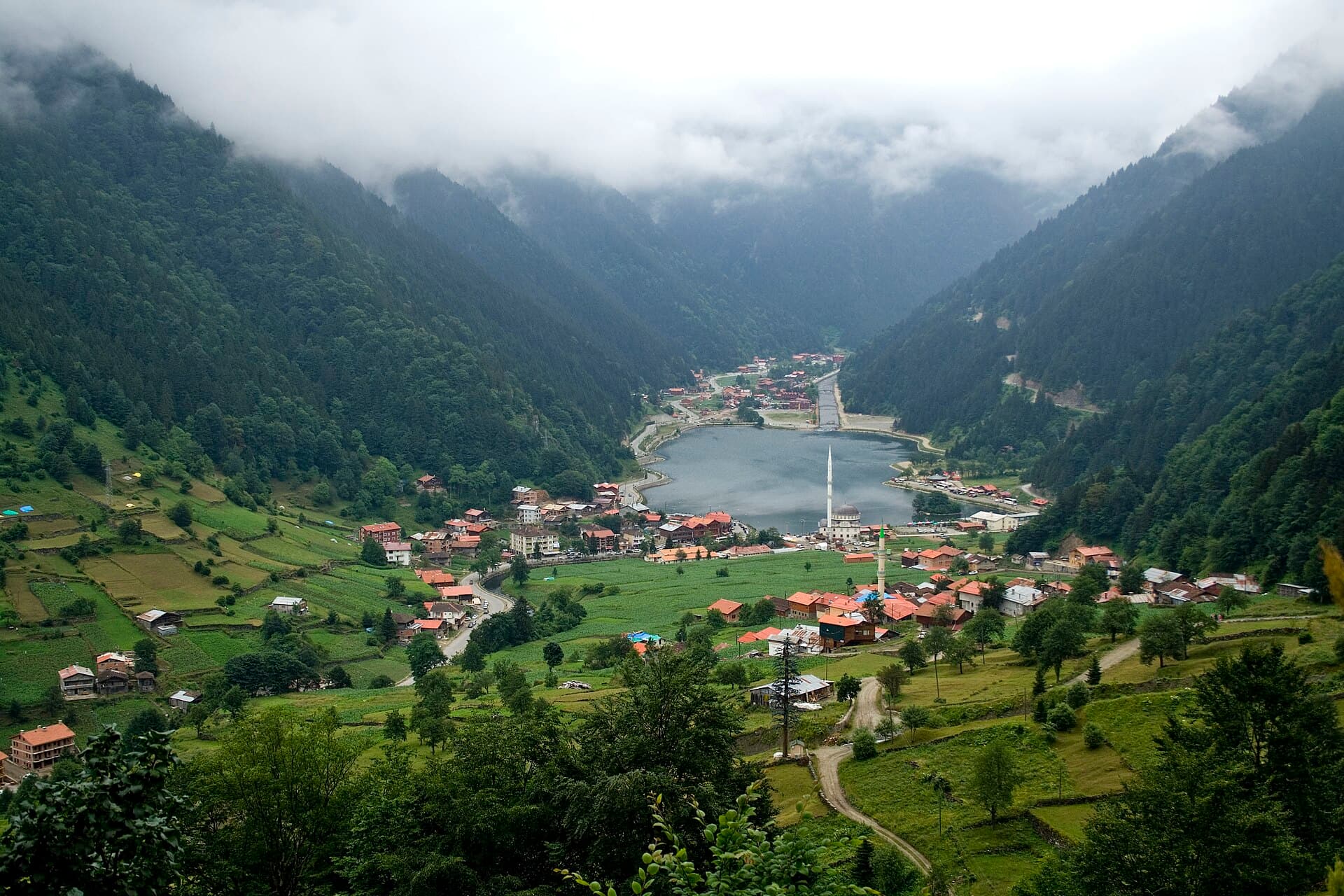
A landslide dammed a mountain stream around 1700 and made this lake. It's 100km and 1h45 from Trabzon — plan a day, not an afternoon.
Uzungöl formed when a rockfall off the Haldizen Mountains blocked the Haldizen Stream, most likely in the late 17th or early 18th century — geologically recent, and the lake is still changing: once close to 2km long, it has silted down to under 1km since. It sits at roughly 1,090m in the Soğanlı range above Çaykara district, a genuine alpine basin, not a coastal lake.
Free to visit; grilled trout and stalls at the lake-head are priced individually (roughly 200–350 TL/portion per visitor reports, not an official tariff — treat as likely to have moved).
180 minHeavy snow followed by rapid thaw has caused documented rockfalls on the Çaykara–Uzungöl road, occasionally closing it to controlled single-direction access. Check conditions before a December–February trip.Roughly 100km and 1h45 each way from central Trabzon — a full day, not a half-day add-on. Do not plan it back-to-back with Sümela Monastery; that's a separate excursion in a different direction (about 47km via Maçka, roughly an hour).July–August is genuinely crowded, driven largely by Gulf-region family travel escaping hotter summers at home. Arrive early for the lakeside path before mid-morning tour traffic.+1 more to know
The immediate lake-head area is a dense tourist strip of stalls and photo props; the quieter, more rewarding walking is along the shoreline path past it.
Look for: The 3km lakeside path (about 45 minutes) beats the crowds if walked early. Wooden Black Sea houses, grilled trout from the Haldizen's cold water, and — past the lake-head stalls — a quieter forest trail climbing toward 1,200m.
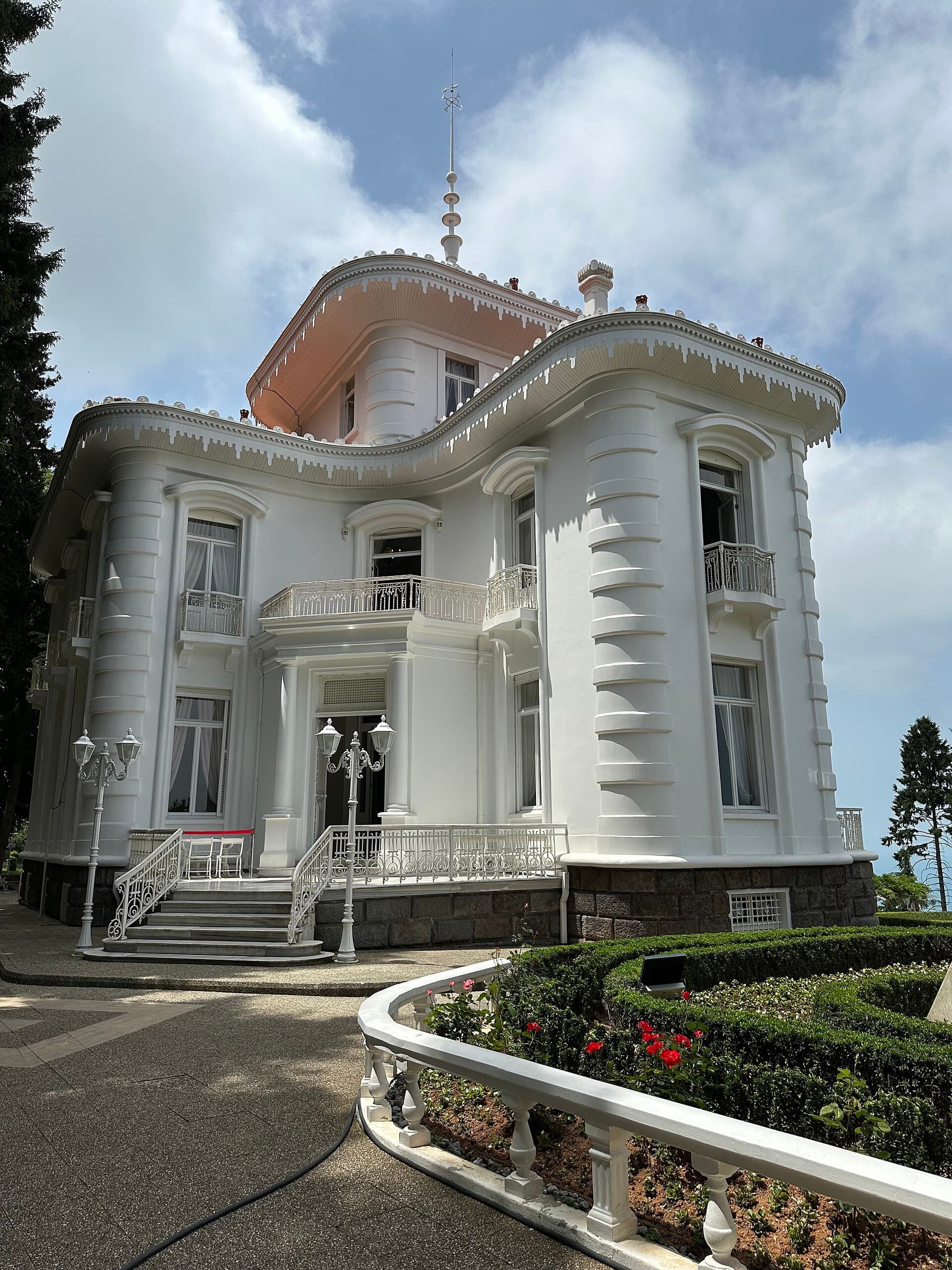
A Greek banker's Belle Époque house, where Atatürk is said to have decided, his last night in Trabzon, to leave his estate to the nation.
Built on Soğuksu hill by Konstantin Kabayanidis, a Greek Orthodox banker, 1890s–1912, in a European Renaissance-influenced style. State-owned from the 1920s. Atatürk visited Trabzon three times — 1924, 1930, 1937 — and stayed here; tradition ties 11 June 1937 specifically to this house. A museum since 1943; restored 2023. Trabzon Museum separately claims the 1924 stay, a conflict this research could not resolve.
A modest entrance fee applies on ordinary days; the exact current price could not be confirmed at research time and has clearly risen with inflation — check at the gate. Free entry on 10 November (Atatürk Commemoration Day). Reported open daily 09:00–17:00 (single-sourced; a separate lower-quality source describes a conflicting reservation-only weekend schedule — confirm before relying on this).
60 minFree entry on 10 November (Atatürk Commemoration Day) draws large crowds — expect queues if visiting that day.Rooms are small and domestic in scale; a single tour group can fill them. Go early or late in the day for a quieter visit.A modest entrance fee applies on ordinary days; the exact current price could not be confirmed at research time and has clearly risen with inflation — check at the gate.
Look for: Period furniture and personal effects across three floors, largely as left. Garden terraces through pine woods look out over the city and the sea — come for that view as much as the rooms.
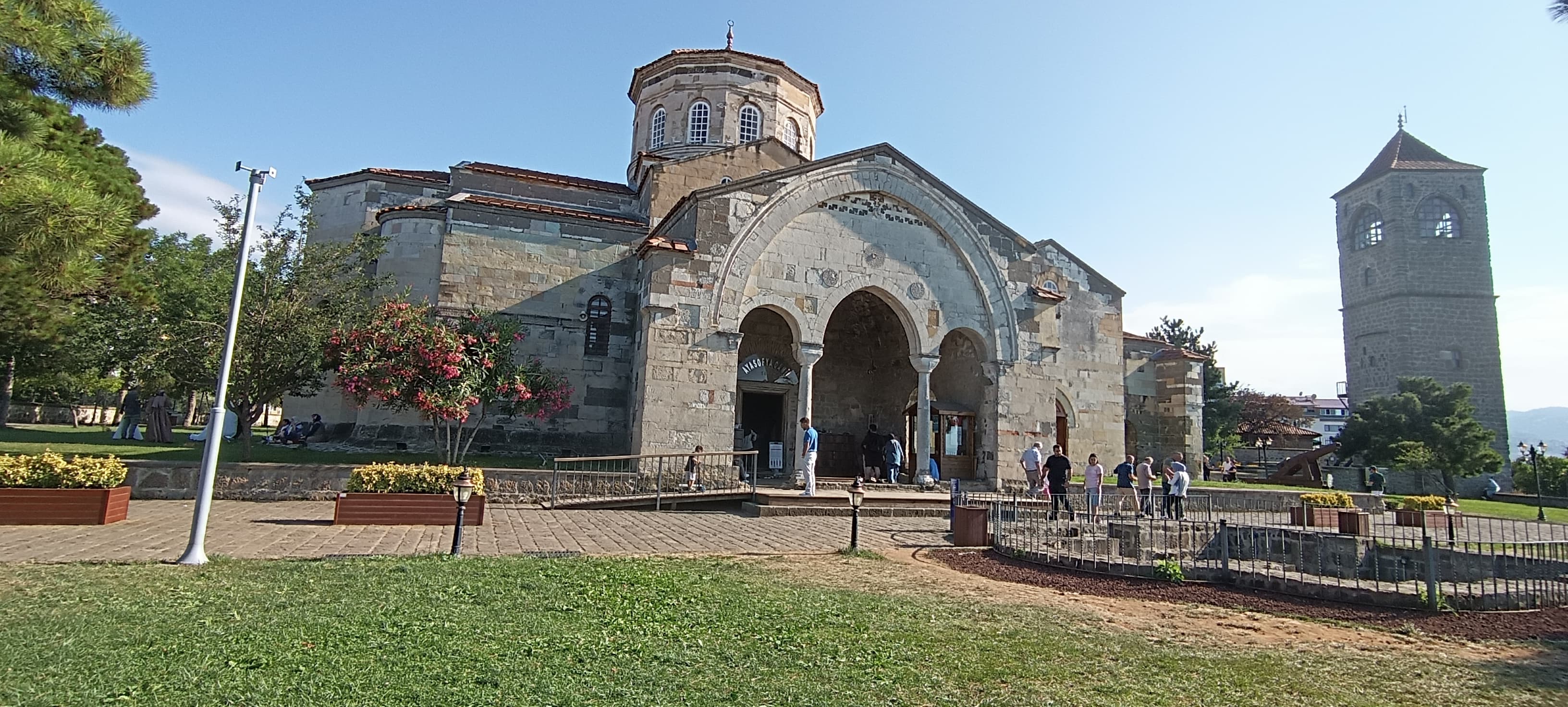
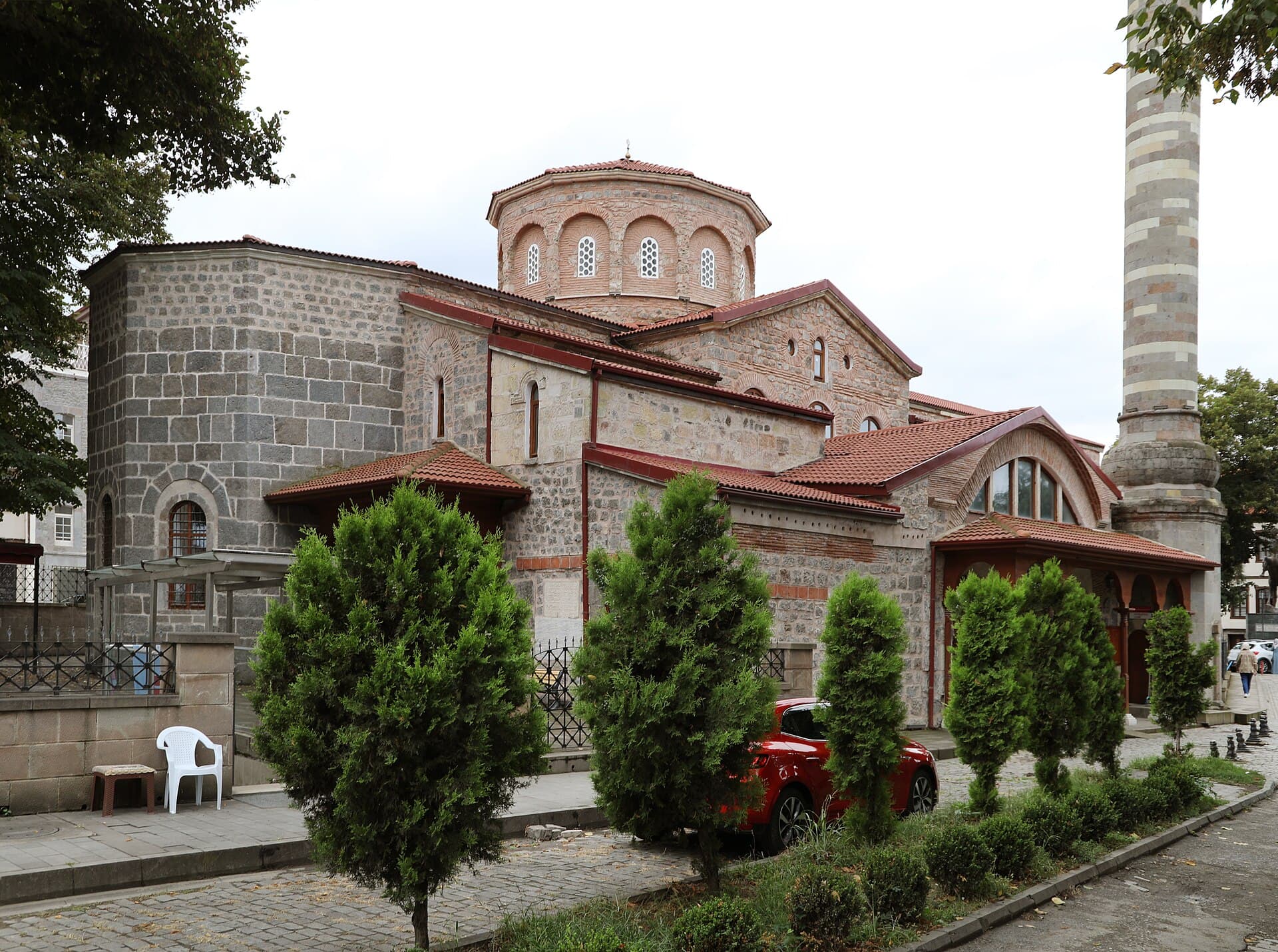
Built as a monastery church in the 1250s, a mosque since 1461 — except a museum run that ended in 2013, before Istanbul's own reversal.
Raised about 1238–1263 under Manuel I of Trebizond, on a headland outside the old walls, with a fresco cycle and a free-standing 13th-century bell tower. Converted to a mosque after the 1461 Ottoman conquest, frescoes plastered over. Uncovered by Edinburgh University and Turkish conservators, 1958–1964, then run as a museum — until a 2013 reconversion returned it to prayer.
Free — an active mosque, no ticket booth or fixed entry fee.
40 minAn active mosque, not a museum — there is no ticket booth or fixed entry fee. Visits are not appropriate during the five daily prayers, especially Friday midday.Modest dress is expected: covered shoulders and knees, headscarves for women.Access to the frescoes and floor beneath the prayer-time covering depends on when you arrive; it is not guaranteed to be uncovered outside prayer hours either.+1 more to know
Only about one-sixth of the original fresco scheme is believed to survive — don't expect a complete decorative cycle.
Look for: Frescoes of the New Testament cycle, best preserved in the narthex. A detached bell tower, older than the church. Since about 2020, a retractable floor covering lets the pavement and lower frescoes stay visible outside prayer times.
Verified · · 29 min to Ortahisar Fatih Camii · 33 min to Trabzon Castle & City Walls
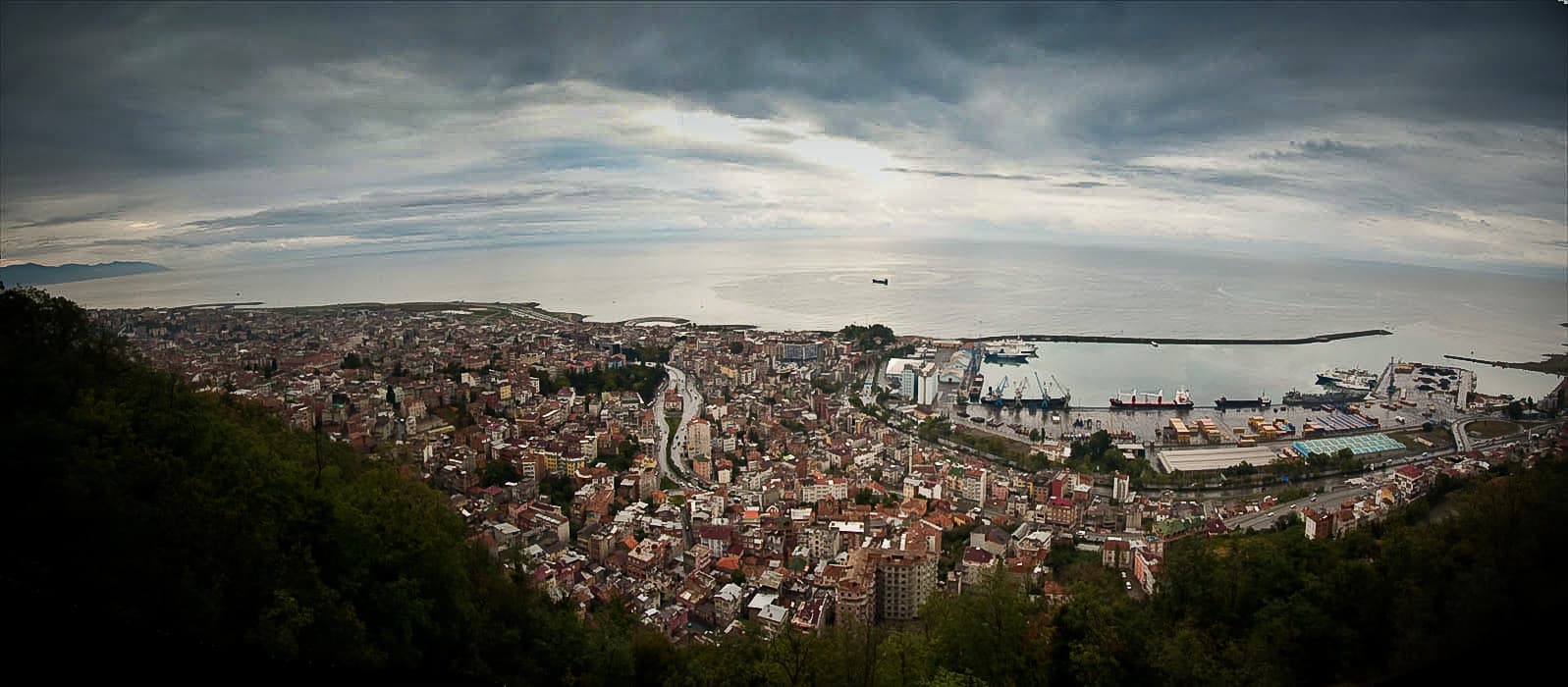
A hill sacred before Christianity and after Islam arrived — now tea gardens, swing-benches and Trabzon's best view, reached by cable car.
Known to antiquity as Mount Minthrion, possibly after a cult of Mithras once sited here; later home to Christian monasteries and hilltop churches, one of which reportedly underlies today's summit mosque. The Volkan Konak viewing terrace, an approximately 900m promenade of glass and timber platforms, opened in 2016; a cable car from Beşirli, on the coast below, reaches the hill in about ten minutes.
Free to visit. Cable car from Beşirli reported to run approximately 10:30–17:30 (single-sourced — confirm before relying on it as your only way up or down); no price found.
60 minSunset is the most crowded hour, especially with extended family groups settling in for tea rather than a quick photo — arrive early for a seat with a clear view.The view is of a working port and green hills, not a beach or turquoise water — set expectations accordingly.Cable car operating hours are approximately 10:30–17:30, single-sourced at research time; confirm before relying on it as your only way up or down.
Look for: Glass and wooden terraces, swing-seats angled at the view, tea gardens filling with families through the evening. Below: the harbour, old walls, and green hills — a working port's view, not a beach postcard.
Verified · · 28 min to Ortahisar Fatih Camii · 28 min to Trabzon Castle & City Walls
The Grand Komnenos emperors' coronation church — older and more historically central than Hagia Sophia, and far less visited.
First raised as a Marian church around AD 335–337 by Hannibalianus, nephew of Constantine; rebuilt across the Byzantine centuries as Panagia Chrysokephalos, Trebizond's cathedral and leading coronation/burial church of the Grand Komnenos emperors (John III crowned here, 1342). Basilica by the 10th century, cross plan by the 12th. Mosque after 1461, renamed for Mehmed the Conqueror.
Free — an active mosque, no ticket booth or fixed entry fee.
30 minAn active mosque with no ticket or fixed entry fee. Avoid the five daily prayer times, especially Friday midday.Modest dress expected: covered shoulders and knees, headscarves for women.Far less visited than Hagia Sophia despite the arguably greater historical weight — don't expect tourist infrastructure like signage in multiple languages.
Look for: Restoration has uncovered marble revetment and fragments of mosaic and cut-stone floor in the apse, work comparable in quality to Constantinople's. An active mosque today — modest dress, and time a visit outside the five daily prayers.
Verified · · 5 min to Trabzon Castle & City Walls · 28 min to Boztepe
Three walled tiers built by an empire that held this coast 250 years — fragments you walk among now, not a fortress you tour.
Defences here date at least to the Roman period, built up into three enclosures — Yukarı Hisar (upper), Orta Hisar (middle), Aşağı Hisar (lower) — from the shore up between the Zağnos and Tabakhane valleys. The walls reached their fullest form under the Grand Komnenos emperors of Trebizond from 1204, defending a city that outlasted Constantinople by eight years before falling to the Ottomans in 1461.
Free, open-access ruins — no gate or ticket.
45 minMost of the wall system no longer stands at real height — this is a fragmentary ruin you walk among and around, not a complete fortress with ramparts to climb.No gate, ticket, or single entrance — access is via ordinary streets through the Ortahisar neighbourhood, with uneven ground and steps in places.Best treated as the connective frame for a wider old-town walk rather than a single dedicated stop.
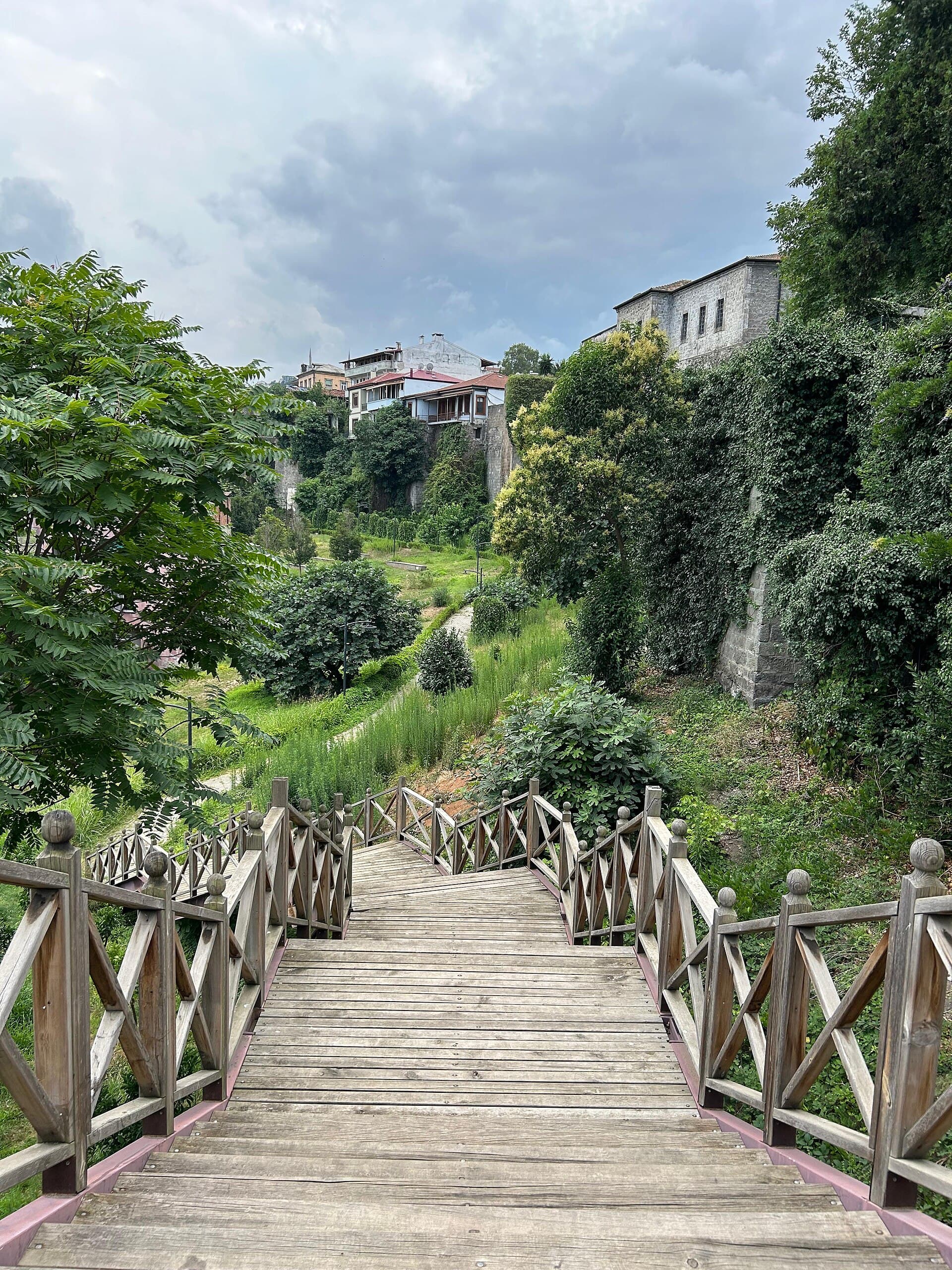
Look for: Most of Aşağı Hisar's walls and much of Orta Hisar are gone; Yukarı Hisar survives best. Ortahisar, the neighbourhood the walls enclose, is the walkable old-town core — mosques, the museum, and the Zağnos valley park.
Verified · · 5 min to Ortahisar Fatih Camii · 28 min to Boztepe
An Italian-built banker's mansion, seized after his 1917 bankruptcy — and, on its own account, a stop on Atatürk's first Trabzon visit.
Built in the early 1900s for Kostaki Theopylaktos, a Greek Orthodox banker, by Italian architects using Italian materials. Theopylaktos went bankrupt in 1917; the mansion passed to the Nemlizade family. Some sources say Atatürk stayed here in September 1924 — unreconciled with Atatürk Köşkü's own claim to those dates. State-owned from the late 1920s; now an archaeology and ethnography museum.
Foreign-visitor entry fee is €3 per the official 2026 DÖSİM fee schedule; Turkish citizens can enter with a Müzekart. Reported hours conflict across sources (one says open daily 09:00–19:00, the official fee page implies a Monday closure typical of state museums) — confirm the current schedule before planning around it.
60 minReported hours conflict across sources — confirm the current schedule, including any weekly closure day, before planning around it.Foreign-visitor entry fee is €3 per the official 2026 DÖSİM fee schedule; Turkish citizens can enter with a Müzekart.
Look for: The archaeology hall runs prehistory through the Byzantine and Ottoman periods; ethnographic rooms upstairs cover domestic Trabzon life. The Italian ironwork and plasterwork reward as much attention as the exhibits.
An Ottoman sultan's tribute to his mother — a 1514 mosque and earlier octagonal tomb, by the man who took the empire into the Middle East.
Built in 1514 by Sultan Selim I (Yavuz) in honour of his mother, Gülbahar Hatun, as the mosque of a larger charitable complex that also held a medrese, imaret and school — only the mosque and her octagonal domed türbe, built slightly earlier in 1505–06, survive intact. Restored under the Trabzon Directorate of Foundations in 2005.
Free — an active mosque, no ticket.
20 minAn active mosque — avoid the five daily prayer times, especially Friday midday, and dress modestly.
Look for: The octagonal türbe beside the mosque, cut stone under a two-tiered drum and dome, is the more distinctive of the two structures. South of Atapark, an easy stop combined with a walk through the old town.
Formed in 1950 when a landslide in the Sera Stream valley blocked the watercourse, similar in origin to Uzungöl but at a fraction of the scale, altitude and distance from the city. It sits within Akçaabat district, about 2km inland from the coastal highway.
Free to visit; paddleboat rental and lakeside restaurants priced individually.
Not a substitute for Uzungöl's alpine scale or altitude — a smaller, lower-elevation lake included specifically for visitors who can't spare a full day.
A 19th-century civil-architecture quarter of Akçaabat district, roughly 17km west of central Trabzon, built up by the town's Ottoman-era merchant families with walled gardens and timber-fronted houses on steep, narrow lanes. Declared an urban protected area in 1988.
Free to walk; köfte restaurants below in Akçaabat priced individually.
Streets are steep, narrow and cobbled in places — comfortable footwear matters more than the short distances suggest.Houses are largely still private homes, not a museum village — photograph the streetscape rather than into private courtyards.
Kunduracılar Caddesi (Shoemakers' Street), renovated by the metropolitan municipality, anchors Trabzon's old commercial district alongside pedestrianised Uzun Sokak and the Kemeraltı bazaar quarter behind it. Despite the name, it's now better known for jewellery and silverwork than shoes — a trade shift typical of old Ottoman-city bazaar streets that keep their historic names.
Free to browse; goods priced individually.
Coordinates are an old-town-centre estimate rather than a single verified pin — the street and bazaar together span several contiguous blocks.