Hagia Sophia of Trabzon
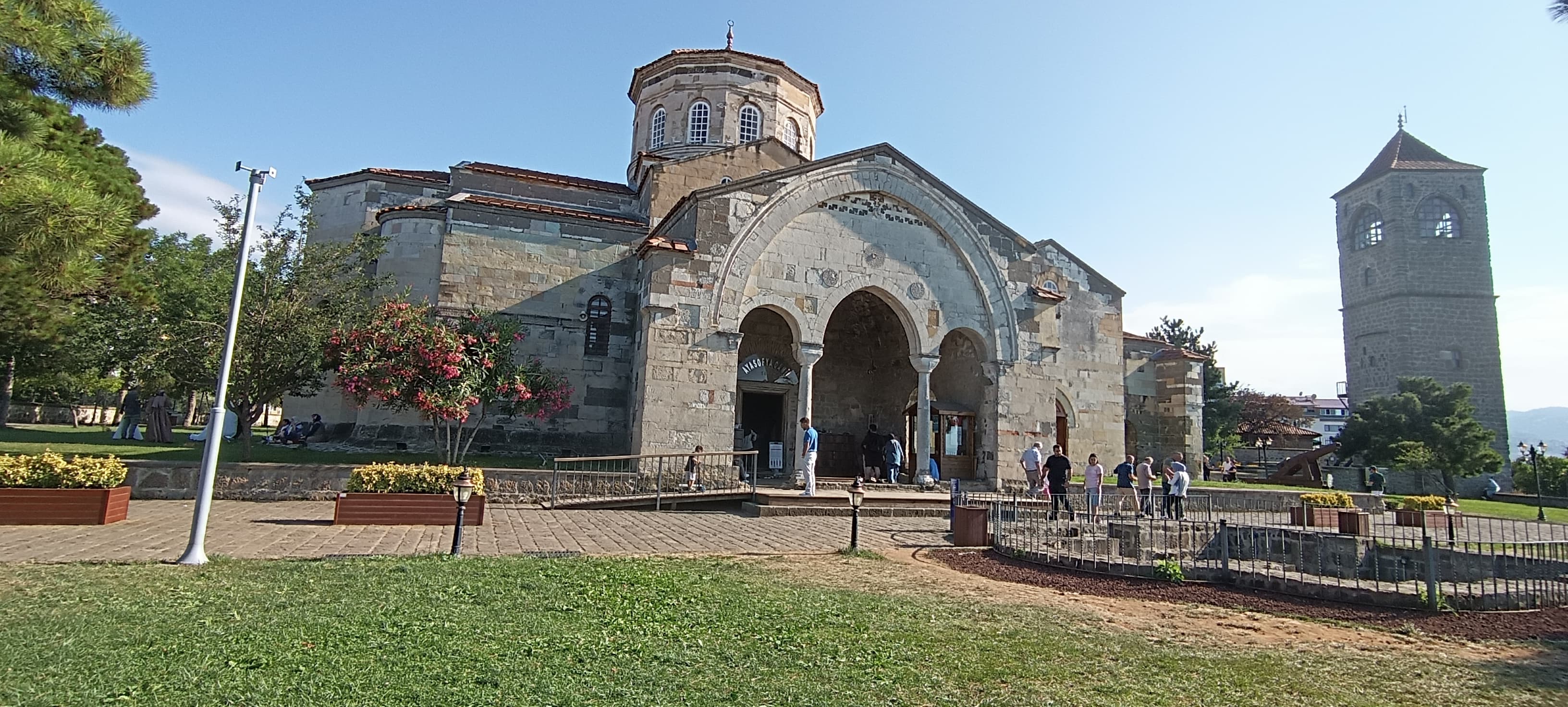
Built as a monastery church in the 1250s, a mosque since 1461 — except a museum run that ended in 2013, before Istanbul's own reversal.
Enough context, no spoilers
Why it matters
Raised about 1238–1263 under Manuel I of Trebizond, on a headland outside the old walls, with a fresco cycle and a free-standing 13th-century bell tower. Converted to a mosque after the 1461 Ottoman conquest, frescoes plastered over. Uncovered by Edinburgh University and Turkish conservators, 1958–1964, then run as a museum — until a 2013 reconversion returned it to prayer.
What to know before you go
Most people who've heard of a Turkish Hagia Sophia reconverting from museum to mosque are thinking of Istanbul, in 2020, when it made international headlines. Trabzon's own Hagia Sophia went through the identical reversal seven years earlier, on 5 July 2013, with almost none of that attention — which makes it the quieter, first draft of an argument Türkiye is still having about how to treat its Byzantine churches.
The building earns the comparison. It went up between about 1238 and 1263 under Manuel I, emperor of Trebizond — the Byzantine successor state that held out on this coast for eight years after Constantinople itself fell in 1453, finally surrendering to the Ottomans in 1461. That conquest converted the church to a mosque immediately, and its frescoes were plastered over, standard practice under Islamic law at the time. They stayed hidden for five centuries until a joint Edinburgh University and Turkish conservation team uncovered and stabilised them between 1958 and 1964, after which Hagia Sophia reopened as a secular museum — the New Testament cycle on the walls and the ceremonial floor of cut coloured stone underfoot, both on public display for the first time in living memory.
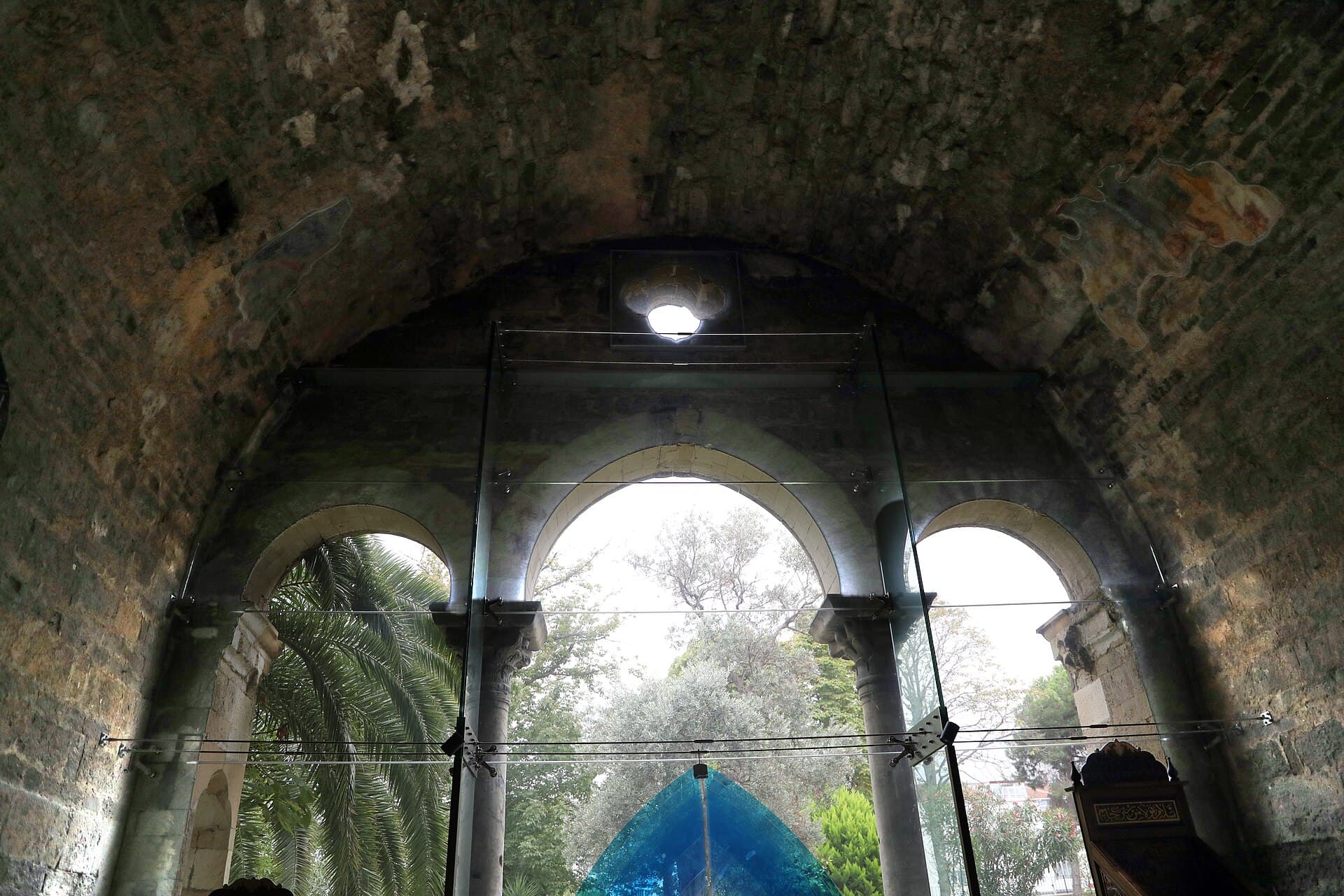
That lasted until 2013. The rededication as a mosque came with the same practical problem Istanbul would face later: how do you hold Friday prayers on a floor of protected medieval mosaic, under frescoes a restoration team spent six years recovering? The first answer was blunt — curtains over the paintings, carpet over the floor — and a local court found that unlawful. The eventual fix, finished around 2020, is the detail worth knowing before you go: a retractable covering system that can be raised for prayer and rolled back the rest of the time, so the opus sectile pavement and the lower registers of fresco stay visible to anyone who walks in. It's not a perfect solution — access to what's underneath still depends on the prayer schedule — but it's a more considered one than Istanbul has managed with its own floor.
Come in the morning, outside prayer times, dressed modestly. There's no ticket any more; a working mosque doesn't charge admission. The narthex frescoes are the best-preserved part and the easiest to see without craning past the prayer hall's furnishings — start there.