Trabzon Castle & City Walls
Three walled tiers built by an empire that held this coast 250 years — fragments you walk among now, not a fortress you tour.
Enough context, no spoilers
Why it matters
Defences here date at least to the Roman period, built up into three enclosures — Yukarı Hisar (upper), Orta Hisar (middle), Aşağı Hisar (lower) — from the shore up between the Zağnos and Tabakhane valleys. The walls reached their fullest form under the Grand Komnenos emperors of Trebizond from 1204, defending a city that outlasted Constantinople by eight years before falling to the Ottomans in 1461.
What to know before you go
Don't come to Trabzon Castle expecting a fortress with a gate, a ticket booth, and battlements to walk. Come expecting fragments — a defensive system that was once genuinely formidable, cut down over centuries to the pieces that survive today, mostly unrestored, and free to wander among at any hour.
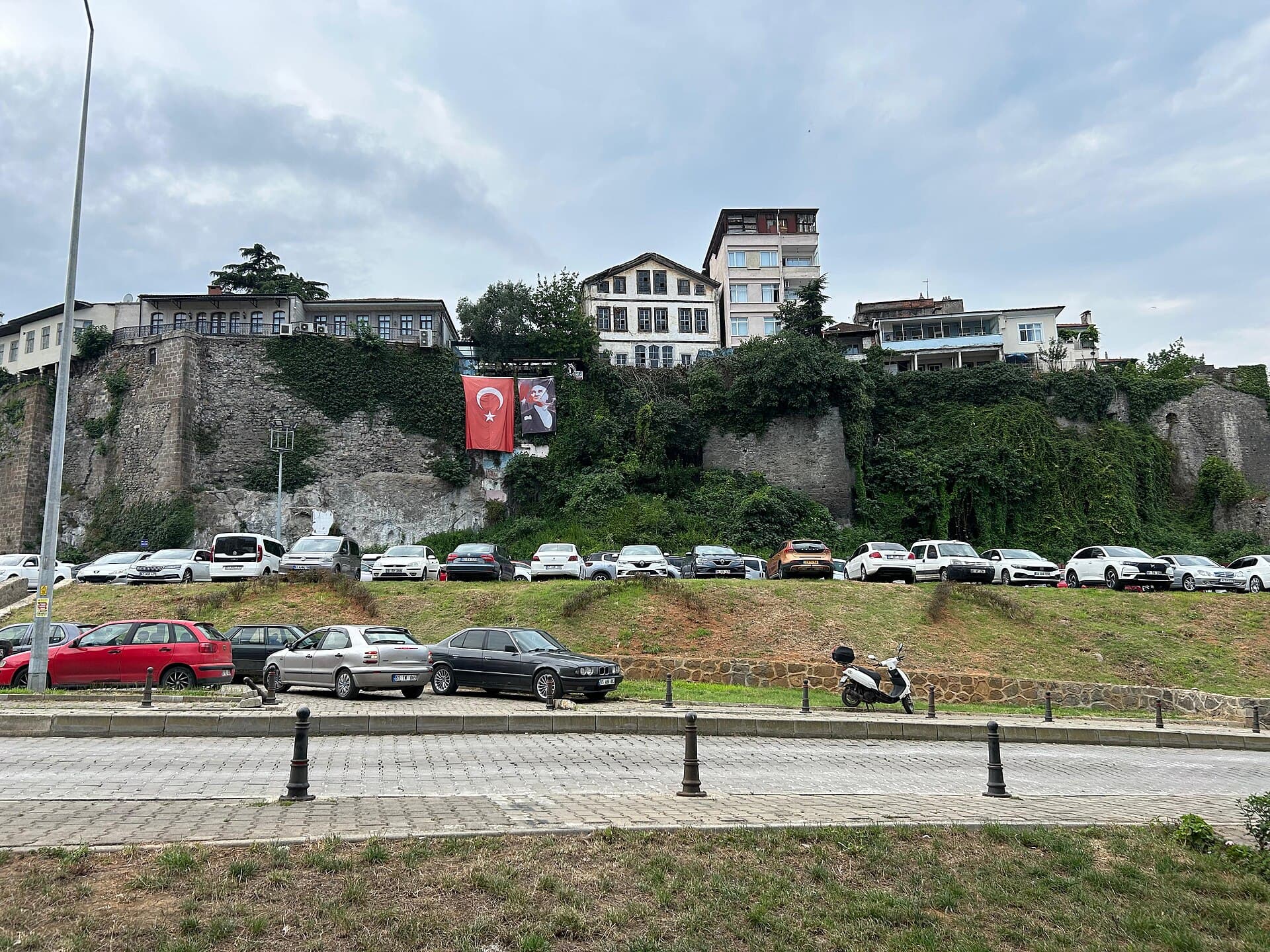
The system had three tiers: Yukarı Hisar, the upper citadel; Orta Hisar, the middle enclosure; and Aşağı Hisar, the lower walls running down toward the sea, the whole arrangement wedged onto high ground between the Zağnos and Tabakhane valleys. Defensive building here goes back to the Roman period at least, but the walls you can still trace mostly date from the centuries when this mattered most: the Empire of Trebizond, ruled from here by the Grand Komnenos dynasty from 1204, a Byzantine successor state that held this coast after Constantinople fell to the Fourth Crusade, then held it again after Constantinople fell a second time, to the Ottomans, in 1453 — Trebizond survived eight more years before its own fall in 1461. For roughly two and a half centuries, these walls were the edge of the last living piece of the Byzantine world.
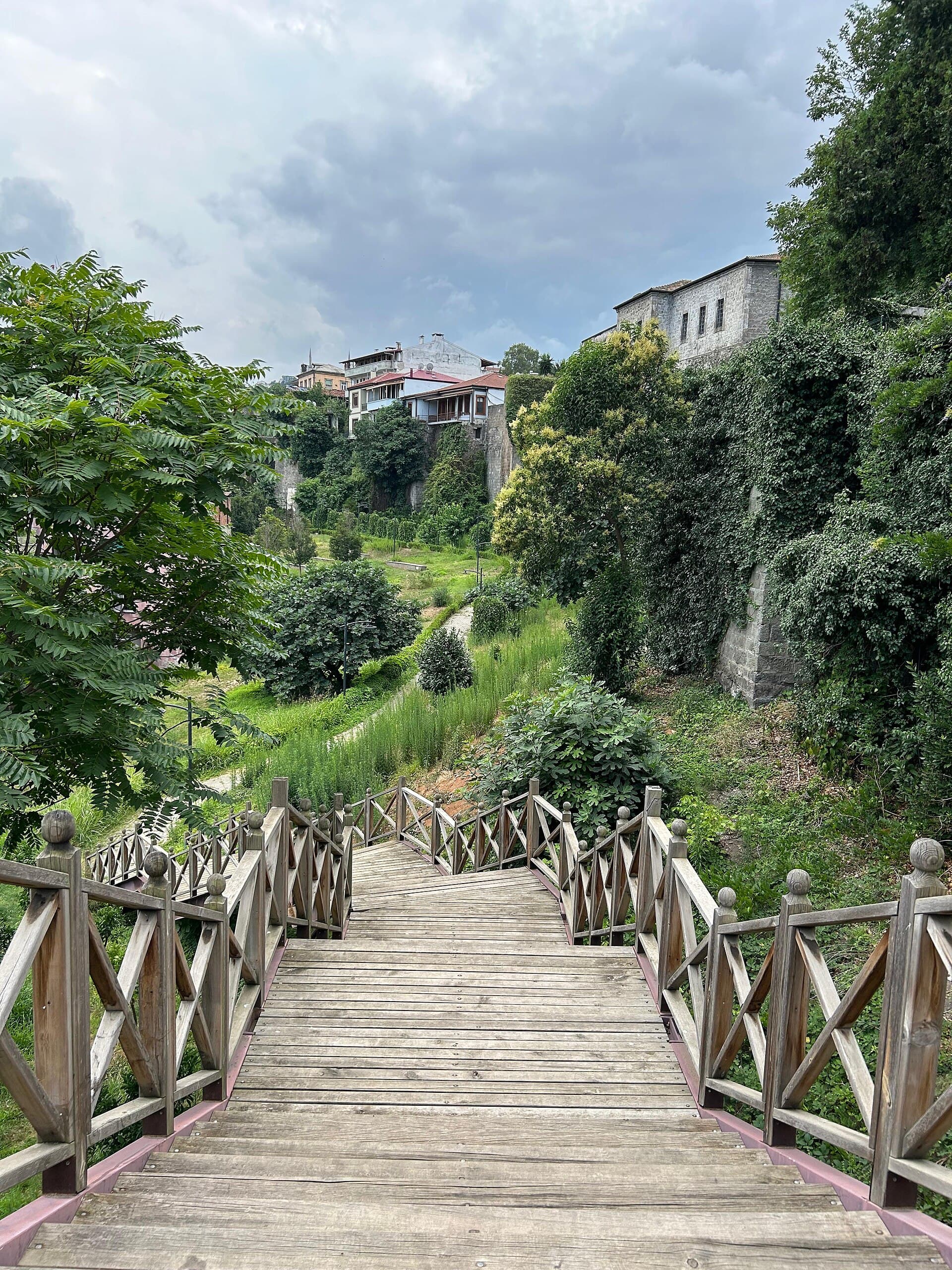
Today almost none of Aşağı Hisar's walls stand, much of Orta Hisar is gone too, and only parts of Yukarı Hisar survive at any real height — an honest state for a fortress this old on a coast this seismically active. Don't plan a dedicated hour circling ramparts; instead treat the castle as the frame around Ortahisar, the old-town neighbourhood it encloses. Walk it as the spine connecting Fatih Camii, Gülbahar Hatun and the museum, drop down into the Zağnos valley park below for its restored footbridge and a patch of green quiet, and let the walls explain why the old town sits where it does, rather than standing as a monument in their own right.