TurQuosian

Marmara

Gallipoli

Where Anzac and Turkish memory meet

The Gallipoli peninsula's WWI battlefields and memorials — a separate place from Çanakkale city and Troy, a short ferry ride away. Australian, New Zealand, British, French and Ottoman forces fought here for eight months in 1915; both 25 April and 18 March are still solemnly observed here today. Most visitors come as one long day from Çanakkale, not an overnight stay.

Landing
25 April 1915
Campaign ended
9 January 1916
Allied dead
~56,000–58,000 (est.)
Ottoman dead
57,000–87,000+ (disputed)
Crossing
Çanakkale–Eceabat ferry, ~25 min
ANZAC Day
25 Apr — registration required

Every published place in one city guide

What to see in Gallipoli.

Start with the essentials, add what genuinely interests you, and leave the rest for another visit. Every place includes a concise story, practical timing, a Maps link, and a one-tap route planner action.

Make the route work

Anticipate the practical details.

Getting there

There's no airport on the peninsula itself. Çanakkale Airport (nearest, small, limited schedule) or flying into Istanbul and continuing overland or by domestic flight to Çanakkale are the realistic options. From Çanakkale city, cross the Dardanelles by car ferry to Eceabat — the gateway town for these sites, not the town of Gelibolu itself, which sits some 40km northeast near a different crossing and has no real connection to the battlefield. The Çanakkale–Eceabat ferry runs frequently (roughly 25 minutes, about 21 sailings a day), with a shorter alternative crossing to Kilitbahır a few kilometres north. Book vehicle space ahead in summer and around 25 April and 18 March, when demand spikes hard.
Getting around

There's no public transport to the individual battlefield sites — a rental car, taxi, or organised tour is necessary. The Anzac sector (Kabatepe, Anzac Cove, Lone Pine, The Nek, Chunuk Bair, the 57th Regiment Memorial) is compact, connected by one loop road starting at Kabatepe. Cape Helles and the Çanakkale Martyrs' Memorial sit a further 25–30km south, a separate leg of the day. Full-day organised tours from Çanakkale cover both in a single long day; doing it without a guide means planning your own route and starting early.

Money

Turkish lira; card acceptance is inconsistent away from Eceabat and Çanakkale. Entry to the open-air memorials and war cemeteries themselves is free — the one ticketed stop is the Kabatepe Information Centre's themed-hall screening. Its exact current price wasn't confirmed to house standard and isn't printed here; expect a modest fee and confirm on arrival.

Connectivity

Mobile coverage is reasonably reliable around Eceabat and Çanakkale but patchier on the peninsula's minor roads and out at Cape Helles. Download offline maps before setting out for the day.

Etiquette

These are active war cemeteries and national memorials, not ruins — treat them with the gravity that implies. No climbing on monuments or headstones, keep voices down, dress reasonably. Around 25 April and 18 March especially, you'll be sharing the sites with Australian, New Zealand and Turkish visitors for whom this ground carries real personal and national weight.

Safety and comfort

Exposed, largely unshaded terrain — sun and heat matter more here than the modest distances suggest, especially in summer. Facilities away from Kabatepe and Eceabat are minimal. If not specifically attending, plan around 25 April: the Anzac Commemorative Site and access roads see significant closures and crowd control in the day around the Dawn Service.

Essential

Don’t leave without

If you only have one day, this is the day.

Rank1
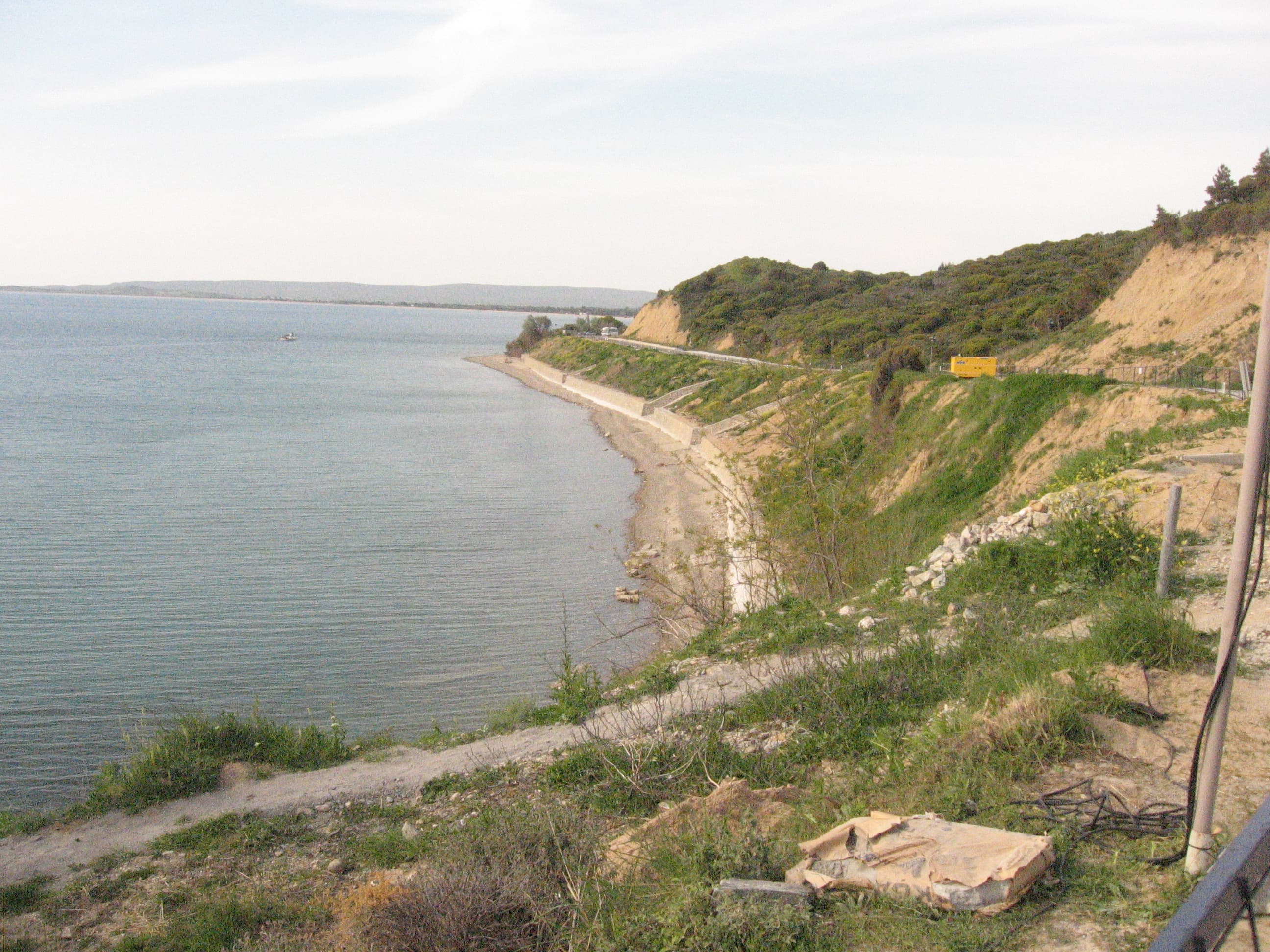
Anzac Cove's narrow beach and steep cliffs, looking north toward Ari Burnu

Anzac Cove

Historic site

The wrong beach, or the right one — historians still argue. This cove is where the word "Anzac" entered the world, at dawn on 25 April 1915.

Australian and New Zealand troops came ashore here before dawn on 25 April 1915, north of the flat beach the plan had called for. General Birdwood recommended the name "Anzac Cove" on 29 April; Türkiye formally recognised it in 1985. Eight months of trench deadlock on cliffs never meant to hold an army followed, ending in a night evacuation that cost almost no lives at all.

30 minThe road to the Anzac Commemorative Site closes to general traffic from around 3am on 25 April until the Dawn Service ends, and the site is typically closed for setup from late morning the day before.Anyone attending the Dawn Service on 25 April must register in advance for a free individual attendance pass — booking a tour does not substitute for this, and tour operators cannot register on a visitor's behalf.Very little of the original 1915 beach remains to stand on; erosion and the coast road have narrowed it substantially, and modern commemorative ceremonies are held at a purpose-built site on North Beach, not inside the cove itself.
+1 more to know
No shade along the shoreline road, and the site sits outside Eceabat — a car, taxi, or tour is needed to reach it.
Look for: The cliffs rising almost straight from the narrow beach — why the original plan collapsed within hours. The Ari Burnu monument, carrying words attributed to Atatürk, and North Beach, where the modern Dawn Service is now held.
Verified · · 34 min to Lone Pine Cemetery and Memorial
Rank2
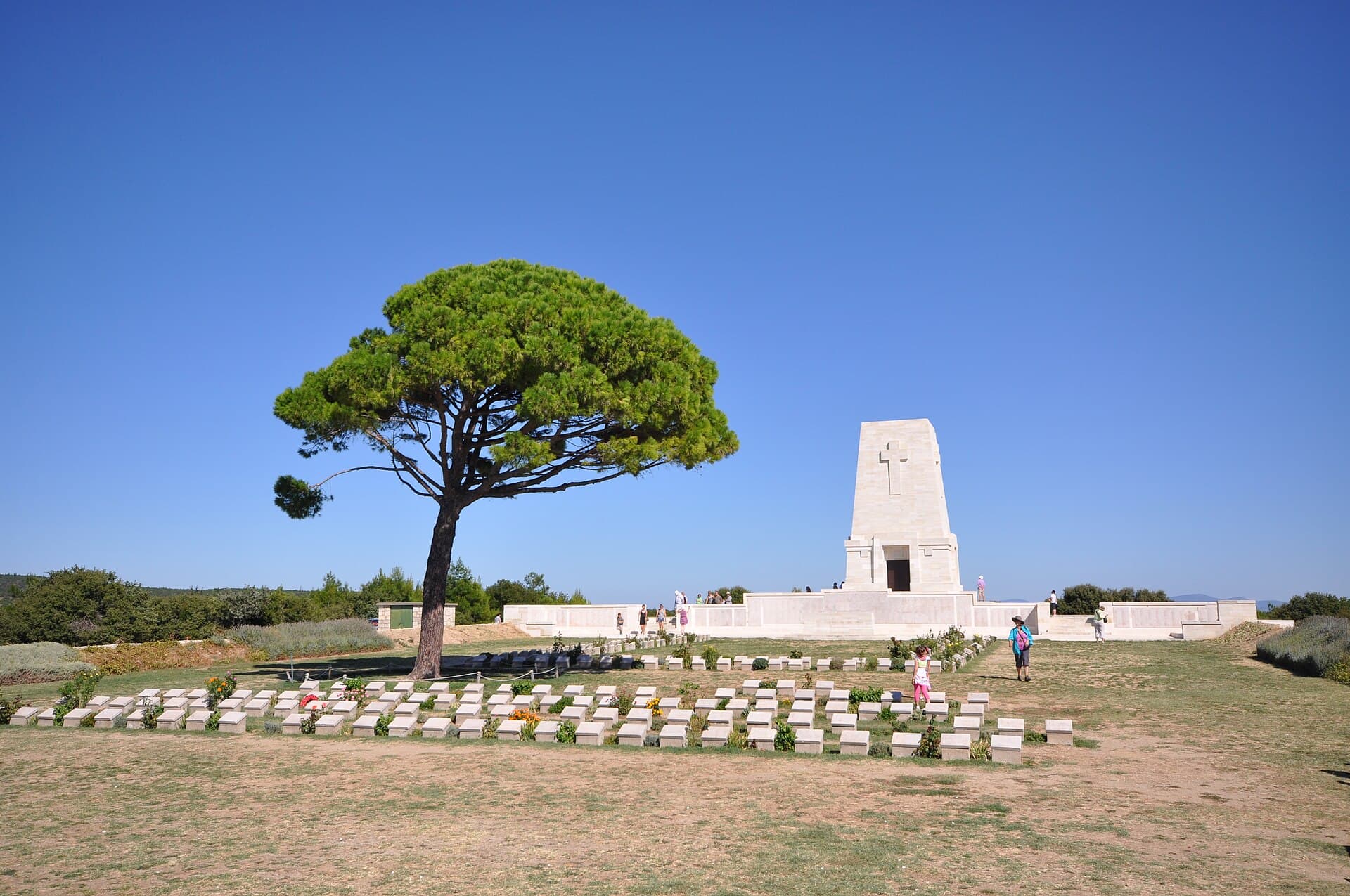
Aleppo pine tree, white memorial obelisk, and cemetery headstones at Lone Pine

Named for a single surviving pine. Now the largest cemetery on the peninsula — 1,167 graves, most of them unnamed.

Australia's 1st Division took this Ottoman ridge — Kanlı Sırt, "Bloody Ridge," to the Turks — on 6 August 1915 after close-quarters fighting in roofed trenches, and held it against counter-attacks until 10 August. Australian casualties reached 2,277; Ottoman losses are estimated at 5,000–7,000. Seven Victoria Crosses were awarded here, four in a single battalion.

35 minAustralia's Anzac Day commemorative service is held here each 25 April, drawing large crowds after the Dawn Service — arrive early if visiting that morning, or come a different day for a quiet visit.Almost all the fighting here happened in narrow, roofed trenches now filled in and grassed over; there is little physical trace of the battle beyond the cemetery and the ridge's shape.471 of the 1,167 graves are unidentified, marked "known unto God" rather than with a name.
Look for: The cemetery's single pine, grown from a cone a soldier's brother sent home in 1915 — the tree at the Australian War Memorial in Canberra descends from the same seed. Look also at how few of the headstones carry a name.
Verified · · 18 min to 57th Infantry Regiment Memorial · 34 min to Anzac Cove
Rank3
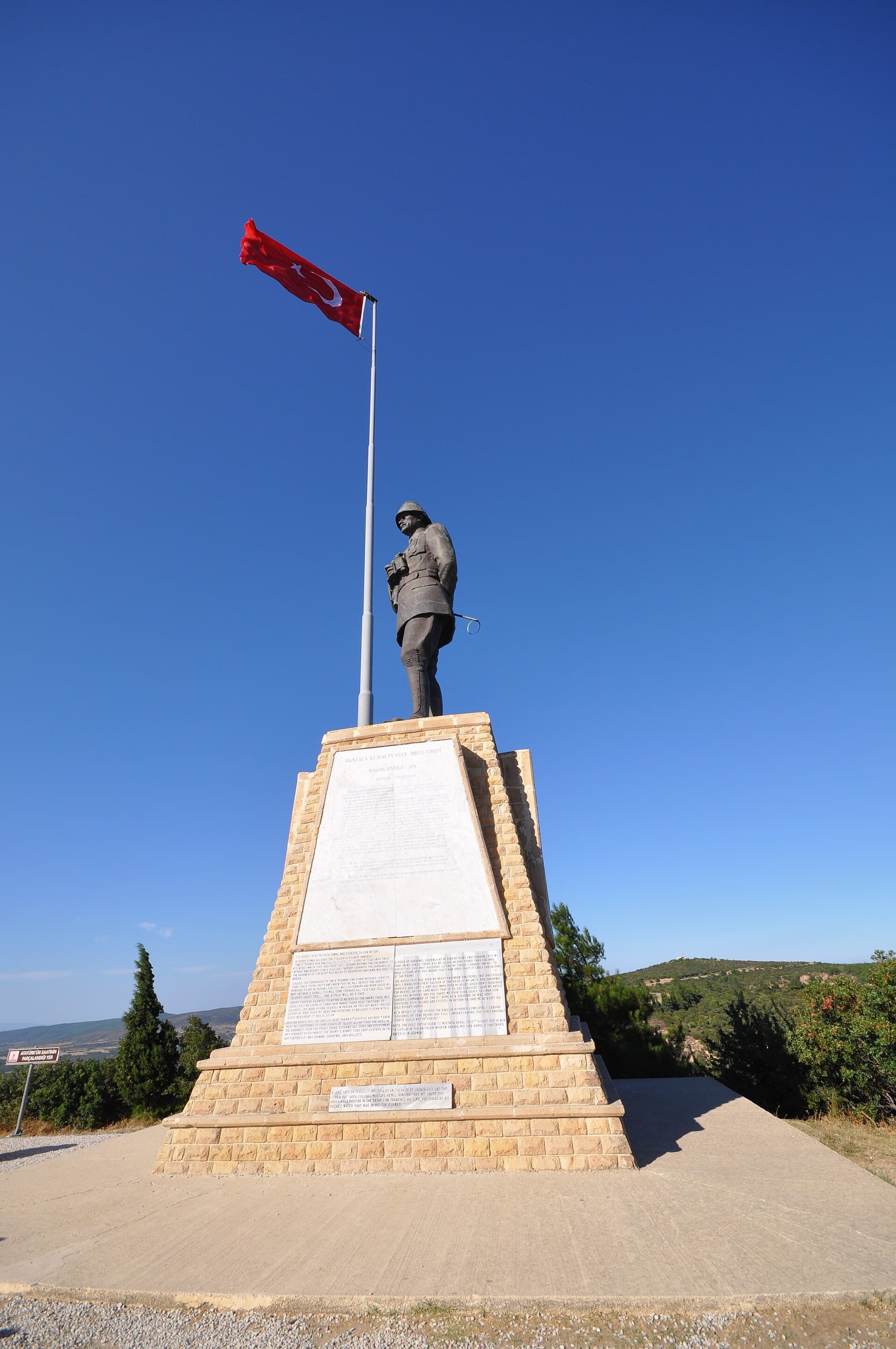
Bronze Atatürk statue on a stone pedestal with a Turkish flag, Chunuk Bair

Chunuk Bair

Historic site

The one hilltop that could have decided the campaign. New Zealand held it a day; Mustafa Kemal took it back, and with it, his future.

New Zealand's Wellington Battalion reached this summit before dawn on 8 August 1915 — the only Allied unit to hold the campaign's real objective, overlooking both the Aegean and the Dardanelles Narrows. Relief troops lost it to an Ottoman counter-attack on 10 August, led by Lieutenant-Colonel Mustafa Kemal, later Atatürk. Allied casualties in the battle ran to 12,000–13,000; Ottoman losses around 9,200.

45 minChunuk Bair hosts New Zealand's own Anzac Day service on 25 April; the site is small with limited standing room, and an overflow site at Hill 261 is used once it fills.A fully exposed hilltop with no shade — bring water and sun protection regardless of season.Roughly 15–20 minutes' drive up from the Anzac Cove/Kabatepe cluster on the loop road; not a walk-in site from the beach.
Look for: The New Zealand Memorial obelisk beside a bronze statue of Atatürk — former enemies commemorated a few metres apart. Kemal's pocket watch, struck by shrapnel here on 10 August, is credited with saving his life; its whereabouts are unknown.
Verified · · 25 min to 57th Infantry Regiment Memorial
Rank4
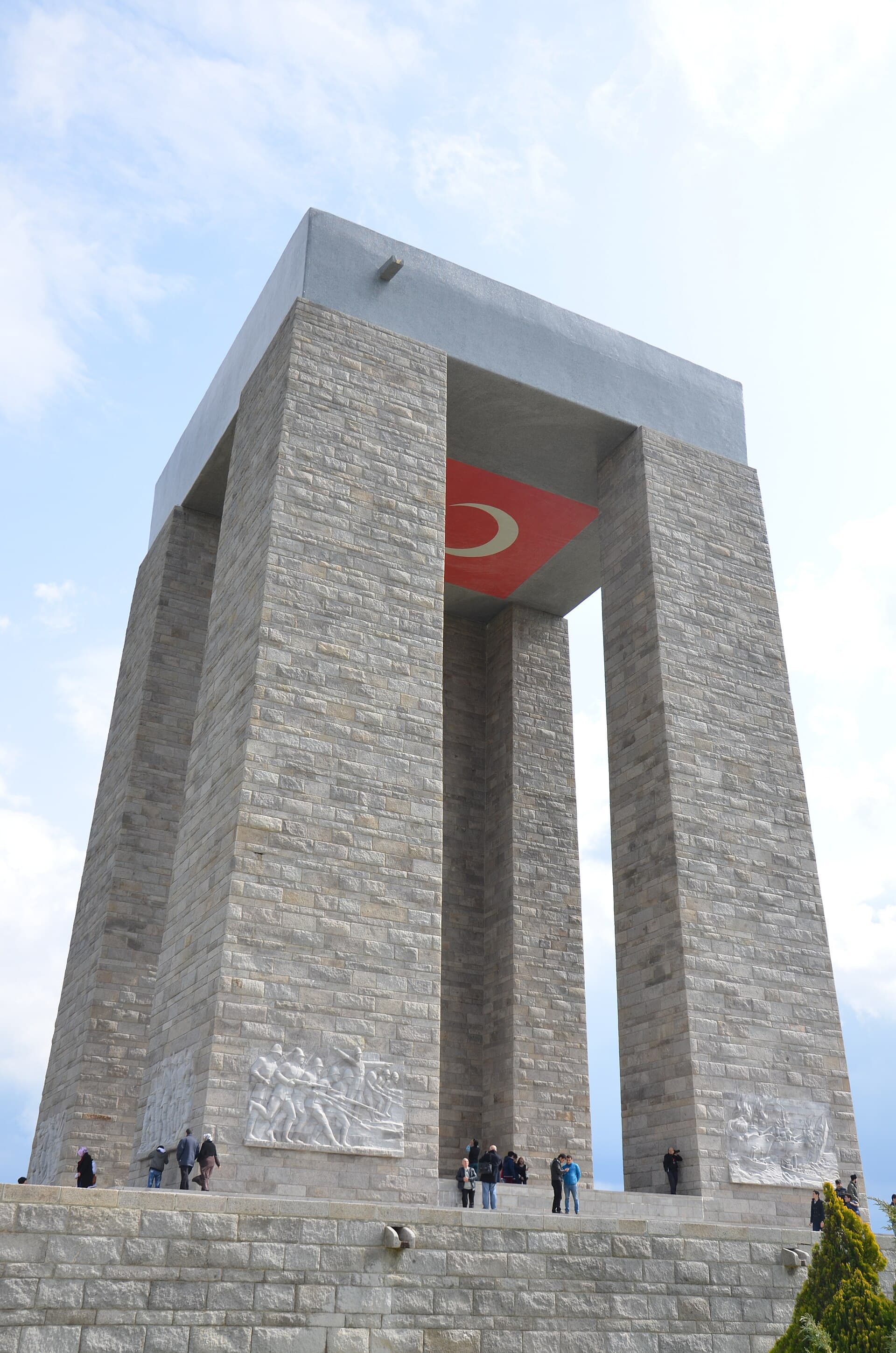
Upward view of the four concrete legs of Çanakkale Martyrs' Memorial with visitors below

Four 42-metre legs holding a concrete roof over nothing — Türkiye's national monument to a battle that turned a general into a president.

Designed after a 1944 competition and built between 1954 and 1960 on Hisarlık Hill above Morto Bay, this monument commemorates roughly 253,000 Turkish soldiers who fought the Gallipoli campaign. It appeared on the 500,000-lira banknote from 1993 to 2005 and remains the primary site of the annual 18 March Çanakkale Victory and Martyrs' Day state ceremony.

50 minVery heavily attended on 18 March (Çanakkale Victory and Martyrs' Day) and around 25 April; the 18 March state ceremony brings road closures and security around the site.Roughly 25–30km / 40–50 minutes' drive south of the Anzac Cove/Chunuk Bair cluster — this and Cape Helles form a separate leg of a single-day visit, not a quick add-on.A fully exposed hilltop position with minimal shade.
Look for: A small museum beneath the monument, and bas-reliefs added in 1999–2000. Nearby, the French National Cemetery holds 2,240 identified graves and four ossuaries for ~12,000 more unidentified — this hill remembers more than one army.
Rank5
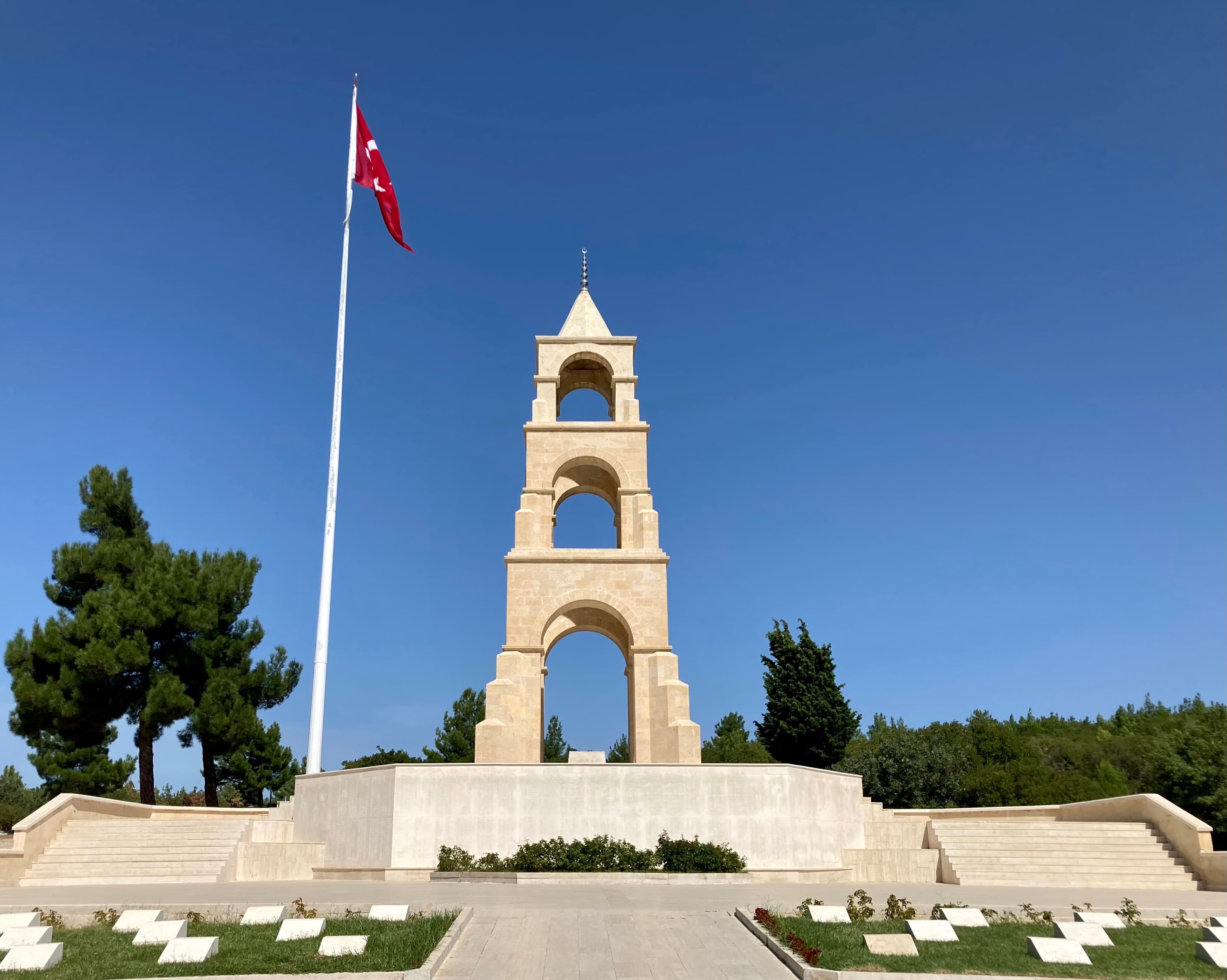
Limestone memorial tower topped with a Turkish flag against a clear blue sky

"I am not ordering you to attack, I am ordering you to die." The regiment obeyed — this is where Türkiye remembers that it did.

On the morning of 25 April 1915, with ammunition low and reinforcements hours away, Lieutenant-Colonel Mustafa Kemal ordered the Ottoman 57th Infantry Regiment to hold its ground against the Anzac landing at any cost. In nine days it lost 25 officers and 1,817 men — roughly half its strength — but held, was reinforced, and fought on for years afterward. This memorial, opened 1992, commemorates that stand by name.

30 minA short, unshaded walk from the road; little seasonal shelter.The site hosts the annual 57th Regiment Loyalty March and gets very busy around 18 March (Çanakkale Victory and Martyrs' Day) and 25 April.The 1,817 names match this one regiment's own documented casualties for 25 April–3 May 1915, not a random sample — but most Ottoman dead from the wider campaign still have no individually marked grave anywhere.
Look for: A 45-square-metre relief of the regiment's counter-attack, and a 1994 statue of Hüseyin Kaçmaz, the last Turkish Gallipoli veteran, with his granddaughter. Its 1,817 names match the regiment's own documented casualties, 25 April–3 May.
Verified · · 18 min to Lone Pine Cemetery and Memorial · 25 min to Chunuk Bair

Worth your time

Worth your time

A second day earns you these.

Rank1

The Nek

Historic site

Four waves, 600 men, 30 seconds of gunfire. The attack Peter Weir's "Gallipoli" ends on, fought over ground the size of a tennis court.

At 4:30am on 7 August 1915, the 8th and 10th Light Horse Regiments attacked a heavily defended Ottoman trench line across a narrow ridge, part of the wider August Offensive. Four successive waves went forward; the first was cut down within half a minute. Of roughly 600 Australians who took part, 372 became casualties against Ottoman losses estimated at about 12 dead.

20 minOne of the smallest and most exposed sites on the peninsula — a few minutes suffices to see it, but its scale is the entire point; don't rush past it.316 burials, only 5 identified — most headstones here mark an approximate location rather than a known individual.
Look for: The tiny scale of the battlefield — the whole attack crossed barely 30 metres of open ground. The Nek Cemetery holds 316 graves, only five identified, effectively a mass grave under individual headstones.
Open in Maps
Rank2

Cape Helles

Historic site

The other landing, the same morning — British, Irish and French troops came ashore at the peninsula's tip, and lost just as terribly.

British, Irish and French forces landed across several beaches around Cape Helles on 25 April 1915. At V Beach, troops poured from the converted collier River Clyde into concentrated fire from the fort and village above; at W Beach, the Lancashire Fusiliers took the beach at a cost still remembered as "Six VCs before breakfast." The Helles Memorial commemorates over 20,000 Commonwealth dead with no known grave.

45 minA genuinely separate sector from the Anzac area, roughly 25–30km / 40–50 minutes further south — treat it as its own leg of the day rather than a short detour.Fully exposed coastal sites with little shade in summer.
Look for: The ruined Sedd el Bahr fort above V Beach, under bombardment since November 1914. The Helles Memorial obelisk, visible from ships in the strait, listing men from across the whole campaign, not just this sector.
Open in Maps
Rank3

Beach Cemetery

Historic site

Simpson and his donkey are the legend. His actual grave, plain among 391 others, draws more visitors than this cemetery's size suggests.

Established in 1915 at Hell Spit, the southern point of Anzac Cove, and used throughout the campaign. It holds 391 burials — 285 Australian, 50 British, 21 New Zealand, 3 Ceylonese and 21 unidentified — including Private John Simpson Kirkpatrick, the stretcher-bearer known for using a donkey to carry wounded men, killed on 19 May 1915 aged 22.

15 minA small, easily missed cemetery immediately south of Anzac Cove — worth deliberately stopping for rather than driving past.
Look for: Simpson's headstone, Plot 1 Row F Grave 1, usually the most visited in the cemetery. The site sits right at the southern edge of Anzac Cove itself, an easy stop before or after the cove.
Open in Maps
Rank4

Kabatepe Information Centre

Museum

Eleven halls and a 60-minute walk-through, built where the original museum stood — context for the battlefield before you drive into it.

Opened in June 2012 at Kabatepe Port on the site of the peninsula's original visitor centre, replacing a smaller museum with an 8,600 sq m complex of themed halls and a war-relics exhibition, built to introduce visitors to the campaign before they reach the battlefield sites themselves.

75 minReported closed on Tuesdays — confirm before planning a visit around it.Entry to the themed halls is ticketed and by timed session (roughly an hour, capped group size); reservations are recommended in season rather than turning up and expecting a slot.
Look for: Recovered personal items, weapons and uniforms from the battlefield in the exhibition hall. The loop road up into the Anzac sector — Lone Pine, The Nek, Chunuk Bair — begins right at this site.
Open in Maps

If you have longer

If you have longer

Keep these compact stops in mind when you build your trip.

Kilitbahır

Historic site

Built in 1463 by Mehmed the Conqueror to guard the Dardanelles at their narrowest point, opposite a matching fortress at Çanakkale. Its coastal guns contributed to repelling the Allied naval attack of 18 March 1915. On the hillside above, a 1960 monument carves a giant Turkish soldier beside the opening lines of Necmettin Halil Onan's poem "Dur Yolcu" — "Stop, traveller."

Sits right by the Çanakkale–Kilitbahır ferry crossing, an alternative to the main Eceabat route — useful if this is the day's first or last stop.The one site on this page from before 1915; if time is short, the WWI-era sites take priority.
30 minOpen in Maps

Getting there and away

Verified routes from Gallipoli.

Door-to-door times and fare ranges, checked leg by leg. Only routes where every leg verified are listed.

Getting around

Türkiye, for scale

Where it sits

See this city in the wider shape of Türkiye.

The map will load as it approaches the viewport.