Anzac Cove
The wrong beach, or the right one — historians still argue. This cove is where the word "Anzac" entered the world, at dawn on 25 April 1915.
Enough context, no spoilers
Why it matters
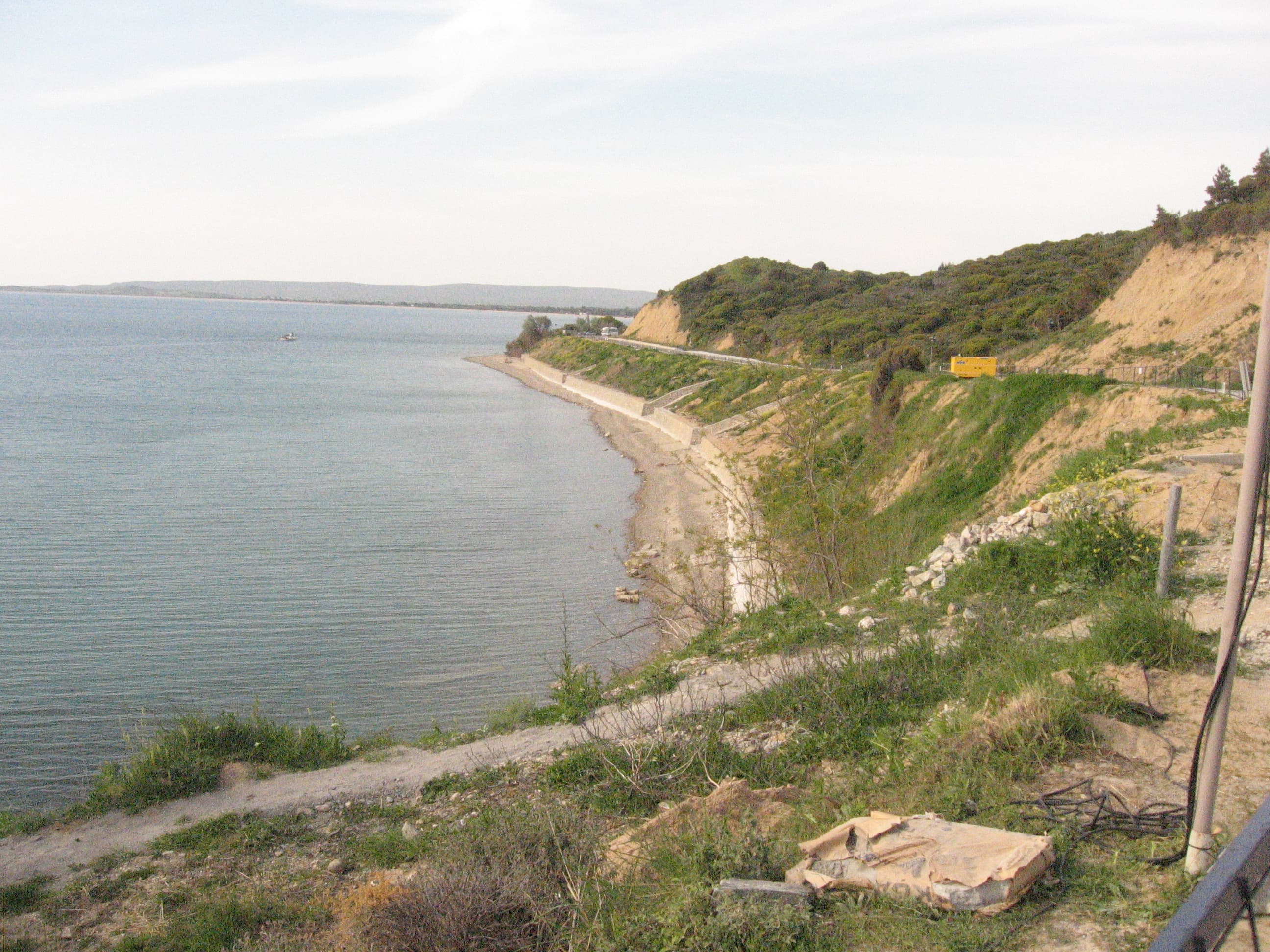
Australian and New Zealand troops came ashore here before dawn on 25 April 1915, north of the flat beach the plan had called for. General Birdwood recommended the name "Anzac Cove" on 29 April; Türkiye formally recognised it in 1985. Eight months of trench deadlock on cliffs never meant to hold an army followed, ending in a night evacuation that cost almost no lives at all.
What to know before you go
Everyone who visits already knows the shape of the story: currents took the boats north in the dark, and the covering force scrambled ashore beneath cliffs instead of onto the open beach the plan had called for. That account comes from General Birdwood and the official historian Charles Bean, and it has been the standard version for over a century. It may not be true. Naval historian Tom Frame found no evidence of a current strong enough to explain the drift, and other historians — Robin Prior, Denis Winter — argue the confusion had more ordinary causes: darkness, poor charts, and no written order telling the first boats exactly where to land. Some now think the men landed on the beach they were meant to, just disorganised and in the wrong order. The debate matters less than what it proves: even the founding fact of this place, repeated at every Dawn Service for a hundred years, is not settled history, and a page dealing honestly with Gallipoli should say so rather than repeat the tidy version.
What isn't disputed is what the terrain did next. The cliffs behind this narrow strip of beach rise almost immediately, and the campaign that followed never escaped them — eight months of trench warfare on slopes too steep for the maps anyone had brought. Birdwood recommended the name "Anzac Cove" on 29 April, four days after the landing; the Turkish government made it official on Anzac Day 1985, one of the rare cases of a country formally naming a piece of its own coastline after the army that invaded it.
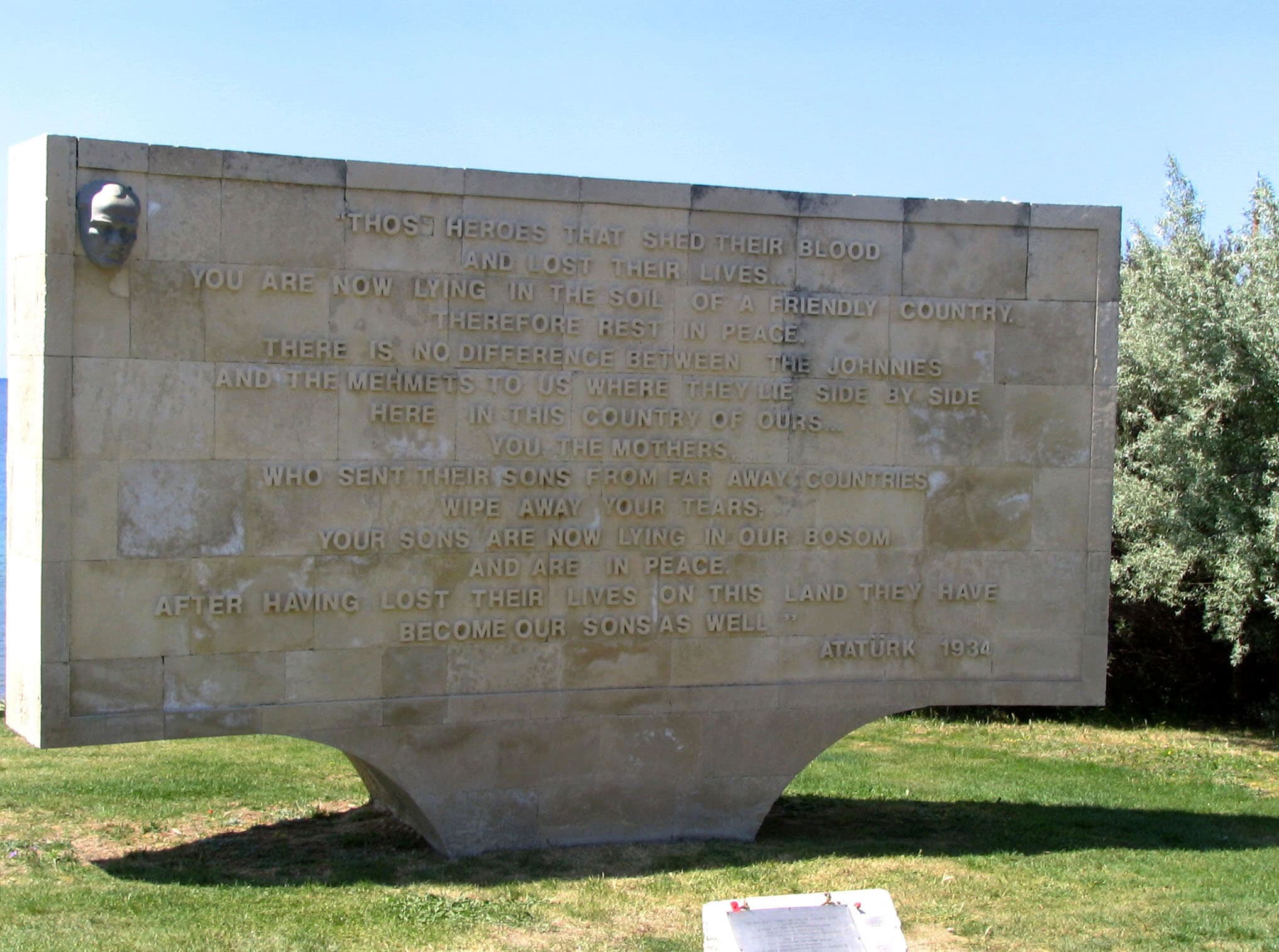
The original Dawn Service was held inside Ari Burnu Cemetery, at the cove's northern point, until 1999, when the crowd outgrew it. Since 2000 the ceremony has moved to a purpose-built site on North Beach, just north of the cove — bigger, but not the exact ground anyone landed on, worth knowing if you expect to stand on the precise spot. The Ari Burnu monument carries words attributed to Atatürk, addressed to the mothers of Australian and New Zealand soldiers, telling them their sons now lie in Turkish soil as Turkish sons. They are moving, and on monuments in Canberra and Wellington too, but a Turkish researcher's work has traced the earliest confirmed sourcing of the current wording to 1978 correspondence — not 1934, the date usually given. Whether Atatürk said something like it and it was reworded later, or it was composed decades afterward and backdated, is a real, unresolved argument. Read the words for what they plainly are — a gesture of reconciliation someone gave voice to — without needing the 1934 date to be true for that to matter.