Lone Pine Cemetery and Memorial
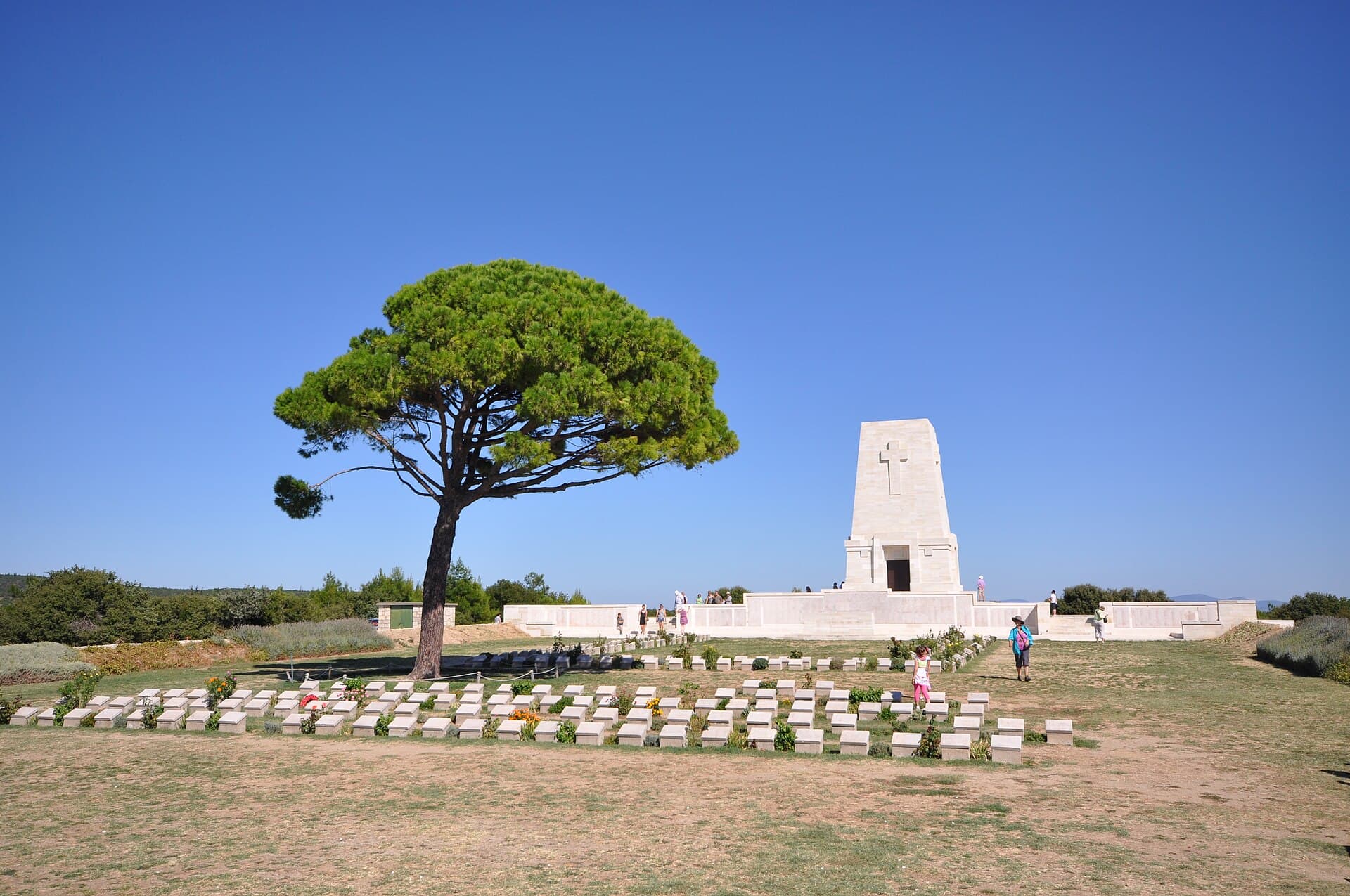
Named for a single surviving pine. Now the largest cemetery on the peninsula — 1,167 graves, most of them unnamed.
Enough context, no spoilers
Why it matters
Australia's 1st Division took this Ottoman ridge — Kanlı Sırt, "Bloody Ridge," to the Turks — on 6 August 1915 after close-quarters fighting in roofed trenches, and held it against counter-attacks until 10 August. Australian casualties reached 2,277; Ottoman losses are estimated at 5,000–7,000. Seven Victoria Crosses were awarded here, four in a single battalion.
What to know before you go
Before the battle this ridge had one tree left standing. Ottoman soldiers had cut the rest for trench timber and overhead cover, and the single pine that survived gave the position its name on both sides of the line — Lone Pine to the Australians, and more starkly, Kanlı Sırt, Bloody Ridge, to the Ottomans. The name earned itself. On 6 August 1915, in an attack timed to draw attention away from the main push toward Chunuk Bair, Australia's 1st Division attacked a network of trenches so heavily roofed with pine logs that some attackers had to tear the roof off with their hands to reach the fighting below. What followed for four days was close-quarters combat in cramped, covered trenches — bayonets, bombs, men fighting through firing slits at arm's length from each other — among the most concentrated violence of the entire campaign. Australian casualties came to 2,277. Ottoman losses are harder to pin down and are usually put at somewhere between 5,000 and 7,000, occasionally cited higher; the imprecision itself says something about how differently the two sides kept count. Seven Victoria Crosses were awarded for actions here, four of them to men of the same battalion within a single day — a measure of how sustained the close fighting was.
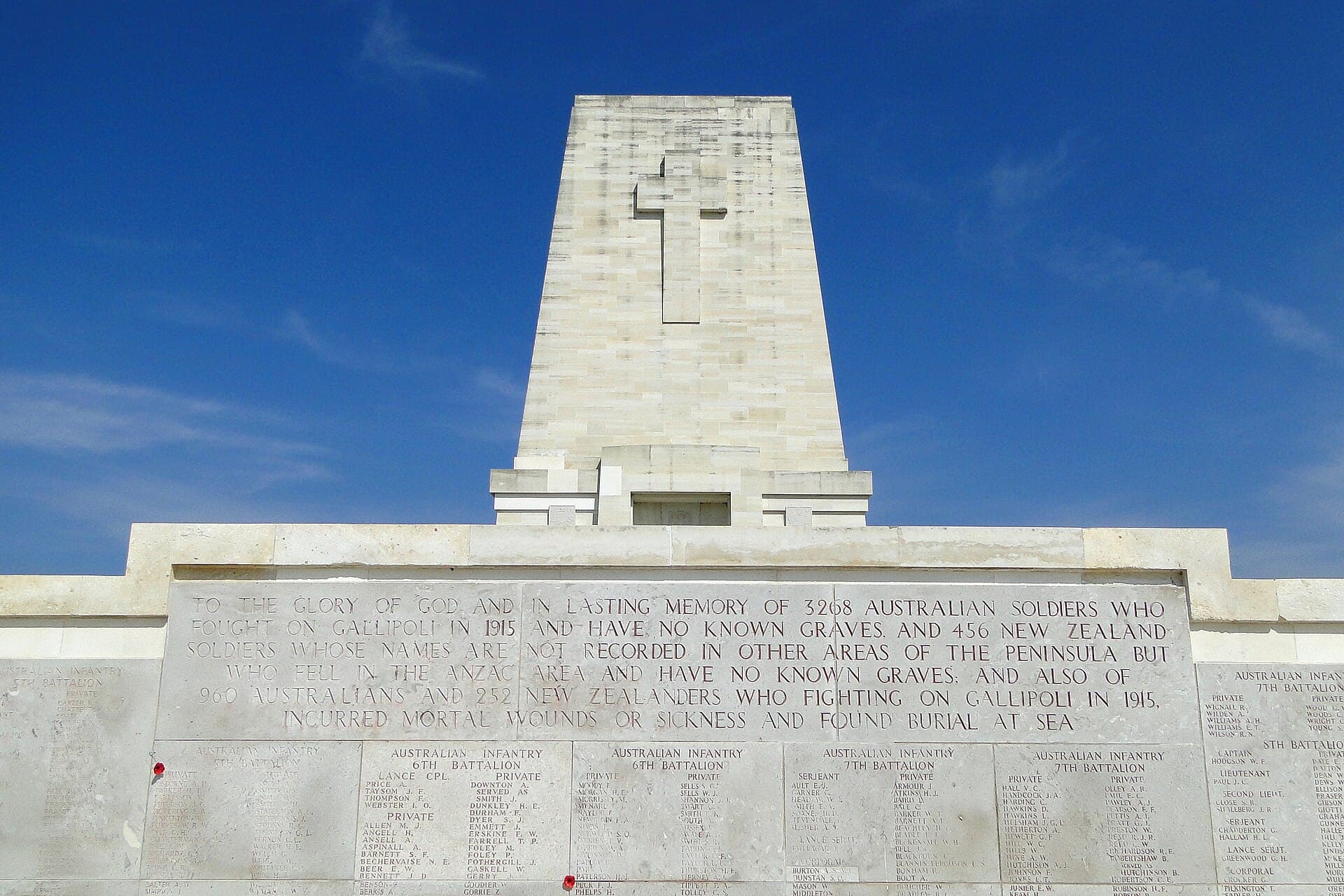
Almost none of that violence is visible now. What you find is a quiet, sloped cemetery — Commonwealth War Graves Commission plots, 1,167 burials, 471 of them recorded only as "known unto God" because there was no way, afterward, to say whose remains were whose. A single Aleppo pine grows near the memorial obelisk, planted from a cone a wounded soldier's brother carried home to New South Wales in 1915; his mother kept it thirteen years before planting the seeds, and one seedling became the Lone Pine tree still growing today at the Australian War Memorial in Canberra. This cemetery holds Australia's official Anzac Day commemorative service each 25 April, later in the morning after the Dawn Service at North Beach — deliberately, since this ridge is identified with the AIF's own dead more than any other single place on the peninsula.