57th Infantry Regiment Memorial
"I am not ordering you to attack, I am ordering you to die." The regiment obeyed — this is where Türkiye remembers that it did.
Enough context, no spoilers
Why it matters
On the morning of 25 April 1915, with ammunition low and reinforcements hours away, Lieutenant-Colonel Mustafa Kemal ordered the Ottoman 57th Infantry Regiment to hold its ground against the Anzac landing at any cost. In nine days it lost 25 officers and 1,817 men — roughly half its strength — but held, was reinforced, and fought on for years afterward. This memorial, opened 1992, commemorates that stand by name.
What to know before you go
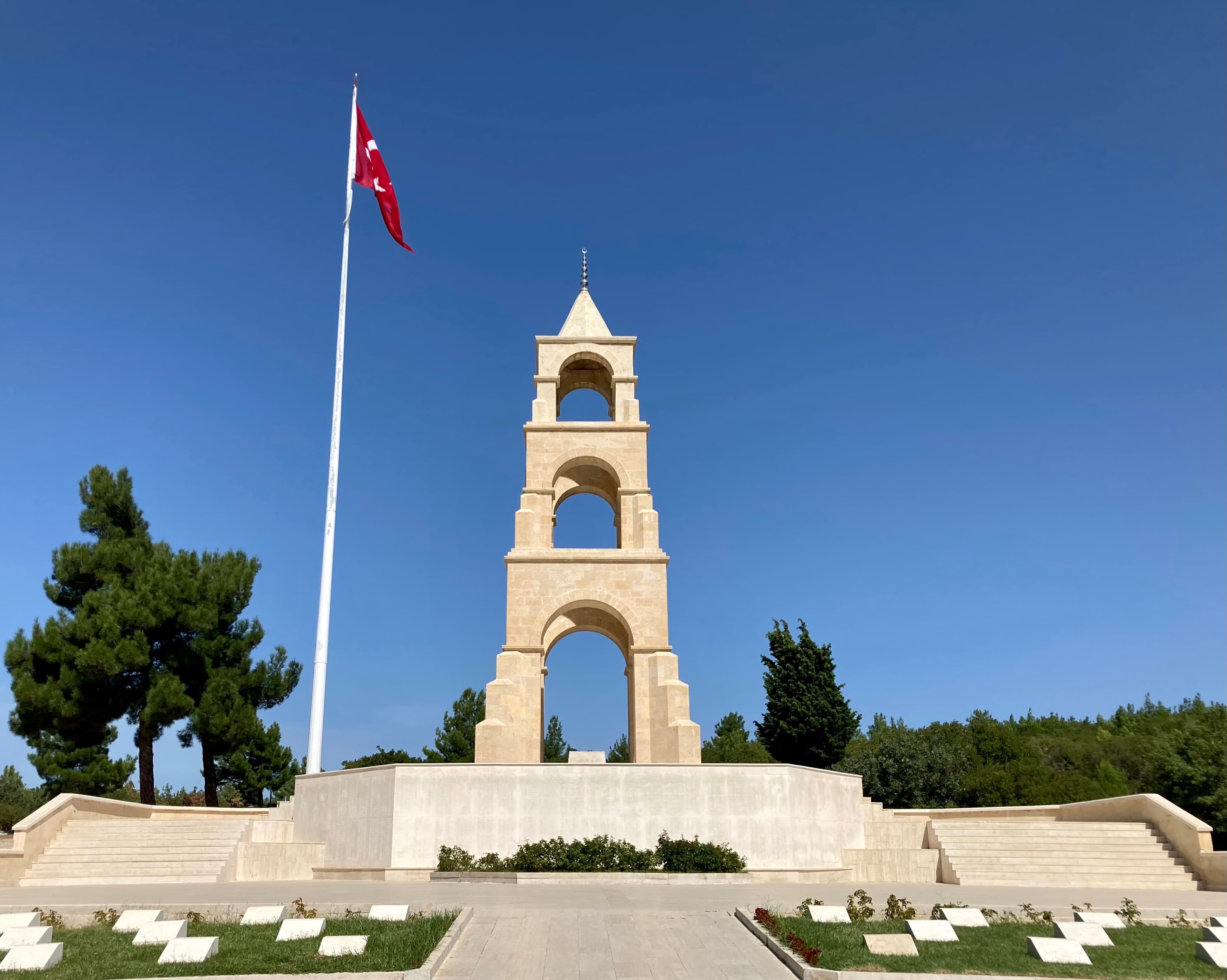
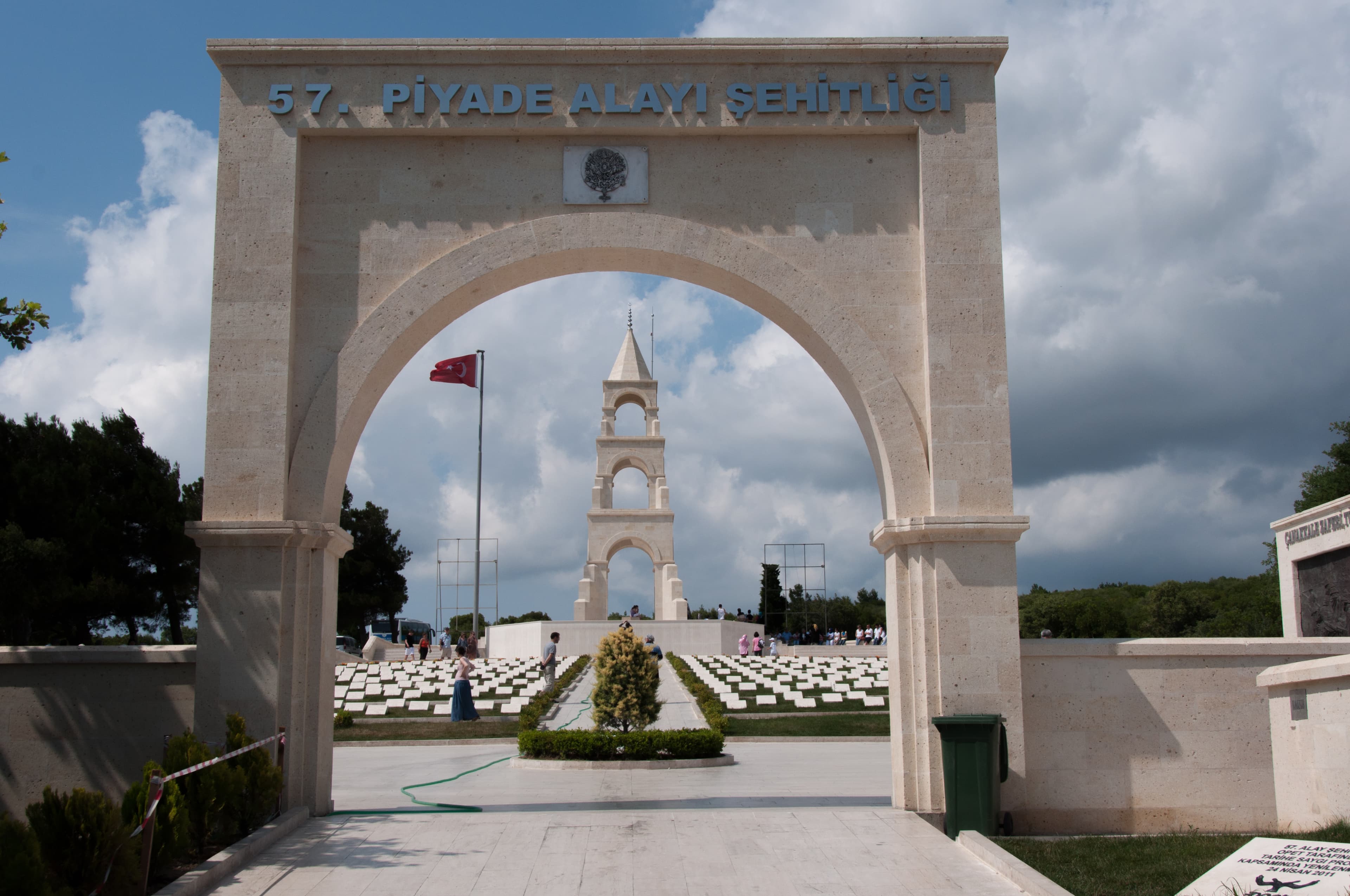
Every Turkish account of the Gallipoli campaign passes through this regiment, and this memorial — set back off the Kabatepe–Conkbayırı road, easy to drive past without knowing to stop — is where that story is told in the most physical detail. On the first morning of the landing, 25 April 1915, the Ottoman defence facing the Anzac beachhead was thin and running short of ammunition. Mustafa Kemal, then commanding the 19th Division, is recorded as having told the 57th Regiment something close to: "I am not ordering you to attack, I am ordering you to die. In the time it takes us to die, other forces and commanders can take our place." The regiment held, at a cost that is unusually precisely documented for this campaign: of roughly 3,700 officers and men at full strength, it lost 25 officers and 1,817 NCOs and soldiers — just under half — in the nine days between the landing and 3 May. It was not wiped out. Reinforced, it held this line through the rest of the campaign and kept fighting for years afterward, in Galicia and then Palestine, before finally being struck from the order of battle in 1918. But 25 April is what Türkiye remembers it for, and this memorial is built around that one loss specifically, not the regiment's whole later war.
The 1,817 names inscribed here, on headstones and on the memorial's walls, match that nine-day casualty figure closely enough that this reads less like a generic gesture at "the Ottoman dead" and more like an attempt to name, individually, one regiment's own documented toll. It is still not a literal grave-for-every-body cemetery in the way the Commonwealth plots across the ridge are — Ottoman battlefield conditions in 1915 made identified individual burial for a unit hit this hard essentially impossible, and what stands here commemorates by name rather than marking that many actual bodies. Alongside the three-storey memorial tower and the large relief of the regiment's stand, a 1994 statue shows Hüseyin Kaçmaz, who fought here as a young soldier and was, by the time of his death that same year, the last living Turkish veteran of the campaign — one individual, named and specific, in front of a monument built from a name-by-name accounting of thousands more.