Chunuk Bair
The one hilltop that could have decided the campaign. New Zealand held it a day; Mustafa Kemal took it back, and with it, his future.
Enough context, no spoilers
Why it matters
New Zealand's Wellington Battalion reached this summit before dawn on 8 August 1915 — the only Allied unit to hold the campaign's real objective, overlooking both the Aegean and the Dardanelles Narrows. Relief troops lost it to an Ottoman counter-attack on 10 August, led by Lieutenant-Colonel Mustafa Kemal, later Atatürk. Allied casualties in the battle ran to 12,000–13,000; Ottoman losses around 9,200.
What to know before you go
Everything else on this peninsula was fought over a shoreline. Chunuk Bair is the one place both sides actually needed, because whoever held this ridge could see, and shell, the Narrows themselves — the strip of water the entire campaign existed to force open. That's what makes the second week of August 1915 the campaign's real hinge, more than the landing itself. In a night attack timed to coincide with the fresh landing at Suvla Bay, New Zealand's Wellington Battalion, under Lieutenant-Colonel William Malone, fought up through scrub and broken ground and reached the summit before first light on 8 August. For roughly a day and a half, an Allied unit held the position the entire campaign had been aimed at since April, against repeated counter-attacks — Malone himself was killed there that same afternoon, hit by a shell from his own side's supporting artillery. Exhausted, the New Zealanders were relieved on the night of 9 August by two British battalions who had arrived on the peninsula only days before, with no time to learn the ground. At dawn on 10 August, Mustafa Kemal — then an Ottoman lieutenant-colonel commanding the Anafartalar Group, not yet Atatürk — personally led a counter-attack that overran them in minutes and threw the line back down the hill for good.
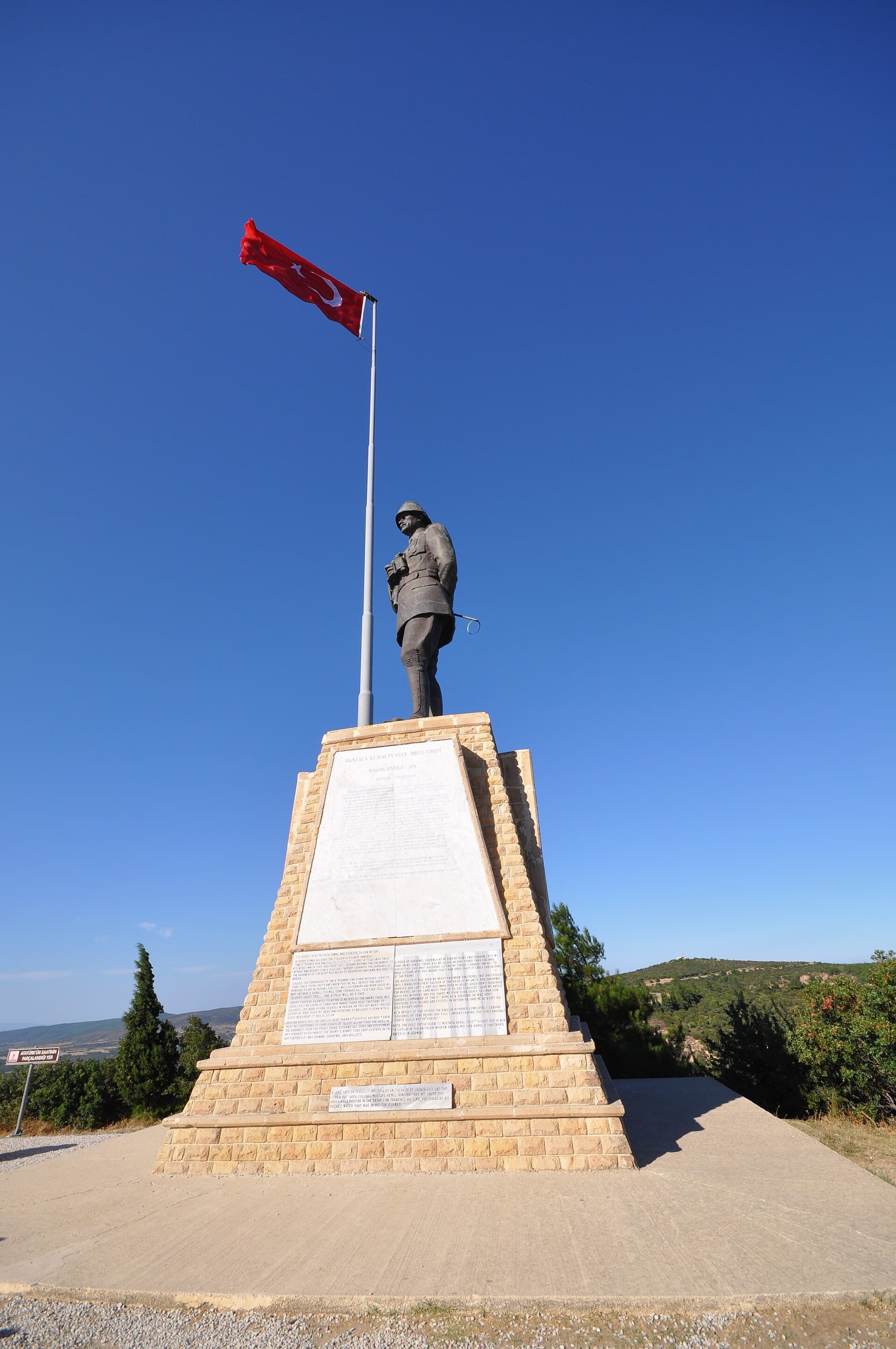
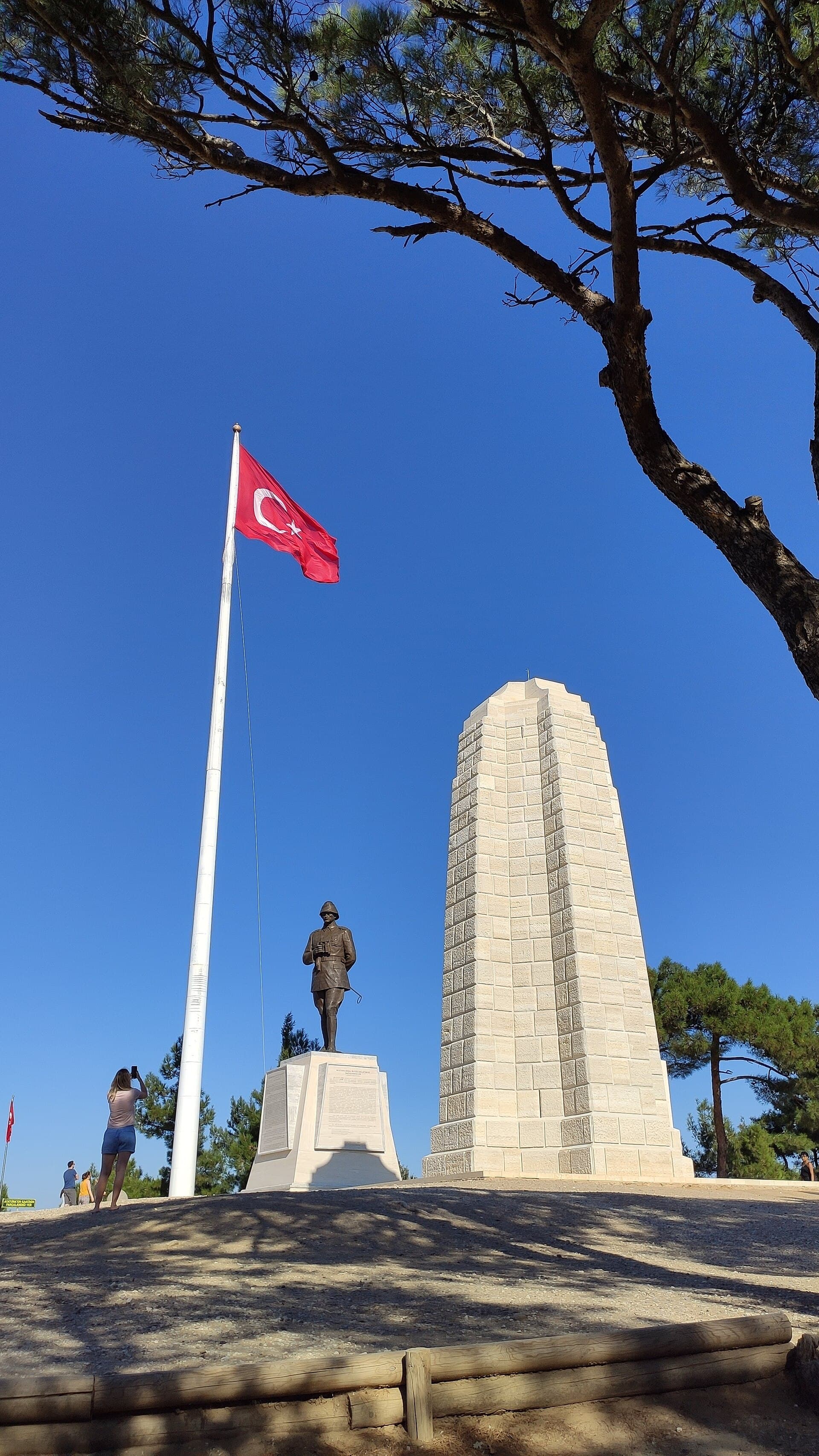
A piece of shrapnel struck the pocket watch in his tunic during the fighting; it broke the watch and bruised him rather than killing him. He later gave the watch to the German general Liman von Sanders, and its whereabouts today are unknown — one of the odder loose threads in the story of the man who went on to build the modern Turkish republic. Allied casualties across the battle are put at 12,000 to 13,000, against roughly 9,200 Ottoman. Today the summit holds two memorials standing together: the largest of New Zealand's five "Uttermost Ends of the Earth" obelisks, and a bronze statue of Atatürk erected by Türkiye in 1993, marking his victory here. It is a genuinely rare thing — a battlefield's high point commemorating both the men who briefly took it and the man who threw them off it, on the same few square metres of grass, neither monument crowding out the other. The view is also, simply, the best on the peninsula: the Aegean on one side, the Dardanelles on the other, and the reason men died for this exact hilltop laid out in front of you.