Çanakkale is a university town on the Asian shore of the Dardanelles, where car ferries cross to Europe in 25 minutes and Troy waits 31km inland. It's lived-in, not a resort — a working harbour and a fish-restaurant street. Give Troy a full morning, the new museum longer, and cross the strait at least once for its own sake. Gallipoli, across the water, is a separate trip.
Start with the essentials, add what genuinely interests you, and leave the rest for another visit. Every place includes a concise story, practical timing, a Maps link, and a one-tap route planner action.
Make the route work
Anticipate the practical details.
Getting there
Çanakkale Airport (CKZ) has domestic-only flights — AJet connects to Istanbul's Sabiha Gökçen a few times daily, plus a route to Ankara. Most travellers arrive by intercity bus from Istanbul's Otogar (around 4.5 hours) or from İzmir; several companies, including Çanakkale's own Truva Turizm, run the route. Confirm current schedules before booking.
Getting around
The city centre is walkable — the ferry terminal, clock tower and waterfront sit within a few hundred metres of each other. Dolmuş minibuses marked 'Truva' or 'Tevfikiye' run to Troy roughly hourly from a stop near (not inside) the otogar, taking about 45 minutes; a taxi is faster if you're short on time. Passenger and car ferries to Eceabat and Kilitbahir, on the Gallipoli side, run every 25 minutes or so around the clock — that crossing is how you'd continue on to the Gallipoli peninsula, a separate destination from this page.
Money
Turkish lira. Foreign-tourist admission to state museums and archaeological sites, including Troy, is now priced and charged in euros. Cards are widely accepted in the city centre; carry some cash for dolmuş fares and smaller vendors.
Connectivity
Mobile coverage is reliable in the city and at Troy itself, which sits close to the main road. It can thin out at beaches and villages further down the coast.
Etiquette
Çanakkale is a relaxed, secular university town — dress codes are informal outside mosques. The city's identity is genuinely bound up with the 1915 Dardanelles campaign; war memorials sit along the waterfront among the cafés, and the week around 18 March and 25 April fills the city with domestic and Australian/New Zealand visitors for commemorations — expect a different, more solemn atmosphere on those specific dates.
Safety and comfort
A safe, well-visited city with normal precautions. The strait itself is a working shipping lane and a genuine current hazard — swim only at managed beaches, not off the Kordon. Ferries are occasionally suspended in severe winter storms; build in slack if your plans depend on one.
Nine cities buried in one small hill — and the layer likeliest to be Homer's Troy is a hard, unglamorous thing to stand in front of.
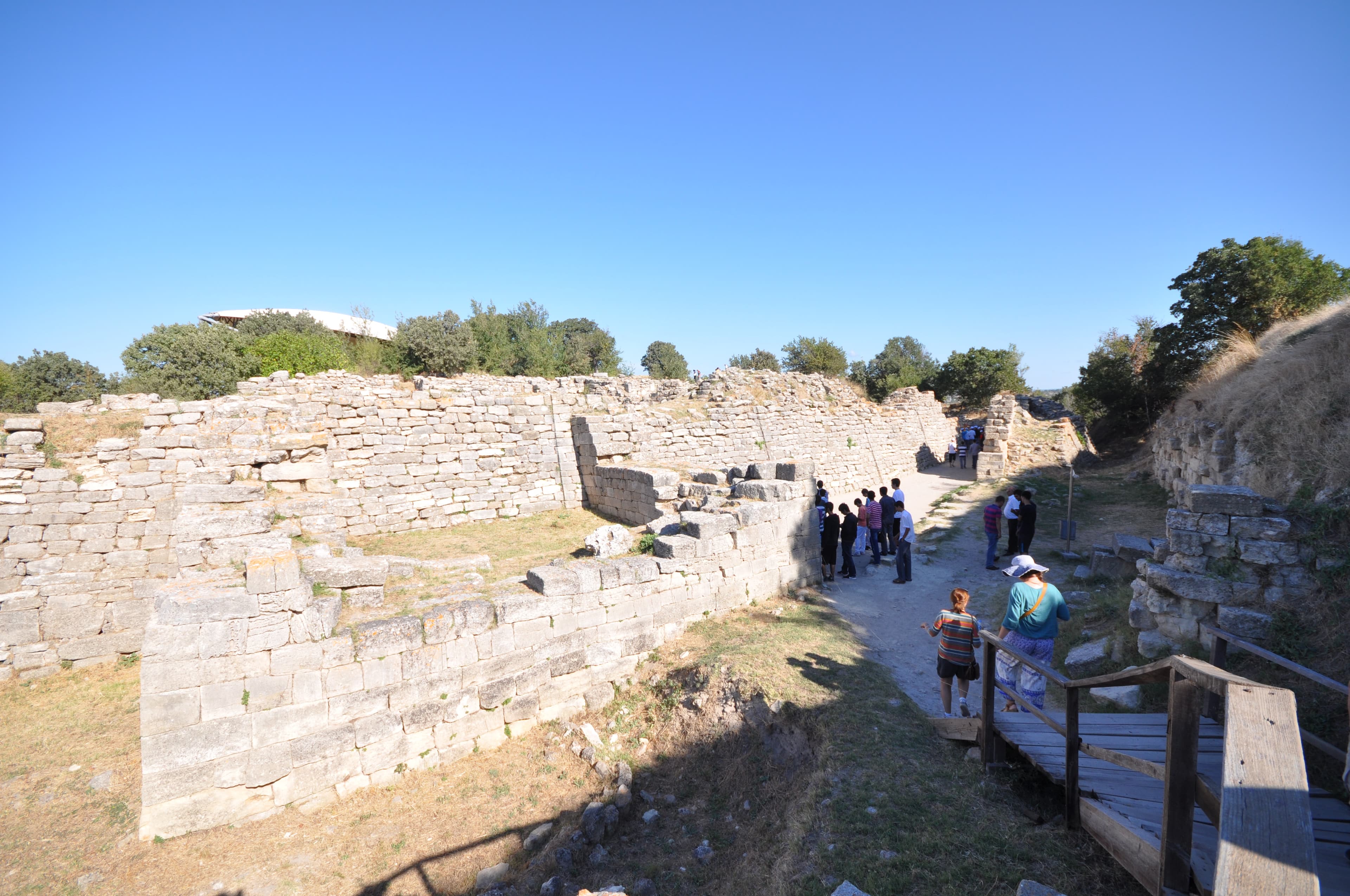
Settled from around 3000 BC and rebuilt at least nine times, most recently as Roman and Byzantine Ilium. Heinrich Schliemann began digging in 1871, convinced Homer's Troy lay near the bottom; later excavators redated the likeliest Trojan War layer to Troy VI or VIIa, roughly 1300–1180 BC. Manfred Korfmann's 1988–2005 campaigns found a lower city at least ten times the citadel's size.
Combined ticket with Troy Museum, reported around €27 for foreign visitors in 2026 — re-confirm before travel; not found published on the official muze.gov.tr listing itself. Museum Pass Türkiye accepted. Under-12s free.
90 minThe exposed circuit is small and confusing without context — the single most common disappointment reported by visitors. Read the look_for and body before you go, not after.Completely unshaded gravel and dirt paths across an open hilltop; no shelter between the entrance and the museum.Uneven ground, low barriers, and open trenches — supervise children closely, especially near Schliemann's Trench.
Look for: The citadel walls, sloped and offset for defence, and the paved ramp inside the south gate. Compare this small fenced circuit with Korfmann's lower city — most of ancient Troy lies unexcavated under the fields outside the fence.
Verified · · 1 min to Schliemann's Trench · 5 min to Sanctuary of Athena & Roman Ilium
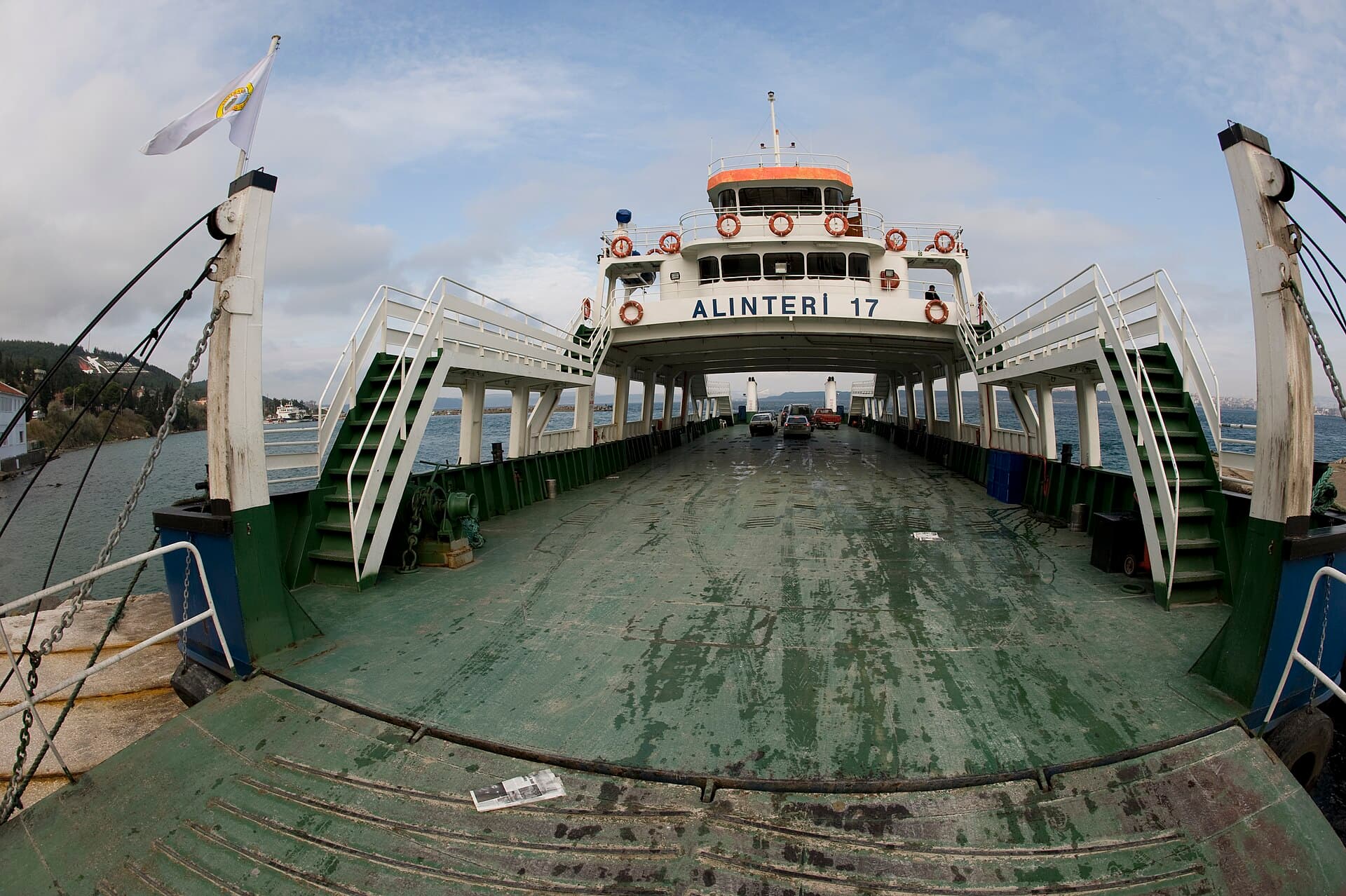
The strait narrows to under 1,300 metres here, and the car ferry crosses it in about 25 minutes — the cheapest, best view in Çanakkale.
Xerxes bridged this strait with lashed boats in 480 BC to invade Greece, and Herodotus says he had it whipped after a storm broke the first attempt. In myth, Leander swam it nightly from Abydos to reach Hero at Sestos until he drowned; Lord Byron re-enacted the swim in 1810 and never let anyone forget it. GESTAŞ has run car and passenger ferries across the same crossing for decades.
Around 40 TL foot passenger, around 725 TL per car, one-way (GESTAŞ, 2026) — confirm current fare at the terminal; prices move with fuel costs.
30 minThis is a genuine strait crossing with real current and shipping traffic, not a harbour cruise — supervise children on deck and stay clear of vehicle-loading areas.Sailings are suspended in severe winter storms, sometimes for hours; build slack into any plan that depends on a specific crossing.Do not swim from the Kordon or the ferry terminal area — currents in the strait are strong and this is an active shipping channel.
Look for: Cargo ships and tankers queuing mid-strait — one of the world's busiest shipping lanes as well as a ferry crossing. On a clear run you can see both the Asian terminal you left and the European one you're arriving at.
Opened in 2018 in a rusting steel cube — and it now holds nearly everything that makes Troy worth the trip.
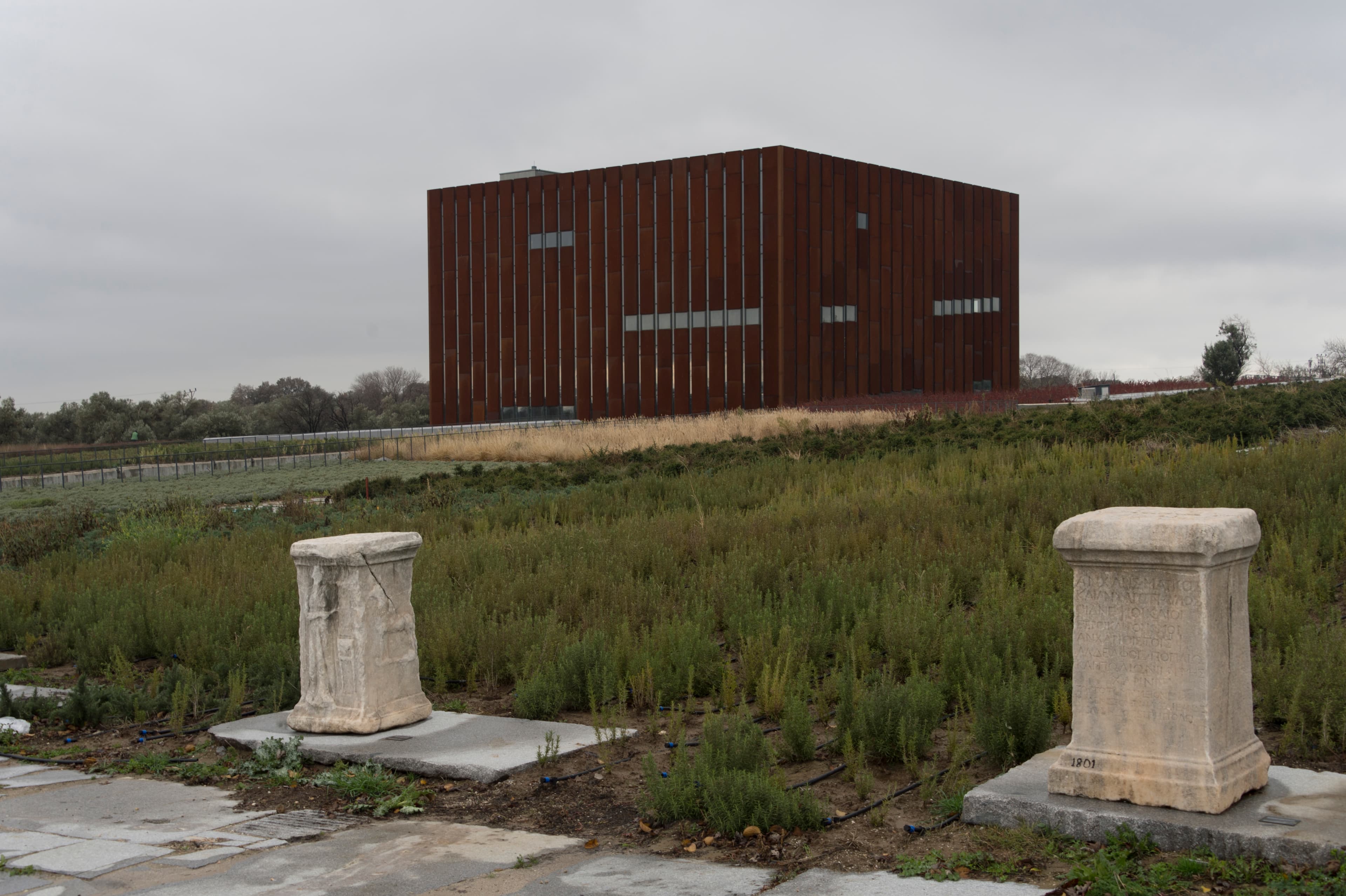
Opened 10 October 2018, in Turkey's declared 'Year of Troy,' after a design competition won by Yalın Mimarlık in 2011. The 32-by-32-metre Corten-steel cube displays around 2,000 objects from a collection of over 40,000, from Troy and neighbouring Troad sites — including finds moved here after Çanakkale's old city-centre museum closed. Won the 2020 European Museum of the Year Special Appreciation Award.
Included in the combined Troy ticket (site + museum), reported around €27 in 2026 — see Walls of Troy entry for ticket details.
90 minThe Polyxena Sarcophagus and the Dardanos gold are displayed under low, protective lighting — plan for it if you're relying on a phone camera.About 800m from the archaeological site entrance, not walkable in one movement with a tour-bus schedule — check whether your transport stops at both.The originals of the most famous Trojan gold (Priam's Treasure) are in Moscow, not here — what's on display are casts and unrelated original finds from other Troad sites. Don't arrive expecting the treasure itself.
Look for: The Polyxena Sarcophagus, a painted sixth-century tomb among Anatolia's earliest figurative sarcophagi. Gold from the Dardanos Tumulus, and casts standing in for the Trojan gold — the originals are in Moscow.
Verified · · 13 min to Sanctuary of Athena & Roman Ilium · 15 min to Walls of Troy
A 12-tonne steel-and-fibreglass horse built for the 2004 film Troy, gifted to the city and planted on the waterfront ever since.
Built as a prop for Wolfgang Petersen's 2004 film Troy and given to Çanakkale's Ministry of Culture and Tourism after filming wrapped, the horse has stood on the waterfront since September 2004. It's steel-framed and fibreglass-clad rather than wood, about 12.4 metres tall and roughly 12 tonnes.
Free.
15 minA static display piece, not built for climbing inside — that experience is at the archaeological site's own 1975 wooden horse, not here.The single most crowded photo spot in Çanakkale on weekend evenings and around the March/April commemoration dates.
Look for: The scale up close — taller than the trees at its base — and the small viewing platform partway up. Don't confuse it with the older, climbable wooden horse at the Troy site, 31km away; they're different objects.
A raw 15-metre gash cut through four thousand years of the city — the most honest monument at Troy to what early archaeology cost.
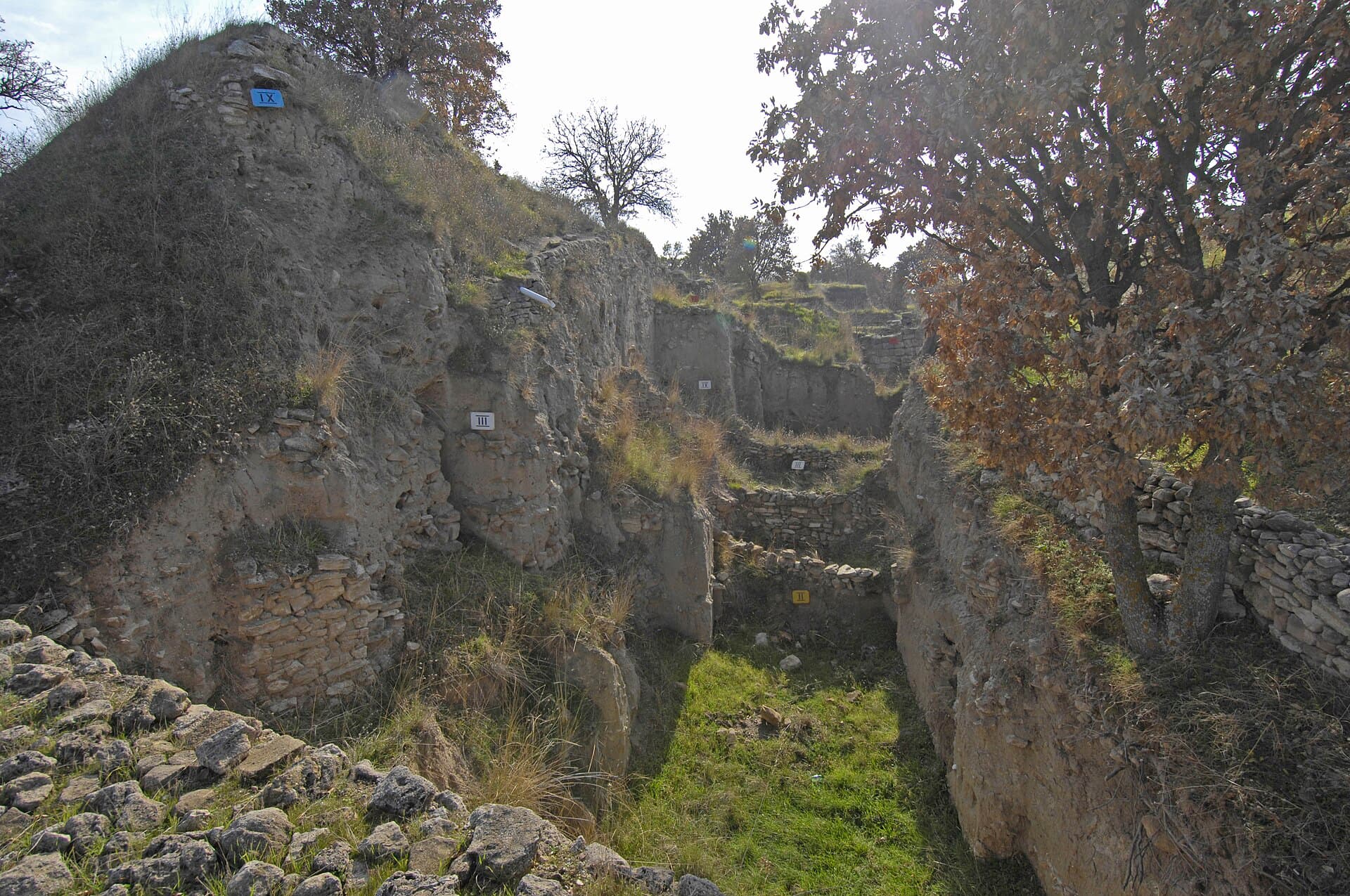
Heinrich Schliemann, convinced Homer's Troy lay near bedrock, cut this trench through the mound from 1871, using picks, dynamite and up to 150 labourers a day to reach the earliest layers fast. He found gold here on 31 May 1873, in a layer he named 'Priam's Treasure' and smuggled out of Ottoman Turkey — later shown to belong to Troy II, roughly a thousand years too early for any plausible Trojan War.
Covered by the general Troy site ticket — no separate charge.
20 minSteep, unfenced or lightly fenced drops in places — keep well back from the edge, especially with children.Little on-site interpretation at the trench itself; the story only makes sense if you already know it or are with a guide.
Look for: The sheer cut sides of the trench, still showing the compressed layers of separate cities as bands of differently coloured earth and stone — read top to bottom as more recent to more ancient.
Verified · · 1 min to Walls of Troy · 6 min to Sanctuary of Athena & Roman Ilium
Troy's Bronze Age city burned around 1180 BC — and Greeks and Romans kept coming back to worship here for another fifteen hundred years.
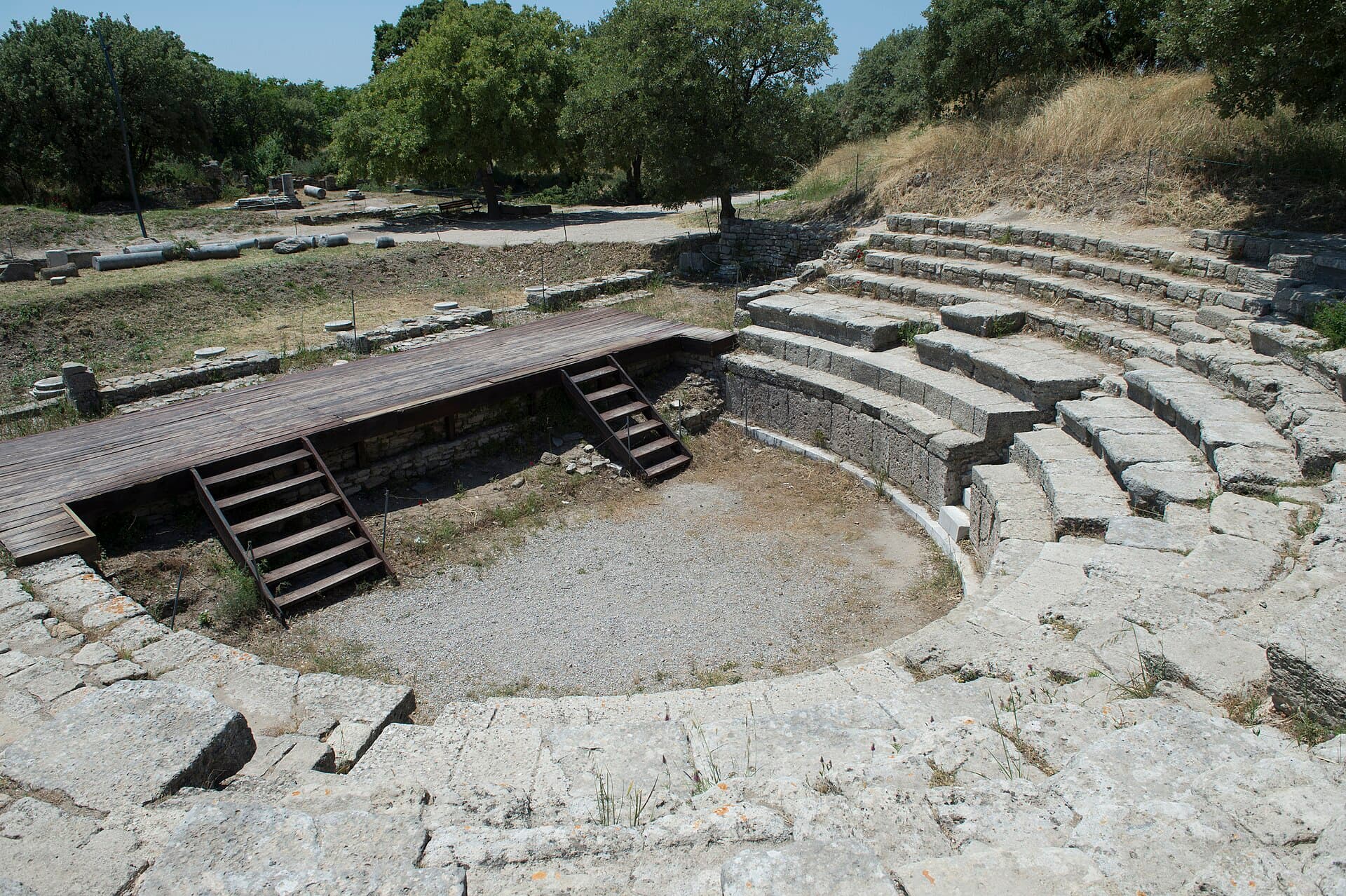
Rebuilt as the Greek Ilion and then the Roman Ilium, this north-eastern sanctuary to Athena drew Xerxes in 480 BC and Alexander the Great in 334 BC, both sacrificing before crossing into Asia or Europe. Julius Caesar and Augustus, whose family claimed descent from the Trojan prince Aeneas, funded rebuilding; Roman-era remains include a bouleuterion and an odeon near the old agora.
Covered by the general Troy site ticket.
30 minLow, foundation-level remains only — no standing structures; this is a site for people who already know the story, not a visual showstopper.Unshaded like the rest of the hilltop circuit.
Look for: Foundations of the Temple of Athena and altar area, and, near the agora, the odeon and bouleuterion — a concert hall and council house built centuries after the Bronze Age walls fell, for a city important for the wrong reasons.
Verified · · 5 min to Walls of Troy · 6 min to Schliemann's Trench
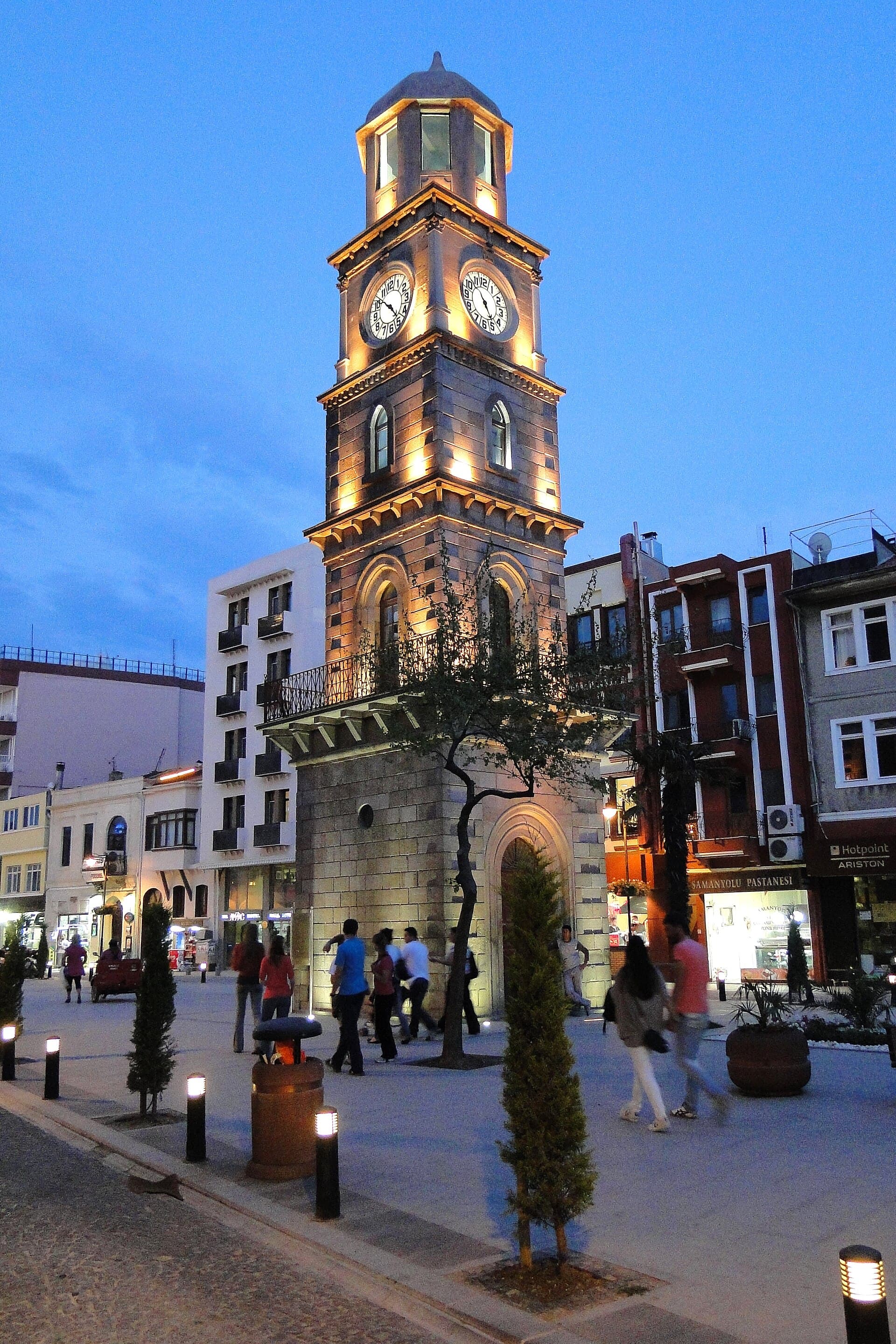
A working ferry harbour, an 1897 clock tower, and a street of fish restaurants — Çanakkale's evening life on one stretch of waterfront.
The Ottoman clock tower on Cumhuriyet Meydanı was built in 1897, five storeys and 20 metres tall, and still marks the centre of town. Aynalı Çarşı, the covered bazaar a few streets back, dates to 1889. Çanakkale grew as a garrison and customs town controlling the strait; a university, founded in 1992, now gives the waterfront its student energy.
Free to walk; restaurant and café prices vary widely by street.
120 minThis is a real town centre, not a pedestrianised tourist zone — normal traffic runs along parts of the waterfront road.Restaurant prices on the main Kordon strip run higher than a block inland; walk to Fetvane or Matbaa for better value.War memorials along the promenade are easy to stumble into without context — see practical.etiquette if visiting during the mid-March or late-April commemoration weeks.
Look for: The clock tower lit at night, ferries crossing continuously behind it, and Fetvane and Matbaa streets a block inland, where the bars and fish restaurants concentrate.
Architect İzzet Senemoğlu built this horse in 1975 from around 25 cubic metres of pine cut on nearby Kaz Dağı (Mount Ida), to give visitors something to climb into at the entrance to the ruins. It predates the 2004 film Troy and the film-prop horse in Çanakkale city by almost thirty years.
Covered by the general Troy site ticket.
Steep internal stairs and low headroom on the upper level — supervise children and mind your head.Can queue up when tour groups arrive together, right at the entrance bottleneck.
Built in 1889, reportedly with funding from the merchant Elijah Haliyo, and designed on the model of Istanbul's Mısır Çarşısı (Spice Bazaar). The name — 'Mirrored Bazaar' — is usually explained by mirrors once placed to spread daylight from the roof, though some local accounts trace it instead to eyeglasses once sold there.
Free to browse; goods at normal market prices.
A working market with ordinary shop hours — quiet on Sundays and in the evening, unlike a tourist-oriented bazaar.The name story (mirrors vs. eyeglasses) is genuinely disputed locally — don't present either version as settled fact.
Güzelyalı grew as a seaside village on the Dardanelles shore south of central Çanakkale, backed by pine woods and facing the strait. It's the standard local answer to 'where do you swim' for a city that otherwise sits on a working shipping channel, not a beach coastline.
Free public beach; sunbed and umbrella hire paid locally.
Sources disagree on the exact distance from central Çanakkale (12–15km) — allow time either way; dolmuş minibuses run from the city centre.Facilities are basic and seasonal — don't expect a resort-standard beach club.