Troy Museum
Opened in 2018 in a rusting steel cube — and it now holds nearly everything that makes Troy worth the trip.
Enough context, no spoilers
Why it matters
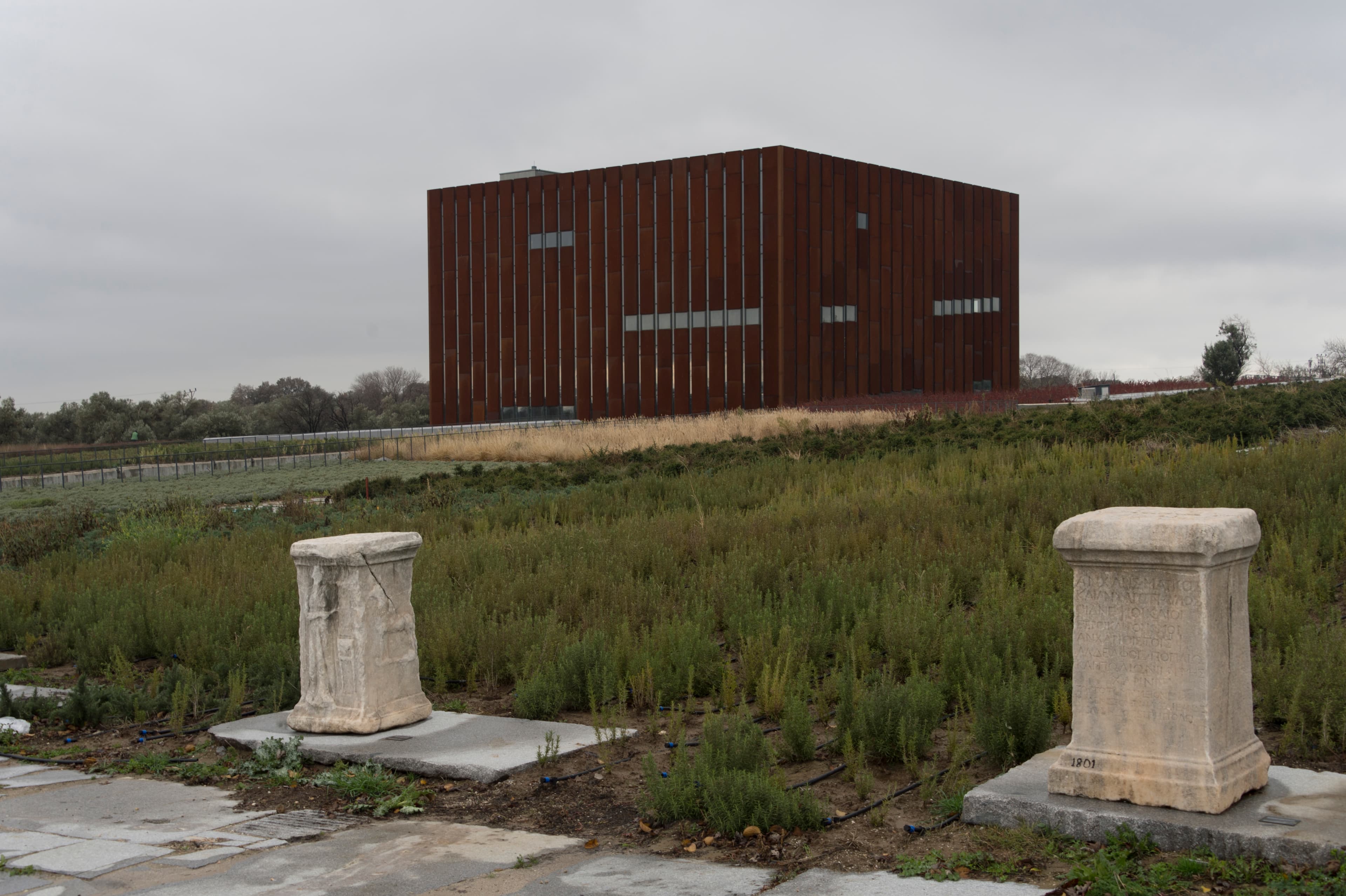
Opened 10 October 2018, in Turkey's declared 'Year of Troy,' after a design competition won by Yalın Mimarlık in 2011. The 32-by-32-metre Corten-steel cube displays around 2,000 objects from a collection of over 40,000, from Troy and neighbouring Troad sites — including finds moved here after Çanakkale's old city-centre museum closed. Won the 2020 European Museum of the Year Special Appreciation Award.
What to know before you go
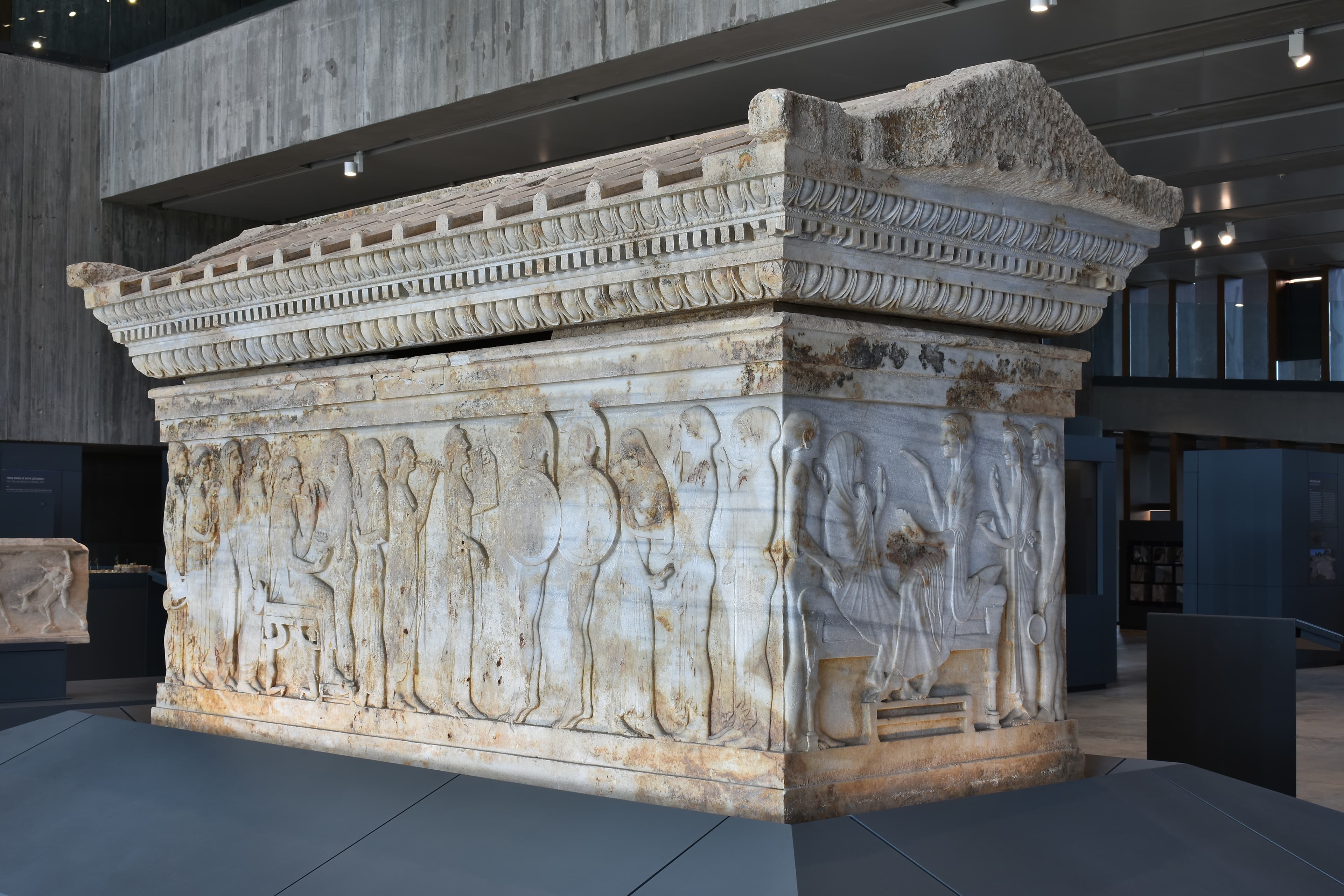
Treat this as the second half of the Troy visit, not an optional add-on, because the museum is where the site stops being an abstraction. The building itself announces the idea: a 32-metre steel cube whose Corten cladding is designed to rust, so that a modern museum slowly comes to look like something excavated rather than built — an award-winning piece of architecture that opened in October 2018, during the year Turkey formally marked as the 'Year of Troy.' Inside, four floors carry you from the Early Bronze Age to the Ottoman period using around two thousand objects pulled from a regional collection of more than forty thousand, and the arrangement does real work: you leave understanding the nine-layer chronology that the ruins themselves scramble underfoot. Two objects justify the trip on their own. The Polyxena Sarcophagus, found nearby in 1994, is a painted marble coffin from the sixth century BC, among the very earliest sarcophagi anywhere in Anatolia carved and painted with narrative scenes rather than left plain — a genuinely startling survival, both for its age and for how much of the paint remains. And there is gold: wreaths, jewellery and grave goods lifted from the Dardanos Tumulus nearby, real evidence of the wealth this stretch of coast controlled. The Trojan gold you may already know about — Priam's Treasure, the hoard Schliemann smuggled out of Ottoman Turkey in 1873 and eventually gave to Berlin — is not here and never will be; the Red Army seized it from a Berlin bunker in 1945, and it has sat in Moscow's Pushkin Museum since, the subject of an unresolved restitution dispute between Russia and Germany that has nothing to do with Turkey at all. What you'll see instead are electrotype casts alongside a case explaining exactly where the originals went and why — an honest gap, better than pretending it isn't there. One ticket now covers the museum and the archaeological site together, so there's no reason to skip it: budget the indoor hour and a half for here, ideally in the early afternoon, when the site itself is at its hottest and least comfortable to be standing on.