Walls of Troy
Nine cities buried in one small hill — and the layer likeliest to be Homer's Troy is a hard, unglamorous thing to stand in front of.
Enough context, no spoilers
Why it matters
Settled from around 3000 BC and rebuilt at least nine times, most recently as Roman and Byzantine Ilium. Heinrich Schliemann began digging in 1871, convinced Homer's Troy lay near the bottom; later excavators redated the likeliest Trojan War layer to Troy VI or VIIa, roughly 1300–1180 BC. Manfred Korfmann's 1988–2005 campaigns found a lower city at least ten times the citadel's size.
What to know before you go
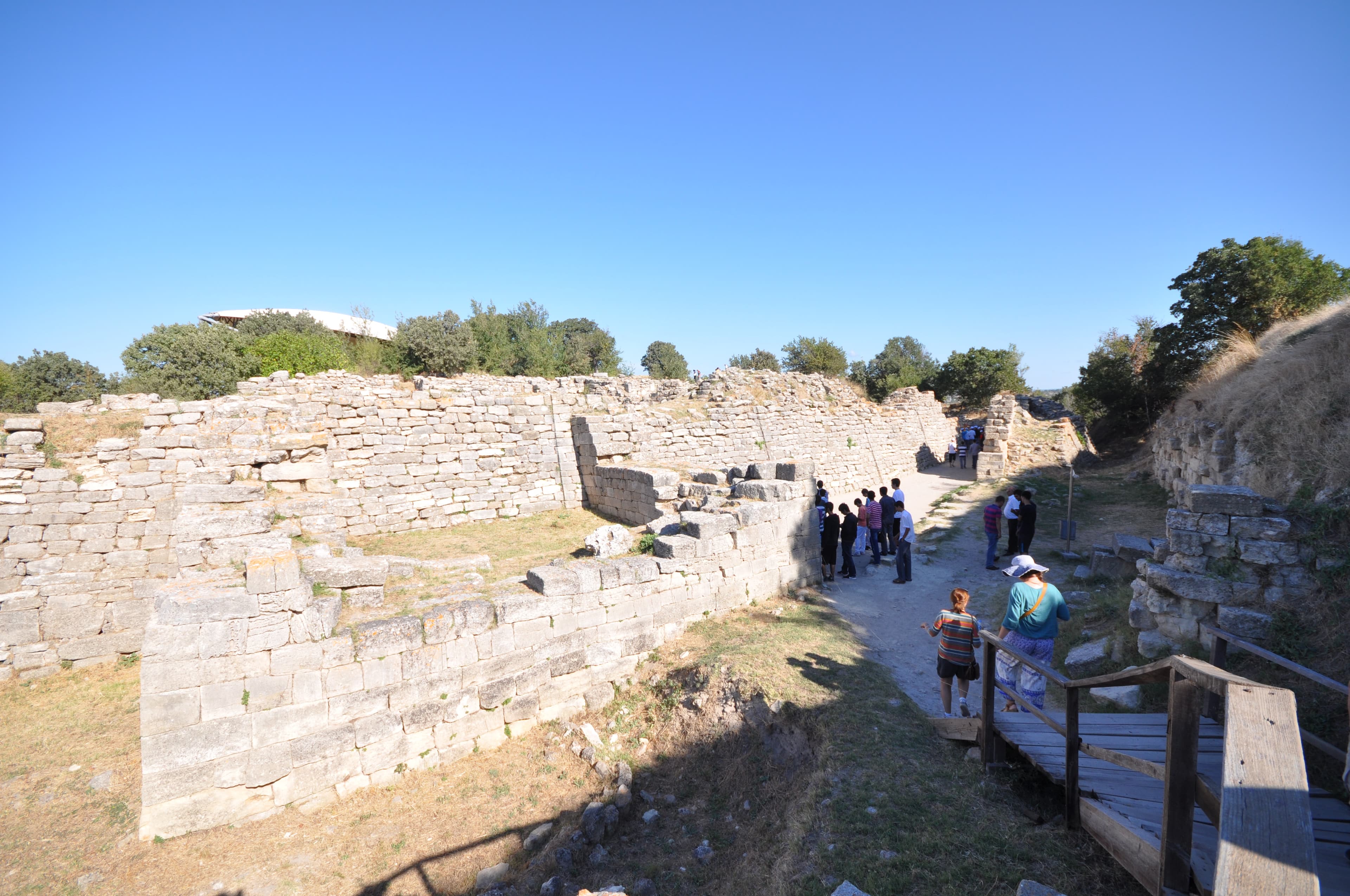
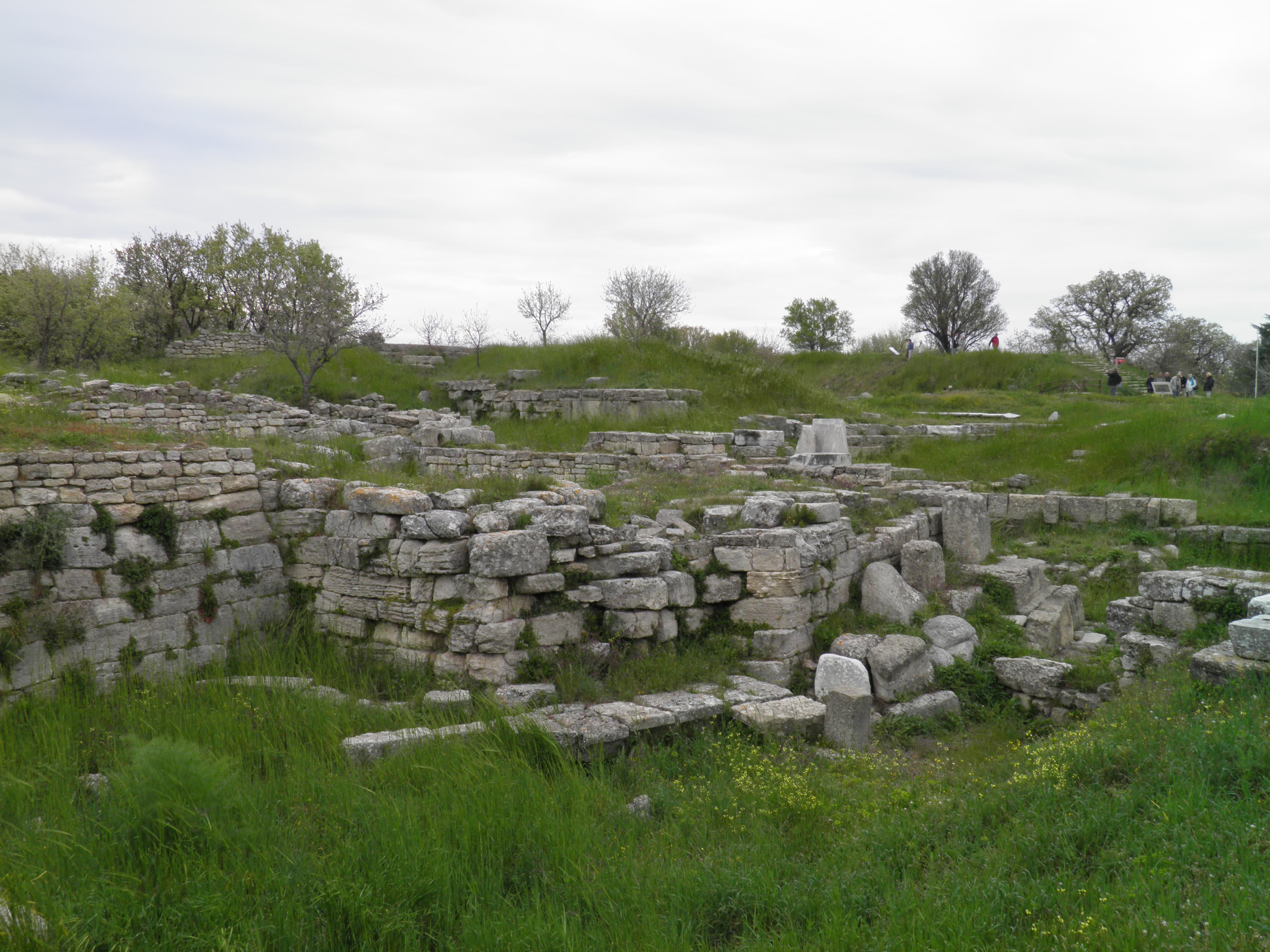
Be honest with yourself about what you're coming to see, because Troy disappoints more visitors than almost any other famous ruin in Türkiye, and the disappointment is almost always the same one: it's small. The circuit of exposed walls at Hisarlık is a few hundred metres around, sitting on a low mound you can walk the whole way round in twenty minutes, and unless you arrive already knowing what you're looking at, a lot of it reads as low stone footings and a confusing tangle of trenches from nine different centuries stacked on top of each other. If you came expecting something like the Library of Celsus at Ephesus — a facade you can photograph and understand in one glance — Troy will not give you that. What it gives you instead is a harder, more interesting kind of proof. This actually is the place: a real Bronze Age citadel, burned and rebuilt across four thousand years, matching the location and the geography the Iliad describes closely enough that serious archaeologists have stopped arguing about whether Homer's Troy is here and argue instead about which of the nine burned layers it was. The walls you're standing beside — sloped, offset, built to make attackers expose their unshielded side — belong to Troy VI or VIIa, the two layers now generally accepted as the best fit for a war around 1200 BC. And here is the fact that actually fixes the size problem, if you let it: what you're walking through is only the citadel, the fortified top of the hill where the rulers lived. In the 1990s, geophysical survey found a much larger lower town buried under the surrounding fields — at least ten times the citadel's footprint — that nobody excavated and nothing marks. Troy was never this small. You are seeing the acropolis of a real city whose streets are still under the wheat. Walk it in the first hour after opening, before the coach groups, with that fact in your head rather than a picture of a wooden horse and flaming towers, and the hard, unglamorous stones start to make a different kind of sense. Give the museum the rest of your morning — it's where the objects that make this place feel inhabited actually are.