Schliemann's Trench
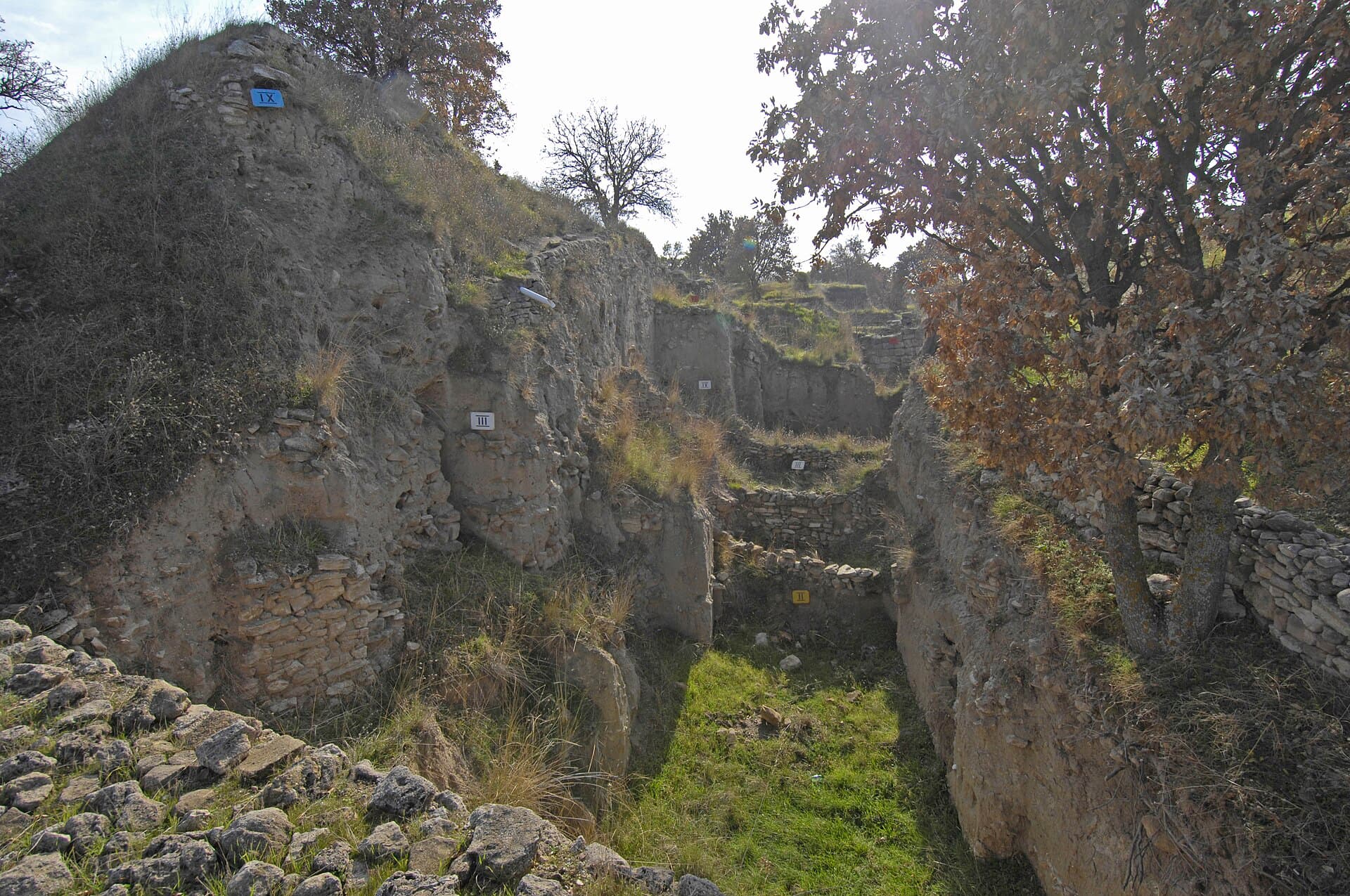
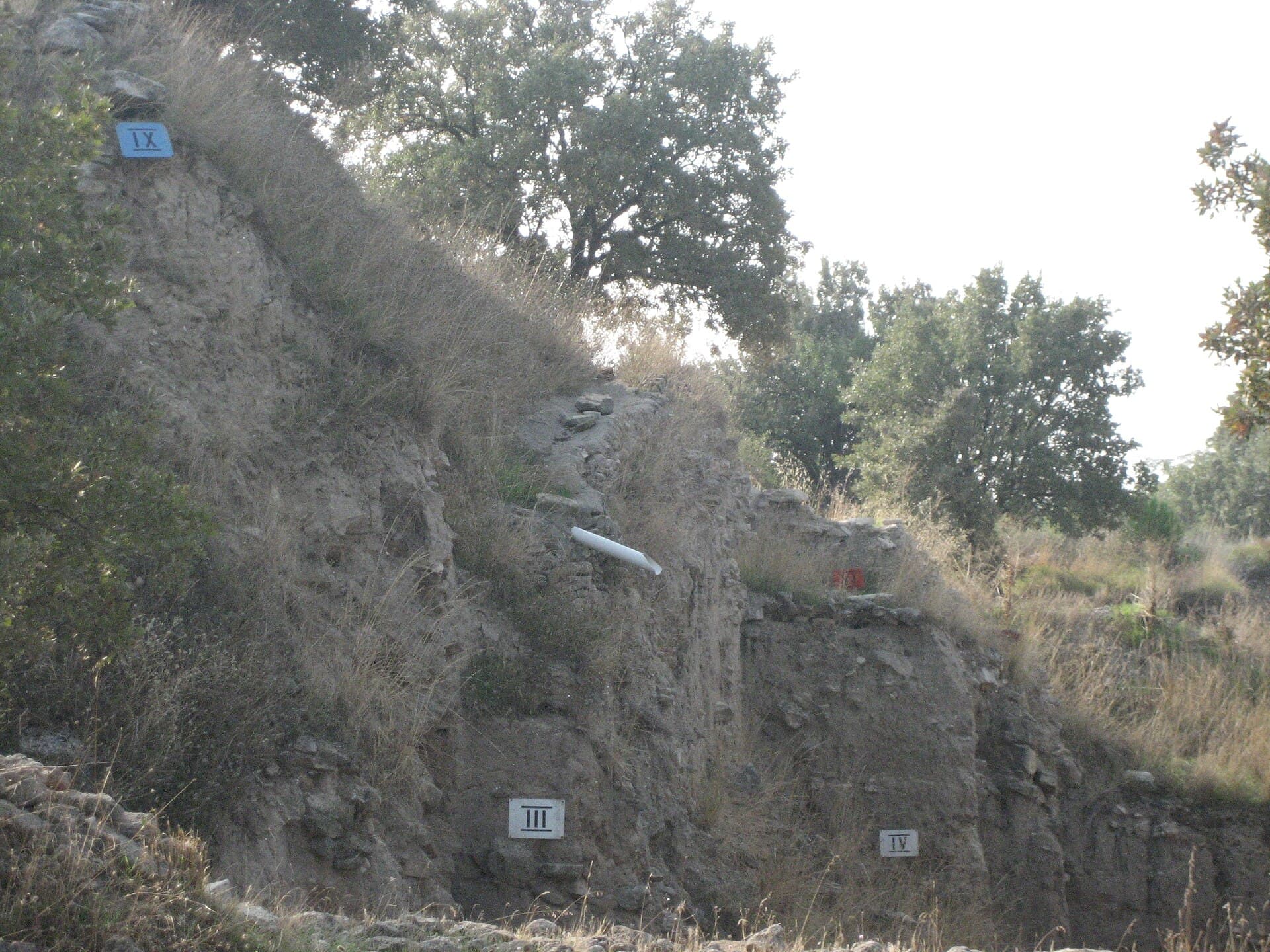
A raw 15-metre gash cut through four thousand years of the city — the most honest monument at Troy to what early archaeology cost.
Enough context, no spoilers
Why it matters
Heinrich Schliemann, convinced Homer's Troy lay near bedrock, cut this trench through the mound from 1871, using picks, dynamite and up to 150 labourers a day to reach the earliest layers fast. He found gold here on 31 May 1873, in a layer he named 'Priam's Treasure' and smuggled out of Ottoman Turkey — later shown to belong to Troy II, roughly a thousand years too early for any plausible Trojan War.
What to know before you go
This ugly gouge through the mound is, in its way, the most truthful thing at Troy, because it shows you exactly what it cost to find the place. Heinrich Schliemann arrived in 1871 already certain Homer's Troy lay at the bottom of the hill, and rather than excavate carefully layer by layer, he drove a trench straight down toward bedrock — at points over fifteen metres deep, cut with pick, shovel and dynamite by a workforce that ran to a hundred and fifty men a day. He was in a hurry to prove a theory, and the trench is what a hurry looks like: it tore straight through the Bronze Age citadel walls that are now understood to be the actual candidate for Homer's Troy, destroying stratigraphy that no later archaeologist could ever put back. On 31 May 1873, in this cut, Schliemann's workers uncovered a hoard of gold jewellery, weapons and vessels that he named Priam's Treasure on the spot, had his wife photographed wearing, and smuggled out of Ottoman territory piece by piece rather than hand over the legally required share. It made him instantly, permanently famous. It was also wrong: later, more careful excavation showed the treasure belonged to Troy II, a city that burned roughly a thousand years before any plausible date for the Trojan War — Schliemann had dug straight past the layer he was looking for without recognising it. The gold itself has its own second story. Ceded to Berlin in 1881 after an Ottoman lawsuit, moved to a bunker in 1945, seized by the Red Army as the war ended, and only publicly acknowledged by Moscow's Pushkin Museum in 1994 — it is still there now, unrestituted, a quiet diplomatic argument between Russia and Germany that nobody expects to resolve soon. None of that is visible standing here. What you actually see is a raw earthen wall with the compressed evidence of nine cities showing as bands of different soil and stone, and a rope keeping you back from the edge. Look at the depth before you look at anything else at Troy — it is the clearest physical measure of how much time, and how much was destroyed to reach it, this hill actually holds.