Sanctuary of Athena & Roman Ilium
Troy's Bronze Age city burned around 1180 BC — and Greeks and Romans kept coming back to worship here for another fifteen hundred years.
Enough context, no spoilers
Why it matters
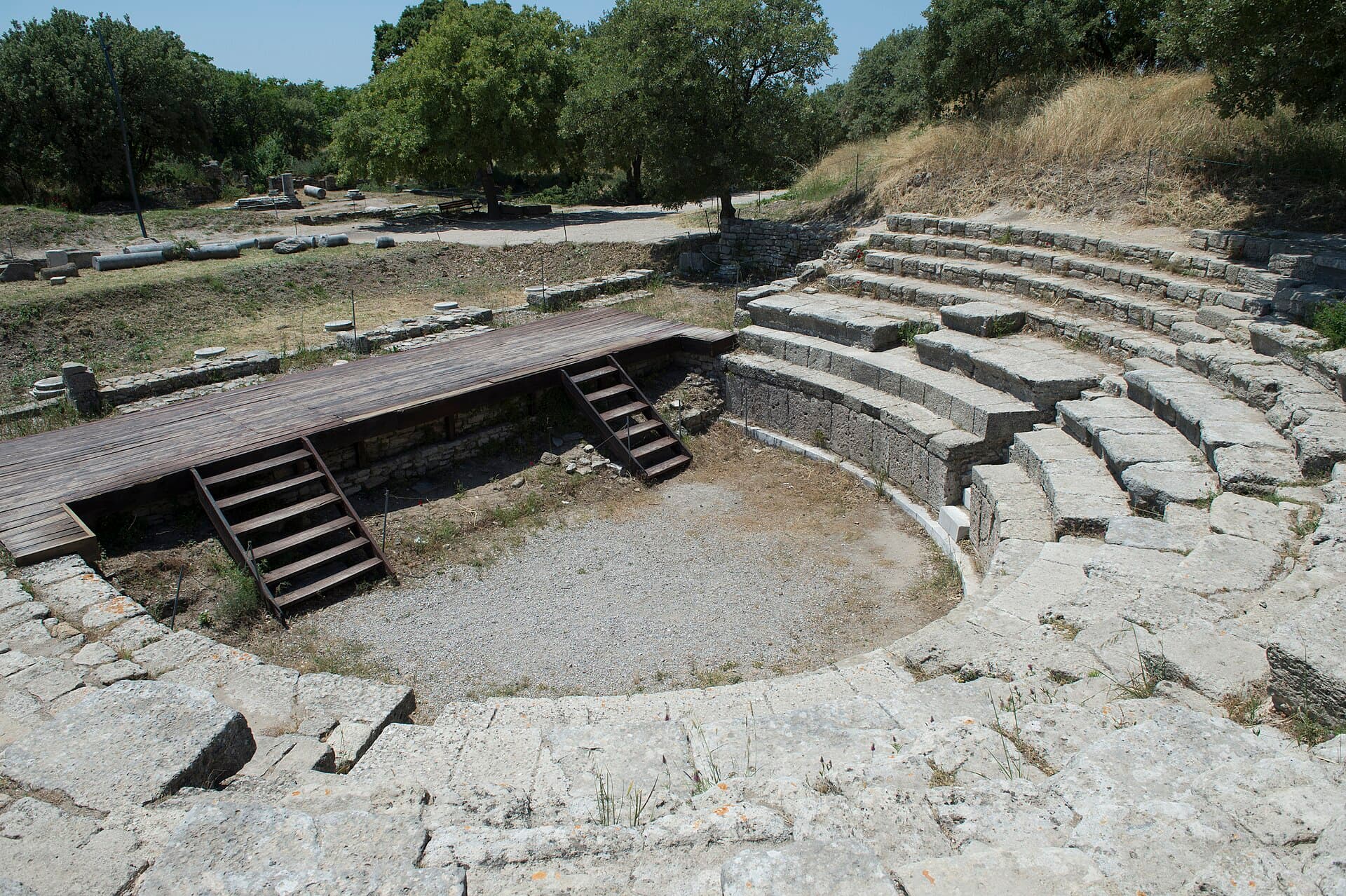
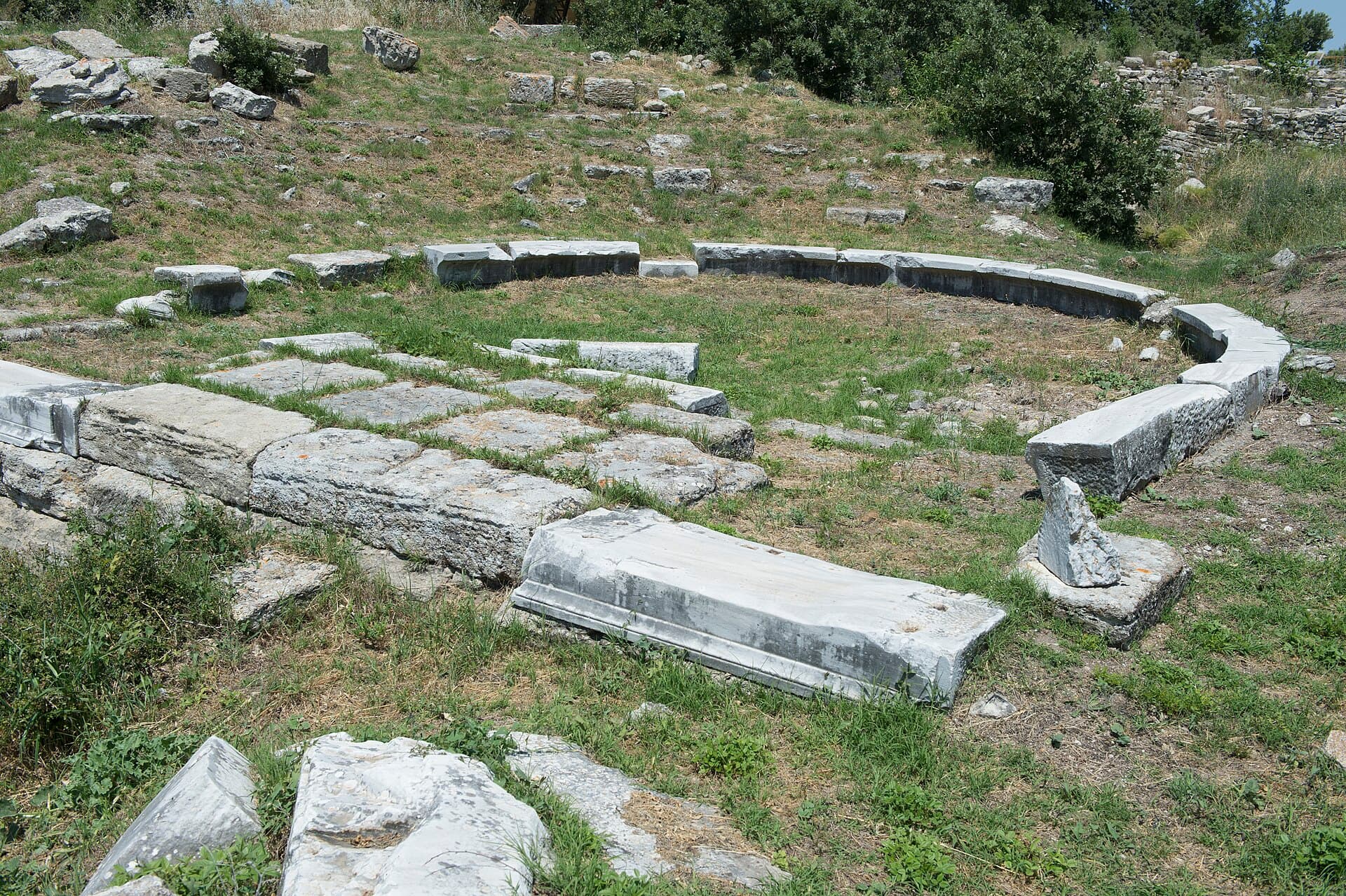
Rebuilt as the Greek Ilion and then the Roman Ilium, this north-eastern sanctuary to Athena drew Xerxes in 480 BC and Alexander the Great in 334 BC, both sacrificing before crossing into Asia or Europe. Julius Caesar and Augustus, whose family claimed descent from the Trojan prince Aeneas, funded rebuilding; Roman-era remains include a bouleuterion and an odeon near the old agora.
What to know before you go
The single fact that reframes all of Troy is this: the Bronze Age citadel most people come for was only ever half the story, and arguably not even the more consequential half. Troy VIIa, the layer likeliest to be Homer's city, burned around 1180 BC and was never rebuilt at anything like its old importance as a Bronze Age power. But the site itself never stopped being visited, and for the next millennium and a half it mattered more as an idea than as a city. Xerxes stopped here in 480 BC on his way to invade Greece and sacrificed to Athena, according to Herodotus, treating Troy as sacred ground before turning it into a war zone all over again. A century and a half later Alexander the Great came the other way, sacrificed at the same sanctuary, and reportedly ran naked around what was shown to him as the tomb of Achilles — a Macedonian king performing Homeric ritual as political theatre before his own invasion of Asia. Rome took the theatre furthest. Julius Caesar's family, the Julii, claimed direct descent from the Trojan prince Aeneas by way of his son Iulus, and once that genealogy became useful, Rome started treating Ilium — the Greek and Roman city that had grown up on and around the old citadel — as its own ancestral home. Augustus funded building here; later emperors kept the privileges flowing. What survives from that long Roman afterlife sits near the old agora: a compact odeon for recitals and music, and beside it a bouleuterion, a council house, both put up for a working provincial town that had every reason to keep its founding myth in good repair. None of this is dramatic to look at — low walls, a shallow curve of seating, foundation courses in the grass — but it answers the question the Bronze Age ruins can't: why anyone with an empire to run kept coming back to a small hill in the Troad for another thousand years after the war that supposedly made it famous was over. Come here after the main citadel, once you already have the size problem in perspective, and the sanctuary reads as evidence rather than an afterthought.