Getting there
Antalya Airport (AYT) connects to the centre by AntRay tram, municipal buses, taxi, and road transfer. Check Antalyakart for current public-transport times.
Mediterranean
Ancient cities, sea light
Antalya works best as two journeys at once: a walkable old harbour city and a base for the great ancient landscapes of Pamphylia and Lycia. Choose a few sites, leave room for the coast, and avoid turning its distances into a checklist.
Every published place in one city guide
Start with the essentials, add what genuinely interests you, and leave the rest for another visit. Every place includes a concise story, practical timing, a Maps link, and a one-tap route planner action.
Make the route work
Antalya Airport (AYT) connects to the centre by AntRay tram, municipal buses, taxi, and road transfer. Check Antalyakart for current public-transport times.
Kaleiçi is best explored on foot. Perge and Lower Düden are closer to the centre; Aspendos, Termessos, Phaselis, Side, and Olympos need separate half- or full-day transport plans.
Carry a payment card and some Turkish lira for small purchases. Museum and archaeological-site prices can change, so confirm the official rate before leaving.
Mobile coverage is generally strong in the city; signal can weaken on mountain trails and remote archaeological sites. Download maps before Termessos.
Dress respectfully around active mosques, keep narrow old-town lanes clear, and never climb or sit on archaeological remains.
Summer heat is the main planning risk. Start exposed ruins early, carry water and sun protection, and use sturdy footwear at Termessos and other uneven sites.
Essential
If you only have one day, this is the day.
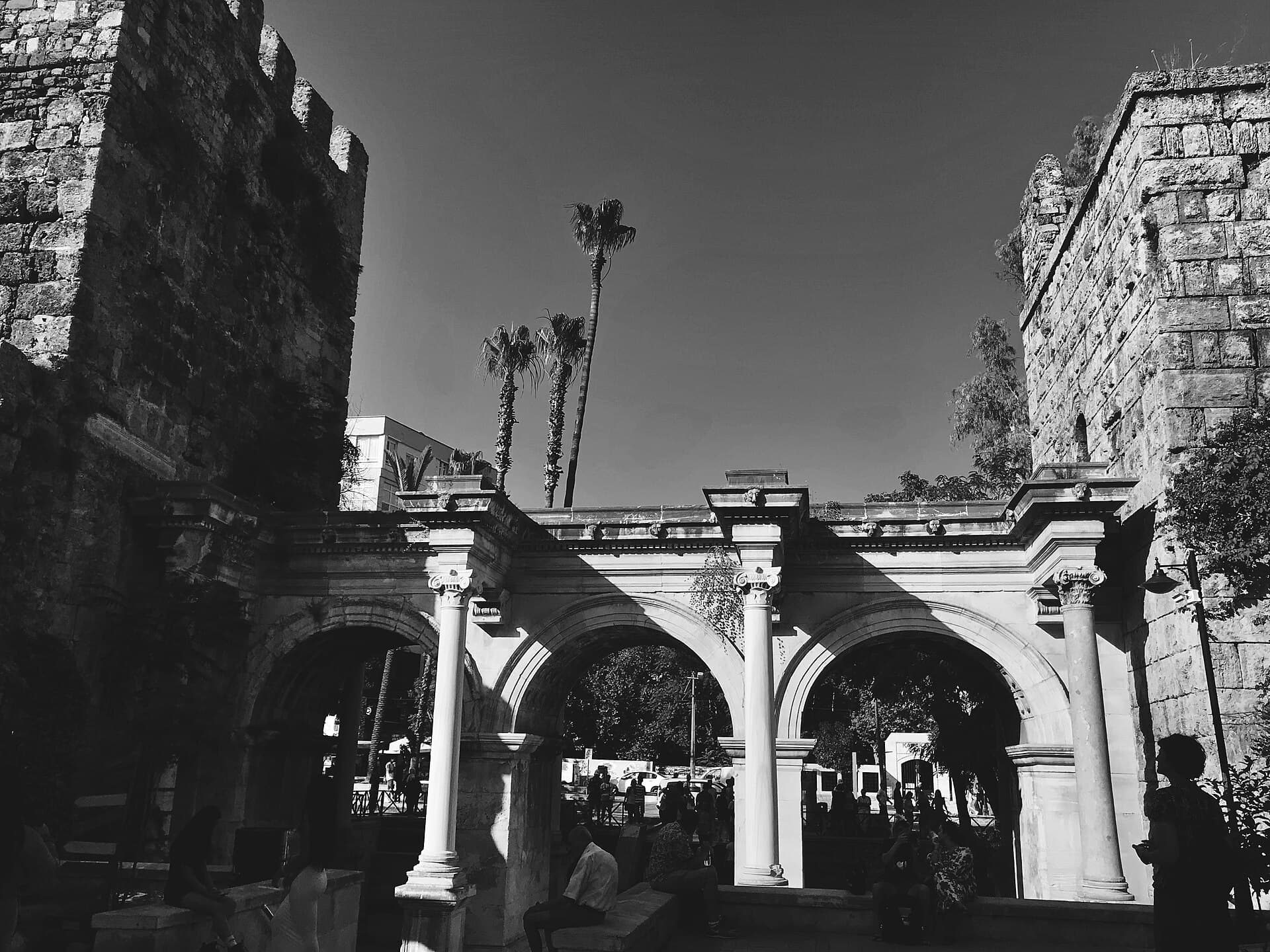
Enter Antalya through a Roman gate, then follow layered streets down to the old harbour.
Attaleia was founded under Pergamon and later became a Roman, Byzantine, Seljuk, and Ottoman port. Hadrian's Gate commemorates the emperor's visit in 130 CE; the lanes inside preserve fragments from many later lives of the city.
Free public area
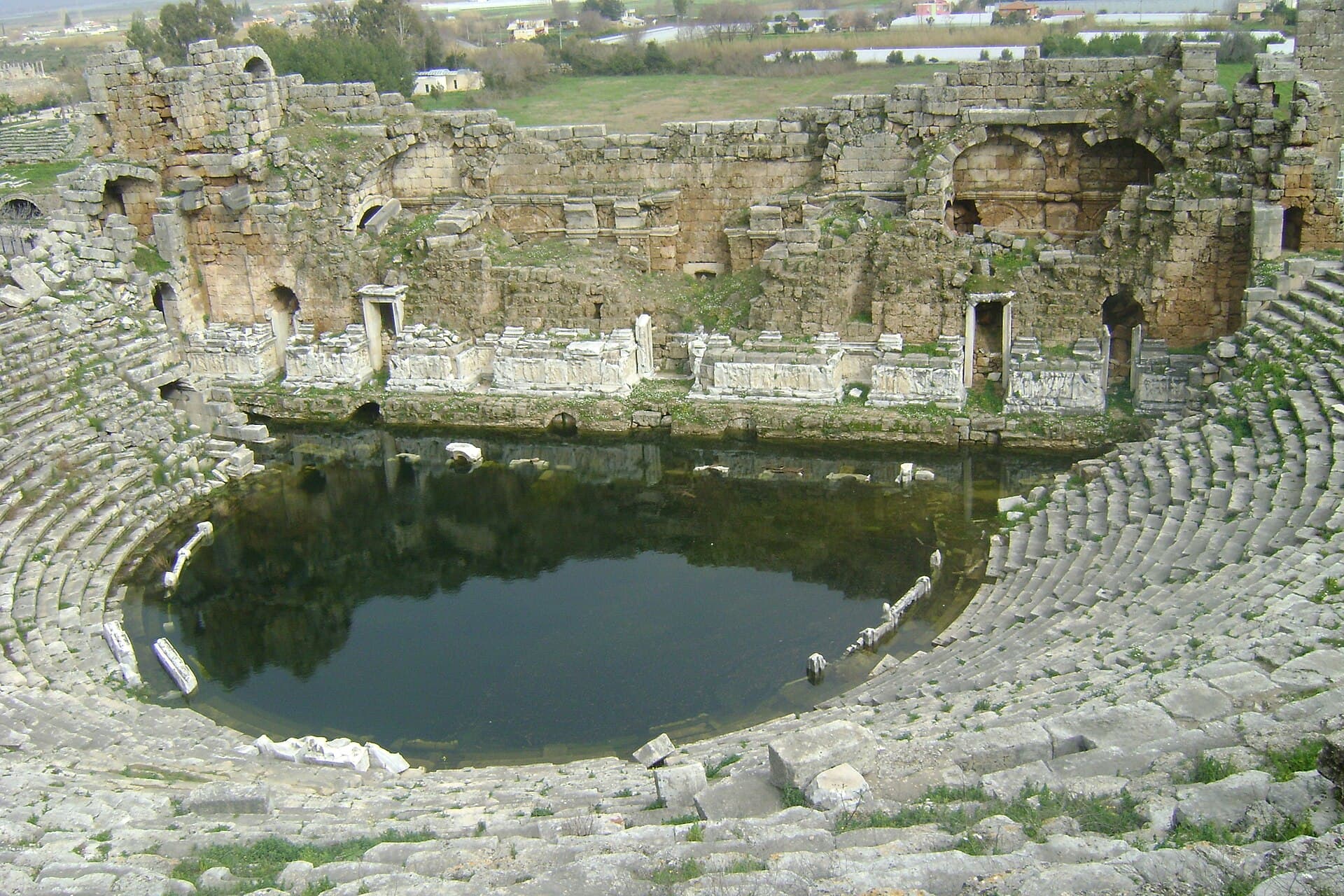
Walk a Roman city whose water channel, baths, stadium, and colonnaded streets still read as one plan.
Known as Parha in Hittite-period evidence, Perge became one of Pamphylia's major cities. Its Roman streets and sculpture programme were especially ambitious, while finds from the site now shape the collections associated with Antalya Museum.
Ticketed; check the official museum site for the current foreign-visitor rate
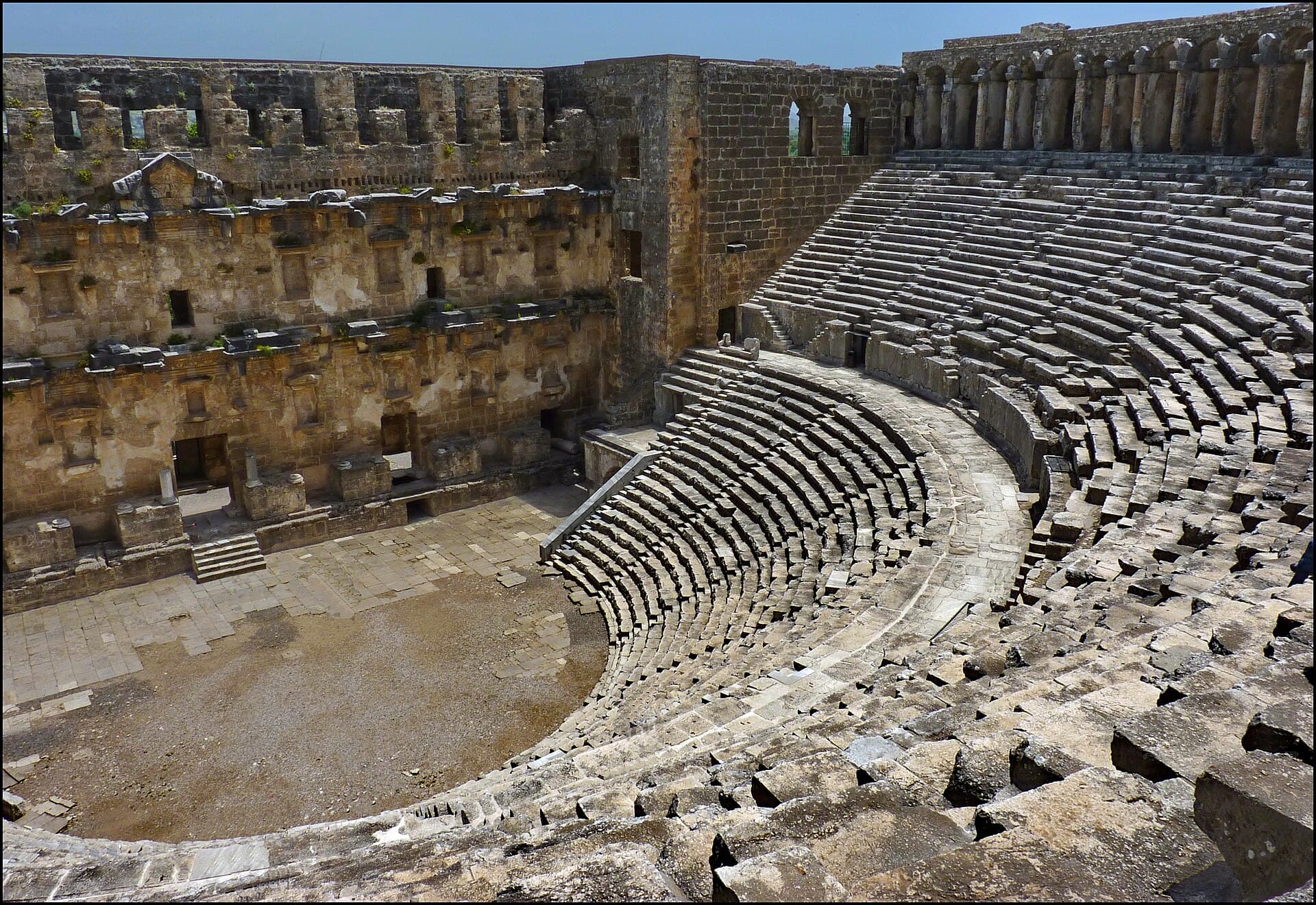
See the celebrated theatre, then climb beyond it to discover that Aspendos was an entire river city.
Aspendos grew near the Eurymedon River and issued its own coinage. Its second-century Roman theatre is exceptionally well preserved, but the aqueduct system, basilica, agora, and acropolis show the larger city behind the famous façade.
Ticketed; current hours and event access vary
Worth your time
A second day earns you these.
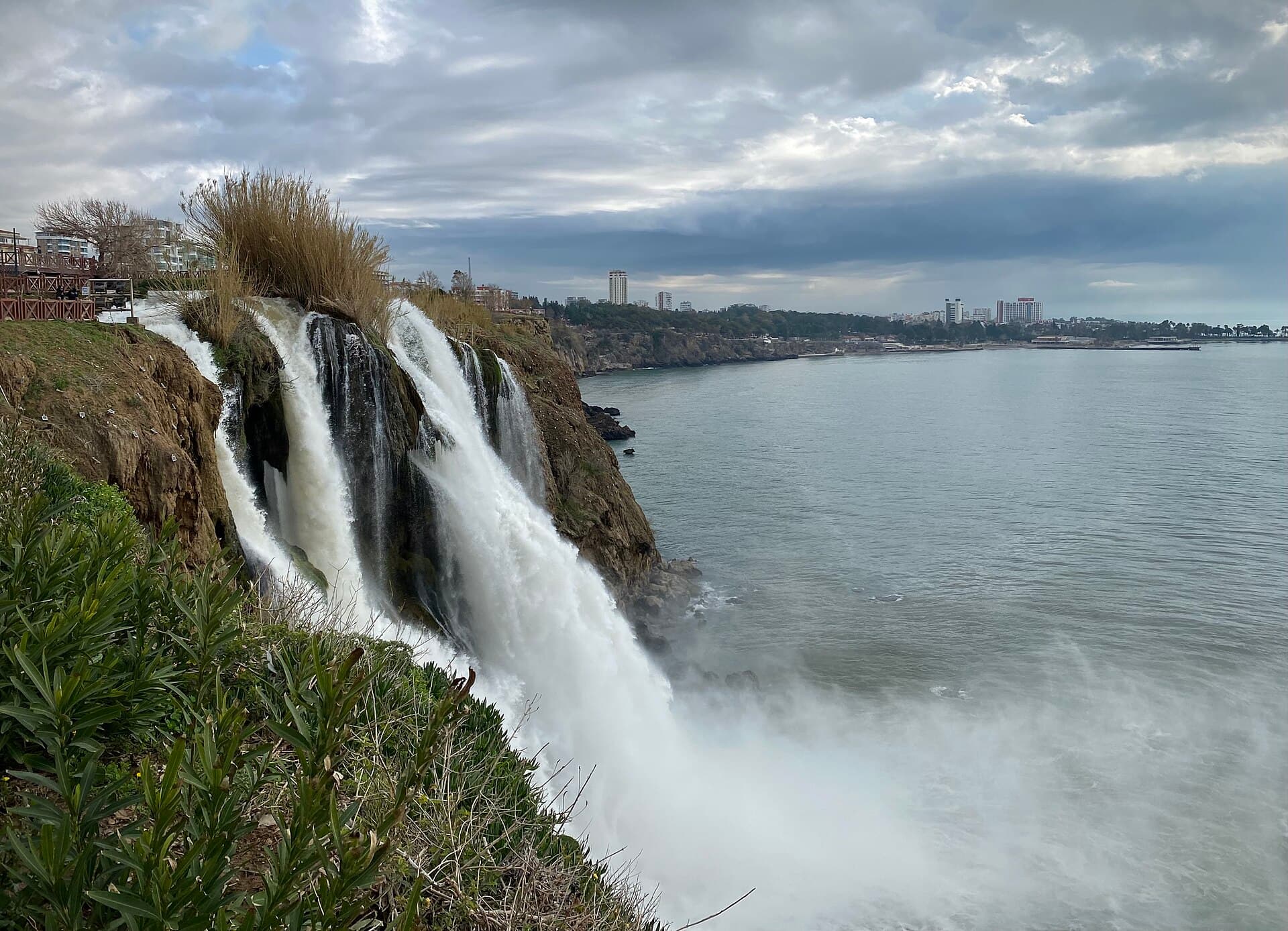
Watch the Düden River leave the city in one final drop straight into the Mediterranean.
The Lower Düden waterfall is the river's coastal finale, falling from Antalya's cliffs into the sea. It belongs to the modern city's everyday landscape as much as its visitor circuit, with viewpoints spread through Düden Park.
Free public park
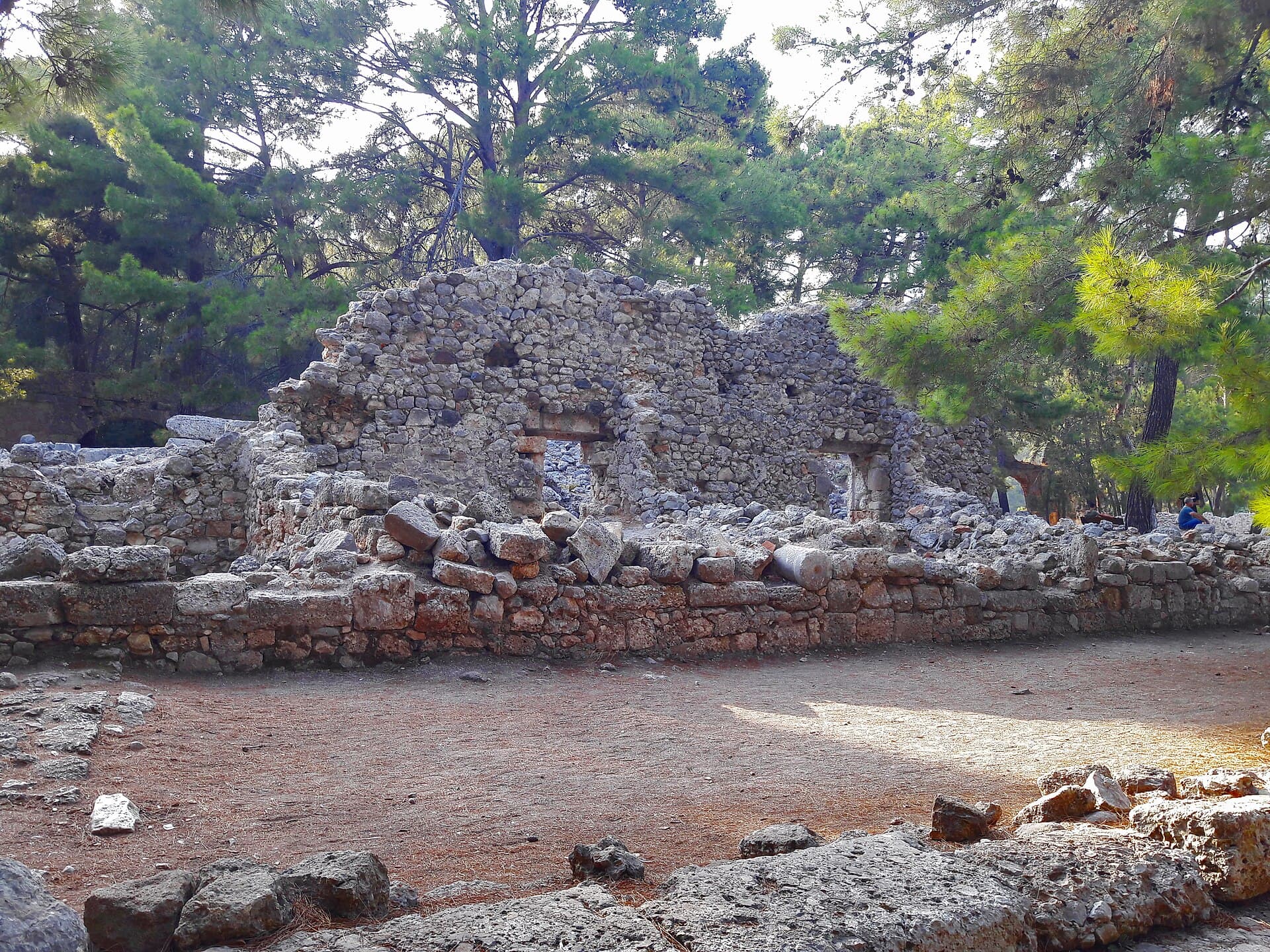
Follow a Roman street from harbour to harbour beneath pine trees, with the sea always close.
Founded as a port settlement in the seventh century BCE, Phaselis used three harbours to build a strong maritime trading role. Its visible Roman and Byzantine remains include an aqueduct, agoras, baths, theatre, and a street joining the bays.
Ticketed; check the official museum site for the current foreign-visitor rate
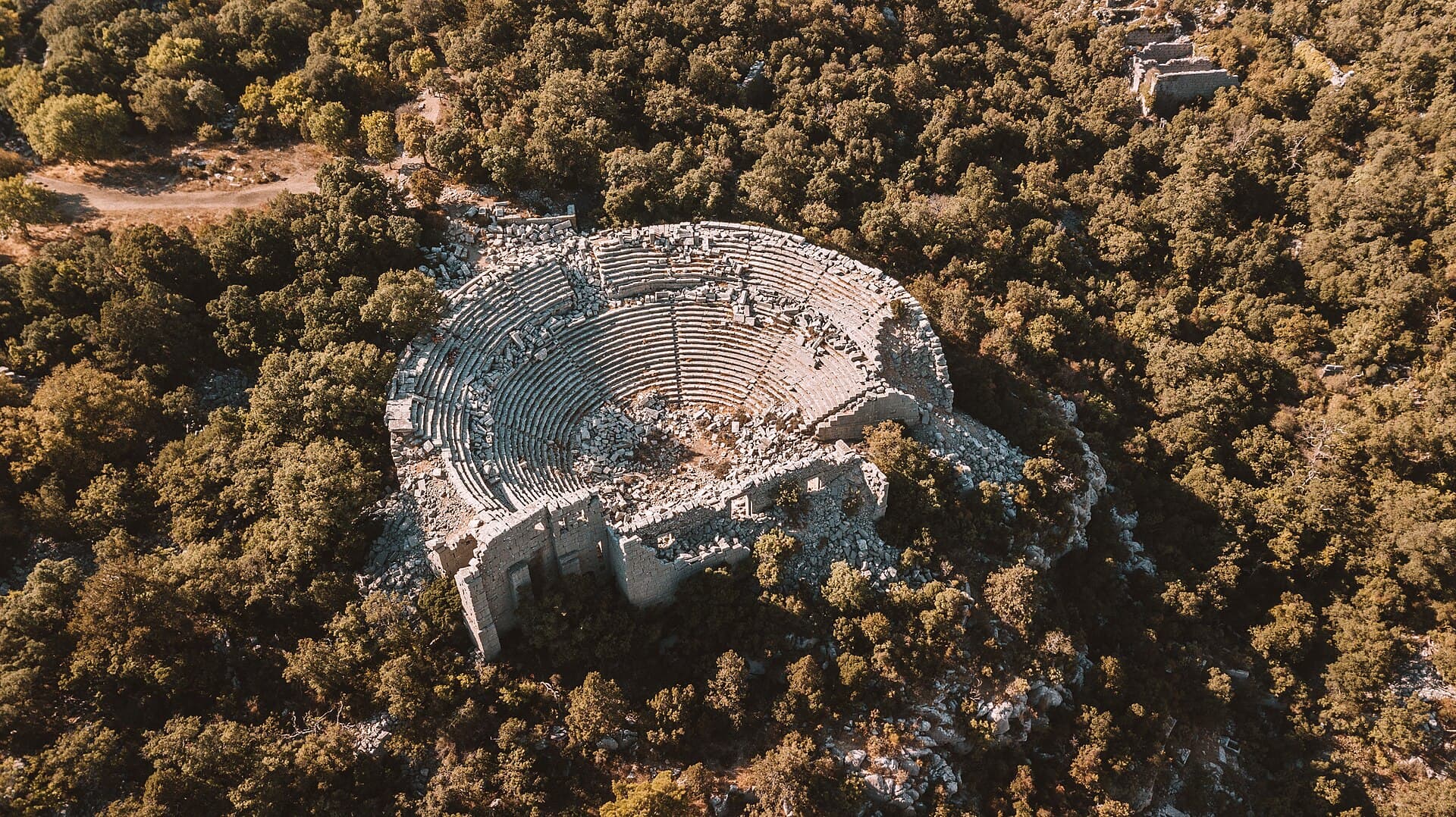
Hike into a mountain city where the theatre opens suddenly toward the peaks and forest.
Termessos was a Pisidian city built high on Güllük Mountain. It resisted Alexander the Great in 333 BCE and later prospered with substantial civic buildings, cisterns, temples, and necropoleis protected by difficult terrain.
Ticketed; check the current official rate
If you have longer
Keep these compact stops in mind when you build your trip.
Antalya Museum brings together finds from the province, including major sculpture groups from Perge and material spanning prehistory to later periods. The official 2026 notice currently lists the museum as closed.
Temporarily closed in the official 2026 notice; recheck before travelling
The Yivli Minare complex developed under Seljuk rule and became one of Antalya's clearest landmarks. Its fluted minaret, religious buildings, and surrounding remains connect the upper old city with later Turkish history.
Free exterior and public complex areas
Hıdırlık Tower stands at the southern edge of Kaleiçi and is generally dated to the Roman period, though its exact original function remains debated. Its setting now links the old walls with Karaalioğlu Park and coastal views.
Free exterior and park
Olympos was an important Lycian League city and later a Roman and Byzantine settlement. Its harbour history, river channel, tombs, baths, and churches now sit within dense vegetation near the coast.
Ticketed; verify current rate and beach access
Side was a major Pamphylian port whose visible remains include a theatre, city gates, baths, streets, and the seaside temples associated with Apollo and Athena. Modern streets now weave through the archaeological landscape.
Mixed free public areas and ticketed monuments
Karain Cave contains archaeological layers from the Palaeolithic and later periods. Finds from its chambers help document changing human occupation, environment, and material culture over an exceptionally long span.
Ticketed; verify current rate and access
Getting there and away
Door-to-door times and fare ranges, checked leg by leg. Only routes where every leg verified are listed.
Türkiye, for scale
See this city in the wider shape of Türkiye.