Termessos
Climb to the eagle's-nest city Alexander the Great looked at and chose not to fight — a theatre on a cliff edge.
Enough context, no spoilers
Why it matters
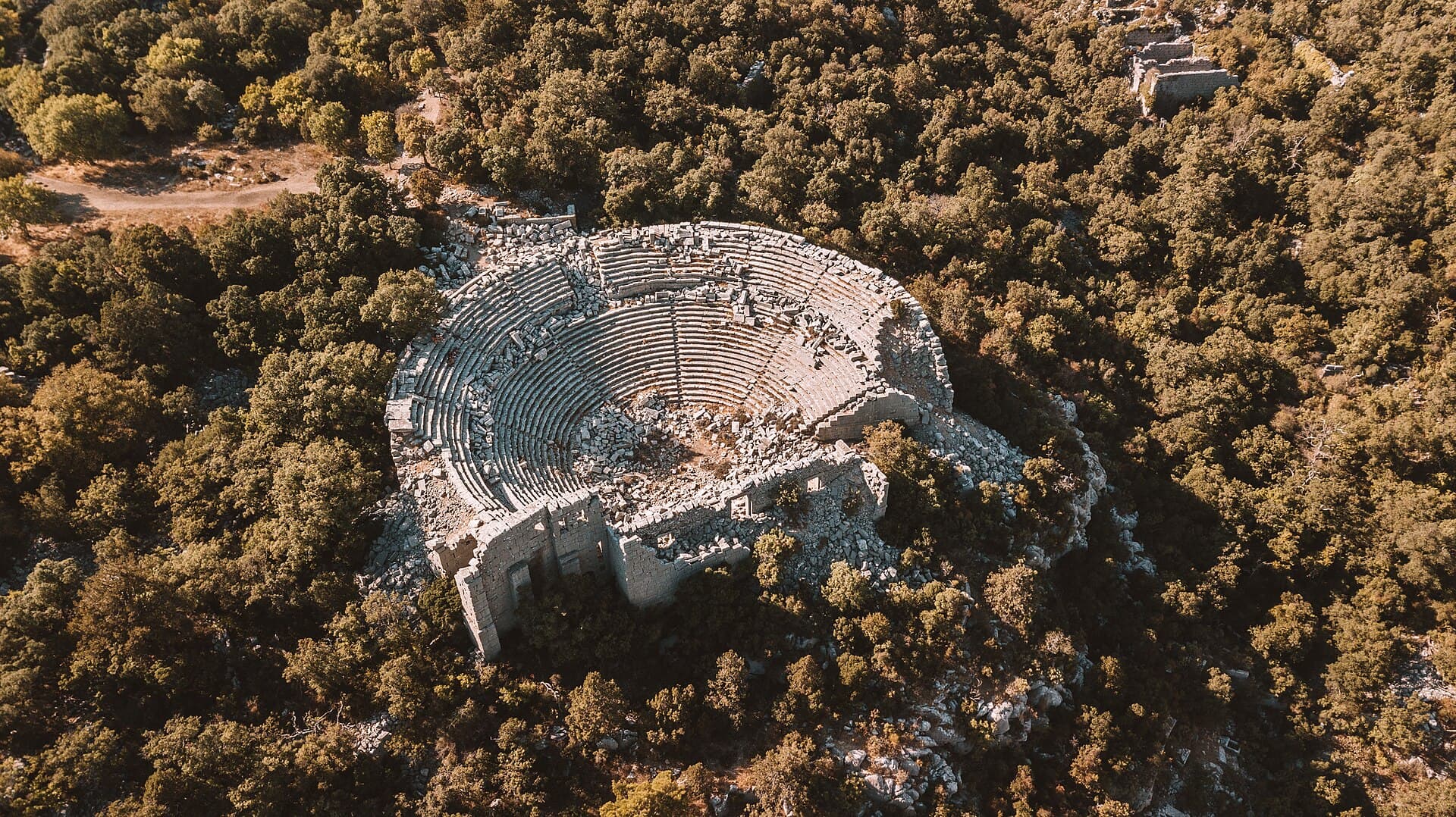
The Pisidians built Termessos high in the Taurus, and in 333 BC Alexander judged its defences too strong and marched on — one of the few cities to turn him away. Left independent, it grew into a wealthy mountain polis. Never overbuilt or easily looted, it keeps a theatre on the lip of a precipice, a colonnaded street, temples, cisterns, and a necropolis of tumbled sarcophagi in the pines.
What to know before you go
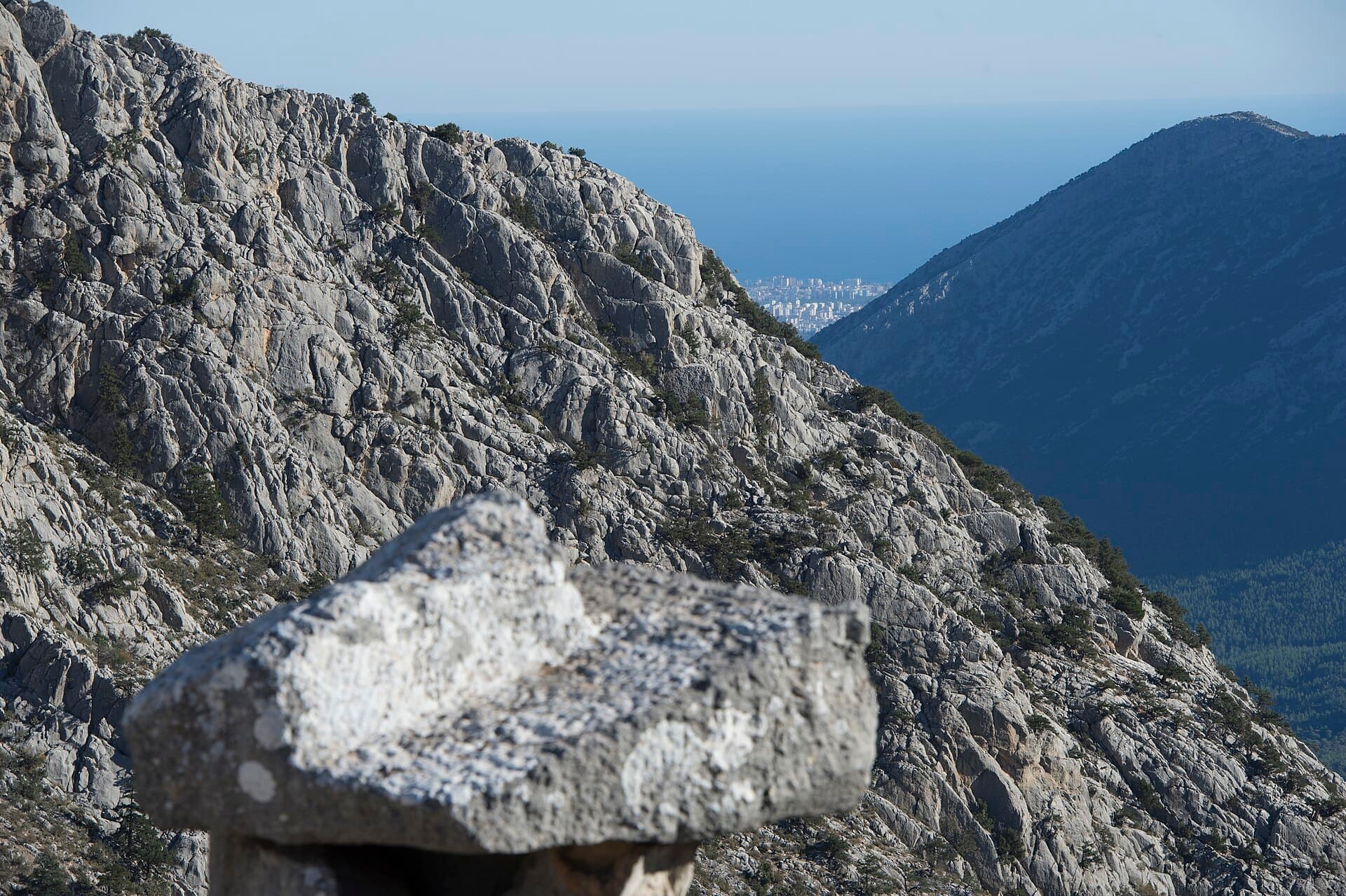
Budget three to four hours and treat Termessos as a hike, not a stroll: the trails are clear but steep and rocky, they are not suitable for wheelchairs or small children, and the reward comes only to those who climb, so wear proper shoes and pace yourself. Go on a spring or autumn morning; the mountain air is cooler than the coast but the ascent is real work, and wet weather makes the polished limestone genuinely dangerous, so pick a dry, clear day for the views that are the whole point. Access is the thing to plan hardest, because this is the least public-transport-friendly of Antalya's great sites: there is no dolmuş to the ruins themselves, so the realistic choices are a hired car or a tour, or a bus toward Korkuteli that drops you at the park entrance followed by a taxi up the mountain road — and even once you park, a steep twenty-to-thirty-minute walk still separates the car park from the theatre, so leave time and water for it. Site entry is a modest €3 for foreign visitors, with a separate national-park vehicle fee at the gate, so carry cash; Museum Pass acceptance at park sites is inconsistent. Because it sits northwest of the city, Termessos pairs well with the Karain Cave (one of Anatolia's oldest inhabited caves) on the same road rather than with the eastern Roman cities. Bring more water than you think you need, sun cover, and a little courage for the cliff edges — and go early, both for the light and to have the necropolis to yourself. One more reason to take your time: because Termessos was never picked over like the coastal cities, inscriptions, temple walls and tombs still lie where they fell — reading a toppled sarcophagus lid or a temple threshold in situ is a kind of discovery you rarely get at a tidied-up site.