Phaselis
Swim off a pebble beach with a Roman aqueduct and a ruined main street at your back.

Enough context, no spoilers
Why it matters
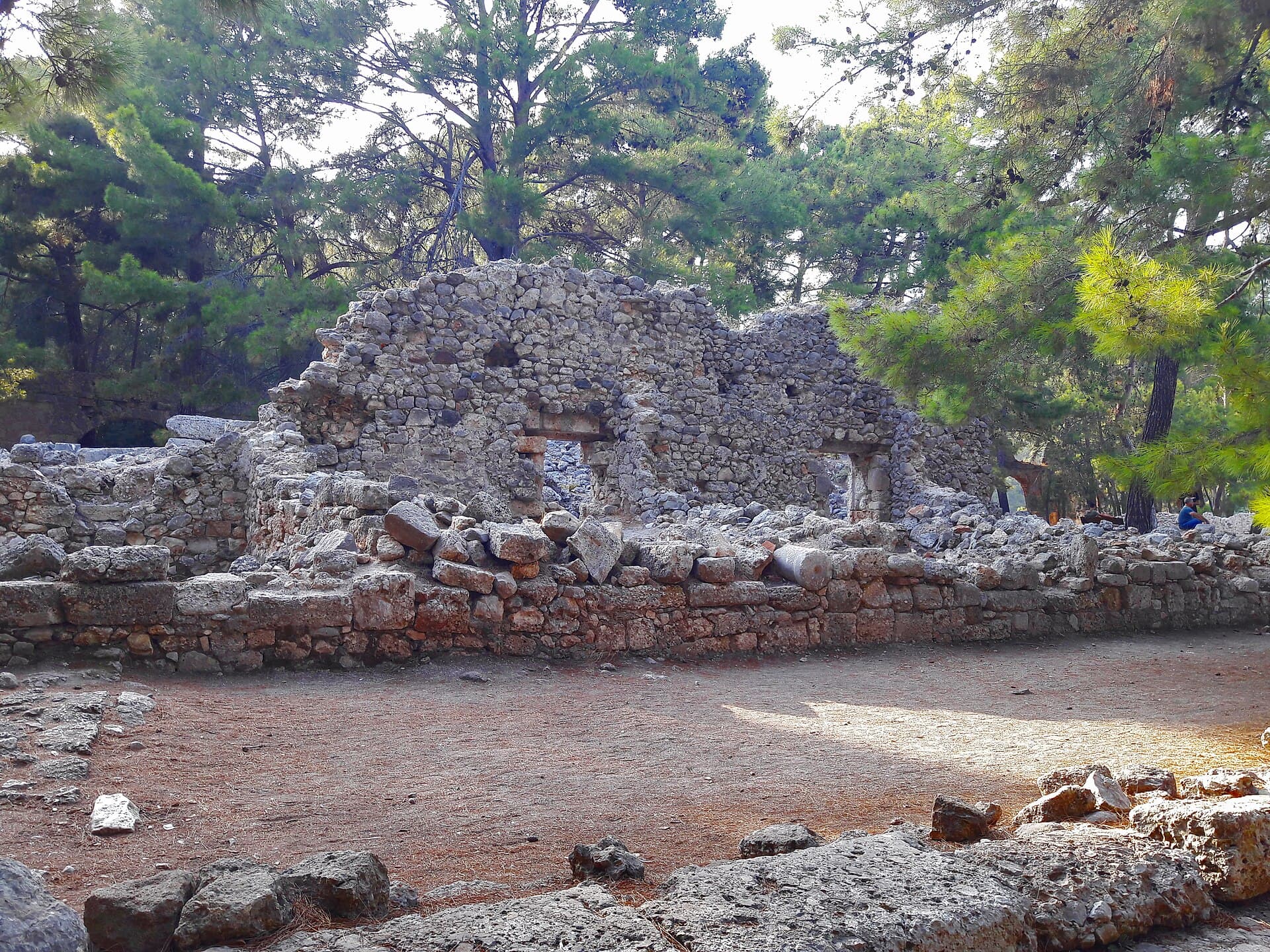
Founded by Rhodian colonists around 700 BC on a wooded peninsula, Phaselis prospered on three harbours that let it trade in any wind. Alexander wintered here; Rome added a gateway for Hadrian and a colonnaded street between the harbours; Byzantine churches followed before piracy and silting emptied it. Its magic is the setting — ruins in pine forest at the water's edge, harbours now coves.
What to know before you go
Plan a generous half-day, around four hours, because Phaselis asks to be done slowly and twice over — first the ruins, then a swim, then the ruins again in changed light — and its whole appeal collapses if you treat it as a quick photo of the theatre. Come at the 08:30 opening, especially between April and October: arriving early gives you the paved street and a harbour cove almost to yourself before the tour boats and the midday heat arrive, and the pine shade that makes Phaselis bearable in summer is best in the morning. It lies about 60 km southwest of Antalya (about an hour's drive) near Kemer, which shapes access: the simplest routes are a car or a day tour, while by public transport you take a Kemer-bound bus or dolmuş from Antalya's otogar and change to a local taxi or seasonal dolmuş for the last stretch into the site — workable, but plan the return so you are not stranded at the gate. Bring what a normal ruin visit does not need but this one does: swimwear, a towel, water shoes for the pebbles, and sun cover, because the reward here is stepping straight from the ancient street into the sea. Phaselis also pairs beautifully with the coast around it — the flame-vents of the Chimaera (Yanartaş) above Çıralı and the ruins of Olympos lie further down the same shore — so a car turns it into a Lycian-coast day rather than a single stop. Protect the site as you enjoy it: it is an archaeological area first and a beach second, so no climbing on walls and take everything out with you. A last tip: walk the full paved street to the far south harbour, which most day-trippers skip — it is the quietest cove for a swim and the best spot to grasp how a single avenue once joined two working ports.