Ankara is Turkey's capital, and it runs on government and business, not tourism — most visitors are here for work, and foreign leisure travel is a small share of the total. Come anyway for two genuine reasons: Anıtkabir, Atatürk's mausoleum and one of the country's most solemn sites, and one of Turkey's finest archaeological museums. Two focused days, not a week.
Start with the essentials, add what genuinely interests you, and leave the rest for another visit. Every place includes a concise story, practical timing, a Maps link, and a one-tap route planner action.
Make the route work
Anticipate the practical details.
Getting there
Esenboğa Airport (ESB) sits roughly 30km north of the centre; Havaş runs a shuttle bus to AŞTİ, the intercity bus terminal, roughly every 30 minutes — confirm the current fare locally, as it moves with inflation. The high-speed YHT train reaches Istanbul in a little over four hours and Ankara is Turkey's rail hub, also serving Konya and other central cities directly. AŞTİ is itself one of the country's largest bus terminals, with services from almost anywhere in Turkey.
Getting around
Kızılay is the interchange for the Ankaray light rail and the M1, M2 and M4 metro lines; Ulus, on the M1, is the stop for Ankara Castle, the Anatolian Civilizations Museum, the Roman Baths and Hamamönü, all walkable from there. Anıtkabir has its own stop on the M2. A Kentkart covers metro, Ankaray and city buses. Gordion, the Phrygian capital linked to King Midas, is roughly a 90-minute drive southwest via Polatlı — feasible as a half-day trip with a car or organised tour, though it isn't covered as a full stop in this guide.
Money
Turkish lira is standard and cards are widely accepted across the capital, more consistently than in smaller towns. ATMs are common throughout Kızılay and Ulus.
Connectivity
Mobile coverage is strong throughout the city, including at Anıtkabir and the Ulus museum cluster, as expected of the seat of government.
Etiquette
Anıtkabir is treated by Turks with the gravity of a national shrine, not a tourist stop — dress modestly, keep your voice down, and remove hats inside the Hall of Honour. Kocatepe Mosque and Hacı Bayram Mosque are active places of worship: shoes off, shoulders and knees covered, and visits timed outside the five daily prayers.
Safety and comfort
Ankara is the seat of Turkey's government and diplomatic community, and ordinary urban precautions apply as in any capital. Check your government's current travel advisory for Turkey before booking, since it is updated far more often than this guide.
Atatürk's mausoleum — approached by Turks with the gravity of a national shrine, not a photo stop. Come prepared to match that.
Built after Mustafa Kemal Atatürk's death in 1938; his body lay in Ankara's Ethnography Museum for fifteen years while the design was chosen and built. Turkish architects Emin Onat and Ahmet Orhan Arda won the competition. Construction began 9 October 1944 and finished 1 September 1953; his remains were transferred here on 10 November 1953, the fifteenth anniversary of his death.
Free entry, including the museum wing and parking. Confirmed across multiple independent Turkish sources.
90 min29 October (Republic Day) and 10 November (the anniversary of Atatürk's death) draw exceptional crowds; the site stays open to the public until 22:00 following the official ceremony, with access and hours adjusted for the day.Security screening at the entrance is routine and can take longer during peak hours, weekends and around national holidays.Dress modestly and keep voices down, especially in the Hall of Honour; remove hats on entering.+1 more to know
Flash photography is not permitted inside the museum wing, and some individual exhibits restrict photography entirely.
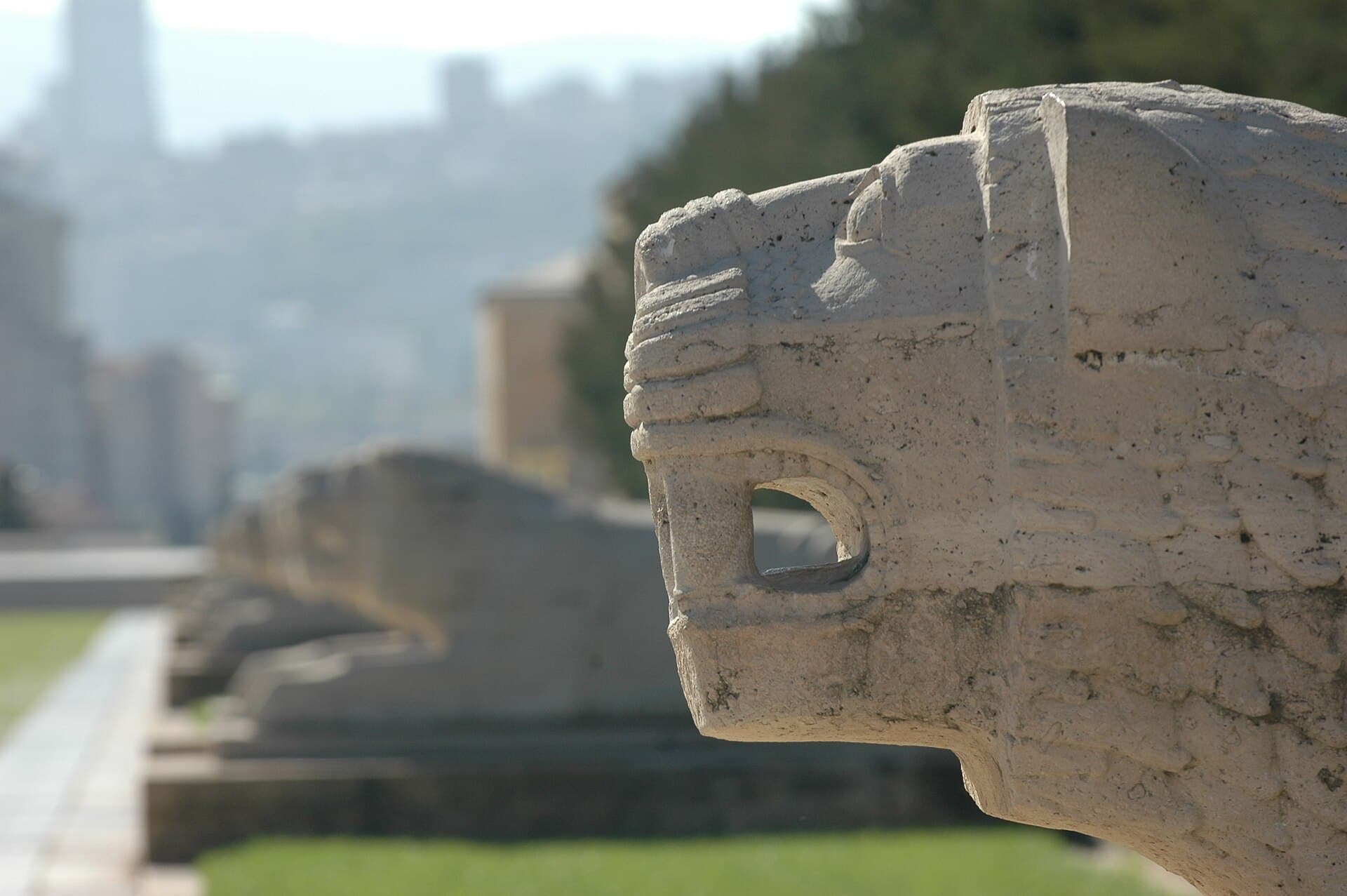
Look for: Aslanlı Yol (Road of Lions): 24 lions in Hittite style, twelve a side, each pair for one of the 24 Oğuz tribes. The 40-tonne cenotaph in the Hall of Honour is symbolic — his sealed tomb lies beneath it. Guards change hourly.
Verified · · 34 min to Ankara Ethnography Museum · 36 min to Museum of Anatolian Civilizations
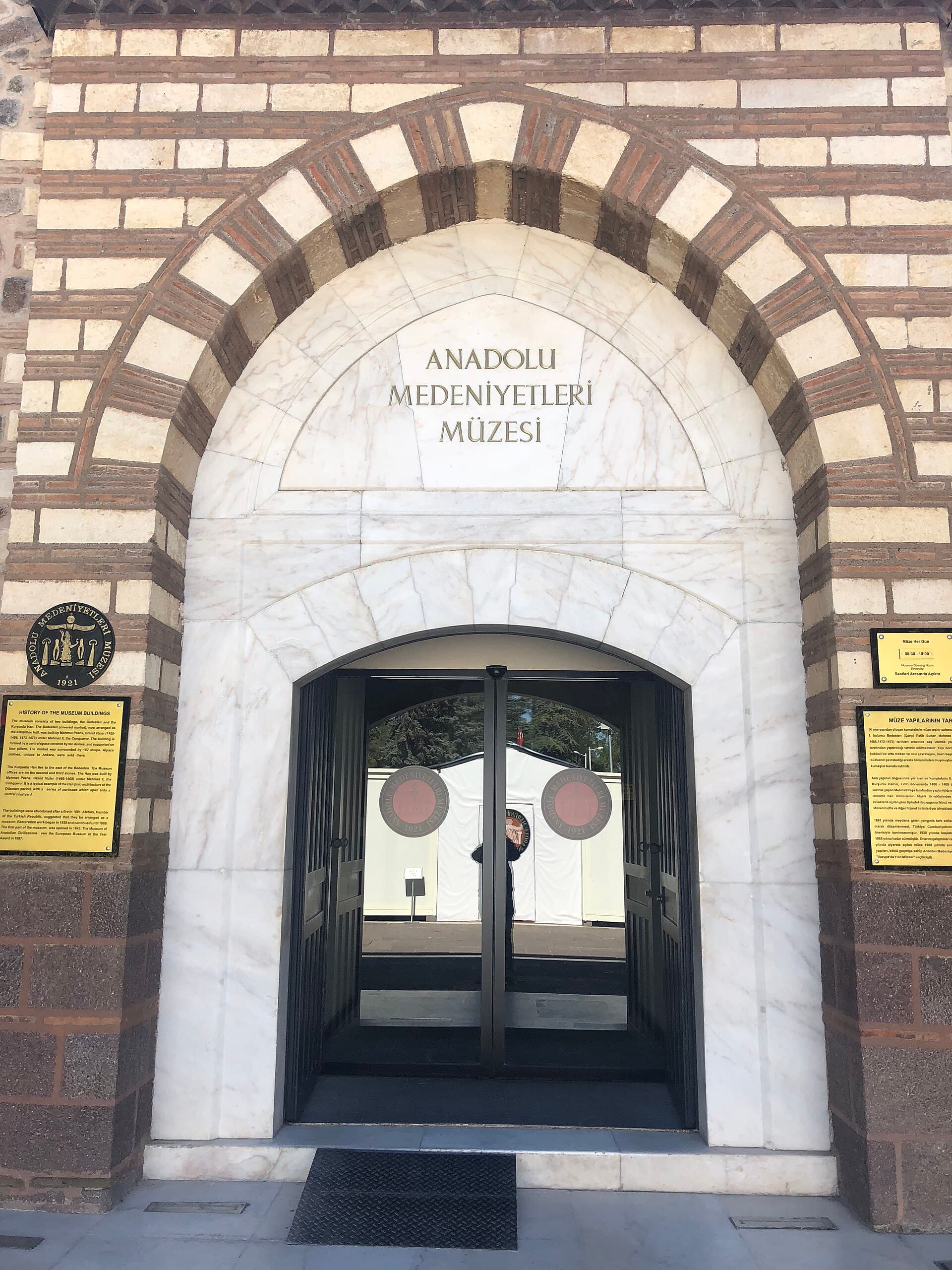
Hittite, Phrygian, Urartian and Lydian collections in a restored 15th-century Ottoman market — one of Turkey's best archaeological museums.
Housed since the 1960s in two Ottoman buildings on Ankara Castle's slope: the Mahmut Pasha Bedesteni, a covered market built 1464–71 for the vizier Mahmut Pasha, and the adjoining Kurşunlu Han. In 1997 it was judged European Museum of the Year, ranked first among 68 competing museums at the European Museum Forum in Lausanne.
€12 for foreign visitors, confirmed against the official Ministry of Culture and Tourism museum/site price list (dosim.ktb.gov.tr). MüzeKart valid. Night-museum hours (19:00–21:00) run 1 June – 1 October in season, ticket office closing 20:15.
90 minThe entrance hall and Paleolithic gallery had a scheduled closure from 12 June to 5 July 2026 for renovation; confirm both have reopened as planned before visiting.Sources disagree on whether the museum closes Mondays; check current hours before building a day plan around it.The ticket office closes earlier than the museum itself — do not arrive in the final half hour.
Look for: The Çatalhöyük wall painting, read by some as the world's oldest map; Kültepe's cuneiform trade tablets; the Alacahöyük royal-tomb sun-disc standards; carved wooden furniture from the Gordion tumuli, among the oldest to survive anywhere.
Verified · · 8 min to Ankara Ethnography Museum · 16 min to Temple of Augustus
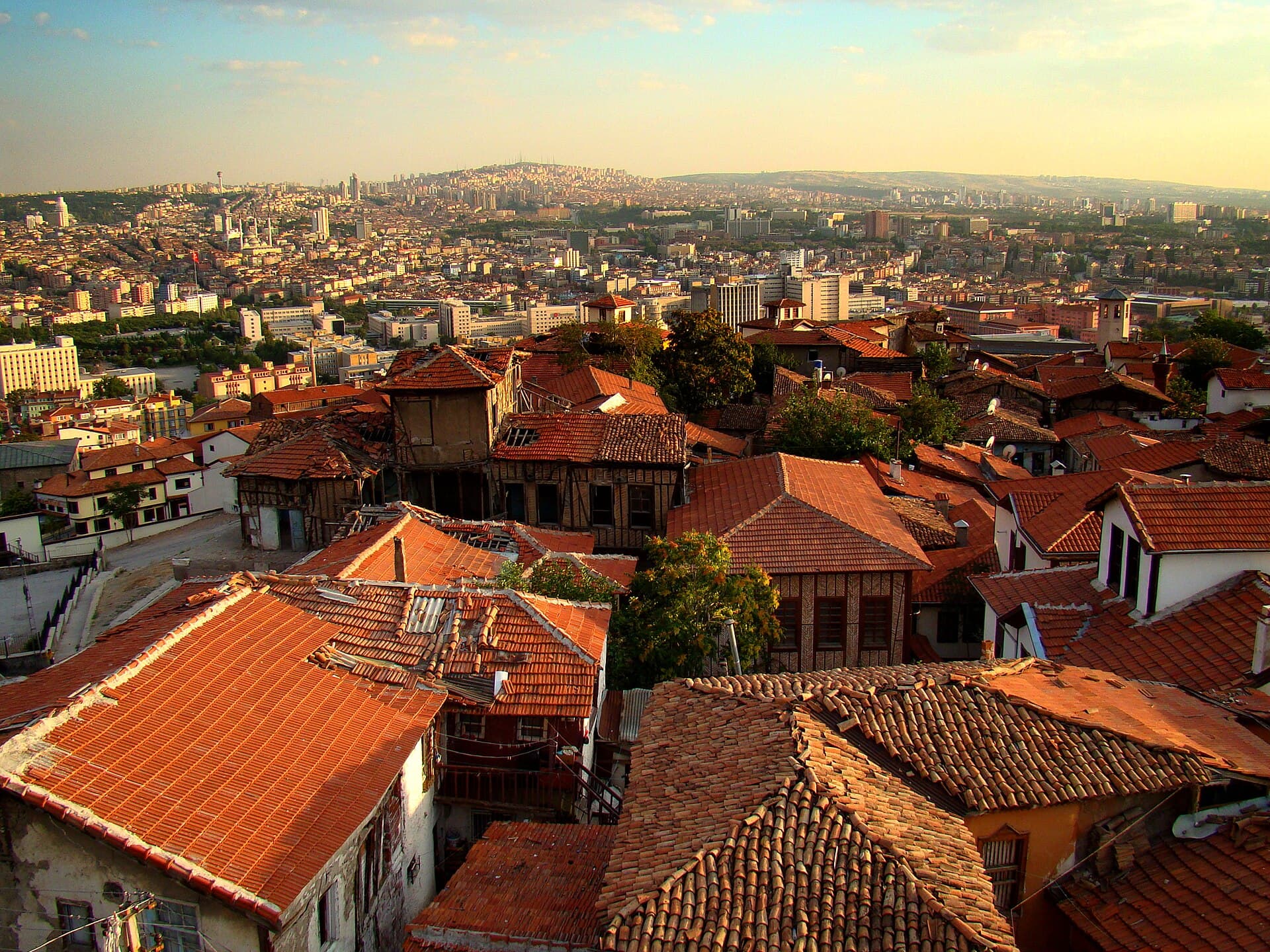
A citadel rebuilt by Phrygians, Galatians, Romans, Byzantines, Seljuks and Ottomans — free to enter, with the best view of the old city.
The hill has carried fortifications since the Phrygians in the 8th century BC, rebuilt by the Galatians in 278 BC and repeatedly again under Rome, Byzantium, the Seljuks and the Ottomans, each reusing the last builders' stone. Two rings of walls survive: an inner circuit with closely spaced towers and an outer one, enclosing the old quarter below the keep.
Free entry to the outer walls, confirmed across multiple sources. No ticket gate.
60 minSteep, narrow, cobbled lanes inside the walls, with uneven footing throughout.Some wall-top sections and towers have no railing despite recent safety improvements at Zindan Kale; treat all unguarded edges as a real fall risk.No fixed closing time and no ticket gate, which also means no staff presence after dark — a daytime or early-evening visit is the sensible choice.
Look for: Reused column drums and inscribed blocks built straight into the curtain walls. Climb to Alitaş or Şark Kulesi for the widest view, over Hamamönü's restored roofs and across the whole basin the modern city fills.
Verified · · 15 min to Temple of Augustus · 18 min to Museum of Anatolian Civilizations
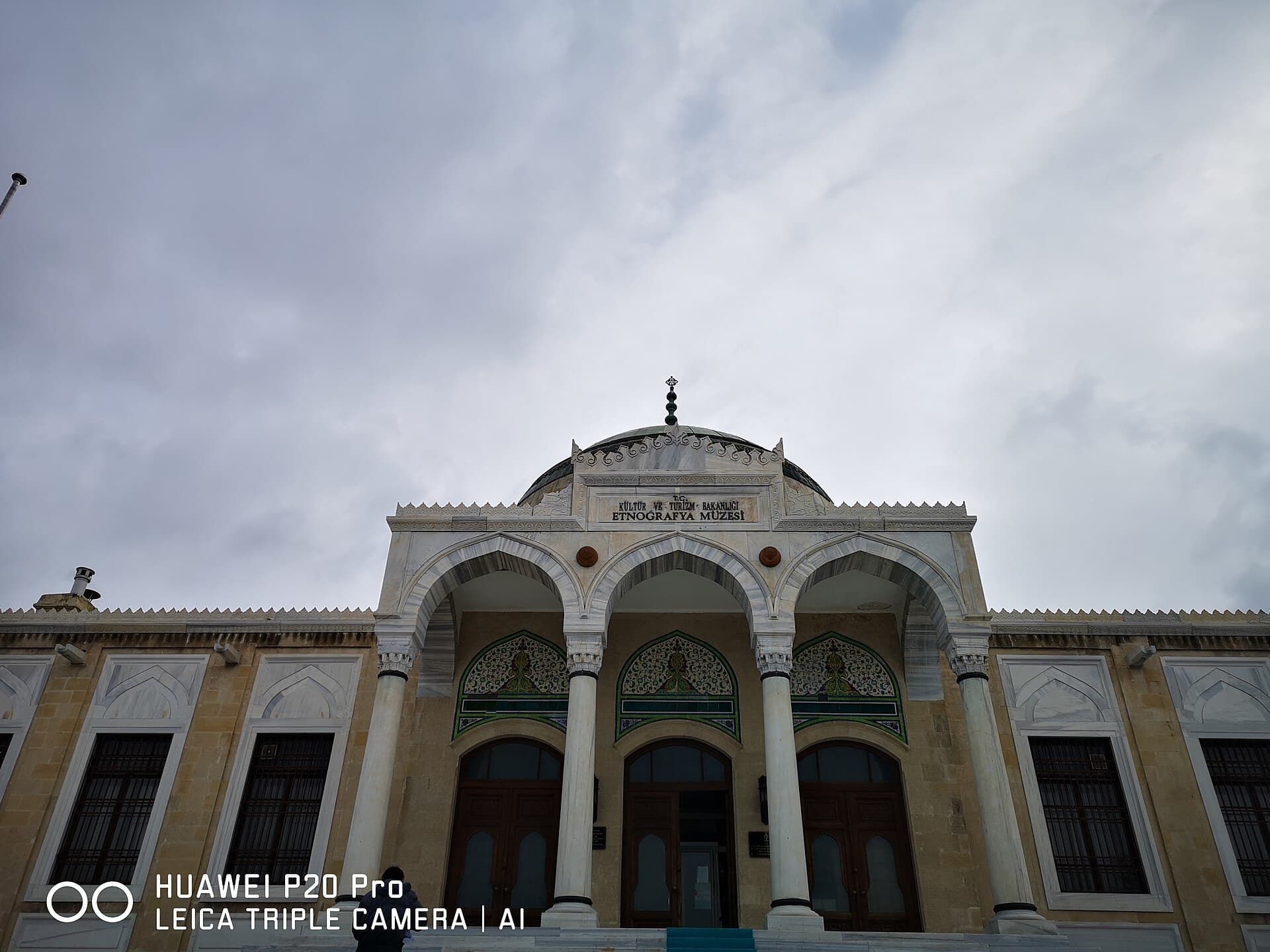
Where Atatürk actually lay for fifteen years before Anıtkabir was ready — and a real Seljuk and Ottoman collection in its own right.
Opened 18 July 1930, the first purpose-built museum of the new Turkish Republic, designed by Arif Hikmet Koyunoğlu. From 21 November 1938, days after Atatürk's death, his body lay in a temporary tomb in the domed central hall until Anıtkabir was finished; it moved there on 10 November 1953. Pietro Canonica's 1927 bronze equestrian statue of Atatürk stands at the entrance.
45 minMüzeKart is accepted; confirm the current foreign-visitor entry price before visiting, as it was not consistently reported across sources for this guide.The ticket office closes roughly 30 minutes before the museum itself.
Look for: The marked spot in the central hall where the temporary tomb stood for fifteen years. Also the 13th-century wooden throne of Seljuk sultan Kaykhusraw III, İznik/Kütahya ceramics, and carpets from Uşak, Bergama and Milas.
Verified · · 8 min to Museum of Anatolian Civilizations · 21 min to Ankara Castle
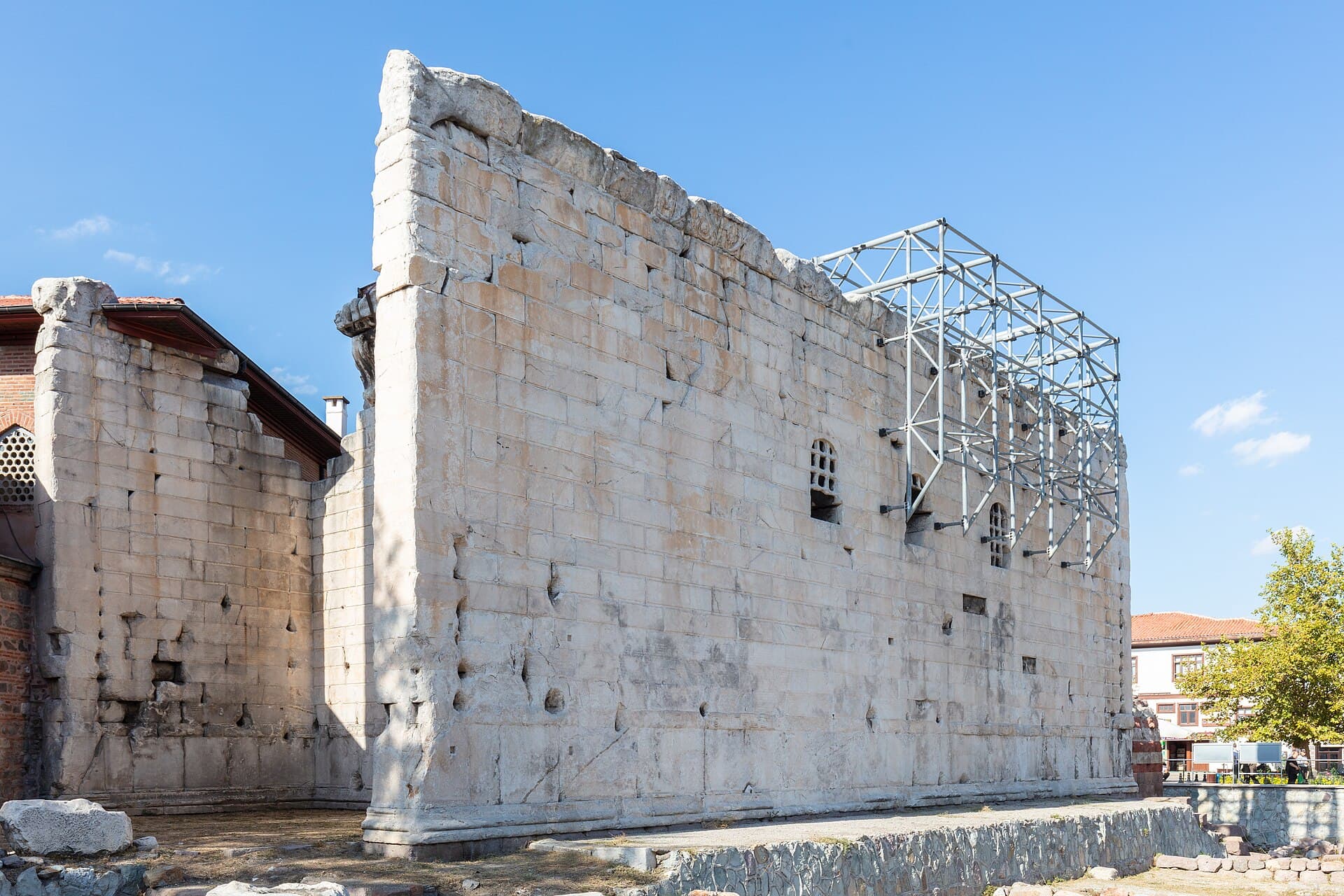
One standing wall of a Roman temple carries the most complete surviving copy anywhere of Augustus's own account of his reign.
Built 25–20 BC as Ancyra's temple to Augustus and the goddess Roma, shortly after Rome annexed Galatia. After Augustus's death in AD 14, his political testament — the Res Gestae Divi Augusti — was inscribed on its walls: full Latin text on the pronaos, a Greek translation on the exterior. Rome's own copy has not survived; Ankara's is the most complete known.
Not listed on the official Ministry price schedule for Ankara sites — free or unticketed as best as this research could determine. Not stated as confirmed fact.
20 minThe temple is viewed from outside the enclosure; sources differ on whether closer access is ever permitted, so do not plan on entering.It sits directly beside an active mosque — keep this in mind around prayer times and dress accordingly if visiting both.
Look for: The inscribed wall itself, viewed from outside the enclosure rather than entered. The Ottoman-era Hacı Bayram Mosque stands immediately alongside it — a 14th-century place of worship built against the wall of a 2,000-year-old Roman temple.
Verified · · 15 min to Ankara Castle · 16 min to Museum of Anatolian Civilizations
Historically one of Ankara's oldest residential quarters, its Ottoman-era wooden houses fell into disrepair through the 20th century. Restoration beginning around 2011 rebuilt the quarter as a pedestrian district of cafés, shops and small museums, anchored by the 15th-century Karacabey Hamamı and the Taceddin Sultan and Hacı Musa mosques.
A popular, heavily restored district rather than an untouched survival — treat it as a well-done reconstruction, not an archaeological site.Weekends and evenings draw large local crowds; a weekday morning is quieter and better for photographs.
Planned from 1957 and built in stages from 1967 to 1987 after an earlier modernist design was scrapped for a neo-classical Ottoman style modelled on the Selimiye and Blue Mosques. Its four minarets rise 88 metres, among the tallest in Turkey, and the main hall holds a reported 24,000 worshippers.
A working mosque — avoid visiting during the five daily prayers and Friday midday prayer; shoes off, shoulders and knees covered, headscarf for women.Entry to the mosque is free; the underground car park is paid.
Built in the 3rd century AD, part of a larger complex with a 95-metre square palaestra once ringed by 128 Corinthian columns. Excavated from the 1930s and opened as an open-air museum after restoration completed around 2001. Only the ground floor and basement level survive; the bathing rooms originally stood at least one storey higher.
€3 for foreign visitors, confirmed against the official Ministry of Culture and Tourism price list (dosim.ktb.gov.tr). MüzeKart valid.
Almost entirely open-air with little shade; a poor midday choice in summer heat.What survives is foundation-level only — expect low walls and column bases rather than standing rooms.
Opened in 1989 as Ankara's first modern shopping mall and a communications tower with a rotating restaurant, in the Çankaya district. The mall closed for rebuilding in 2014, reopened in 2018, and the tower's observation deck reopened after further renovation on 19 May 2022.
Entry to the mall is free; the lift to the observation deck is a separate paid ticket — confirm the current price locally.Geographically separate from the Ulus/Anıtkabir cluster — budget real transit time if combining it with the rest of a one-day plan.