The Rock Church
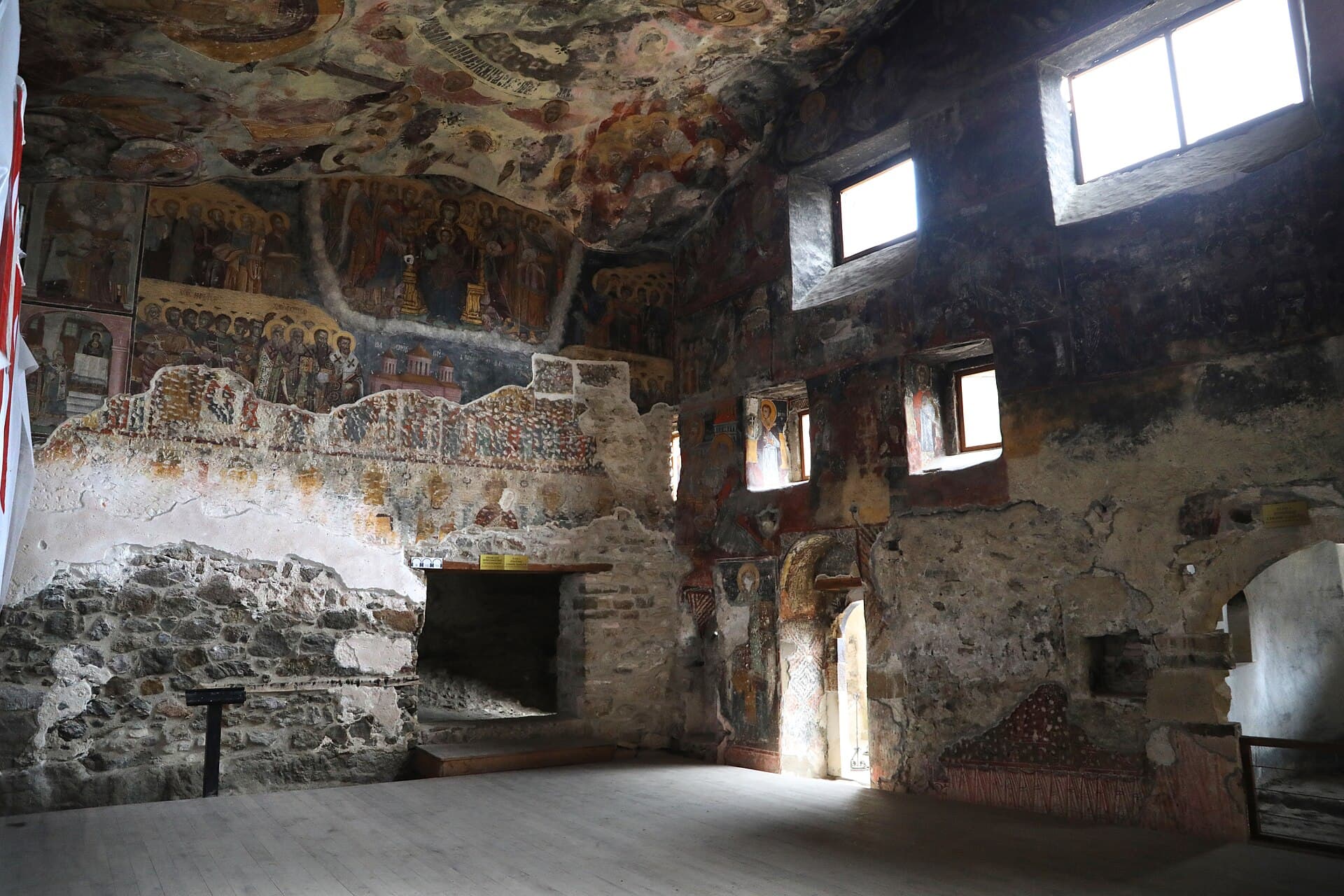
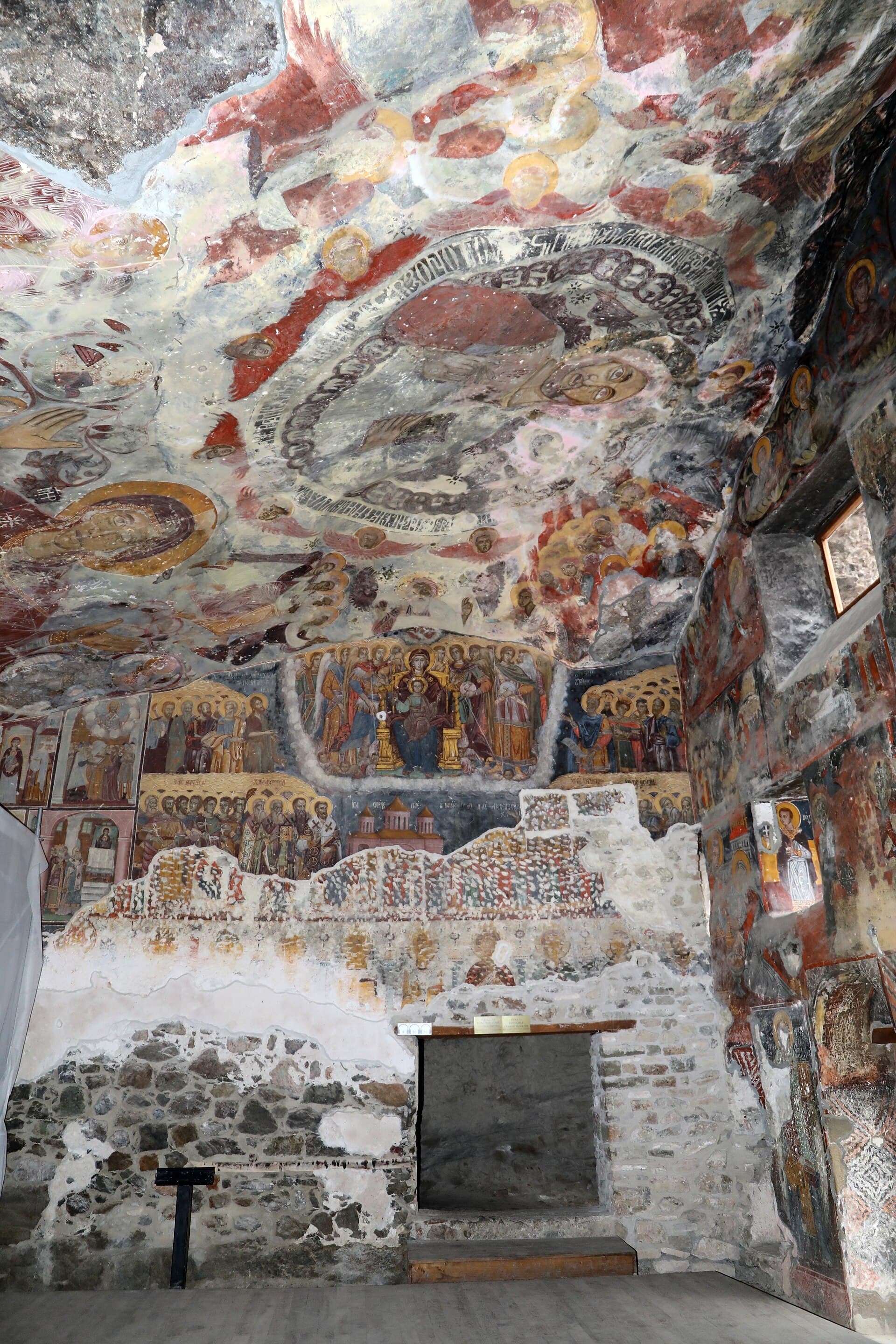
Faces of saints at eye level, close enough to touch — painted to be lived with and prayed toward, not admired from a cathedral floor.
Enough context, no spoilers
Why it matters
Cut directly into the cliff, the rock church holds painting from several phases spanning roughly the ninth to nineteenth century, including work tied to Trebizond emperor Alexios III in the 1300s and chapel scenes dated to the early 1700s. Centuries of visitors scratched names into the lower panels. A Ministry restoration begun May 2024 has worked scene by scene since, including the exterior Last Supper.
What to know before you go
The frescoes are not what the word "church" prepares you for. There is no vaulted ceiling floating overhead, no distance forcing your head back to see a painted heaven. The rock church at Sümela was cut straight into the mountain, and the walls close in the way a cave does — faces of saints at eye level, narrative scenes running along walls close enough to touch, though you shouldn't. That closeness is the whole experience: this was never built to overawe from a distance, only to be lived with, prayed toward, and touched, which is also why so much of it needed repair. Centuries of hands did what centuries of hands do. Pilgrims, soldiers, and later tourists scratched names and dates into paint never meant to survive contact, and the scenes nearest the entrances — the ones everybody could reach — took the worst of it. What survives underneath is a genuinely layered programme, not one single mural: work tied to the Trebizond emperor Alexios III in the fourteenth century inside the main church, further scenes added in stages, and chapel paintings dated to the early eighteenth century, with some accounts placing the very earliest layers as far back as the ninth. Since May 2024 the Ministry's restoration laboratory in Trabzon has worked through the paintings scene by scene, using cleaning techniques suited to centuries-old pigment rather than scrubbing it — the exterior Last Supper was the first major scene brought back into focus, in 2024, and the work has continued since. The honest caveat: this is a live, multi-year project, and which panels have conservators or coverings on them will vary week to week. What can be said as of writing is that the interior scenes read clearly, up close, with no scaffolding blocking the view — a markedly better state than this site's own worst years, when it was closed outright for structural reasons (see Sümela's Cliff Face). Go with low expectations of grandeur and high attention to detail, and it delivers. Look for where a restored panel meets an unrestored one — the join teaches you more about what nine centuries actually did to a painted wall than any label could, and it is more honest than pretending the whole thing has always looked this clear.